Why we love conspiracy theories
 In short, we want the world to make sense, so ideological cabals and aliens offer a more attractive solution to the appearance of randomness than does randomness itself. On the one hand, we have to temper our impulse to impose order on chaos by reining in our imaginations with common sense, logic, and civil discussion.On the other hand, this reveals our deeply rooted conviction that there is a purpose to our existence and that there is true meaning in our lives and in our world.
The Aroma of Ideology
 A NYT op-ed cites a study by social scientists at Brown, Harvard, and Penn State that people we agree with smell better to us.
For a theological critique, see my article, The Scent of Spirit.
Symbiosis — Blueprint for Peace
 Here’s a beautiful spread from Cosmos Magazine on cooperation in nature. If natural enemies can make peace with one another for mutual advantage, shouldn’t human communities be able to recognize how much more we stand to gain by setting aside our petty differences… or even working through our substantive differences?
It’s largely a matter of will. We have to want to resolve our disagreements more than we want to be right. Some earlier thoughts on conflict resolution here.
Thanks to Rabbi Yaakov Feitman for his article in this week’s Mishpacha Magazine.
Don’t Beat Stress… Meet Stress
 Doctors can’t tell you much about migraines. According to Healthline.com, a partial list of triggers includes lack of sleep, caffeine, foods, food additives, hunger, dehydration, alcohol, strong odors, bright lights, loud sounds, weather change, exercise, hormones and — my personal favorite — stress.
At their best, migraines will interrupt my sleep several times a night. At their worst, they shoot burning needles of agony into my brain for 14 hours straight until I finally pass out from exhaustion.
I’ve dealt with migraines for about a quarter century now. During my last series, a new neurosurgeon put me on steroids to relax my muscles, a regimen that prevents headache Armageddon while allowing the cycle to slowly run its course.
It’s working, mostly, for which I’m enormously grateful. But not without a curious side-effect.
Now I’m too relaxed.
Groupthink: Blinded by “I’m Right”
 Crossword puzzles. Sudoku. Word games. Logic problems. These are common recipes from the diet books for the mind. Go traveling. Take up knitting or gardening. Learn Italian. Drive a different way to work. Get an advanced degree. Anything and everything that piques cognitive activity belongs in our catalogue of mental health activities.
“That’s all good,” says Barbara Strauch, author of The Secret Life of the Grown-Up Brain: The Surprising Talents of the Middle-Aged Mind and New York Times health and medical science editor. But the most intriguing advice Ms. Strauch has heard is this: “Deliberately challenge your view of the world. Talk to people you totally disagree with.”
It makes sense. Nothing kicks the brain into overdrive like having to defend your point of view against attack, or the desire to dismantle an argument you find unsound or wrongheaded. What’s more, Ms. Strauch asserts that the brain is actually primed for questioning assumptions, since reexamining our beliefs provides the opportunity to revisit, or more deeply contemplate, why we believe the way we do.
“Confronting things you disagree with may not make you change your mind,” she says, “but it will perhaps give you a view that is more satisfying to the middle-aged brain.”
And who knows? Sometimes we may even discover that we’ve been wrong.
The True Rewards of Giving
 Would most people rather save one person or save the world? The answer might surprise you.
University of Oregon psychologist Paul Slovic asked subjects for donations to save a little girl from starvation. To one group he gave no other information; to the other group he added that this girl was one of millions of other starving people. Logically, that extra bit of information should make no difference, since the girl being saved is the same.
But as one of my mentors likes to say, human beings are psychological and not logical creatures. Case in point: subjects in the second group donated about half as much money as those in the first group.
Building Character and Acquiring a Civil Tongue
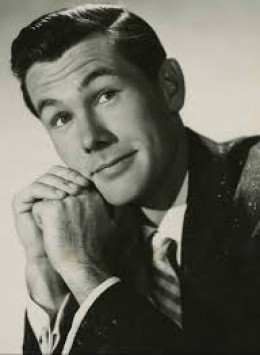 Older readers will remember Johnny Carson, the legendary host of the Tonight Show whose 30-year tenure preceded that of Jay Leno. But not so many remember Mr. Carson’s predecessor, Jack Paar, and fewer still will recall why he left the show.
In the opening monologue one night, Mr. Paar uttered the expression “W.C.,” a mostly-forgotten anachronism meaning Water Closet, yet another anachronism meaningbathroom. The censors bleeped the term as profane. Mr. Paar quit the show in protest.
The story strikes as comical, and we can’t help rolling our collective eyes at the overzealous censors who couldn’t tell real profanity from the merely indelicate. But when it comes to values, we can’t escape the inevitable objection: who gets to decide where to draw the line?
Can you be Good Without God?
 Most of us consider ourselves good people. We want to live moral lives, want to do what’s right, want to earn the respect of others. Our intentions are almost always good. But we all know about a certain road paved with good intentions.
So how do we figure it out? We try to follow the law, but the law is written by imperfect human beings, and every day we read in the headlines about some miscarriage of justice perpetrated by the very system that is supposed to ensure that justice is done. We try to listen to our conscience, but our neighbor’s moral compass points south and ours points north.
Historically, man has turned to religion, but there too the headlines are filled with disillusionment, and history records countless atrocities perpetrated in the name of heaven. And even when we manage to achieve moral clarity, in the next moment temptation presents itself and our heartfelt resolutions fly out the window.
How to Stop a Fight
 This has happened to you.
You’re standing in a crowded room. Someone pushes into you from behind. You feel a surge of irritation, even anger. Who is this careless oaf who can’t respect your personal space? You turn around to express your indignation, only to discover that the offending party is actually a good friend of yours who has bumped into you accidentally or, perhaps, even on purpose and is not smiling at you as you find yourself on the receiving end of a good-natured prank.
Your anger evaporates in an instant.
But why? The bump was no less of a bump on account of the person who bumped you. But the bump was never the issue at all. What was at issue was your ego, resenting the perpetrator who failed to show you respect.
It’s almost always ego that is the real perpetrator in any fight. Change one little detail and our irritation or anger vanishes. But when we feel our ego has been affronted, heaven help the offending party.
 Yonason Goldson