Home » Communication (Page 9)
Category Archives: Communication



The French battle for ethics
 What is the world coming to?
It’s truly a sign of the times when France – of all nations – is leading the way in ethics reform. This is the country that for decades has destabilized the world by selling weapons to and buying oil from any regime willing to do business; it’s the culture that embraced casual illegitimacy centuries before the institution of marriage began crumbling elsewhere around the globe; and it’s the government that has recently taken the war on terror to its beaches by banning Muslim women from wearing “burkinis,” apparently based on the presumption that modesty leads to suicide bombings.
Then there are the endless tales of cronyism, kickbacks, and embezzlement among the political elites. Former President Nicolas Sarkozy gave himself a 170% raise shortly after taking office.
But there’s a new sheriff in town – President Emmanuel Macron – whose justice minister François Bayrou introduced sweeping ethics legislation last week into a system that has shown little interest in ethics.
Among the list of proposals we find:
- A ban on nepotism in appointments to government positions
- Increased scrutiny over the use of public money
- Stronger penalties for political corruption
- A public bank to finance and control political party funds
These are all worthy and admirable steps to restore a measure of integrity to a morally dysfunctional system. But they also demonstrate how imposing the battle for ethics really is.
THE EYE OF THE LAW
There are two ways of looking at legislation in general. The more common perspective views legality as the border-crossing of culpability. On one side of the line are things I’m allowed to do; on the other side of the line are things I get punished if I get caught doing.
And there’s the rub. It’s only illegal if I get caught, the conventional thinking goes. When that attitude becomes the accepted norm, inevitably the gray area of ethical ambiguity starts to spread like nuclear fallout, leaving in its wake countless casualties of radioactive rationalizing and moral mutation.
But what if instead we look at the law as an expression of civil values and responsibilities? Then we come away with an entirely different mindset, one in which the law is something to be upheld, not circumvented. And when that viewpoint takes hold, everything else begins to look different.
Imagine if the narrative inside our heads sounded like this:
- I don’t cheat on my taxes because I’m a member of a society that values honesty, not because I’m afraid of the IRS.
- I seek out the owner of a lost wallet because I empathize with his distress, not because the law might punish me if I don’t.
- I trip the fleeing purse snatcher and return the handbag to the little old lady not because there’s a Good Samaritan law, but because I see myself as a good citizen.
THE LETTER OF THE LAW
Really, laws should only be necessary as protection against miscreants and as a guide to morally ambiguous conflicts of interest. Instead of searching for loopholes that allow us to pervert the intent of legislation, we should seek to glean the spirit that guided those who designed the law and contemplate how we can contribute to a more civil society.
King Solomon says, The performance of justice is joy to the righteous, but ruinous to the workers of corruption.
 There is no greater joy than the feeling that comes from benefiting others through selflessness and service, from the sense of integrity that swells in our hearts when we know we’ve honored the values of society without being goaded by the fear of punishment that haunts the unscrupulous day and night.
So kudos to the French for their efforts to re-establish basic ethical standards in government. But to have any hope of real change, we must return to seeing the law as a foundation for moral conduct, not a snare of reprisal to be skirted at every opportunity.
After all, wouldn’t you rather live in a world where others think more about what they can contribute than what they can get away with? Isn’t the best first step to start thinking that way yourself?


Strangers on a Train
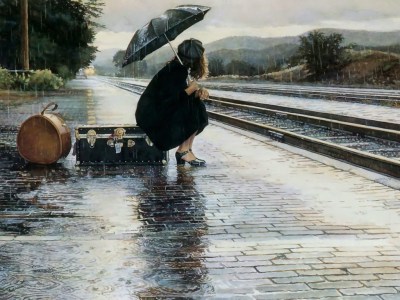 There is an art to travelling with small children by public transportation.
We had managed to balance our seven bags in and atop our two baby strollers. Needless to say, this left them unavailable for babies. My wife, Sara, shifted one-year-old Jake into long-distance-hip-riding mode while our new friend Blythe did the same with her own one-year-old, Joshie. Zeke and I, the husbands and designated sherpas, prepared to push the makeshift luggage carts.
The problem was, we had no idea where we were going.
Sara and I had arrived in Budapest less than a week earlier, and our feelings of apprehension had been deepening by the hour. Through the mercy of divine intervention, the principal of our new school was on our flight from Israel. Otherwise, we might have taken up residence in Ferihegy International Airport like Tom Hanks in The Terminal.
A haze of disorientation enveloped us almost immediately, progressively growing thicker and darker. Principal Haraszti – whose name I soon began to slur into Horrorstory – deposited us in our apartment with a loaf of bread, a bag of apples, and a box of milk. There was no crib for Jake and no bed for three-year-old Abby. Horrorstory promised to call the next morning, which he did – an hour late. Relief, if not gratitude, came naturally. We had no money, had yet to find anyone who spoke English, and didn’t know our own address or phone number.
Why had no preparations been made? we asked. After all, the administration had had all summer to prepare for our arrival.
We received the answer we were to hear again and again: the matter will be resolved.
We proceeded to deal with one ineptitude after another. Of course, that made it easy to forge a bond of friendship and alliance with Blythe and Zeke, the other American couple who had parachuted in from across the globe to find themselves similarly neglected.
Generally speaking, the end of the week allows us to shrug off our troubles and anxieties with the arrival of the Sabbath, and we had been assured that all our needs were taken care of. The school had arranged an orientation camp for the students an hour outside the city, and we were expected to participate. Horrorstory told us which train to take and where to get off. The camp, he said, was “right across the street from the train station.”
 Most of his information was accurate. All of it, actually, except the last part. Across the street from the train station stood a lovely expanse of woodland, with no sign of life other than birds and rodents. There was no attendant behind the station window, either. He probably wouldn’t have spoken English anyway.
As we pondered our options, I found myself already thinking in Hungarian: the matter will be resolved.
So we loaded up the strollers and headed off in the opposite direction, only to find ourselves wandering through an industrial area almost as deserted as the woods. It would be the sundown in a few hours, and the specter of welcoming the arrival of the Sabbath in the middle of nowhere loomed ominously before us.
We asked the few passersby if they knew of the camp, but no one had any idea what we were talking about. Eventually, we flagged down a young German tourist on a bicycle. He knew no more than we did; but he took pity on us, turned back the way he had come, and set off as if in search of the Holy Grail. A few minutes later he returned. The camp was indeed across the street from the station. Just a half-mile down the road and hidden entirely from view.
So we survived our first week in Budapest, our first Sabbath in Hungary, and our first encounter with students who looked at us as if we had just emerged from the ghettos of their grandparents’ tortured memories.
***
The return trip to Budapest was somewhat more relaxed. It hadn’t started off that way, however. We had just finished loading up the strollers for our hike to the train station when the rain began to fall. A quarter hour searching for a taxi turned up nothing and left us nowhere.
Then the camp director took pity on us. Miraculously, he succeeded in cramming four adults, four children, and all our baggage into his matchbox sedan, and off we went.
Whatever their idiosyncrasies, Hungarians do have a certain passion for coming to the rescue of others. The camp director raced us to the station, somehow gathered up most of our belongings and carried them single-handed through the pedestrian underpass and into the first-class cabin of the train, which pulled up as if on cue for us to board. We hadn’t planned on traveling first class, but once there we had no interest in packing up to relocate. Aside from that, the price of $3.50 U.S. – albeit triple the second-class fare – seemed eminently reasonable; at least for rich Americans like us.
We had the entire train car to ourselves.
The money gap would follow us everywhere. On Sundays, Sara and I crossed the street from our apartment to let Jake and Abby frolic in Városliget, Budapest’s central park. Often we would buy the children giant balloons, shaped like rabbits or roosters, almost as big as they were. The locals, never shy about staring at strangers, glared with a mixture of resentment and awe at the wealthy Westerners who could afford two balloons. They cost a dollar apiece.
Our Hungarian salary was about $200 a month, which covered food and basic living expenses. That was what most Hungarians lived on. We received a separate American salary which, back in the States, would have kept us at subsistence level. But in Hungary we were able to save most of it (which had a lot to do with why we were there in the first place).
There was something unsettling, however, about being seen as rich. It was one more thing that set us apart in a country where we stood out noticeably already. And even if it wasn’t objectively true, it was relatively true; and that taught us an uncomfortable lesson about the reality of perception.
In a way, we are what other people think we are, no matter what we think we are, and no matter what we really are.
That sense of displacement tarnished the pleasure of our train ride back to Budapest. If not for us, the first-class car would have been empty. Ergo, it should have been empty. We didn’t belong there. No one did.
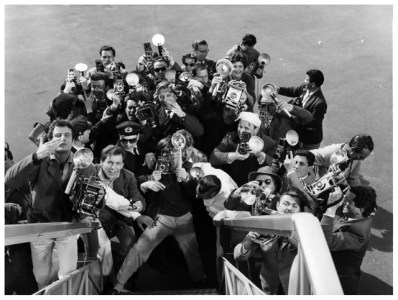 The train pulled into the station and we descended from our private car. Porters raced each other for the privilege, and expected gratuity, of carrying our luggage. But these were no ordinary porters. They were like the cast of surreal characters from a Federico Fellini movie. The withered septuagenarian who got to us first beat out two comrades, one hobbling on a crutch and the other with his arm in a sling.
We let him take one of the lighter bags, with which he struggled, uncomplaining, as he hauled it to the taxi stand. The cabbie demanded the extortionate price of 300 forint – about three dollars – to drive us back to our apartment, where Blythe and Zeke joined us. The work crew that was supposed to have completed repairs on their apartment was running behind schedule.
It wouldn’t take much longer, they were told. The matter would be resolved.
Published in this month’s issue of The Wagon Magazine.


No More Flake News
 It’s bad enough that we have to endure fake news. But at least untruths and half-truths can be debunked.
More insidious than fake news is flake news — those trifling stories peeping out from beneath lurid headlines trying desperately to generate buzz without even the most lethargic mosquito’s wings to carry them.
SEE IT: Melania slaps away Trump’s hand in Israel, screams the Daily News, proving once again how the media can overlook the most substantive world events in rabid pursuit of the inconsequential.
The brief episode of finger-play probably meant nothing. And if the Trumps’ marriage is on the rocks, no doubt we will find out about it in good time. For the moment, however, let’s table the issue to devote a little more attention to the war on global terror and the quest for world peace.
Shall we?



 Yonason Goldson