Home » Culture (Page 26)
Category Archives: Culture
The Search for Nothing
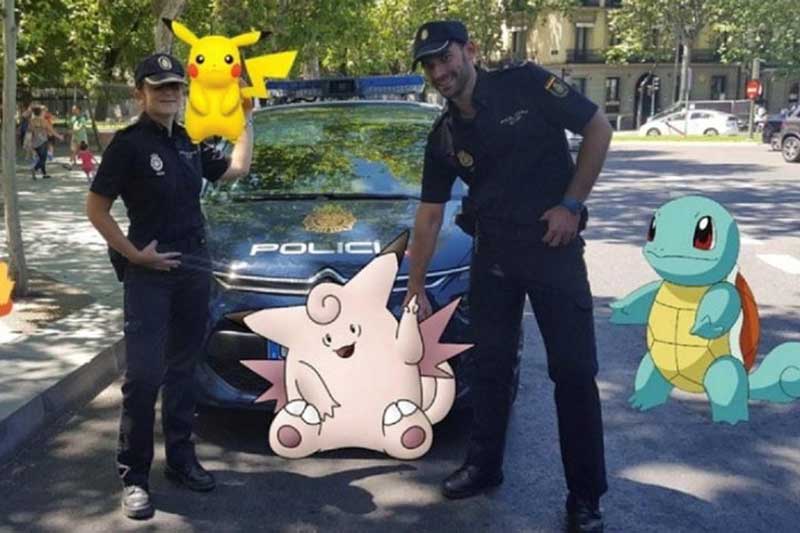 Of course, you know all about it. It has overshadowed all other headline news. It has become everyone’s passion. There’s no escaping it.
No, I’m not talking about the presidential elections, climate change, or global terror. I’m talking about something really important:
Pokemon Go.
If you haven’t heard of it, you probably live in a cave and won’t be reading this anyway. If you don’t understand what it is… well, that’s a different story.
For people of a certain age — not to mention a certain level of maturity and common sense — the latest tech-fad is barely comprehensible. Countless denizens of the virtual world have crawled out of the darkness and into the sunlight to search for animated characters that can only be seen on their cell phone screens in undisclosed locations. By wandering about pointing their phones hither and thither, players find cartoon critters, then take aim and “shoot” to catch their pixilated prey.
As inane as it may sound, the game seems relatively harmless. It also has the benefit of drawing participants off their couches and encouraging them to put their atrophying appendages back into use, sometimes by walking miles in pursuit of quarry. Guided by an all-knowing, all-seeing cosmic GPS mastermind, Pokemon creatures may crop up anywhere, leading players on quests of “augmented reality.”
But is it really harmless?

The Humpty Dumpty Deception
 “When I use a word,” Humpty Dumpty said, in rather a scornful tone, “it means just what I choose it to mean — neither more nor less.”
This would appear to be a powerful statement of personal empowerment and forward-thinking vision. In fact, it is precisely the opposite.
The truth is this: if we don’t master our language, we can’t be masters of ourselves. Because we think in words, sloppy speaking will inevitably produce sloppy thinking. And if we aren’t thinking clearly, then we don’t know who we are, what we believe in, or what we stand for.
Clichés, sound-bites, political correctness — these are all our enemies. The reflexive recitation of words bereft of authentic meaning constitutes much of talk radio, and it may offer a convenient refuge from having to defend our opinions with hard facts and sound reasoning. But we don’t open up lines of communication and cooperation by hiding from clarity and logic.
Verbal interchanges have become so glib, so vapid, and so superficial, that anything short of a complete overhaul of our language will not do. But some popular expressions are worse than others, and here is my short list of the worst offenders, phrases that should be punishable by law.

Which Road Not Taken?

Tel Dan Nature Preserve in northern Israel
I recently read an account of a girls’ high school graduation ceremony. The writer described the collective sigh of resignation that whispered through the assembled relatives and friends as one of the graduate-speakers began by reciting Robert Frost’s classic poem, “The Road Not Taken.” The captive audience seemed to anticipate a predictable excursion along the overly well-trodden road of invoking Frost’s verse as a paean to individuality and non-conformism.
Instead, the writer was pleasantly surprised. Departing from the expected formula, the young speaker argued with Frost’s message by defending those with the courage to walk the well-traveled road of tradition in the face of social pressure to reject establishment and convention. It is indeed refreshing to hear the voice of youth, albeit second hand, recognizing the fallacy of a new conformism that preaches non-conformity — or, even worse, anti-conformity.
However, in my days as a student of literature at the University of California, I learned that Robert Frost is among the most famously misunderstood of poets. The attentive reader discovers that it was never Frost’s style to merely paint landscapes out of words or to render such trite messages as “favor the road less-traveled.” Frost had a sharp, unforgiving eye that focused not on the beauties of nature but upon man’s frequent failure to recognize his own place in the natural world.
And so “The Road Not Taken,” like so many of Frost’s poems, ripples with subtle but troubling inconsistencies. Frost asserts that he chose the road
having perhaps the better claim Because it was grassy and wanted wear.
However, he immediately contradicts himself by declaring,
Though as for that the passing there Had worn them really about the same.
So which is it? Were the roads the same or were they different? And if they were the same, then what did it matter which one he chose?
Frost offers his first clue in his first line:
Two roads diverged in a yellow wood…
 Why did the wood have to be yellow? Since we generally visualize forests as green, would we not expect the wood to be described as emerald, or verdant, or leafy? Why did Frost choose to depict his forest as yellow, the color of the first turning of the leaves with the onset of autumn?
Since Frost is clearly describing not a ramble through the woods but a journey through life, the autumnal image of the yellow wood suggests the last years of middle age, the time when one is set in his ways and resistant to — but not yet incapable of — change. It may be a time when one begins to reflect upon opportunities missed, upon chances not taken, upon the caution that urges the traveler to consider the roads ahead and look
down one as far as I could To where it bent in the undergrowth.
As his choices and options diminish with the anticipated approach of his twilight years, it is here that the traveler through life hopes to catch sight of his final destination before committing himself irrevocably to one path or the other.
Taken thus, the yellow wood represents not the habit of age but the habit of human nature. We favor the familiar, the easy, the undemanding. We resist the unknown, the untried, the untested. When facing decision, human nature prods us along the path of least resistance, the path that poses the least danger, the least challenge and, consequently, the least opportunity for personal growth.

The two roads diverging in Frost’s yellow wood lay equally trodden in absolute terms. But for the narrator, the inclination born of habit predisposed him in one direction, where a different traveler inclined by his own forces of habit might find himself predisposed to take the other path.
And so Frost does not ponder the choice between roads more or less traveled by others, but contemplates which kind of road he has traveled more or less himself. To challenge ourselves with the unfamiliar, to force ourselves to overcome new obstacles, to seek out opportunities to discover new resources of talent, ability, and creativity — these are the pathways that, “somewhere ages and ages hence” will be what “has made all the difference.”
Who is mighty? asks the Talmud. The one who conquers his inclination. Traditionally, we apply this statement to the battle against the desire for physical gratification and amoral self-interest. But perhaps it applies equally well to the inclination of habit and routine. When we fear the unfamiliar, when we refuse to look down new roads for no reason other than because we have never traveled them before, we rob ourselves of the chance to discover the limitless potential with which the Creator has endowed every one of us.
Originally published in 2008 by Aish.com.

Days of Shame
 Five policemen cut down in the line of duty. Two more civilians cut down by errant policemen. A mistrustful population further convinced that there is no one deserving of their trust.
It’s more than a shame. It’s shameful. We need to point fingers, even as we recognize that finger-pointing lies at the heart of our problems.
Maybe there is a way to turn around the blame-game, to turn partisanship into hope of something positive. The only way to begin, however, is to acknowledge how we got here and to ask uncomfortable question of the people responsible… ourselves included.

Spitting Image 5:3 — Visions of Martyrdom
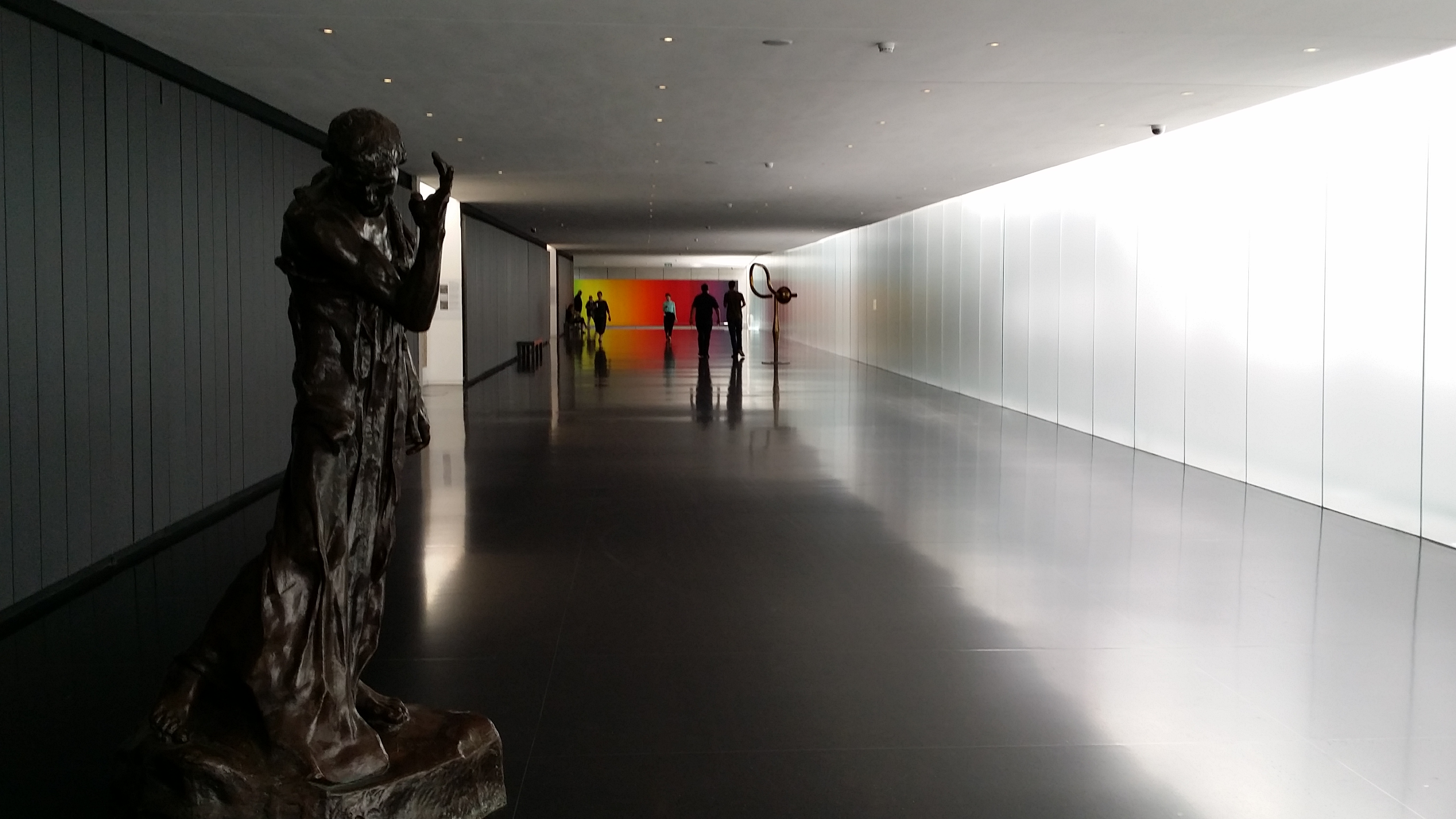
In the vast, austere entry hall to the Israel Museum, with its ultramodern monochrome walls, prismatic focal point, and symbiotic theme of shadow and luminescence, you happen upon a discordant figure: one of the Burghers of Calais, sculpted by the French master Auguste Rodin.
The original sextet of figures represents the city fathers of Calais who surrendered themselves to save their besieged city during the Hundred Years’ War. With heads and feet bare, ropes around their necks, and the keys of the town in their hands, the burghers were brought before the English king Edward III who ordered them beheaded.
Although their lives were eventually spared, Rodin has rendered their images as they prepare to meet what they believe will be their end, their respective expressions spanning the gamut from stoicism to despair.
As jarring as the image may appear in this contemporary setting, the story resonates deeply with ancient Jewish tradition. In the Yom Kippur liturgy, there figures prominently the narrative of the 10 Martyrs, the talmudic sages who received the Heavenly decree that their deaths would atone for the sins of their generation and deflect Divine wrath from their people. They too went to meet their end stoically, but without despair.
Martyrdom is not something we seek, but there are times that call for self-sacrifice of one kind or another. In this generation of selfish individualism, entitlement, and personal autonomy, we can look to the past to remind us that tribalism, senseless violence, and identity politics are all symptoms of a society that has forgotten how to commit itself to a higher sense of purpose, and that only by setting aside our superficial differences can we survive as one people.
Spitting Image 5:2 — Inversion
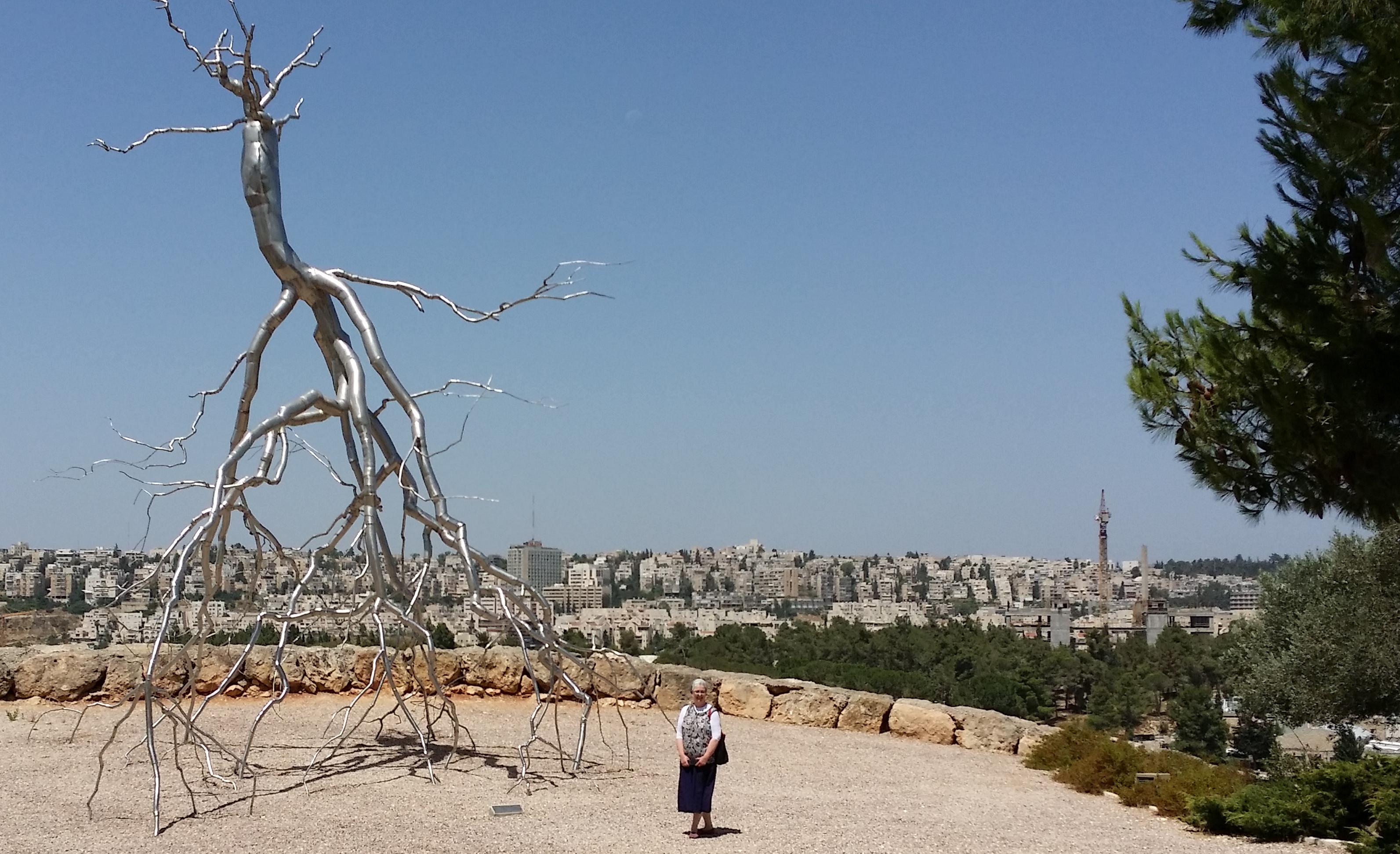
This provocative image from the Israel Museum provides one of the most compelling examples of what modern art can accomplish. Even as the values of contemporary society become more tangled, our priorities more topsy-turvy, our ideals more overgrown with deadwood, and the roots of civilized society increasingly shriveled, it’s not too late to take a fresh look at where we are and where we’re headed.
We just need to look with open eyes and clear minds.
The Talmud compares a person whose wisdom exceeds his good deeds to a tree with many branches and few roots. Ideas that fail to materialize into positive action may be worse than no ideas at all, since they allow us to live in the world of the mind and praise ourselves for our noble intentions while we stand idly by and allow evil to reign.
Only by recognizing the contradictions in our own lives will we be able to turn the world right-side-up again and restore order amidst the chaos.
Spitting Image 5:1 — Writing on the Wall
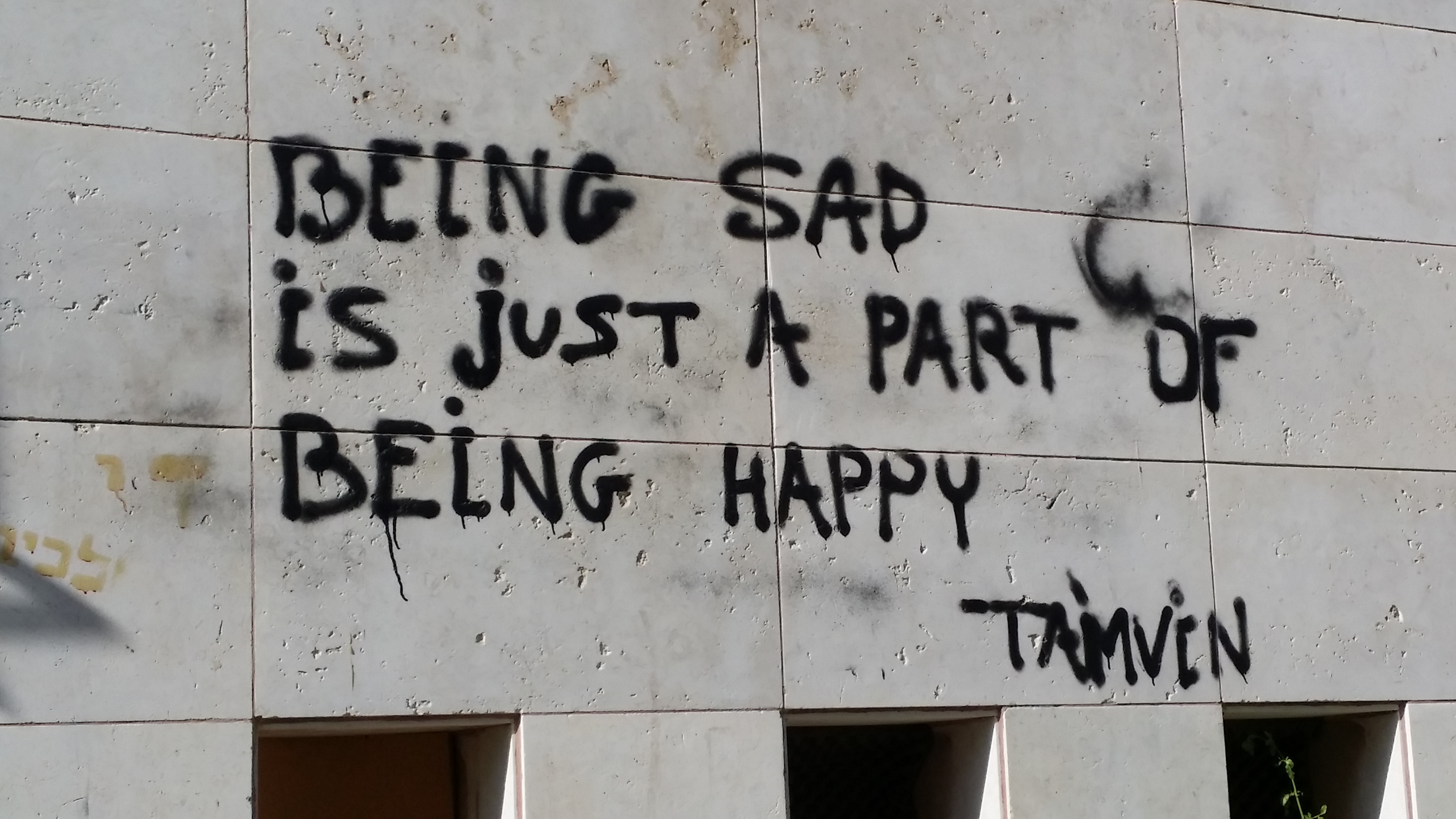 In Israel, even the graffiti aspires to wisdom and spiritual elevation.

The Divided States of America
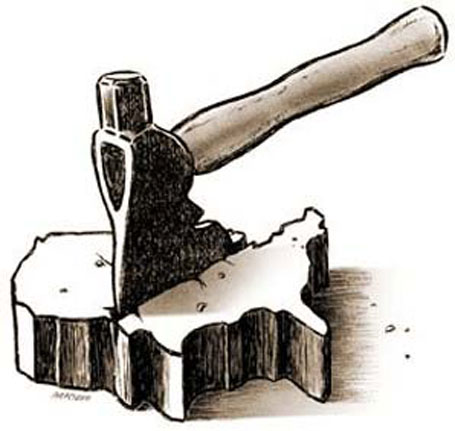 E pluribus unum — Out of many, one.
Such a glorious sentiment, 240 years old this week, destined for the dustbin of history.
In contrast to the vitriol of the broadsheets from two centuries ago — which belied a common commitment to basic, “self-evident truths” — the unfiltered invective filling our airwaves today reveals a wholesale abandonment of common values or, even worse, of any values at all.
With the general election now reduced to a choice between the two most unpopular candidates in American history, the undeniable takeaway is that our population has splintered into four intractable camps, each unwillingly come to terms with any other. Here is a snapshot of who we now are.
What truths do we hold?
 We hold these truths to be self-evident, that all men are created equal, that they are endowed by their Creator with certain unalienable Rights, that among these are Life, Liberty and the pursuit of Happiness.

Are these truths still self-evident, in a nation where all moral and natural boundaries have been worn away, not by the steady march of time, not even by complacency, but by a determined and calculated campaign to redefine standards and values that were once universal?
The great wisdom of the Framers was to recognize that human values shift like the sands of the desert, and that the foundations of any civilization will only endure so long as its people continue to believe that there are higher ideals than individual self interest, that personal and collective sacrifice are necessary for personal and collective prosperity, and that commitment to individual responsibility is the only way to ensure the preservation of individual rights.
Without these, a society will inevitably become a house divided against itself and, as such, will not survive for long.

Radio Interview with Steve Curtis
 More discussion about my recent article in the Times of Israel Blog, “The Danger of Democracy.”
My interview with Steve Curtis of KLZ-AM in Denver ran a full hour segment. Enjoy!
 Yonason Goldson