Home » Education and Childraising (Page 4)
Category Archives: Education and Childraising

Spitting Image 3:2 — Wood nymph with flowers
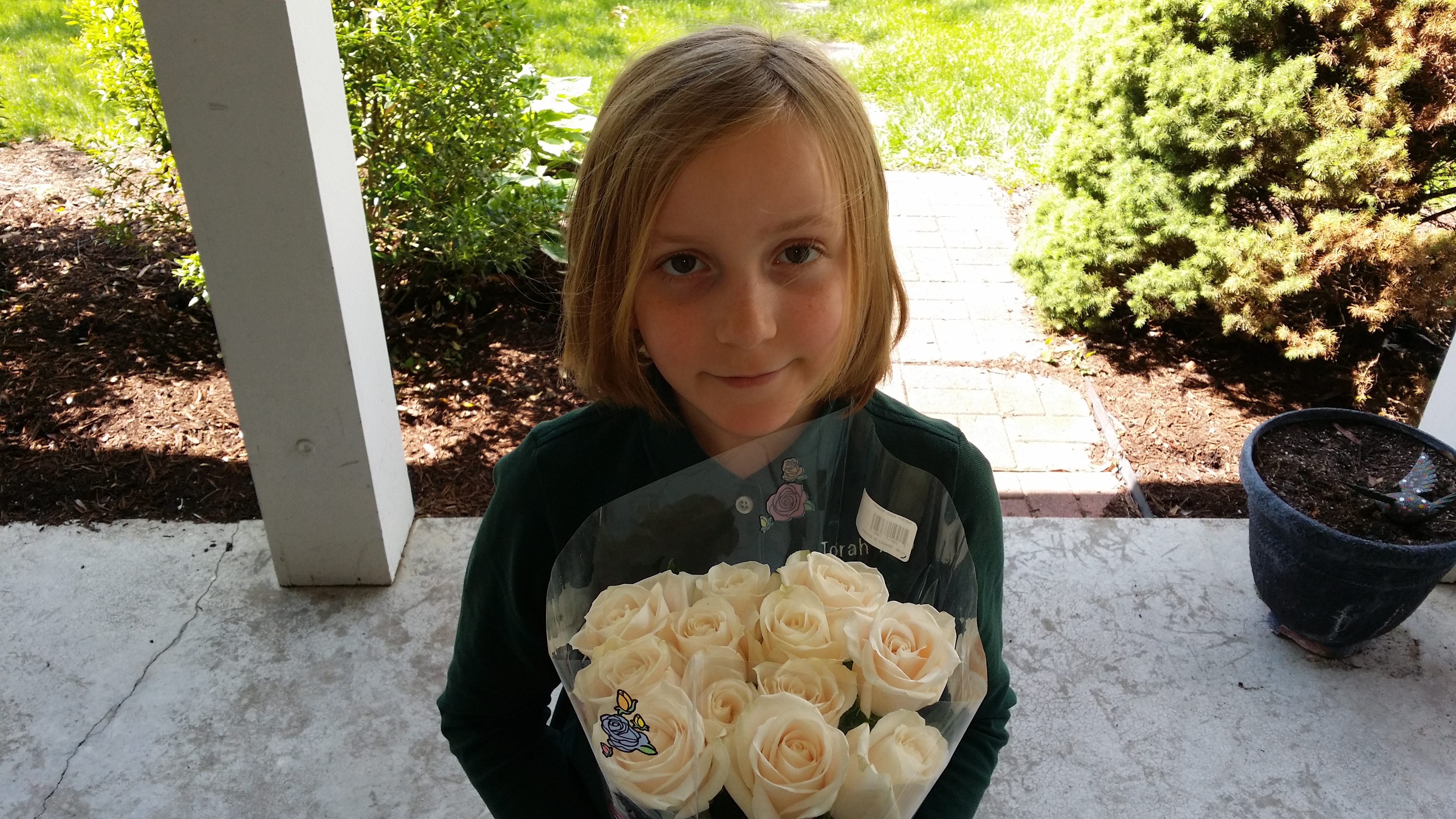
It’s always an auspicious omen when a wood nymph shows up with a gift of fresh-cut flowers on Sabbath eve.

Giving offense vs. taking offense
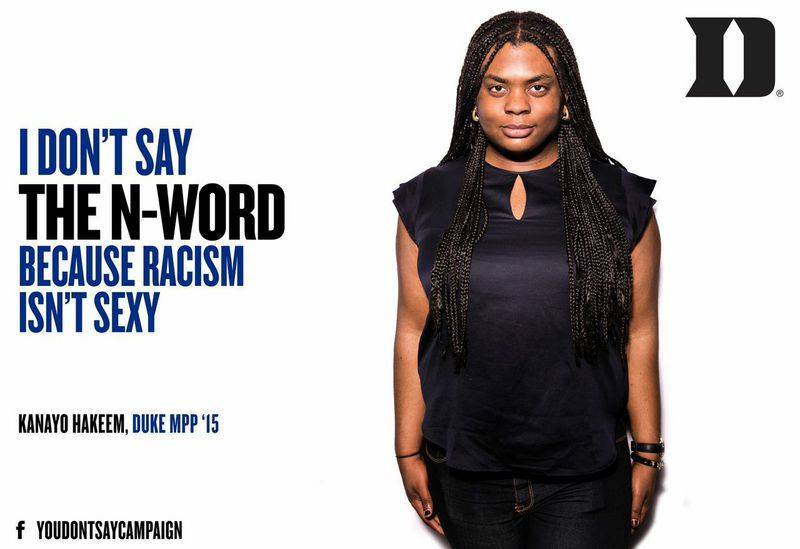 The political correctness police were out in force recently, correctly censuring Larry Wilmore for his use of the N-word and insanely condemning Hillary Clinton for uttering the words “off the reservation,” perceived as demeaning to Native Americans.
Starting with Mrs. Clinton’s turn of phrase, we might as well excise from the the lexicon of acceptability words such as “nosy” because it might offend people with large noses, “insightful” as insulting to myopics, “high-minded” as defamatory of marijuana users, and “thin skinned” for denigrating hemophiliacs. If we want to find reason for taking offense, we can find it everywhere.
The more noteworthy incident was Larry Wilmore’s use of the N-word at the White House Correspondents’ Association dinner, and his directing it toward the President of the United States, no less. Clearly the remark was intended to be affectionate and laudatory, which is how it was taken — without offense.
But that’s not really the point. In a society that is growing simultaneously disrespectful and intolerant of disrespectful speech, we need to elevate public discourse, not sink deeper into the gutter. If the N-word is too offensive to be broadcast — even news anchors reporting the story weren’t permitted to repeat it in quotation marks — then it is certainly unacceptable to be used in the presence of our president or, even worse, said to him.
Frankly, I’m more concerned by the use of President Obama’s first name, and his nickname at that. Maybe Mr. Obama and Mr. Wilmore are on a first-name basis. But in a formal context, such familiarity is utterly disrespectful from anyone other than a spouse, parent, or sibling.
This is the real threat of political correctness. It’s not just that we take offense in all the wrong places. It’s that we lose all sensitivity for the difference between what is respectful and what is disrespectful, we lose all sense of priorities, and we forget that refinement is a value. Nothing matters except the applause, the laugh, the ratings, and the votes.
This is why the same people who took offense at Mrs. Clinton’s use of “off the reservation” have no reservations about her pathological pattern of telling lies and misrepresenting political adversaries.
This is why our political and social institutions are in chaos.
And this is what we are teaching our children.

Why we can’t say what we mean
 A picture is worth a thousand words. Except when it isn’t.
You may have heard of Le Bateau, the work by French avant-garde painter Henri Matisse that hung upside down in New York’s Museum of Modern Art for 47 days back in 1961. Looking at the painting, it’s hard to see why it mattered.
But that’s not the case when we communicate. According to a recent study by the University of Minnesota, the use of emoji — those little yellow emoticons — are almost as likely to cause confusion as they are to evoke the emotions for which they are named.
Interviewing 334 subjects, researchers discovered that people argued over whether emoji communicate positive, negative, or neutral emotions about 25% of the time. That’s a lot of befuddlement for a medium that’s supposed to make communication easier.
Hannah Miller, lead author of the study, told Fortune Magazine that people could solve much of this confusion by “putting emojis in context, adding words into the mix.”
Now there’s a novel idea: use actual words to say what you want to say.
 The problem is, even that doesn’t always help, since the putrefaction of language that has resulted from advertising and political correctness, together with the corrosive influence of texting, has degraded not only our ability to articulate our thoughts clearly but also our capacity for clear thinking altogether.
Whether the deterioration of thought has influenced the deterioration of language or vice versa is the topic of these musings from 2009.

In Memorium
 Today marks the second anniversary of my father’s death. He was a man of unyielding principle and discipline, of meticulous honesty and unwavering standards. He had the ability to create an instant rapport with others and charm them without guile or manipulation, but he never seemed able to completely let down his emotional guard to truly connect. He could be hard, but he instilled in me a code of ethics and integrity that have formed the foundation of my sense of self and my worldview.
I wrote this tribute to him for Father’s Day in 2001:
Honor (is learned from) Thy Father

Alan Rickman and the Heart of Darkness
 I’m not a fan of the Harry Potter movies which, as is so often the case, paled in contrast to the sheer genius of the books. But if there was one portrayal that stood out head and shoulders above the rest, it was Alan Rickman’s pitch-perfect rendering of Severus Snape, the slippery potions-master who tormented Harry Potter throughout his career at Hogwarts while secretly protecting him from harm.
I’ll allow myself to boast that I never doubted Snape’s loyalty, even after he killed Dumbledore at the end of The Half-Blood Prince. Mostly, I trusted the author. J.K. Rowling did a brilliant job of developing Dumbledore’s character from the outset of the series. If Dumbledore trusted Snape, then there was no way Snape could be a traitor.
Reportedly, Alan Rickman turned down the role initially. He thought the character two-dimension and found no challenge in the role. But Ms. Rowling had her heart set on him, and so she revealed to Mr. Rickman what no one else knew yet, that Snape was really Harry’s secret protector, who would ultimately give his life to save the boy from harm.
 So for all those — young and old alike — who missed the books but saw the movies, Alan Rickman brought to life the character who teaches us that no matter how dark someone may appear on the outside, there may yet reside a soul of light and goodness within.
By way of tribute, I offer this return to my recent essay on the wisdom of Harry Potter.
Read the article at: http://www.learning-mind.com/reading-harry-potter/

Affluenza: Nothing new but the name
 Some verbal atrocities are either too offensive or too absurd to ever be forgotten. Like Jonathan Gruber’s candid admission that “the stupidity of the American voter … was really, really critical for [Obamacare] to pass.” Or Brian Williams misremembering that he had been shot down in a helicopter. Or Al Gore’s claim that he invented the internet (although, in all fairness, that was not quite what he said).
But few violations of common sense and common decency compare to that of Jean Boyd, the judge who concluded that probation and rehab were sufficient punishment for Ethan Crouch — after he pled guilty to taking the lives of four people while driving drunk — because he was a victim of affluenza.
Now, two years later, after Ethan Crouch has violated his parole, fled to Mexico with his mother, and finally ended up back in custody, the Washington Post would like us to reconsider whether the diagnosis is really so ridiculous after all. Rallying experts to support his case, Post editor Fred Barbash suggests that affluenza may indeed be an authentic malady, citing ASU professor of psychology Suniya S. Luthar and Barry Schwartz of Swarthmore College:
“High-risk behavior, including extreme substance abuse and promiscuous sex, is growing fast among young people from communities dominated by white-collar, well-educated parents. These kids … show serious levels of maladjustment as teens, displaying … marijuana and alcohol abuse, including binge drinking [and] abuse of illegal or prescription drugs.”[What also stands out] is the type of rule-breaking – widespread cheating and random acts of delinquency such as stealing from parents or peers among the affluent, as opposed to behavior related to self-defense, such as carrying a weapon, among the inner-city teens.”
“[What also stands out] is the type of rule-breaking – widespread cheating and random acts of delinquency such as stealing from parents or peers among the affluent, as opposed to behavior related to self-defense, such as carrying a weapon, among the inner-city teens.”
And finally: Serious depression or anxiety among affluent kids is “is two to three times national rates.”
No arguments from this quarter. But what does not appear in Mr. Barbash’s lengthy commentary is even the most meager attempt to identify why affluence produces teenage miscreants. What is it about growing up with every possible advantage that predisposes so many children to criminally irresponsible behavior?
The answer is quite simple.

Mistaking Identity
 Dennis Prager is at it again, this time with the simultaneously radical and reactionary, bigoted, sociopathic, and really-not-very-nice assertion that transgender people should take names and employ pronouns appropriate to their chosen identity.
Quick! Inside the nearest shelter… the sky is falling. Civil society may never recover.
Okay, yes, I am being sarcastic. Guilty as charged. But sometimes the logical and moral convolutions the politically-correct allow for no outlet other than simple mockery.
But I apologize if I hurt anyone’s feelings. I know it’s terribly bad form these days to speak the truth.
However, it should come as no surprise that the moral boundaries of civil society grow ever blurrier, in this case by design. These winds were already blowing with gale force when I published the following essay back in 2011:
When their third child, Storm, was born, Kathy Witterick and David Stocker announced the birth of their new baby with the following email:
“We’ve decided not to share Storm’s sex for now — a tribute to freedom and choice in place of limitation, a stand up to what the world could become in Storm’s lifetime (a more progressive place? …).”
Needless to say, friends and family alike have trouble understanding Witterick and Stocker’s unconventional approach to child-raising. With stereotyping, bullying, and social stigma inevitable parts of growing up, it’s easy to argue that manufacturing an additional obstacle to healthy social development is hardly in the child’s own best interest.
“Everyone keeps asking us, ‘When will this end?'” says Witterick. “And we always turn the question back. Yeah, when will this end? When will we live in a world where people can make choices to be whoever they are?”
FREEDOM WITHOUT LIMITS
A single family hardly constitutes a trend. But consider the Egalia preschool in Stockholm, Sweden, where staff avoid such culturally loaded words as “him” and “her,” addressing the children as “friends” rather than “boys and girls.” According to the AP, “breaking down gender roles is a core mission in [Sweden’s] national curriculum,” and many preschools have hired “gender pedagogues” to devisestrategies for eliminating “stereotypes.”
 Could they be right? Is sexual identity nothing more than arbitrary social programming? By eliminating every vestige of guidance from a child’s environment might parents actually help him learn to make better choices? Will indoctrinating a child with the conviction that every imaginable alternative is equally viable produce a canny, confident, and even-keeled adult?
Well, would it make travel easier if we uprooted every street sign and tore down every traffic signal? Would it make navigation easier if we burned every map and disabled every GPS?
The hazards of unrestricted freedom often go overlooked in a society that values personal autonomy above all else. But the formula for resolving the tension between individual expression and social boundaries was articulated by King Solomon, the wisest of all men, nearly three thousand years ago.
Hear, my son, the moral guidance of your father,
and do not forsake the teaching of your mother (Proverbs 1:8).
Giving voice to the self-evident truth that men are men and women are women, Solomon alludes to the distinct manner in which a father and a mother each makes a unique contribution to the psychological and ethical development of their child. From the father comes instruction— formal guidance in the ways of moral values and discipline. How to know right from wrong, and how to choose good over evil — this is the kind of wisdom most effectively communicated through fatherly counsel and direction.
Complementing the father’s instruction are the lessons absorbed from the mother, who plays the primary role in creating the atmosphere of personal responsibility and spiritual commitment that should permeate a home. It is mainly through the intangible, unquantifiable influence of the mother that a child develops moral sensitivity. Neither father nor mother can successfully assume the role of the other, for our distinct psycho-spiritual complexions are part of the design according to which the universe was formed.
Parents who refuse to assert moral principles, albeit in the name of tolerance and progressivism, succeed only in making their home an environment of intellectual anarchy that will inevitably lead to confusion and dysfunction later in life.
CHILD-RAISING, TAILOR-MADE
Train a youth according to his way;
even when he grows old he will not depart from it (Ibid. 22:6).
Often cited, correctly, as the source for individualizing education based upon the singular needs of every child, this proverb contains another element often overlooked: the word “youth” — na’ar, in Hebrew — implies immaturity. Truth be told, the majority of us suffer from a sophomoric certitude in the infallibility of our own wisdom. And children are the most susceptible of all to such delusions.
Wanting desperately to believe in their own independence, children seize hold of any excuse, no matter how irrational, to invalidate the wisdom of their parents. Left to his own devices, a youth will steer confidently into the heart of the nearest storm, delighted to be free from the steady guidance of the parent who could have saved him from catastrophe.
Like old wine and fine cuisine, genuine wisdom is an acquired taste, and the immature mind will reject its lessons as surely as the untrained palate will disdain the delicacies of a Cordon Bleu in favor of peasant’s fare smothered in salt and ketchup. But we do our children no favor by making it easier for them to marching confidently over the edge of the nearest precipice. Gentle instruction administered with care and consistency will lay the foundations of moral discernment as a child grows into adulthood.
A WORLD WITHOUT BORDERS
In his famous legal discourse regarding character development, Maimonides writes that “people are influenced by the society in which they live” (Hilchos Dayos 6:1). Among the many dangers of the modern world, none may be as insidious as the attack upon all natural and moral boundaries. Electric lighting pushes away the darkness of night, central air conditioning and heating insulate us from the changing of the seasons, cars and planes shrink the distance between faraway places, and electronic communication eliminates all delay in correspondence and information.
No one is suggesting that we live like the Amish and eschew modern technology. But these inventions are not as innocuous as we wish to believe: in the same way that physical boundaries have been breached, so too have moral boundaries become increasingly blurred and the path of moral conduct ever more difficult to find.
 Respect for traditional family structure continues to erode. The personal conduct of political leaders raises less concern than the carelessness that leads to getting caught. Violent criminals are cast as victims while defenders of life and limb are vilified as exploiters and oppressors. And the role of human sexuality in mental health and social stability is ever more profoundly misunderstood. Political correctness and moral equivalence have so muddied conventional wisdom that young and old alike often fear censure from their peers for daring to judge even the most abhorrent behaviors.
Yes, children need to learn to make their own choices, and today’s helicopter parents who micromanage every aspect of their children’s lives are more likely to produce crippled than capable adults. Nevertheless, we dare not overcompensate by throwing our children into the stormy waters of amorality and expecting them to swim. As Solomon has said, it is only through the guidance and teaching of moral values that we will keep our children afloat, as well as enabling them to navigate their way to safe harbor.
Originally published by Jewish World Review
In Memoriam — Rav Ephraim Oratz
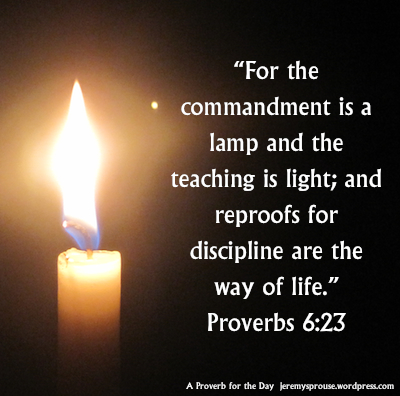 How do you start to describe the one person most responsible for launching you on the path that has defined you for nearly a quarter century?
I never had any great desire to be a classroom teacher until I found myself under the tutelage of Rabbi Ephraim Oratz, whose unparalleled pedagogic genius and vast reservoir of Torah knowledge inspired me to embark upon my career as a rebbe. Whatever I have accomplished in the field of Torah education is primarily because of him.
Rav Oratz was — if I may be permitted to use the term — the ultimate Torah-Renaissance man. He possessed the passion of the Amshinover chassidim, the yekkishe precision of the German Jews, the academic discipline of the Lithuanian scholars, and the worldly nobility of Rav Samson Rafael Hirsch, all rolled up — as Rav Shraga Feivel Mendelovitz would say — into one selfless, total servant of the Almighty.
Rav Oratz was truly of the old school, with countless stories about growing up in the post-depression years, about learning and teaching in the old American day school system, about playing stickball on the streets of New York. He told me once how his father had to go out every Monday morning to find new employment, because his Sabbath-observance cost him his job time and time again. More incredibly, Rav Oratz didn’t learn of this until years later; his parents kept the children in the dark so they wouldn’t feel insecure.
In our coddled generation, that kind of mesiras nefesh — self-sacrifice — is almost entirely forgotten.
Coddling was one term absent from Rav Oratz’s educational lexicon. He understood with every fiber of his being that self-esteem is not given, it is acquired by learning discipline and discovering the joy that comes from struggle and success. He never acknowledged good work with exuberant cries of excellent, fantastic, or well done. Instead he responded with a silent nod, a quick smile, a short nu, nu or, on one extraordinary occasion, with not bad, not bad at all. That was high praise indeed.
Rav Oratz would arrive exactly two minutes before each class, replace his hat with his yarmulke in one smooth, practiced motion, then look inscrutably around the room, which was usually less than half full when it was time to begin. On one occasion, when there were only two of us present on time, he looked at me and asked, “Is something else going on this evening?”
I shrugged my shoulders. Rav Oratz shook his head. “Just one of those things I guess I’ll never understand,” he said.
There weren’t many things Rav Oratz didn’t understand. In two years of classes I never heard him unable to answer a question, although he could hold his tongue indefinitely when he wanted us to come up with the answers on our own.
“Wouldn’t you have hated to have him as a rebbe?” a member of the Ohr LaGolah leadership-training program once commented — after Rav Oratz was safely out of earshot.
“Wouldn’t you love to have had him as a rebbe now?” I shot back.
There’s nothing more inspirational than witnessing a true master do something as well as it can be done. Watching Rav Oratz teach made me want to be a teacher. That was it. My course in life was set, without prompting, without a sales pitch, with just enough encouragement to convince me that I could succeed if I put my heart into it. And I wanted nothing more than to do what he could do, even if I did it only half as well as he could.
“If you aren’t devoted to chinuch,” he once said to us, “please find a different profession. You can make more money doing almost anything else, and there’s no telling how much damage you might do if you go into teaching for the wrong reasons.”
Rav Oratz had little patience for shoddiness, whether in teaching or in life. He had too many stories of classroom incompetence, and followed up one particularly distressing narrative by muttering, “A beheima (animal) of a rebbe.”
He recounted the time one teenager walked into his class wearing tight jeans and his shirt half unbuttoned, his hair slicked back, and “those things” — massive air-sneakers — on his feet.
Rav Oratz: “Have you looked at yourself in the mirror today?”
Student (flustered): “Yeah. Why?”
Rav Oratz: “Did you see tzelem Elokim (the image of God)?”
Student: “Whad’ya mean?
He also taught me my signature phrase. “Of course it makes sense; you just don’t understand it.”
After a few failed attempts, Rav Oratz devised a creative way to cure girls — at least partially — of their feverish note-taking, which generally took the form of compulsive stenography. After saying over the same point five times in his class lecture, he asked one poor girl to read from her notes.
The discomfited student began reading. After a few moments, Rav Oratz interrupted to say, “You just repeated yourself.” Uncomprehending, the girl explained that she was just reading what she had written.
“Okay,” said Rav Oratz, “go ahead.” The student resumed, but only for a moment. “You just repeated yourself again,” interrupted Rav Oratz. Again, the confused girl pleaded that she was only reading what the rebbe had taught.
It took one more volley before another girl hissed, “Ooh, you tricked us!”
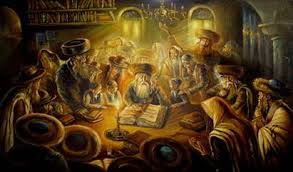 “Now we’re making progress,” Rav Oratz replied. He never wanted to merely teach his students information. He wanted to teach them how to learn and make them love learning so that they would never want to stop.
Then there was his distinctive way of dealing with latecomers. When a student came in during class, Rav Oratz would stop mid-sentence and follow the offender with his eyes until he had taken his place, pause for one beat, then continue where he had left off. Most memorable was the time a student came in only moments after he had explained this technique, allowing him to demonstrate, to (almost) everyone’s delight, and to the latecomer’s consternation.
Subtlety was all to Rav Oratz. When high-school girls questioned the wisdom behind shemiras negiah (the rules of “hands off” between the sexes) and asked why it was such a big deal if boys and girls held hands, his answer was priceless:
“It’s not a big deal at all. But you know it doesn’t stop at holding hands. First he’s holding your hand; then his hand is around your arm; then it moves to your back; then he’s stroking your hair.”
Pause for dramatic effect.
“The same way he pets his dog.”
Pause while girls squirm.
“Nice doggie.”
Pause while making petting motions in the air.
“You want to hold hands? Go ahead. Give him your paw.”
Every word was delivered with dry, dispassionate, clinical objectivity.
Rav Oratz did allow a shadow of emotion to creep over his face when he talked about the resistance of yeshiva administrators to fire drills. “They all have the same rationale,” he would say. “Torah is a shemira. I tell them they can say that after they’ve had to shepherd a class of little children down from the third floor of a smoke-filled building.”
When my first book, Dawn to Destiny, was in pre-production, Judaica Press contacted Rav Oratz and asked him to edit it. The publisher later told me that he was less-than-enthusiastic. But when Rav Oratz learned that the author was a former student, he agreed immediately.
Several weeks later, I called him to discuss his critique. He began by raising an objection to the first sentence of the introduction. This is going to be a long phone call, I told myself. And it was. But the finished product came out so much the better for having gone through Rav Oratz’s trial-by-fire.
It took me 17 years to get back to Israel after completing Ohr LaGolah. At my earliest opportunity, I went to see Rav Oratz and thank him for all he had done for me.
His response was completely in character. “Adaraba,” he said. Just the opposite.
And it was especially sweet when my daughter went off to learn in Israel at Darchei Binah seminary: there’s something indescribable about having your child learn from your rebbe. I imagine that it’s even sweeter to teach the children of your students.
A generation comes and a generation goes; the sun also rises, and it sets. Rav Oratz returned to the yeshiva d’rakiya last Shabbos, moving on to enjoy the rewards of a life devoted to the children of his people. And our world has grown darker as we try to carry the torch and safeguard the light of Torah for the generations yet to come.
May his neshoma have an aliyah and his family be comforted among the mourners of Tzion and Yerushalayim.

A Message to my Son

My oldest son enters the Israeli army this week, motivated by nothing other than a sense of commitment to the security of his people.
It seems fitting to revisit these thoughts, written on the occasion of his bar mitzvah ten years ago.
It’s not difficult to sympathize with the skeptics who questioned the ability of Avrohom Mordechai Altar, then still a teenager, to succeed his father as leader of the Gerrer Chassidim, possibly the most influential Torah community in Poland at the end of the 19th century. But the young scholar, who would grow up to become a great rabbi and author of the Imrei Emes, answered his critics with the following parable.
A small town in an isolated land rested at the foot of a great mountain, a peak so high and steep that all reasonable people considered it unconquerable. From time to time, however, some impetuous youth would set out to climb the mountain. Some of these returned admitting defeat. The rest were never heard from again.
Despite the warnings and prophesies of doom, a certain young man decided to challenge the mountain. Many times he nearly turned back, and many times he nearly met his end, but through sheer persistence he finally reached the mountain top. But he was utterly unprepared for what he found there.
A thriving city of people lived upon a great plateau at the mountain¹s summit. There were houses and farms — an entire community living where everyone believed that no one had ever set foot.
The inhabitants of the mountain top laughed at him when he expressed his astonishment. “Do you think you¹re the first one to climb the mountain?” they chided. “We also reached the top and, having done so, chose to build this town and make our lives here.”
Not yet recovered from his dismay, the young man noticed a small boy, only six or seven years old. This was more than he could believe. “Did you climb all the way up here, too?!” the young man exclaimed.
“No,” replied the boy. “I was born here.”
The youthful rabbi explained to his followers that indeed he was young. But he had been born into a dynasty of great Torah leaders, raised by and taught by the greatest sages of his generation who had in turn been taught and raised by the greatest sages of their generation. True, he was young; but he had been born on a mountain, and from his place atop the shoulders of the spiritual giants who preceded him he would build upon their greatness. In this way would he succeed as a leader of his people.
And so he did.
 Every year, on the sixth day of the Jewish month of Sivan, Jews around the world celebrate the revelation at Sinai, over 3300 years ago, when the Almighty gave us the Torah. It was the Torah that provided the moral and legal foundation that has enabled the Jewish people to build a nation devoted to spiritual ideals, a nation that endured for nearly 1,500 years in its land and nearly 2,000 years scattered across the globe. It was the Torah that introduced the concepts of peace, of charity, of justice, and of collective responsibility to a world that knew no value other than “might makes right.” It was the Torah that formed the basis of Christianity and Islam, spreading monotheism throughout the world and fashioning the attitudes of modern progressivism.
It all began on that mountain called Sinai, and from that point on the Jewish people have labored to climb the mountain of morality and virtue, sometimes succeeding, sometimes failing, sometimes wondering whether our efforts are worthwhile, but always persevering in our mission to attain the summit of spiritual and moral perfection.
Had our mission demanded completion within a single generation, we would never have held out hope of success. But every generation climbs a little higher, building on the accomplishments of their parents and grandparents, fighting for every handhold, struggling for every foothold, occasionally slipping back but never surrendering.
The mission that defines us as a people began 33 centuries ago; it continues today as we recommit ourselves to the study and observance of Torah, and celebrate it on the holiday of Shavuos.
And it was two weeks after Shavuos that I celebrated what happens only once in a lifetime — the bar mitzvah of my eldest son. In his first 13 years of life I did my utmost to teach him that he was born on the mountain, that he has the accomplishments of generations beneath his feet to support him, and that future generations will depend upon him for their support just as he depends on those who went before.
And so it is with every Jewish child. Each has his own contribution to make in the eternal mission of our eternal people. It is the Torah that defines us, the Torah that guides us, the Torah that sustains us, and the Torah that will ultimately bring us to the fulfillment of the spiritual goals for which the Almighty created us.
Climb, my son. Climb and keep climbing toward the top of the mountain.
Originally published by Aish.com.

The Great Divide: Ignorance and Insecurity
Conor Friedersdorf writes in the Atlantic:
 [At Yale University, one] resident declared in a campus publication, “I have had to watch my friends defend their right to this institution. This email and the subsequent reaction to it have interrupted their lives. I have friends who are not going to class, who are not doing their homework, who are losing sleep, who are skipping meals, and who are having breakdowns.” One feels for these students. But if an email about Halloween costumes has them skipping class and suffering breakdowns, either they need help from mental-health professionals or they’ve been grievously ill-served by debilitating ideological notions they’ve acquired about what ought to cause them pain.
This is the reaction of Ivy League students, the best and the brightest, the cream of the crop, the hope for the future, the movers and shakers of the next generation, the political, social, and economic leaders of tomorrow. Their entire world collapses because someone, somewhere disagrees with them.
The depressing irony of the episode is that Erika Christakis’ noble attempt to accord students a greater measure of personal and moral responsibility resulted in the students themselves protesting for — and thereby demonstrating — their own incapacity to take responsibility for their actions on any level at all. Without a trace of embarrassment, academe’s most elite sons and daughters dissolved into a collective hissy-fit because one of their instructors suggested they should be treated as adults.
 Yonason Goldson