Home » Philosophy (Page 9)
Category Archives: Philosophy

The Devil can’t make you do it
 Hey, mom. Post-partum depression got you down? Thinking of leaving your husband? Don’t fight it; just let him go. After all, it’s not your fault.
It’s your hormones. That’s the latest from the world of science. According to psychologist Jennifer Bartz of McGill University, researchers have identified a link between new parents divorcing and low levels of oxytocin.
Whatever the explanation, there seems to be a familiar eagerness by researchers to impose a chemical, as opposed to a psychological, explanation upon human behavior. Scientists often appear to prefer a model that links our choices to biological and evolutionary causes, further disassociating human decision-making from that most obvious explanation — free will.

Article of Faith: Victims and Survivors in Kalamazoo
Last Saturday evening, according to CNN, the Michigan shooter drove through the streets of Kalamazoo for seven hours, firing at eight people in different neighborhoods and killing six of them. In between attacks, he picked up and dropped of Uber passengers without incident.
 “There isn’t a connection that we’ve been able to establish between any of the three victim groups with each other, any of the three victim groups with the defendant,” said Michigan prosecutor Jeffrey Getting.
What could these victims have done to protect themselves? Why were the survivors chosen for life and not for death? The natural conclusion is that the world is a place of randomness, where we are left to the hands of fate without rhyme or reason.
Amidst all the pain and confusion, is there any way for us to confront the presence of evil in our world and the persistent appearance of disorder without retreating into bitterness and despair?
As we mourn and look for answers, I’d like to offer these thoughts from 2009.
Every night, most of us go to bed without questioning whether we’ll wake up the next morning or whether the sun will rise in the east. Every morning, most of us go to our front doors confident that our cars will start, that the trains will run, that our coworkers and customers will be respectively friendly, or sour, or aloof, each according to our expectation based upon experience.
Is this faith? Or is it rather the reasoned projection of logical extrapolation? Or is there a difference?
Over the past two decades, 50% more tornadoes have swept through the state of Illinois than the state of Alabama. Nevertheless, Alabama has suffered many more fatalities. An article in the journal Science has suggested the following explanation: Because people in Alabama tend to share the religious conviction that their destiny is in the hands of G-d, they resign themselves to the inevitability of Divine Providence. In contrast, people in Illinois more commonly believe that they are in control of their own destiny and masters of their own fate; consequently, they are more inclined to take action toward ensuring their own safety and welfare.
If correct, this analysis might imply that faith is vastly over-rated. If dependence upon the Almighty increases the likelihood of an early demise, perhaps we should all reject the notion of faith and conclude that God really does help those who help themselves.
Alternatively, we might re-evaluate our understanding of faith.
 The Hebrew word emunah — commonly translated as faith — is more accurately translated at faithfulness. It is less descriptive of our internal beliefs and more descriptive of our external behaviors. It describes not our feelings but the degree to which our commitment translates into concrete actions. Most significantly, it expresses our conviction that the Almighty keeps faith with us, even when we may fail to keep faith with Him.
Consider the husband on a business trip a thousand miles from home who resists the overtures of an attractive young woman in the hotel lounge, the teenager away at college who leaves a party when hard drugs start passing around, the lowly private who doggedly advances according to orders even when he is cut off from the rest of his company — all these are examples of faithfulness that endures even when human logic and fear of consequences offer no objection, even when peer-pressure urges us to abandon duty and loyalty. These are the truly unsung heroes, who set aside the relentless calling of self-interest and immediate gratification for nothing but the commitment to another person, to a code of honor, or to an ideal.
According to Jewish philosophy, our trust in the Almighty is not the “leap of faith” that comes from believing without logic or reason, but the confidence that comes from knowing that the Almighty has proven His faithfulness again and again over 3,300 years of uniquely supernatural history. It derives not from our faith that everything will turn out the way we want all of the time, but our certainty that everything is guided by Providence, and that the logic behind every divine edict is true and just — even when it is unfathomable to human understanding.
Finally, faithfulness does not require us, nor even advise us, to sit by passively and await the Divine Will to reveal itself before us. Rather, it requires us to act in our own best interest while adhering to the moral laws of God and man.
Almost everyone has heard the story of the clergyman forced to seek refuge on his rooftop by the rising waters of a flood. One boat comes and offers to save him, but he replies, “I have faith in God.” Another boat comes,and then another, but he refuses to accept help. Finally, a helicopter drops down a ladder and warns that they are the last of the rescuers. But the man of the cloth declares, “I have faith in God.”
The floodwaters continue to rise, and the clergyman drowns.
Upon arriving in the next world, he asks why, in spite of his devout faith, the Almighty did not save him. And God replies: “What did you want from Me? I sent you three boats and a helicopter.”
G-d does indeed help those who help themselves. But He ultimately rewards those who remain faithful, who recognize that there is both a time for taking matters into our own hands and a way to do so without compromising our faithfulness to the Master of the Universe. There is a time to live — through determined effort, with honor and dignity and self-respect. There is also a time to die — either when the cost of personal integrity becomes too great, or when one’s time is simply up, no matter how random the events that end a life may appear.
Learning to strike the perfect balance between determined effort and principled resignation is the work of a lifetime. It is also the key to achieving true faithfulness to God while taking comfort in the promise that, despite the illusion of chaos and the very real pain of loss, everything happens for a reason.
Originally published in Jewish World Review

River of Fire — More than just a Legend?
 According to Jewish history, the Assyrian King Sancheriv exiled the ten lost tribes of Israel around 6oo BCE and scattered them throughout his kingdom.
According to legend, the tribes were taken to a land on the far side of the Sambatyon River, which raged with a current so violent that it could not be crossed and, by some accounts, burned with fire.
Needless to say, a river of fire must be a fabrication of pure mythology.
But not if you ask Andrés Ruzo. In a recent Ted Talk, Dr. Ruzo describes how he followed a family folktale deep into the Amazon forest to discover a river fed by a geothermal hot spring with an average temperature of 86 degrees Celsius.
(Not quite boiling, but much hotter than your extra-hot coffee, which is about 60 degrees.)
Modern technology allows us to do things that were once the realm of science fiction and sorcery. Modern discoveries are showing us that the legends of the past may have more truth to them than we ever imagined possible.

The Midpoint of the World
As we finally enter the voting season with the Iowa caucuses, I’m drawn back to these thoughts from 2013 on who we are and where we are headed. If hindsight is 20/20, why do we keep making the same mistakes over and over again?
 What would you ask of a time traveler from a hundred years ago? And if you traveled a hundred years into the future, what would you want to tell the people you found there? Perhaps it would sound something like this:
What did you do to handle the overpopulations we predicted? How did you protect the seashores? What did you do to keep the ozone layer intact, the energy supplies, the trees? Have you eliminated ignorance, brutality, greed?
There might be no better way to discover unexamined truths about ourselves then by composing a letter to our grandchildren’s grandchildren. This was certainly on the mind of award-winning essayist Roger Rosenblatt a quarter century ago when he penned his deeplythoughtful Letter to 2086:
This letter will be propped up in a capsule at the Statue of Liberty, to be opened on the statue’s bicentennial. Go ahead. Undo the lock. I see your sharp, bright faces as you hoist us into your life, superior as cats to your primitive elders. Quaint, are we not? Beware of superior feelings. The message is in this bottle.
As a student of Jewish philosophy, I don’t believe in coincidences. So when my neighbor — out of the blue — handed me a long forgotten back issue of Time Magazine, the cover article by Mr. Rosenblatt resonated with the faint echo of providence. And although the intended audience still reside three generations in the future, this letter offers a tantalizing window into the past, as well as an illuminating perspective on how much has changed and how much has remained the same.
Click here to read the whole essay.

My interview on Solomon Success
Great minds think alike, and Jason Hartman has a website and podcast exclusively devoted to the practical lessons of King Solomon’s wisdom.
Listen to my interview with him here.

The Failure of Freedom
 For those who care enough to learn the lessons of history, the echoes of the ancient past can be heard clearly amidst the discord of the chaotic present. If we want to understand the crisis of political leadership that plagues our country and our world, we have only to look back to earliest records of national governance, nearly 3000 years ago.
It was the 9th Century Before the Common Era. 391 years had passed since the Children of Israel first entered their land. For nearly four centuries, Jewish society had been plagued by divisiveness, political instability, and spiritual ambivalence. But at last, after the prophet Samuel spent his entire career teaching the Jews to more deeply respect the law and inspiring them to more profoundly appreciate their national mission, the people united in response to his invocations and dispatched emissaries to ask:
“Appoint a king to rule over us like all the other nations” (1 Samuel 8:5).
Seemingly, the Jews had finally come to their collective senses, recognizing that all their political and social strife stemmed from a pervasive national attitude in which “every man did what seemed right in his own eyes” (Judges 21:25). Without a strong executive office to pilot the ship of state, without a single voice of authority to bind many into one, the tribes of Israel remained a disconnected confederation of individuals who joined forces only when necessary and turned against one another whenever self-interest clashed with national purpose and identity.
240 years ago, another attempt was made to create a new nation, conceived in liberty, and built upon guiding principles of equality and justice.
Today, that same nation, blessed with more power, prosperity, freedom, and opportunity than any in the history of the modern world, confronts a political system crippled by bloat, inefficiency, and corruption. At a moment in time when we desperately need inspired leadership, we face a contest between a socialist and a sociopath in one party, a narcissist and a curmudgeon in the other. And while the frontrunners serenade us with siren-songs of high-sounding dreams and visions — all deeply divorced from reality — the few aspirants who attempt to set forth concrete policy proposals and plans of action wallow in low single digits.
Why is the electorate so eager to embrace the illusion of leadership and so unwilling to recognize the real hope of positive change?

The Monty Hall Problem: Unlocking the Doors of Destiny
 I can sleep at night again, now that I have resolved one of life’s most perplexing mysteries. All is well with the universe once more.
What is the persistent question that for so long stole my peace of mind? It is the riddle of Monty Hall and the goat behind Door Number Three.
The so-called Monty Hall problem is a counter-intuitive statistics puzzle that goes as follows: You have to choose one of three doors. Behind one you will find a car; behind each of the others, you will find a goat. You pick Door #1, hoping for the car, of course. Monty Hall, the game show host, narrows your choices by opening Door #3 to reveal a goat. Then Monty offers you a choice: you can stick with your original door or switch to Door #2.
What should you do? Simple logic suggests that there is no advantage to switching doors. With the elimination of Door #3, your odds improve from one-in-three to even-money. It shouldn’t matter whether or not you switch: either way, you will still have a 50-50 chance.
But here human logic fails. By switching doors, you increase your odds from even money to two-thirds.
HERE’S WHY IT WORKS, AND WHAT IT MEANS TO US:
http://www.learning-mind.com/the-monty-hall-problem/

The Second Amendment and the Oral Law
 As president Obama embarks upon his latest unilateral campaign to repair the world, this time by expanding restrictions on gun ownership, it’s worth revisiting my article on the Second Amendment from 2010.
Perhaps the greatest danger to the Constitution is manipulating its words to validate predetermined conclusions. By doing so, we violate the talmudic admonition against making the law “a spade for digging,” i.e., a tool to advance our own ends.
To preserve constitutional integrity, we have to familiarize ourselves with the context of its times, then apply those observations to the times in which we live. That only works when we are committed to honoring the system, rather than exploiting the system to fit our own agenda.
Last month’s Supreme Court ruling affirming Second Amendment states’ rights (and coinciding with the predictable Republican grilling of Supreme Court nominee Elana Kagan over the same issue) has brought back into the spotlight the constitutional ambiguity regarding gun ownership in the U.S. of A.
A well regulated Militia, being necessary to the security of a free State, the right of the people to keep and bear Arms, shall not be infringed. So states the Second Amendment to the United States Constitution. At first glance, the stipulation seems clear enough. American citizens may own guns, plain and simple.
 Or maybe not. The qualifying phrase that introduces the amendment appears to restrict constitutional protection to dependence upon a militia, or citizen army, to defend the nation. Accordingly, in times such as ours, when a standing army has assumed responsibility for the common defense, there may be no constitutional guarantee at all. And so, on second thought, the amendment seems to clearly limit the extent of private gun ownership.
Or, again, maybe not.
Perhaps the Founding Fathers meant that, since every citizen ultimately owns an equal share of the responsibility to defend his country, the right to bear arms is part and parcel of each person’s national duty to fight for the public welfare should the need ever arise. This would explain why the authors of the amendment might have mentioned a militia even if they never meant to restrict said right.
So what was the original intent of the Framers? If they were here, we could ask them. Since they are not, each side seems to have a fair and reasoned claim to support its respective position.
Is there any way to resolve the question of what was intended by men who passed away long before our grandfathers were born?
In fact, there may be.
THE REST OF THE STORY
Imagine that, as you pass by a window, you see a man wearing a mask raise a knife and plunge it into the chest of another man lying prone beneath him. You scream for the police, certain that you have just witnessed a murder.
Or, yet again, maybe not.
Now imagine that you were unfamiliar with the concept of open-heart surgery. Only after the police arrive and explain that the man in the mask is a surgeon working to repair the heart of the man on the table beside him will you understand that he is in fact saving a life and not taking one.
Context is everything. It orients us in time, space, and circumstance, transforms isolated acts into links in a chain of connected events, none of which can be understood in isolation. And so, if the words of our forebears sometimes appear to us muddled or imprecise, the surest way to achieve clarity is to examine comments and opinions from the same thinkers and the same era.
 Here are a few examples to provide historical context:
James Madison, on the principle of individual rights: [A bill of rights] should more especially comprise a doctrine in favour of the equality of human rights; of the liberty of conscience in matters of religious faith, of speech and of the press; of the trial by jury… of the writ of habeas corpus; of the right to keep and bear arms.
Massachusetts Representative Fisher Ames: The rights of conscience, of bearing arms, of changing the government, are declared to be inherent in the people.
Supreme Court Justice James Wilson, contributor to the drafting of the Constitution:The defense of one’s self, justly called the primary law of nature, is not, nor can it be abrogated by any regulation of municipal law.
Vice President Elbridge Gerry, signatory to the Declaration of Independence, on national defense: What, sir, is the use of militia? It is to prevent the establishment of a standing army, the bane of liberty.
In the context of the times, the intention of the Framers becomes difficult to debate. Only in relatively recent times, when the concept of a militia has become an anachronism, has it become possible to question the true meaning of the Second Amendment.
PRESERVING THE INTEGRITY OF THE LAW
Is there any way for words to retain their clarity despite the persistent evolution of cultural references and values? Is there any method for protecting ideas from the ravages of changing times and sensitivities?
Indeed there is. It predates the United States Constitution by 31 centuries, and it is called the Oral Law of the Torah.
Consider these biblical commandments:
Remember the Sabbath Day and keep it holy… And this will be a sign upon your arm and a remembrance between your eyes … Slaughter your [livestock] in the manner that I have prescribed… Do not seethe a kid in its mother’s milk.
 These precepts, as they are written in the Torah, are impossible to observe. What does it mean to keep the Sabbath “holy,” and what actions — if any — are required to “remember” it? What kind of sign are we to place upon our arms, if elsewhere the Torah prohibits the application of any tattoo, and how do we place a “remembrance” between our eyes? Nowhere does the Torah outline any prescription for ritual slaughter, nor does it imply what is commonly understood, that that the prohibition against cooking a baby goat in its mother’s milk extends to every mixture of meat and dairy products.
In spite of these and many other ambiguities, the basic practices of the Torah observant community have remained essentially unchanged for over 3300 years. The explanation is simple. Unlike the family encyclopedia which once gathered dust on the shelf and now gathers dust on the CD rack, the Oral Torah forces every committed Jew to see himself as custodian of a living tradition that connects him with the origins of his identity and enables him to live in the modern world without compromising the values of his ancestors.
No longer purely oral, the discussions and debates of past authorities have been recorded for their children in the writings of the Talmud and the commentaries that elucidate them. Unlike the records left behind by the Framers of the Constitution, however, these records have become canonized as part of the structure and process through which Jewish law is determined in each and every generation. Even when questions and disagreements arise, there is no debate within the Torah community over the methods through which answers and solutions are to be found.
Society changes, technology changes, and the values of human beings twist in the winds of time like a weather vane spinning before a storm. Electricity, automobiles, computers, cloning, and in vitro fertilization may have once been unimagined, but we have inherited a legacy that teaches us how those earlier generations would have resolved the problems of our changing world if they were here themselves today. And so the Torah Jew never loses his bearings, for he is guided by the words of his forefathers and finds comfort in the knowledge that the ancient wisdom of the Torah will never become stagnant, corrupted, or out of date.
As my teacher Rabbi Nota Schiller often says, the Oral Torah allows the Jews to change enough to stay the same.
Originally published by Jewish World Review

Why do we Cry? The Psychology of Tears
 My dog died. I just got engaged. An earthquake leaves thousands homeless. “Time in a Bottle” comes on the radio. I passed my college physics exam. My best friend has leukemia. My daughter just gave birth to twins. Another senseless terror attack takes innocent lives. Jimmy Stewart’s friends and neighbors all rally to his defense at the end of “It’s a Wonderful Life.”
It would be hard to compose a more random grouping, would it not? Taken individually, the items on this list seem so far removed from one another that anyone having the same emotional response to every one of them might reasonably be diagnosed as schizophrenic.
Well, maybe schizophrenic is what we are, since any of them could send any of us into a spell of sniffles, if not outright sobbing.
Which has to make us wonder: why do we cry? We all know when we cry.
We cry when we’re sad, and we cry when we’re happy. We cry when we’re lonely, when we’re in pain, when we hear bad news, and when we hear good news. We cry when we’re so overwhelmed with work or debt or family or life in general that we can no longer cope, and we cry when we’re so filled with joy that we want hug the world.
But what do all these highs and lows have in common? And why is crying our natural, involuntary reaction to emotional intensity?
Read more at: http://www.learning-mind.com/why-do-we-cry/

Free Judea Under Shimon Maccabee
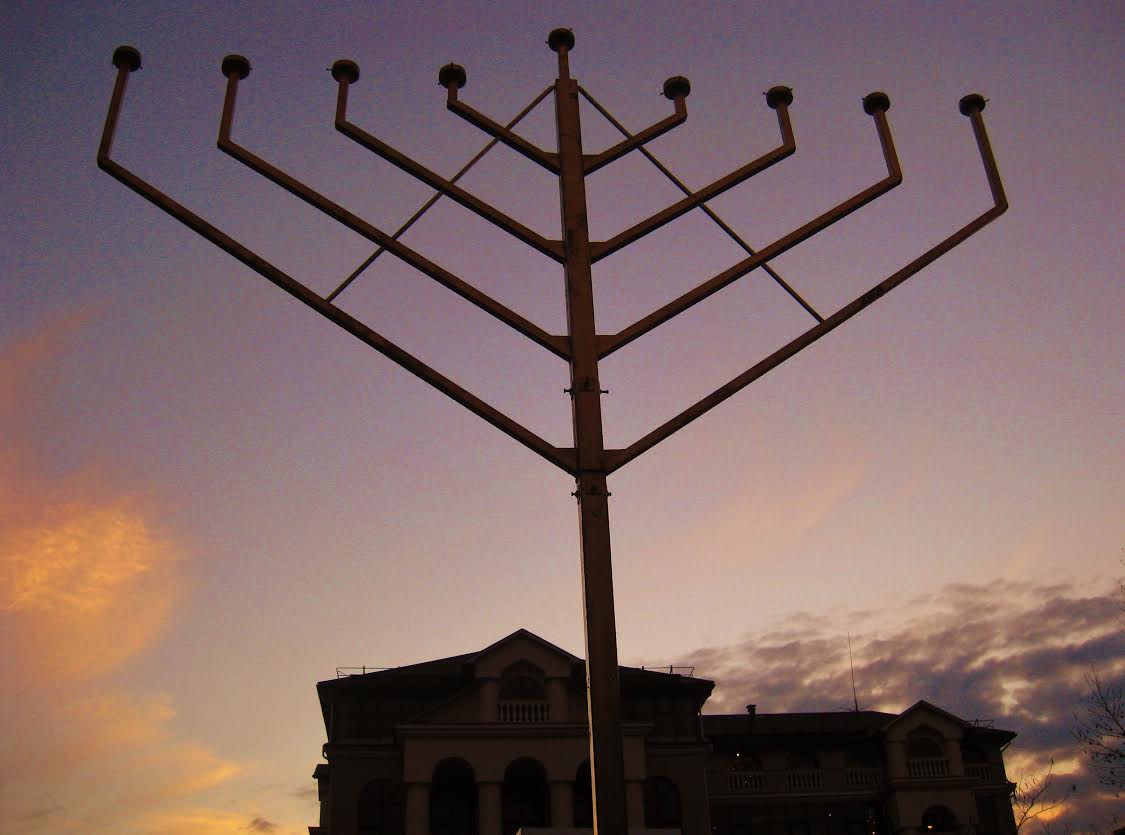 Virtually everyone has learned about the miracle of Chanukah and the rededication of the Temple in Jerusalem. But the tumultuous 22 years between the Hasmonean victory over the Seleucid Greek army and the establishment of an autonomous Jewish state are not nearly so well known.
In 165 BCE, the same year that the Maccabees recaptured the Temple, Demetrius I succeeded Antiochus IV as ruler of Syria. Immediately, the new monarch sought to consolidate his forces with the soldiers still garrisoned in Jerusalem and with the Hellenist Jews still determined to resist the authority of a Torah government.
The early success of the Maccabees evaporated before the renewed Syrian onslaught. Eleazar, eldest brother of Judah Maccabee, was the first Hasmonean casualty of war, crushed beneath the elephant he believed was carrying the king as he drove his sword upward into its belly during the battle of Beis Zecharyah. Only a year later, after defeating an army ten times greater his own and slaying the Seleucid general Nikanor, Judah Maccabee himself fell in battle as he attempted to defend Jerusalem with only 800 men. Both the capital and the Temple were lost, and Demetrius appointed Bacchides, a particularly cruel Seleucid officer, as governor over Judea.
CRISIS AND RECOVERY
After Judah’s death, his brother Jonathan assumed command of the Jewish resistance. Vastly outnumbered and in retreat, Jonathan prepared his army to flee across the Jordan river, where he hoped to reorganize his forces. Before he had completed the operation, however, enemy soldiers discovered and surrounded his hideout. Jonathan barely escaped with his life, while his brother Yochanon was captured and killed.
With his forces too weak to mount a conventional assault, Jonathan returned to the guerrilla tactics of the early Hasmonean revolt. Gradually, he rebuilt his strength until his own army attained parity with the Seleucid forces. Recognizing that Bacchides had lost the will to fight, Jonathan took advantage of the stalemate and dispatched messengers with offers of peace. Bacchides accepted, and Jonathan established himself north of Jerusalem in the village of Michmash, the early home of Saul, first King of Israel.
 Five years later, an attempted coup against Demetrius back in Syria provided Jonathan with the opportunity for which he had long been hoping. Preoccupied with his own fight for survival, Demetrius posed no threat at all as Jonathan advanced to seize Jerusalem and began refortifying the city’s defenses. Jonathan continued to monopolize on the fractious Seleucid government, playing Demetrius and his rival, Alexander Balas, one against the other. In short order, Jonathan secured his position in Jerusalem and reclaimed his hereditary position as High Priest in the Holy Temple. As the political situation in Syria deteriorated, Jonathan continued to expand his control over Judea.
TREACHERY AND REPRISAL
But Jonathan’s successes in diplomacy ultimately led him too far. When Tryphon, a new king in Syria, marched against Jerusalem, he found Jonathan waiting for him at the head of a much larger army of 40,000 men. Recognizing that he had no hope of victory, Tryphon convinced Jonathan to meet with him in Akko, where he captured Jonathan and subsequently murdered him.
After 17 years of Jonathan’s leadership, his brother Shimon, the last of the five Maccabean brothers, took his place as leader over Judea. In response to Tryphon’s treachery, Shimon threw his support to Tryphon’s rival, Demetrius II. In appreciation, on the 27th day of Iyar, 3619 (142 BCE), Demetrius formally exempted the Jews from their annual tribute and declared Judea fully independent, recognizing Shimon as its sovereign. Twenty-two years after the miracle of Chanukah, the Jews finally gained political autonomy for the first time since the era of the First Temple.
In the course of his rule, Shimon secured the boundaries of his tiny kingdom, repulsed an attack by Antiochus VII of Syria, and led his people into one of the greatest periods of prosperity of the Second Temple era.
Shimon’s own end was less glorious. He was assassinated by his son-in-law, Ptolemy, in the seventh year of his reign. Ptolemy’s ambitions profited him nothing, however, since Shimon’s son Yochanon drove him out of the kingdom. But Ptolemy did succeed in bringing the last of the sons of Mattisyahu to a violent death.
For the family who restored glory to the Jewish people, drove out the Selucid oppressors, resisted the corrosive influence of Hellenism, and returned the divine service to the Temple in Jerusalem, we hardly would expect such an inglorious end. We would also not expect such a mixed legacy: Shimon’s son and grandson both allied themselves with the heretical Sadducees; his great-grandsons began a civil war that resulted in the beginning of Roman rule over Israel and produced the bloody reign of Herod.
Where did the Hasmoneans go wrong?
THE DIVINE RIGHT OF KINGSHIP
Before his death, the Jewish patriarch Jacob prophesied that, “The scepter shall never depart from Judah,” meaning that no tribe other than Judah would ever rule legitimately over the Jewish people (Genesis 49:10). The reputation of Judah Maccabee as a brilliant general and an inspired leader remains unimpeachable. But from the moment he drove the Greeks out of Jerusalem, Jewish law required him to petition the Sanhedrin straight away for the appointment of a permanent leader from the dynasty of David. By retaining national leadership for himself and establishing a precedent followed by his brothers and their descendants, Judah sentenced the Hasmonean line to a destiny of one tragedy after another, until nothing remained but the memory of former greatness.
 There is another, deeper reason for the inevitable downfall of the Hasmonean dynasty. As members of the priestly kohanim,the Hasmonean family had their mission within the Jewish nation defined by the Torah as purely spiritual. Unlike the large majority of Jews who must strive to balance the pursuit of spiritual ideals with involvement in the material world, kohanim have no occupation other than Divine service and no portion in the Land of Israel other than the Temple itself.
Conversely, the kings, whose royal line descends from David himself, live a life of opulence and luxury, through which they endeavor to achieve an absolute synthesis of spirituality and materialism.
By shouldering the mantle of kingship, perhaps not in name but undeniably in practice, the
Hasmoneans encumbered themselves with the burden of kings — to harmonize the physical and the spiritual — obligating themselves in a service diametrically opposed to the austerity demanded by their intrinsic nature as priests.
Unable to succeed simultaneously as kohanim and as kings, the Hasmoneans condemned themselves to failure and, ultimately, self-destruction when they did not return the leadership of the Jewish nation to its rightful heirs, the descendants of the dynasty of David, the true kings of Israel.
 Yonason Goldson