Home » Politics (Page 12)
Category Archives: Politics

Giving offense vs. taking offense
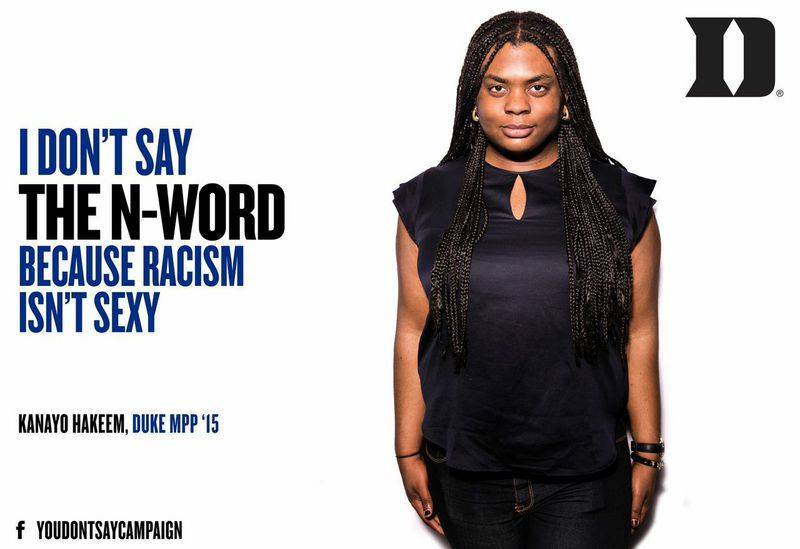 The political correctness police were out in force recently, correctly censuring Larry Wilmore for his use of the N-word and insanely condemning Hillary Clinton for uttering the words “off the reservation,” perceived as demeaning to Native Americans.
Starting with Mrs. Clinton’s turn of phrase, we might as well excise from the the lexicon of acceptability words such as “nosy” because it might offend people with large noses, “insightful” as insulting to myopics, “high-minded” as defamatory of marijuana users, and “thin skinned” for denigrating hemophiliacs. If we want to find reason for taking offense, we can find it everywhere.
The more noteworthy incident was Larry Wilmore’s use of the N-word at the White House Correspondents’ Association dinner, and his directing it toward the President of the United States, no less. Clearly the remark was intended to be affectionate and laudatory, which is how it was taken — without offense.
But that’s not really the point. In a society that is growing simultaneously disrespectful and intolerant of disrespectful speech, we need to elevate public discourse, not sink deeper into the gutter. If the N-word is too offensive to be broadcast — even news anchors reporting the story weren’t permitted to repeat it in quotation marks — then it is certainly unacceptable to be used in the presence of our president or, even worse, said to him.
Frankly, I’m more concerned by the use of President Obama’s first name, and his nickname at that. Maybe Mr. Obama and Mr. Wilmore are on a first-name basis. But in a formal context, such familiarity is utterly disrespectful from anyone other than a spouse, parent, or sibling.
This is the real threat of political correctness. It’s not just that we take offense in all the wrong places. It’s that we lose all sensitivity for the difference between what is respectful and what is disrespectful, we lose all sense of priorities, and we forget that refinement is a value. Nothing matters except the applause, the laugh, the ratings, and the votes.
This is why the same people who took offense at Mrs. Clinton’s use of “off the reservation” have no reservations about her pathological pattern of telling lies and misrepresenting political adversaries.
This is why our political and social institutions are in chaos.
And this is what we are teaching our children.

Passover, Freedom, and the War on Culture
 The responsibilities of freedom, the history of freedom, and the culture wars that threaten the values and the foundations of civilization.
Listen to my interview on the Bill Martinez show (interview begins at 33:00).

Taking Pride in Prejudice
 Prejudice [prej–uh-dis]. Noun. 1. an unfavorable opinion or feeling formed beforehand or without knowledge, thought, or reason. 2. any preconceived opinion or feeling, either favorable or unfavorable. 3. unreasonable feelings, opinions, or attitudes, especially of a hostile nature, regarding an ethnic, racial, social, or religious group.
According to these definitions from Dictionary.com, it’s clear that there are two essential components to prejudice: first, it is a form of opinion, not fact; second, it must be unreasonable or preconceived.
Please follow closely here: this implies that, for any opinion to avoid being prejudicial, the one holding that opinion must be able to articulate three things: 1) why he believes his opinion is correct; 2) why those who believe otherwise think they are correct; and 3) why those with whom he argues are wrong.
This is a matter of simple logic. First, if I can’t explain what I believe, then my beliefs are — by definition — prejudicial. Second, if I can’t explain someone else’s opinion, then rejecting that opinion is — also by definition — prejudicial. And third, if I can’t explain why I disagree with someone else’s opinion, that is — again, by definition — prejudicial.
But who am I kidding? We live in a world of sound bites and slogans, a world in which image trumps substance, in which feelings trump logic, in which the loudest voice drowns out all opponents and the most inflammatory rhetoric attracts the largest audiences. The new morality that rages against prejudice is mostly smoke-and-mirrors; indeed, the people who cry out against prejudice the loudest are the most prejudicial people of all.

Panama Papers: the New Ashley-Madison

Photo Credit: Kacper Pempel
So now it all comes down to Costa Rica.
With the American elections devolving into the absurdity of a bad reality-show, it has become simply too embarrassing to continue living in the United States. When Ted Cruz starts to look moderate and even-keeled in comparison to every other viable candidate, you know it’s time to find a new place to live.
Of course, Israel would be my next choice. But I have two children living in Israel now, and the last thing twentysomethings want is for mom and dad to move in down the street while they’re trying to discover who they are and decide what they want to do when they grow up.
(The fact that I’m still trying to figure out what I want to do when I grow up does not make things better.)
I could move to Canada, of course, but fleeing across the northern border is such a cliche I wouldn’t be able to live with myself. And Mexico is too risky; after all, what happens if I decide I want to come back and Donald Trump won’t let me in?
Europe is in chaos, Asia is too crowded, Africa is too hot, and Australia is too close to the South Pole. Brazil and Venezuela teeter on the brink of catastrophe, threatening to pull the entire South American continent down with them.
So I found myself left with only two possibilities: Panama and Costa Rica. But after last week’s headlines, Panama is off the table as well.
The revelations in the Panama Papers have exposed a dark side of human nature almost beyond human imagination.

Political Correctness: the root of all evil
 Dear Future President:
If you want to fix the country, you can start with the root cause of all that ails our country:
Political Correctness.
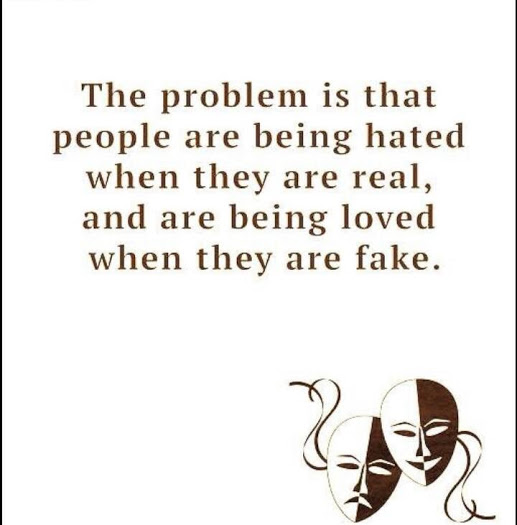
The truth is that political correctness is not a new idea at all; it is simply the new label for an old, established moral postulate once accepted by all.
The word civility shares its linguistic root with the word civilization. It means taking into consideration the comfort of others before expressing what I think or doing what I want. It means remembering that other people have rights before I assert my own. It means reflecting upon how my actions are going to affect my community and recognizing that I have a responsibility to a society that is more than the sum of autonomous individuals.
So what was wrong with the term civility that the concept needed rebranding as political correctness? Most likely, it was the connotation of political ideology that spawned this illegitimate offspring of cultural nobility.
In this series, professionals provide advice for the next U.S. president.
#nextpresident

Why do we think so?
 We think so because all other people think so;
Or because—or because, after all, we do think so;
Or because we were told so, and think we must think so;
Or because we once thought so, and think we still think so;
Or because, having thought so, we think we will think so…
Henry Sidgewick

Who we are not
 So here we are again, contemplating a general election that will give us a choice between the lesser of two evils. And the likely options look to be more noxious than any we’ve ever had to face.
Everyone is asking the same question: how did we get here? And the bad news — which is old news — is that negative advertising works.
But why does it work? Everyone hates it, everyone complains about it, everyone laments the decline of civility, the widening of the political divide, and the incurable blight of ideological gridlock. So why do we continue to respond to the very thing we can’t stand in a way that makes it keep getting worse?
A new study may offer a glimmer of explanation.

Spitting Image 2:6 — The FBI vs. Apple: Lessons Learned
 Good news, everybody! The FBI has found a workaround to break into the iPhone of suspected San Bernardino terrorist Syed Rizwan Farook, and the Department of Justice is backing down from Defcon 1. So now that the crisis is averted, what are some practical lessons we can learn about confrontation and conflict resolution?
Here are a few suggestions:
Both sides might be right. The FBI and Apple each claimed national security as its top concern. The FBI was thinking short-term — stop more terrorist attacks now; Apple was thinking long-term — don’t make ourselves vulnerable later. It’s entirely possible that both parties were sincere and correct.
So here’s the first takeaway. Until evidence proves otherwise, assume positive intent. Your adversary is not necessarily evil; he may just be looking at things from a different angle. Trying to understand his position before going into attack mode may avert conflict and promote mutually beneficial cooperation.
Go around roadblocks, not through them. Apple refused to cooperate. The FBI refused to back down. But as each party dug in and the deadlock stretched out, government officials did something that should renew our hope in government officials: they looked for another way of solving the problem. When the most straightforward plan of action isn’t panning out, don’t give up on finding a detour.
There might already be a solution. After arguing for months that it was impossible to break the phone’s encryption without Apple’s help, the government apparently found hackers who did what hackers said they could do from the beginning: find a way in. So if you don’t know what to do, ask someone who knows more than you do.
Nothing is foolproof. It’s a cliche, but cliches are usually true. Anything that can be protected can be broken into; and any plan can be thwarted. Or, as Yogi Berra used to say: Good pitching will always beat good hitting; and vice versa.
There are no perfect fixes. Although the Department of Justice isn’t releasing details, some believe that breaking into the phone may have caused some of its data to be irretrievably lost. A win doesn’t have to be 100%. In business, in diplomacy, and in most of life, it rarely is. If you end up with most of what you want, don’t let what you had to give up spoil your victory dance.
Save litigation as a last resort. Law suits cost everybody; except the lawyers. So if you’re not a lawyer, try everything else before you push the nuclear button.
Working together makes you look better. Black eyes and bloody noses are painful and unattractive, even when you win. I’m reminded of the Karate master who was accosted by hoods as he was leaving his dojo. “Do you want to beat me?” he asked. “Yeah, we want to beat you,” their leader replied.
The master could easily have dispatched the young miscreants without breaking a sweat. Instead, he took of his jacket and laid down on the sidewalk. “Now you have beaten me,” he said. The hoods looked at him in confusion, then drifted away.
Maybe cooperating means giving up a little more now. But you will almost certainly come out ahead in the end.

Nothing left to say, nothing right to say
 I’m going to make a greater effort to stay away from politics in general and Donald Trump in particular (although I’ve made that resolution before without much success). I’ve been baffled by the responses I’ve gotten from Trump supporters accusing me of dishonesty and spreading a message of hate.
It’s hard to imagine how individuals who claim sensitivity to lying and hate-mongering are able to overlook such an abundance of both in their own candidate’s rhetoric. But I’ve already addressed the proliferation of such double-standards and willful ignorance elsewhere.
So here is my parting shot (for now), excerpted from an article by the always-insightful Jonathan Rosenblum:
IF DONALD TRUMP SPEAKS to voters tired of being ignored and condescended to, he is nevertheless a disastrous representative of them. Nothing in his life until now has shown an iota of concern with those who now salute him, and he has not offered one serious policy prescription that would address their economic insecurities. All he offers is his boastful self-promotion and a call for the power to make America great again. However different in style he is to the polished and fluent Barack Obama, he offers the same promise of being some sort of miracle worker. (Remember when Obama pronounced his nomination as the day the oceans cease to rise.)
Trump is not the antidote to thought-stifling political correctness, as his supporters seem to think. Vulgarity and the lack of basic human decency are not the opposite of political correctness.
[Trump] has betrayed no understanding of the American system of checks and balances or three co-equal branches of government. Recently, he boasted that he would gut First Amendment protections of the press to make it easier for him to sue, in the manner of Turkey’s Erdogan, reporters and papers that get under his tissue-thin skin.
ONE OF THE WISEST OF THE FOUNDERS, Benjamin Franklin predicted, “Only a virtuous people are capable of freedom. As nations become corrupt and vicious, they have more need of masters.” And, as David French argues, “Trump is running not for president of a constitutional republic but to be the strongman of a failing state.”
One by one, many at first inclined to hold their noses and vote for Trump (and there is an argument for doing so) have determined that they cannot, for he will further lower the standards of an already debased culture. For some it was his casual dismissal of the courage of John McCain during six years of torture in North Vietnamese captivity, which left McCain permanently disabled.
For Andrew McCarthy, the lead government prosecutor in the first World Trade Center bombing, it is Trump’s boast that he will order American troops to become war criminals and target the wives and children of ISIS fighters. For Stephen Hayes of the Weekly Standard, it is the impossibility of explaining to his young children why someone would mock the physical disability of a crippled reporter. For the religious conservative David French, it is his pledge to keep funding Planned Parenthood to the tune of millions of dollars, so that it can continue killing hundreds of thousands of babies a year.
These thoughtful conservatives are shocked that Trump’s supporters rather than being appalled by his cruelty and malice are attracted by it. They see him as the artifact of a society from which the civic vitality catalogued by de Tocqueville has been lost and replaced by vitriol and demagoguery.
“Our Constitution was made for a moral and religious people,” wrote John Adams. “It is wholly inadequate for the governance of any other.” (Hat tip again to David French.) If so, America is grave danger on the evidence of this election season.
Hat tip: Sylvia Poe
 Yonason Goldson