






Home » Science and Nature (Page 4)

Category Archives: Science and Nature

Four Ways to Make Attention Deficit Less Disorderly

attend-girlMany years ago, when my eldest son was about six years old, I introduced him to Chutes and Ladders, the next board game up from Candyland on the sophistication scale.  Nothing but luck, the game nevertheless contains an engaging element of the unpredictable, as any roll of the die can rocket you up a ladder to the top or send you plummeting down a slide to the bottom.

My son took to the game immediately, and we bonded as we moved our respective pieces up and down the board.  And then, with fatherly foresight, I waited for the moment of supreme joy and excitement as my son counted his piece onto the 100 mark at the top of the playing grid.

“You won!” I cried out, expecting him to respond with elation.

Instead, my son looked at the board, looked at me, and burst into tears.

“What’s wrong?” I exclaimed, genuinely flummoxed.

“I don’t want the game to be over!” he bawled.

Oh, if only they could stay six years old forever.

It’s worth examining what happens as we grow older that makes us lose the joy of the game in our headlong pursuit of victory.  Maybe it’s that we’re not paying attention.  Maybe it’s that we’re paying too much attention.

Or maybe it’s both.

Click here to read the whole article.

River of Fire — More than just a Legend?

200051According to Jewish history,  the Assyrian King Sancheriv exiled the ten lost tribes of Israel around 6oo BCE and scattered them throughout his kingdom.

According to legend, the tribes were taken to a land on the far side of the Sambatyon River, which raged with a current so violent that it could not be crossed and, by some accounts, burned with fire.

Needless to say, a river of fire must be a fabrication of pure mythology.

But not if you ask Andrés Ruzo.  In a recent Ted Talk, Dr. Ruzo describes how he followed a family folktale deep into the Amazon forest to discover a river fed by a geothermal hot spring with an average temperature of 86 degrees Celsius.

(Not quite boiling, but much hotter than your extra-hot coffee, which is about 60 degrees.)

Modern technology allows us to do things that were once the realm of science fiction and sorcery.  Modern discoveries are showing us that the legends of the past may have more truth to them than we ever imagined possible.

Why do we Cry? The Psychology of Tears

0610-why-we-cry-1154My dog died.  I just got engaged. An earthquake leaves thousands homeless. “Time in a Bottle” comes on the radio. I passed my college physics exam. My best friend has leukemia. My daughter just gave birth to twins. Another senseless terror attack takes innocent lives. Jimmy Stewart’s friends and neighbors all rally to his defense at the end of “It’s a Wonderful Life.”

It would be hard to compose a more random grouping, would it not? Taken individually, the items on this list seem so far removed from one another that anyone having the same emotional response to every one of them might reasonably be diagnosed as schizophrenic.

Well, maybe schizophrenic is what we are, since any of them could send any of us into a spell of sniffles, if not outright sobbing.

Which has to make us wonder:  why do we cry? We all know when we cry.

We cry when we’re sad, and we cry when we’re happy. We cry when we’re lonely, when we’re in pain, when we hear bad news, and when we hear good news. We cry when we’re so overwhelmed with work or debt or family or life in general that we can no longer cope, and we cry when we’re so filled with joy that we want hug the world.

But what do all these highs and lows have in common? And why is crying our natural, involuntary reaction to emotional intensity?

Read more at: http://www.learning-mind.com/why-do-we-cry/

The End of Awe

grand-canyon-compressor“For thousands of years, it had been nature — and its [Creator] — that had had a monopoly on awe. It had been the icecaps, the deserts, the volcanoes and the glaciers that had given us a sense of finitude and limitation and had elicited a feeling in which fear and respect coagulated into a strangely pleasing feeling of humility, a feeling which the philosophers of the eighteenth century had famously termed the sublime.

“But then had come a transformation to which we were still the heirs…. Over the course of the nineteenth century, the dominant catalyst for that feeling of the sublime had ceased to be nature. We were now deep in the era of the technological sublime, when awe could most powerfully be invoked not by forests or icebergs but by supercomputers, rockets and particle accelerators. We were now almost exclusively amazed by ourselves.”

― Alain de Botton, The Pleasures and Sorrows of Work

The Boundaries of the World

wormhole 2This week, the world observed the 100th anniversary of Albert Einstein publishing his General Theory of Relativity.  The effects of his revelation extend far beyond what most of us imagine, as I outline in this excerpt from my book Proverbial Beauty:  Secrets for Success and Happiness from the Wisdom of the Ages.

Do not remove the boundaries of eternity, which were set in place by your forefathers (Proverbs 22:28).

Writing for Environmental Health Perspectives, Ron Chepesiuk cites research that exposure to artificial light can prevent trees from adjusting to seasonal variation, affecting the behaviors, foraging areas, and breeding cycles of insects, bats, turtles, birds, fish, rodents, and reptiles even in rural settings.  Urban light has caused disorientation in migrating birds, accounting for avian deaths estimated between 98 million and one billion each year.

The 24-hour day/night cycle, known as the circadian clock, affects physiologic processes in almost all organisms. These processes include brain wave patterns, hormone production, cell regulation, and other biologic activities. Disruption of the circadian clock is linked to several medical disorders in humans, including depression, insomnia, cardiovascular disease, and cancer, says Paolo Sassone-Corsi, chairman of the Pharmacology Department at the University of California, Irvine, who has done extensive research on the circadian clock. “Studies show that the circadian cycle controls from ten to fifteen percent of our genes,” he explains. “So the disruption of the circadian cycle can cause a lot of health problems.”

A meeting sponsored by the National Institute of Environmental Health Sciences (NIEHS) concluded that, although there is still no conclusive evidence, the correlation between altered patterns of light and dark in the modern world and dramatic increases in the risk of breast and prostate cancers, obesity, and early-onset diabetes appears more than coincidental.

And, of course, we can no longer see the stars.

Breaches in natural boundaries have taken many other forms as well:

  • In 1884, a farmer visiting the Cotton States Exposition in Louisiana brought back a few Venezuelan water hyacinths to decorate the fountain outside his home in Florida. Today, the aggressive purple flowers choke 126,000 acres of waterways.
  • Kudzu, a Japanese vine imported in 1876 to prevent erosion, is currently spreading through the southern United States and expanding at a rate of 150,000 acres a year.
  • The European rabbit, introduced to Australia in 1859, has reached a population of over 200 million, necessitating the construction of a 2000 mile long rabbit-proof-fence to prevent the wholesale destruction of farmlands.
  • In 1956, African bees brought over by Brazilian scientists to breed for honey production escaped their quarantine and gave rise to the noted “killer bee” scare.

The list goes on and on.  In the United States alone, containment costs of invasive species are estimated at $138 billion annually.

But the violation of natural boundaries has even more broad-reaching consequences, affecting not only the stability of our physical world but the integrity of the moral universe as well.  In his book Modern Times: the world from the twenties to the nineties, historian Paul Johnson analyzes the impact of Albert Einstein’s theory of relativity upon the way Western society began to look at the established values of the ages:

All at once, nothing seemed certain in the movements of the spheres… It was as though the spinning globe had been taken off its axis and cast adrift in a universe which no longer conformed to accustomed standards and measurement. At the beginning of the 1920s the belief began to circulate, for the first time at a popular level, that there were no longer any absolutes:  of time and space, of good and evil, of knowledge, above all of value.  Mistakenly but perhaps inevitably, relativity became confused with relativism.

No one was more distressed than Einstein by this public misapprehension.  He was bewildered by the relentless publicity and error which his work seemed to promote…

Einstein was not a practicing Jew, but he acknowledged a God.  He believed passionately in absolute standards of right and wrong… He wrote to [colleague Max] Born:  “You believe in a God who plays dice, and I in complete law and order in a world which objectively exists and which I, in  a wildly speculative way, am trying to capture.  I firmly believe, but I hope that someone will discover a more realistic way or rather a more tangible basis than it has been my lot to find.”

But Einstein failed to produce a unified theory, either in the 1920s or thereafter.  He lived to see moral relativism, to him a disease, become a social pandemic, just as he lived to see his fatal equation bring into existence nuclear warfare.  There were times, he said at the end of his life, when he wished he had been a simple watchmaker…

[T]he public response to relativity was one of the principal formative influences on the course of twentieth-century history.  It formed a knife, inadvertently wielded by its author, to help cut society adrift from its traditional moorings in the faith and morals of Judeo-Christian culture.

It’s hard not to be impressed by the prescience of King Solomon.  When civilization depended upon candlelight to hold back the darkness, the inexorable cycle of day and night forced us to conform to the natural order.  True, our lives have become more convenient and more comfortable, but once electric lighting pushes away the darkness of night, once central air conditioning and heating insulate us from the changing of the seasons, once cars and planes shrink the distance between faraway places, once electronic communication eliminates all delay in correspondence and information and, indeed, once science itself seems to provide justification that all boundaries are negotiable, is it not inevitable that society will begin to challenge moral boundaries as well?

There are no absolutes when every established norm is threatened by the inertia of change for the sake of change and an idealized vision of unrestricted freedom.  Once change becomes the new normal, human society has little hope of curbing the headlong rush into chaos and social disintegration into moral anarchy.

In the same way that we have to defend the integrity of natural and moral boundaries as a society, we have to guard the boundaries between ourselves and those around us when the order of society begins to crumble.  But no matter how much we try, we can never completely seal ourselves off from the influences of the culture in which we live.

I discovered this frightening truth on a trip to southern Asia, where a popular joke is repeated only half-jokingly:

In America people drive on the right side of the road.
In England, people drive on the left side of the road.
In India, it’s optional.

Only when society as a whole preserves its respect for the traditions that have been handed down through the ages will the structure of that society endure.  But if each generation believes that it can reject the standards of its forbears from a position of moral superiority, the next age of darkness can be found lurking right around the corner.

South Carolina and the Great Flood

151007074358-south-carolina-flooding-drone-sanchez-newday-00001420-large-169As residents of South Carolina begin to emerge from the floodwaters that inundated their state, Jews around the world are reading the story of Noah and the ark this week in their synagogues.  Water is both the source of all life and the greatest destructive force on earth.  I ponder the paradox in these reflections from after the Pacific Rim tsunami of 2005.

Volcanoes. Hurricanes. Earthquakes. Fires. Tornadoes. Blizzards. Drought.

In a time when reports of terrorism have become all too common, it is sobering to consider the myriad ways nature possesses to inflict death and violence on a scale surpassing the most destructive instruments devised by man. Of all these, however, destruction by water, whether from the sea or from the sky, holds a unique terror in the scope and measure of its devastation.

tsunami_housesAside from the 150,000 lives already reported lost across nearly a dozen countries along the Indian Ocean, dehydration, disease and hunger threaten as many as 5 million more in the wake of the recent tsunami. And rare though tidal waves may be, the more familiar trial-by-water of floods has, with much greater frequency, left similar numbers homeless and in danger of starvation.

It seems ironic that water, the source and foundation of all life upon our planet, can become nature’s most malevolent instrument against the beings whose lives depend upon it.

Devastation by water occupies a prominent place in human history. Virtually every ancient culture records the tradition of a great flood that inundated the world, lending credence to the biblical account of Noah and the ark. Jewish tradition describes this not as a random event, but as a divine response to the corruption of mankind.

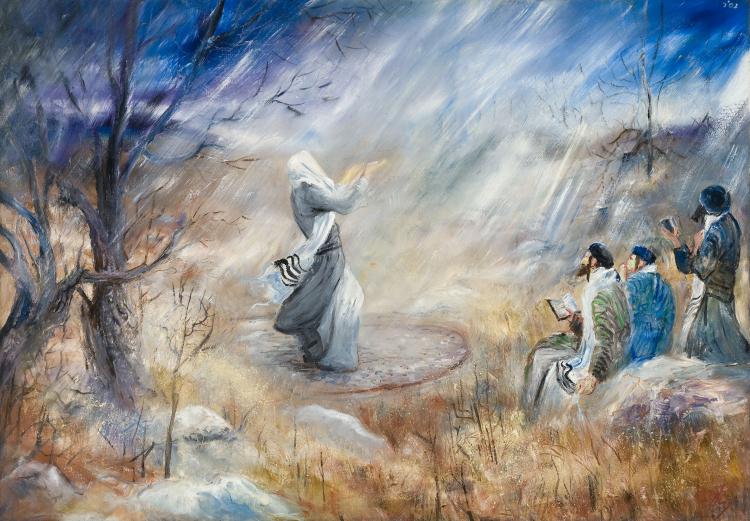
The Talmud, however, reports a much more enigmatic account of divine intervention through water. It was in a time of terrible drought that the Jewish people approached the sage Choni HaMagil and beseeched him to pray for rain on their behalf. When Choni’s supplications to the Almighty went unanswered, he drew a circle in the dust and stepped inside of it, vowing not to leave the circle until G-d bestowed rain upon His people.

Immediately, a fine mist settled upon the earth, too little to alleviate the drought but sufficient to free Choni from his vow.

Choni called out to heaven: “I asked not for this, but for a rain to fill all the wells and cisterns.” Immediately, raindrops larger than melons began to fall, wreaking destruction upon homes and fields.

519133312_2_570_411Again Choni called out to heaven: “Neither did I ask for this, but for a rain of blessing.” Immediately a normal rain began to fall, filling the wells and cisterns of the people as Choni had requested. But the rain did not stop, and soon the entire population of the land feared that they would drown in the rising waters.

One last time Choni called out heavenward: “Master of the World, Your people, Israel, whom You brought out from Egypt, can tolerate neither too much blessing nor too much misfortune.” Immediately the waters abated, and the people returned to their fields. From this time onward, people referred to Choni by the name HaMagil   —   the Circle-maker.

What was the point of G-d’s demonstration to the people of Israel? What did Choni mean that the people could not tolerate too much blessing? And why did Choni find it necessary to remind the Almighty, at this particular moment, that He had brought the Jewish people out from Egypt?

The Exodus from Egypt may be described, in commercial terms, as the largest loan ever extended in the history of man. During the generations of slavery in Egypt, the Jewish people had forgotten their Creator and lapsed into the same idolatries as their Egyptian masters. And although, to their credit, the Jews had guarded themselves against assimilation, this alone was insufficient to earn them the privilege of miraculous redemption. Nevertheless, G-d gave them an incalculable line of credit: Freedom from slavery, freedom from oppression, freedom to chart their own course into the future.

Moreover, He promised them immeasurable blessing and unbounded prosperity, on condition that they would repay their loan   —   repay it by living according to G-d’s law, repay it by rising above material pursuits and petty self-interest, repay it by using all the blessing that G-d would bestow upon them to aspire to moral, ethical, and spiritual perfection.

In this light, blessing may be understood as a double-edged sword. Wielded in one direction, it cuts down all enemies and obstacles that stand before us. Wielded in another, it obligates us to a standard of righteousness and moral behavior that we may find nearly impossible to meet.

This was the meaning behind the Almighty’s response to Choni the Circle-maker’s plea:

Two roads lie before My people, and it is their choice which to follow. One leads back to Egypt, back to the oppression of materialism and the slavery of self-indulgence, back to spiritual emptiness and the absence of all blessing. The other road leads forward, to spiritual fulfillment and spiritual greatness, if My people will only find within themselves the potential to seek greatness and discard all lesser goals. It is for this that I redeemed them, that they might cast off the chains of physicality and reach for the heavens.

H19060-L75167491And this too was the meaning behind Choni’s appeal to the Almighty:

Master of the World, You brought your people out from slavery and oppression on condition that they would use their freedom and the blessings to strive for spiritual heights. Your people, however, have demonstrated from their beginnings that, whatever their potential may be, they still suffer from human failings and human shortcomings. They cannot tolerate too little material blessing, lest the struggle to survive overwhelms them and they abandon all higher aspirations. And they cannot tolerate too much blessing, lest they cower before the goal set for them and lose all hope of its attainment.

By all accounts, the world that we live in today enjoys a level of material affluence unattained and unimagined by previous generations. Such basic necessities as rapid transit, instantaneous communication, indoor plumbing, electrical lighting and refrigeration, which we take for granted, provide us with an ease of living simply unavailable to even the wealthiest, most powerful monarchs until the last century. The very existence of an “entertainment industry,” much less the staggering sums of money devoted to it, testifies to our abundance of resources   —   which is to say, our abundance of material blessing.

Nowhere does Jewish tradition teach the condemnation of wealth or of recreation.

Nowhere does Jewish law mandate the forcible redistribution of wealth from those blessed with good fortune to those less fortunate. But Jewish tradition does warn us of the responsibilities of prosperity. It warns us in the narrative of the flood, in the story of Choni HaMagil, and also in the Hebrew word for charity: tzedakah, derived from the word tzedek, or justice.

It is only just that those who are blessed share a portion of their blessing with their less fortunate neighbors. It is only just that, before overindulging in one’s own good fortune, he ponders why he deserves having received such blessing while his neighbor has not. And it is only just that he ask himself how, even in the absences of tax incentives or legal mandate, he might reach out with his blessing to ease his neighbor’s plight.

If the waters of the earth, the life-giving waters that are the source of our greatest blessing   —   life itself   —   have risen up to inflict enormous tragedy, swallowing human life and draining billions of dollars of aid to spare human suffering, we will all be remiss if we do not pause to consider whether we have used our blessings wisely, and what we must do to ensure that we will continue to deserve them.

The Miracle of Music

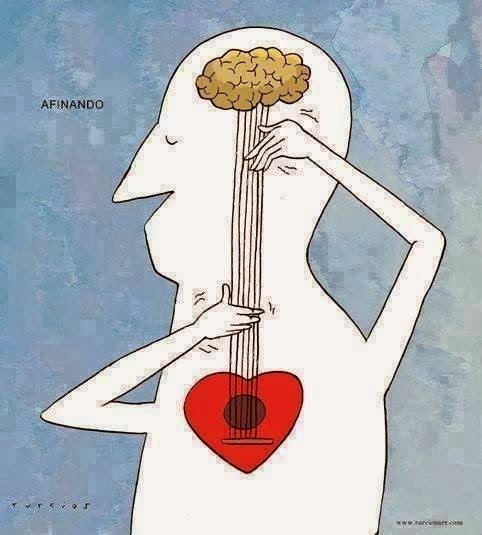
music-of-heart-and-mindWhy do the human mind and heart respond so passionately to an arrangement of sounds and words that provide absolutely no tangible or evolutionary benefit? The answer reveals much about ourselves and the world we live in.

We spend much of our lives looking and hoping for miracles. But the greatest miracle of all is right before our eyes: nature itself, the seamless fusion of all the forces of the world into a unified, unvarying system.

Science itself testifies to this: the principle of entropy, intrinsic to Newton’s second law of thermodynamics, describes the natural state of the universe as tending always toward disorder. In other words, nature’s law cannot account for the laws of nature, cannot explain the original ordering of the natural world that produced the immutable regularity of nature itself. What greater testimony to intelligent design can one find than the unnatural, persistent order evident in every aspect of the workings of Creation?

But what does this have to do with music?

Read the whole article here: http://www.learning-mind.com/the-miracle-of-music-how-sounds-affect-the-human-mind-and-heart/

music_speaks_what-136004


Clean up your act and become a better person

smell-fruit-to-lose-weightCounting your change as you exit the local supermarket, you discover that the cashier accidentally handed you back a ten dollar bill instead of a five.  You pause, debating whether to go back and correct the error or pocket your modest windfall.

What you do next may depend on how fresh the fruit smelled in the produce section.  If the tomatoes were over-ripe enough to emit an unpleasant odor, that might be all it takes to set your moral compass spinning.

In a series of social science experiments, researchers observed how exposure to disgusting smells or images can influence our attitudes and behavior:  the same self-protective reflex that makes us back away from an assault upon our senses can also make us recoil from offensive behavior.  Needless to say, rotten tomatoes have nothing to do with personal character; but once our feelings of disgust have been activated toward repugnant pictures or noxious odors we are more likely to feel aversion toward objectionable conduct and become increasingly repelled by unethical behavior.

That’s the good news.  What’s really ironic, however, is that the same stimuli that make us less tolerant of improper actions by others make us more likely to engage in those same kinds of actions ourselves.

Read the whole article here.

The Scent of Spirit

images“A rose by any other name would smell as sweet,” wrote William Shakespeare, arrange ten simple words into possibly the most famous aphorism in the English language.

[Proverbial Beauty – preview at Amazon.com]

And yet, for all the mystique and romance associated with the beauty of the rose, the greatest of all poets recognized fragrance, not visage, as the defining quality of the most admired flower.

Bonnie Blodgett would almost certainly agree. In Remembering Smell: A Memoir of Losing and Discovering the Primal Sense, Ms. Blodgett describes the emptiness and depression that took over her life when a zinc-based nasal spray disrupted the operation of her olfactory nerve and disfigured her sense of smell.

Gone were the familiar, reassuring fragrances of her garden, replaced by ceaseless aromas of rotting flesh and excrement, which Ms. Blodgett describes as nothing less than torture. But even when these “phantom smells” abated, the odorless existence that replaced them was only a marginal improvement.

“I had no way of knowing before what it would be like to not smell anything,” she told NPR. “When I woke up and sniffed and there was nothing there — I don’t know how to explain it — I felt completely disconnected. I truly felt as if colors were more flat. The voices in conversation felt like a TV soundtrack to me.”

Adding insult to injury was the lack of sympathy received from friends. Unlike blindness, deafness, illness, or injury, most of us cannot relate to an impaired sense of smell as especially debilitating. Of all our senses, it is the one we are most likely to take for granted.

Of course, not everyone fails to recognize the power of fragrance. From Cleopatra to Oprah Winfrey, the rich and powerful have scented themselves to augment their personas and project an image of potency, charisma, or sensuality. Today, the research, development, and production of perfume and cologne have created a $25 billion industry that markets, in the words of star perfumer Sophia Grojsman, “a promise in a bottle.”

imagesNational Geographic explains it this way:  “Memory and fragrance are intertwined, some biologists insist, because the sense of smell plugs smack into the limbic system, the seat of emotion in the brain. No other sense has such immediate access.”

The unique power of fragrance takes little time to assert itself in the chronicles of mankind. Immediately upon exiting the ark, Noah gave thanks for his salvation by building an altar and bringing offerings of thanksgiving. “And the Almighty smelled the pleasing fragrance, and said to Himself, Never again will I curse the earth on account of man” (Genesis 8:21).  Obviously, G-d does not “smell” the way human beings do.  But according to the linguistic nuances of biblical Hebrew, “aroma” implies direct contact over a great distance in the finest detail and in the most subtle ways.*

The Hebrew words rayach (scent) and ruach (spirituality) derive from a common grammatical root, and the implied connection between them appears as early as the narrative of man’s formation, when the Almighty “breathed a living soul into his nostrils” (Ibid. 2:7).  The common derivation of the Hebrew words neshimah –“breath” – and neshomah – “soul” – suggests that our spiritual life force comes, literally and metaphorically, by way of air and respiration.

Just as smell is the most difficult sense to measure, quantify, and define, so too is our spiritual essence the least palpable and discernible facet of our existence.  Similarly, the interplay between one soul and another is the most elusive of human pleasures, but it is also the most rewarding.  As King Solomon says, “Scented oil and incense gladden the heart, sweet as the sincere counsel of a kindred soul” (Proverbs 27:9).  Indeed, the smoky fragrance of incense wafting into the corners of our minds and rippling across the strings of our hearts is anything but smoke and mirrors; it stirs our memories and hopes and dreams the same way that true friendship and camaraderie arouse our spirit.  Truly, the faculty of smell provides the spice of life by adding texture and dimension to all our other senses.

[Proverbial Beauty – preview at Amazon.com]

Ask Bonnie Blodgett.  As suddenly as her sense of smell disappeared, just as suddenly it returned, and she will never take it for granted again. “I was going around smelling everything,” she says. “Being able to smell lilacs again was just — I don’t think I’ll ever get over it.”

imagesBut it goes beyond mere olfactory pleasure. There is truth to common expressions like he has a good nose for business and something doesn’t smell right. Like our sense of smell, human intuition is our intangible moral compass, guiding us when we encounter something for the first time to quickly assess its value and authenticity.  In the biblical narrative, Jacob disguises himself as his brother, Esau, then enters the tent of his father, Isaac, who exclaims, “The fragrance of my son is like the fragrance of a field blessed by G-d” (Genesis 27:27).  The sages elaborate, explaining that the fragrance of the Garden of Eden entered with Jacob, convincing Isaac to bestow his blessing.**

What was this “fragrance of Eden”?  It was nothing less than the soul’s eternal connection to the ultimate Plan of Creation, which began with the placement of Man into a perfect world and will culminate in the restoration of that perfect world at the End of Days.***  And throughout the long generations of chaos in between, the spiritual nature of our world can be scarcely perceived through sight, sound, touch, or taste.  But it can be smelled, if we pay attention to the subtle pleasures of life that are expressions of the human soul and contemplate the mysterious allegory of fragrance.

And so the ancient sources describe the advent of the messianic era as a time when the divinely appointed redeemer will “smell and judge,” – determining complex truths through spiritual discernment (Babylonian Talmud, Sanhedrin 93b).  Thus we find, according to Chassidic tradition, the story of Rabbi Menachem Mendel of Vitebsk, the 18th Century leader of European Jewry whose wife ran through the door one afternoon shouting, “Mendel, Mendel, there’s a man outside shouting that the Messiah has arrived!”

Immediately, Rabbi Menachem Mendel jumped up and ran to the window, took a long sniff of air, then shook his head and muttered, “Nonsense!” before returning to his studies.  Like Isaac, the rabbi knew that a world with the Messiah smells different from a world without Messiah, and that if he could not detect the fragrance of Eden then certainly the messianic era had not yet arrived.

Two generations later, Rabbi Israel of Rizhin asked why the illustrious rabbi had to run to the window – why could he not simply sniff the air in his own home?

Rabbi Israel answered his own question.  So involved was Rabbi Menachem Mendel with his own personal service of the Almighty, so intent was he upon hastening the arrival of messianic era, so profoundly had he had already connected with the spiritual source of the universe that his own house had already acquired the fragrance of Eden.  Consequently, he had to run to the window to discover what the rest of the world smelt like.

The more we focus on what we should be doing to create a perfect world through the perfection of our own character and conduct, the more our lives will acquire the fragrance of spiritual purpose.  And the more eagerly we anticipate the glorious fulfillment of the Almighty’s Master Plan, the sooner we will enjoy a world in which we draw in the aroma of the Divine with every breath.

[Proverbial Beauty – preview at Amazon.com]

*Rabbi Samson Rafael Hirsch

**Rabbi Shlomo Yitzchaki, ad. loc

***Based on the Malbim, loc. cit.

Adapted from an essay originally published in Inyan Magazine, 2 July 2014.  With thanks to Rabbi Shraga Simmons and Aish.com.

The Answer is in the Stars

roll-over-and-look-at-the-starsFrom Symmetry Magazine:

According to theory, the big bang should have created matter and antimatter in equal amounts. When matter and antimatter meet, they annihilate, leaving nothing but energy behind. So in principle, none of us should exist.

But we do. And as far as physicists can tell, it’s only because, in the end, there was one extra matter particle for every billion matter-antimatter pairs. Physicists are hard at work trying to explain this asymmetry.

Here’s a nice follow up to yesterday’s post, Embrace Mystery and Discover Joy.  Scientists love to tell us how they’ve decoded the secrets of the universe.  Then they tell us that we shouldn’t even exist.

“The universe is not only queerer than we suppose, but queerer than we can suppose.”

~J.B.S. Haldane