Blog: The Ethical Echo Chamber

The Danger of Democracy
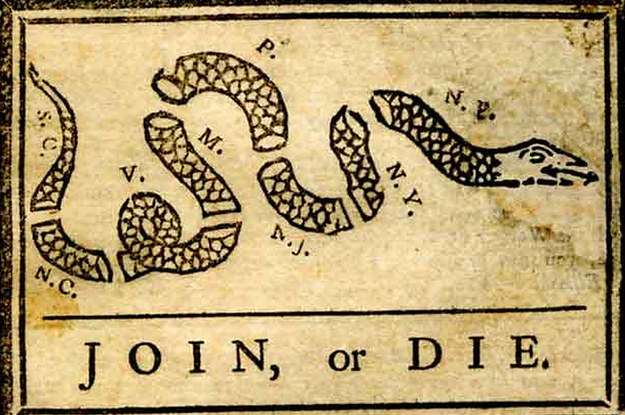 The prospect of a presidential race between the two most unpopular candidates in American electoral history should give us serious pause to reflect upon the inherent precariousness of any democratic system.
On the one hand, democracy protects a people from the whims and excesses of despotism by creating a system of accountability and popular will. On the other, it places power in the hands of the masses, who may be uninformed and easily manipulated; as Robert A. Heinlein once wrote, does history record any case in which the majority was right?
A lot of people seem to agree. Even now that the outcome appears inevitable in both primary races , opposition to the status quo has grown so intense that, in both parties, the voices of pragmatism are being drowned out by the battle cry of revolution.
Each rebel camp is a bizarre mirror-image of the other. On the Republican side, the party orthodoxy is rejecting the presumptive nominee for being indifferent to its values and unfit to lead. On the Democratic side, a surging upstart movement rallies around an untethered independent while decrying the corruption of the party orthodoxy itself.
Both insurgent groups are threatening to turn to third-party candidates. Leaders on both sides are warning that such a move would be political suicide, and history supports their fears. Third-party campaigns backfired for Teddy Roosevelt in 1912, Strom Thurmond (nearly) in 1948, Ross Perot in 1992, and Ralph Nader in 2000. So isn’t it better to vote for the lesser of two evils than to give away the election by grasping at straws?
That’s a good question.

Spitting Image 3:3 — Never having to say you’re sorry
 I can almost feel sorry for J. K. Rowling. By age 40 she had published the most successful literature series in history, become the richest woman in England and, according to Forbes, was the first person ever to become a billionaire by writing books.
By any accounts, 40 is too young to retire. So what does one do for a second act?
Ms. Rowling tried turning her hand to crime novel writing, but the glare of Harry Potter washes out anything else connected with her name. After claiming she would never add to the series, now it seems that she is doing precisely that with a forthcoming sequel.
And why not? Better than the sad attempts to stir up controversy with her post-publication commentaries, which seem aimed at no goal other that remaining relevant after her book sales ceased to make headlines. First she told us that Albus Dumbledore is gay, an assessment that cooled the enthusiasm of many fans and met with incredulity from many others.
Then she began apologizing for killing off her characters, first Remus Lupin then, most recently, Fred Weasely.
 If Leo Tolstoy were still alive, would we expect him to apologize for killing off Anna Karenina? Did William Shakespeare go too far by killing off Romeo and Juliet? Should Arthur Miller have re-imagined the saga of Willy Loman as Life of a Salesman? And is there anybody with more blood on his hands than Nicholas Sparks?
Ms. Rowling’s gift for making the fantastic seem believable depended upon lacing her stories with the kind of harsh and painful twists that are inevitable in the real world. Without these, her novels would never have struck such a resonant chord with readers who could be captivated by impossible flights of fancy while finding within the narrative a wealth of down-to-earth lessons and insights for every day living.
Of course, maybe Ms. Rowling didn’t mean any of it, like the April Fool’s joke of Harry being a figment of Ron’s imagination.
We can hope, while suggesting that the author remember the words of King Solomon: Do not say, “How is it that times gone by were better than these?” For that is not a question prompted by wisdom.
With a talent for storytelling like yours, Ms. Rowling, no apologies are necessary.
Spitting Image 3:2 — Wood nymph with flowers
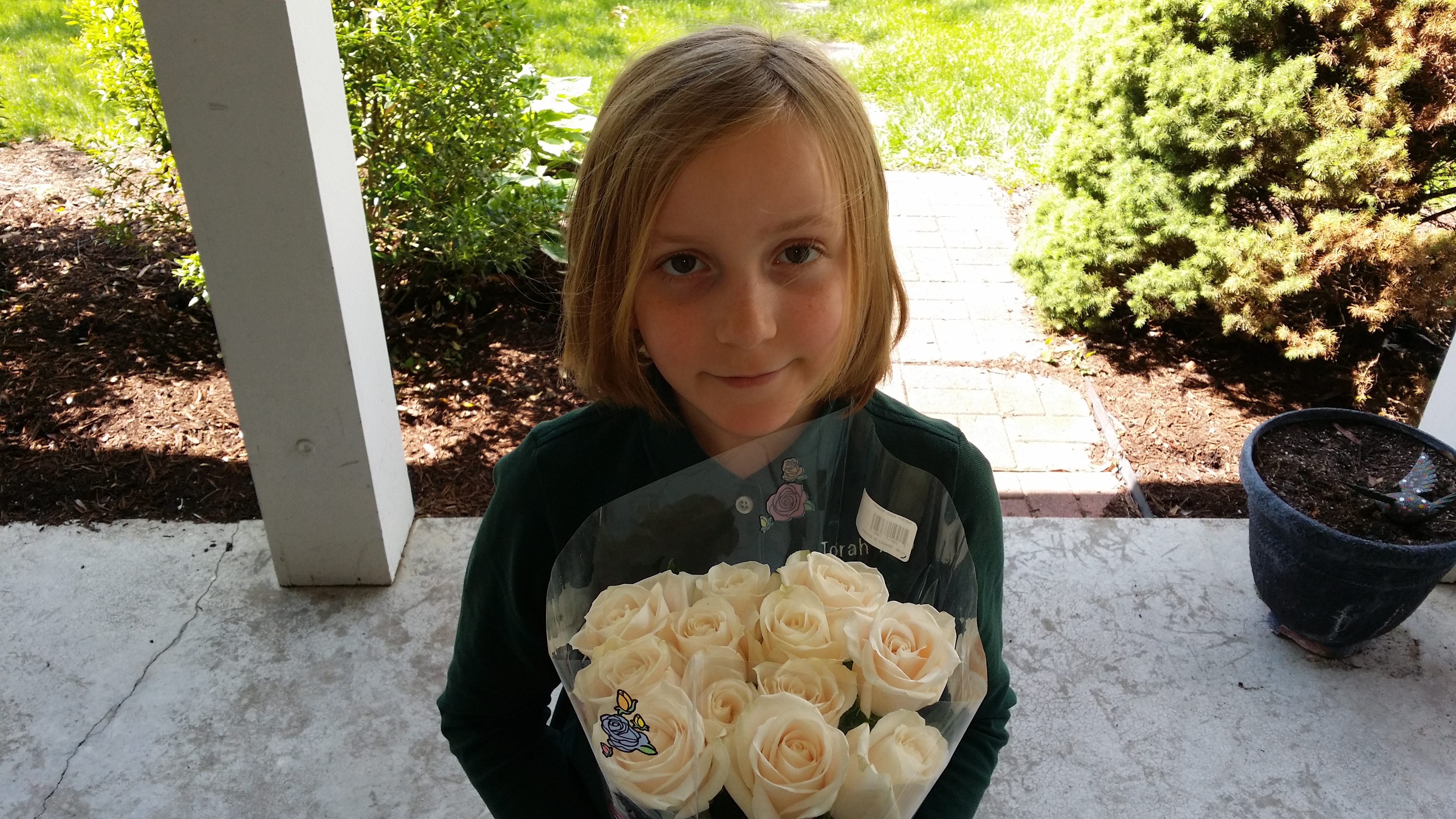
It’s always an auspicious omen when a wood nymph shows up with a gift of fresh-cut flowers on Sabbath eve.

A Day of Remembrance Soon Forgotten
 So what was the point of last week’s Holocaust Memorial Day?
Once upon a time, the commemoration served as a warning against the consequences of unbridled nationalism. But in this generation, the memory of Nazi atrocities has mutated into a political football tossed about to score points for one ideological cause or against another.
IDF Major General Yair Golan made the most egregious fumble when he suggested last Wednesday that events in pre-war Germany are repeating themselves in modern-day Israel. Like all public figures who talk first and think later, the deputy chief of staff was soon scurrying to revise his comments, pleading that he hadn’t meant what he said and hadn’t said what he meant.
More likely, General Golan meant exactly what he said. And it’s likely that his heart was in the right place, even if his brain was out to lunch.

One step closer to Eden
Awake from the north and come from the south! Blow upon My garden and let its spices flow. Let My beloved come to his garden and partake of its precious fruit.
— Song of Songs 4:16
Would the world be better off without mankind?
Many environmentalists think so. It’s hard to deny that, from a purely ecological point of view, life on earth would do much better without human beings around to interfere with the natural order.
But without mankind, there would be no point and, ultimately, no reason for the world to exist at all. Only Man seeks to create; only Man strives to become more than he is; and only Man directs his efforts toward ideals that transcend mere survival and procreation.
If we are to act as responsible custodians of the world, however, we have to stop from time to time and let the world remind us what those ideals are.

In the late 1800s, the great Rabbi Samson Raphael Hirsch announced his plan to travel from Germany to see the storied mountain ranges of Switzerland. This was entirely in keeping with Rabbi Hirsch’s philosophy of integrating worldly knowledge and experience into his religious outlook. That being said, the incomparable leader of Orthodox Jewry was well into his seventies, seemingly much too old to undertake such an adventure.
Some of the rabbi’s closets acolytes questioned the wisdom of embarking on such a strenuous journey at his advanced age. The rabbi replied that it was precisely because of his age that he felt it necessary to go.
“I may not have much longer to live,” explained Rabbi Hirsch. “And when I stand in judgment upon my arrival in the World to Come, what will I say when the Almighty asks me, “Samson, why did you not see My Alps?”
Rabbi Hirsch understood what we too easily forget: That the wonder and beauty of the world are here for us to experience, for us to enjoy, and for us to find inspiration in the masterful Hand that fashioned all of Creation.
But North Americans need not travel to Switzerland to find their inspiration. Within our own borders we have the “American Alps.” That’s what Louis Hill, president of the Great Northern Railway, called the mountains of Glacier National Park. It was Hill who found the region so extraordinary that he lobbied congress to designate Glacier as a national park in 1910. And it was Hill who influenced the Alpine design of the park’s hotels and facilities to echo the mountains’ namesake across the sea.
Even from the same continent, getting to the park in northern Montana is no simple matter. My wife and I flew into Spokane, Washington, then rented a car and began to drive, first across the Washington border, then through Idaho, and ultimately into Montana. The roads were mostly straight and flat as the miles sped by; it took us six hours just to reach the outskirts of 1,583 square-mile wilderness. But as my own rabbi likes to say, the best things in life are rarely found on the beaten path.
Click here to read the whole article from this month’s Wagon Magazine.

Don’t count down — count up
 Between Passover and the festival of Shavuos (Pentacost, celebrating the Almighty’s revelation at Sinai), tradition calls for every Jew to count the days and the weeks connecting the freedom of the exodus from Egypt with the responsible application of that freedom.
These seven weeks are a time filled with opportunity for personal growth, beginning with the awareness that little changes can add up to extraordinary transformation.

Your dog doesn’t love you — get over it
 Okay, I’m guilty.
As a high school teacher, I strive to maintain a persona of impeccable professionalism every moment of every day. Almost.
On rare occasions, however, when I can no longer resist the impulse to really get under my students’ skin, I indulge a streak of sadism and utter those few words guaranteed to enrage even the most mild-mannered teenager.
Are you ready? This is what I say:
“Your dog doesn’t love you.”
And I don’t stop there. Pausing a few seconds to allow the full measure of indignation to begin boiling over, I follow up with:
“And you don’t love your dog.”
I have plenty of ammunition in my arsenal to defend my point. But in addition to the logic of my argument, I now have a current study that supports my claim.

Giving offense vs. taking offense
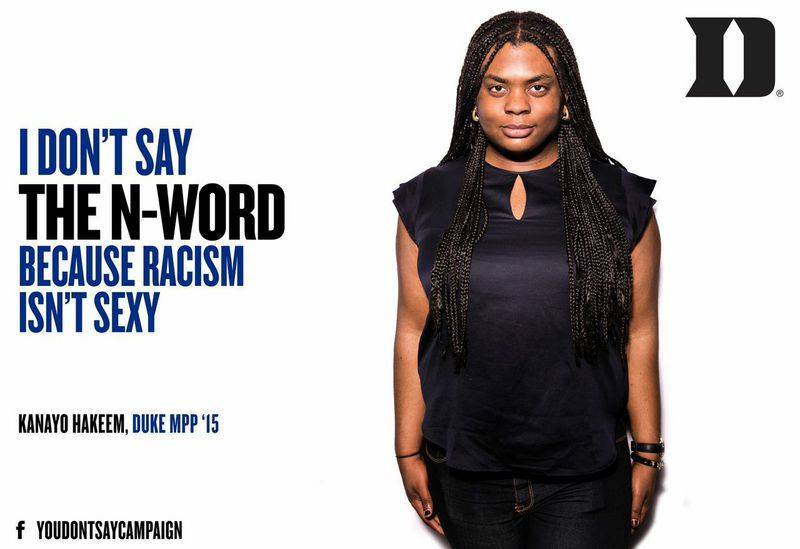 The political correctness police were out in force recently, correctly censuring Larry Wilmore for his use of the N-word and insanely condemning Hillary Clinton for uttering the words “off the reservation,” perceived as demeaning to Native Americans.
Starting with Mrs. Clinton’s turn of phrase, we might as well excise from the the lexicon of acceptability words such as “nosy” because it might offend people with large noses, “insightful” as insulting to myopics, “high-minded” as defamatory of marijuana users, and “thin skinned” for denigrating hemophiliacs. If we want to find reason for taking offense, we can find it everywhere.
The more noteworthy incident was Larry Wilmore’s use of the N-word at the White House Correspondents’ Association dinner, and his directing it toward the President of the United States, no less. Clearly the remark was intended to be affectionate and laudatory, which is how it was taken — without offense.
But that’s not really the point. In a society that is growing simultaneously disrespectful and intolerant of disrespectful speech, we need to elevate public discourse, not sink deeper into the gutter. If the N-word is too offensive to be broadcast — even news anchors reporting the story weren’t permitted to repeat it in quotation marks — then it is certainly unacceptable to be used in the presence of our president or, even worse, said to him.
Frankly, I’m more concerned by the use of President Obama’s first name, and his nickname at that. Maybe Mr. Obama and Mr. Wilmore are on a first-name basis. But in a formal context, such familiarity is utterly disrespectful from anyone other than a spouse, parent, or sibling.
This is the real threat of political correctness. It’s not just that we take offense in all the wrong places. It’s that we lose all sensitivity for the difference between what is respectful and what is disrespectful, we lose all sense of priorities, and we forget that refinement is a value. Nothing matters except the applause, the laugh, the ratings, and the votes.
This is why the same people who took offense at Mrs. Clinton’s use of “off the reservation” have no reservations about her pathological pattern of telling lies and misrepresenting political adversaries.
This is why our political and social institutions are in chaos.
And this is what we are teaching our children.
Spitting Image 3:1 — A Journey of a Thousand Miles…
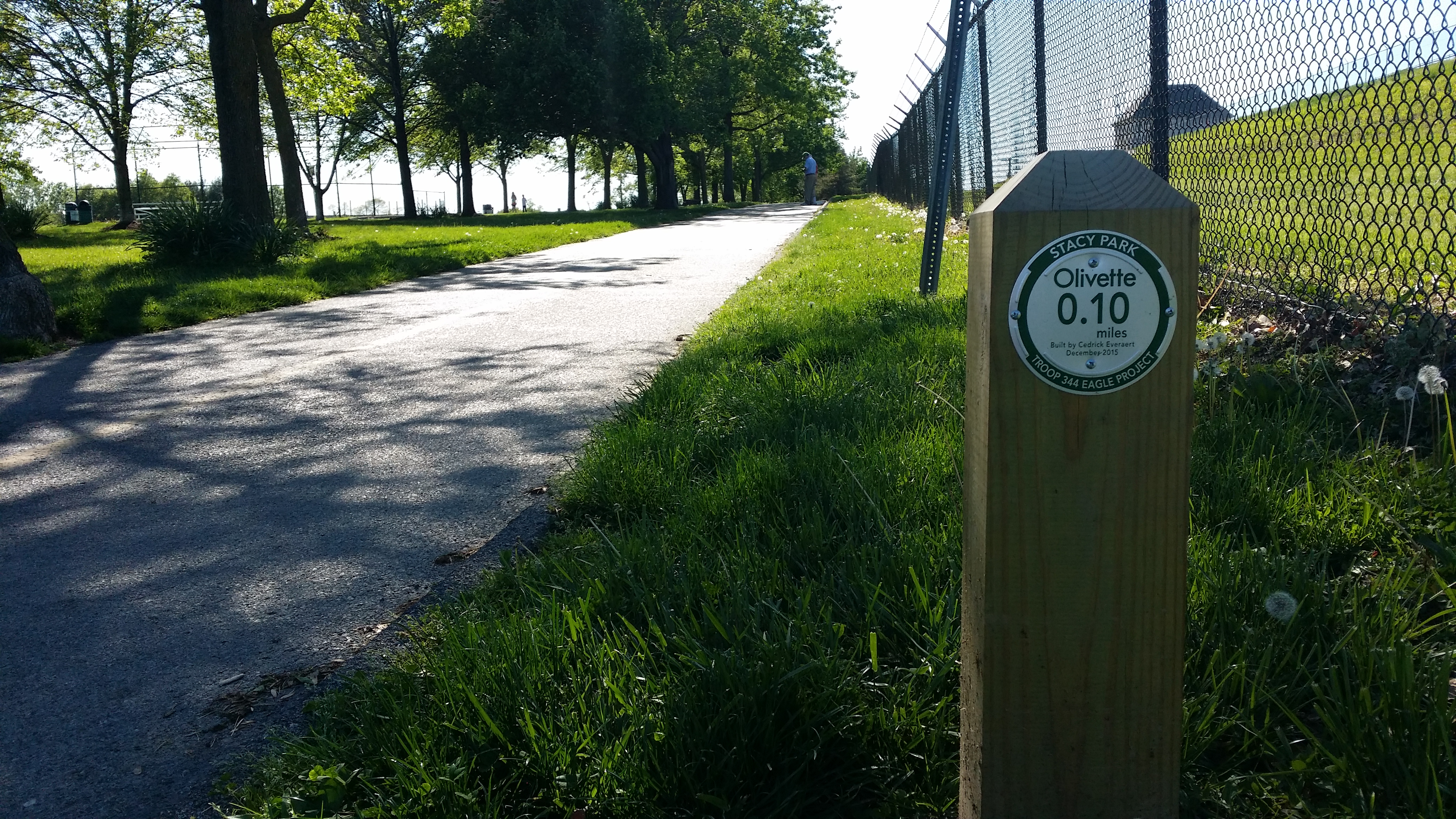 The road beckons, and our heart longs for adventure. But the way is long, and who knows what might befall us along our journey?
How many times have we turned back, turned aside, or given up before we’ve given ourselves time to either succeed or fail? How many opportunities have we missed, how many victories have we left unwon, how many heroic failures have we traded for cold comfort and abandoned hopes?
All beginnings are difficult, say the sages of the Talmud. And when we concede the race before we start, all we have left is a scrapbook of empty dreams.

Passover, Freedom, and the War on Culture
 The responsibilities of freedom, the history of freedom, and the culture wars that threaten the values and the foundations of civilization.
Listen to my interview on the Bill Martinez show (interview begins at 33:00).


 Yonason Goldson