Home » Posts tagged 'Book of Proverbs' (Page 5)
Tag Archives: Book of Proverbs

Open Season on Everyone
 Let me be clear. I am no fan of Ann Coulter.
The right-wing firebrand disdains all forms of moderation in both tone and worldview, whether she is tweeting expletives about Jews or hailing Donald Trump’s immigration plan as a new Magna Carta. When it comes to discrediting the intellectual and moral integrity of conservatism, nobody does it better.
Even Ms. Coulter’s political mentor, arch-conservative David Horowitz, disavowed her for attempting to resurrect as a martyred crusader Senator Joseph McCarthy, whose self-serving campaign against communists real and imagined represents one of American history’s ugliest eras.
For my part, I’ve never gotten out of my head Ms. Coulter’s inexcusably cruel and utterly gratuitous swipe at Margot Kidder in a 2004 column about the controversy that eventually ended the career of CBS anchor Dan Rather. With neither context nor pretext, Ms. Coulter’s savaging of an admired actress struggling with bipolar disorder was even more contemptible that Donald Trump’s mocking of disabled reporter Serge Kovaleski.
So it may be simple karma that Ms. Coulter received as good as she dishes out at last weekend’s Comedy Central roast of actor Rob Lowe. Her mere presence on the dais apparently marked her as fair game, making her the target of more vicious barbs than the man-of-honor himself.
But karma does not excuse the cast of notables who turned what should have been good-natured (if adolescent) banter into a lynching party.

No Re-entry

“I can only show you the door. You have to walk through it.”
~ Morpheus, The Matrix
Life is a series of doorways, each leading into the future. Fear and complacency try to convince us not to go through one; complacency and arrogance try to convince us that there’s no need to go through another.
Either way, once we go through, there’s no going back. All we can do is be careful which doors we choose to open, and learn from our mistakes so that we don’t repeat them.
Here’s a deeper look, excerpted from my book Proverbial Beauty:
Fortunate is the man who listens for me, attentively waiting at my doors day by day, keeping watch by the doorposts of my entryways (Proverbs 8:34).
In the language of Solomon, a doorway symbolizes a point of transition, a threshold of spiritual growth, and an opportunity not only to realize but to increase one’s personal potential. And so wisdom says, as it were: “None is more fortunate than those who listen to me, who learn my ways and commit themselves to my principles, who wait eagerly and attentively for every opportunity to rise to the challenges demanded by moral discipline, who do not rest on their laurels but follow every moral victory by hastening to the next ‘entranceway’ and waiting for the next ‘door’ of opportunity to open up for them.”
It sounds a simple formula, but although “change” may make an effective campaign slogan, human nature deplores change and yearns for the status quo. For many, nothing is more frightening than the unknown that lies on the other side of the next “door.” And human creativity knows no bounds in its efforts to avoid knocking at the doors life places in our path.
In the mythical town of Khelm, the synagogue beadle would rise at dawn each morning to go around the town, knocking on doors to rouse the parishioners for the morning prayer service.
Years went by, and as the beadle grew older it became increasingly difficult for him to make the rounds. One winter, after a particularly heavy snowfall, he told the synagogue elders that he would be unable to make it out the next morning to knock on doors.
The wise men of Khelm convened an emergency meeting. Without the beadle to knock on the doors of the townspeople, there was no way to ensure that they would have the requisite quorum of ten men for the morning service. But appointing a replacement also posed a problem. For one thing, the beadle had served the community loyally for decades, and it seemed unappreciative to unceremoniously remove him from his post. For another, it was difficult to think of a replacement as reliable and trustworthy as the beadle had been.
After lengthy consideration, the wise men finally devised a solution. No replacement would be necessary after all. Instead, they hired workers to remove the doors from all the homes in the town and line them up in the beadle’s house. The next morning, the beadle rose at his usual time, knocked on every door without having to leave the comfort of his home, and then went back to bed.
Even if we make it through one doorway, our problems are still not over. For just as fear and self-interest are eager to turn us back before we pass through any given door, arrogance and complacency are waiting to pounce upon us after we make it to the other side, urging us to be satisfied with what we have achieved and warning us not to risk what we have by trying to accomplish something more.
Of course, the most successful deceptions are the ones closest to the truth. There is always risk in aspiring to greatness, and reaching for the unattainable is as certain a recipe for failure as not attempting to reach at all.
This is why we find some doors closed to us. It is for our own benefit that fate may bar us from pursuing the most appealing pathways: those ways could lead to crippling failures if we tried to follow them, or else leave us giddy with pride and quash further opportunities for success.
No one ever said life was simple. Only through self-reflection, sincere introspection, and seeking counsel from the wise can we hope to choose rightly and wisely. If we make every effort to push ourselves to the limits of our potential without giving in to impulse or ego, more often than not we can expect to succeed in our endeavors. And if we find that some doors remain closed to us, with perseverance we will discover that other doors open to lead us toward the same, or better, destinations.

The Boundaries of the World
 This week, the world observed the 100th anniversary of Albert Einstein publishing his General Theory of Relativity. The effects of his revelation extend far beyond what most of us imagine, as I outline in this excerpt from my book Proverbial Beauty: Secrets for Success and Happiness from the Wisdom of the Ages.
Do not remove the boundaries of eternity, which were set in place by your forefathers (Proverbs 22:28).
Writing for Environmental Health Perspectives, Ron Chepesiuk cites research that exposure to artificial light can prevent trees from adjusting to seasonal variation, affecting the behaviors, foraging areas, and breeding cycles of insects, bats, turtles, birds, fish, rodents, and reptiles even in rural settings. Urban light has caused disorientation in migrating birds, accounting for avian deaths estimated between 98 million and one billion each year.
The 24-hour day/night cycle, known as the circadian clock, affects physiologic processes in almost all organisms. These processes include brain wave patterns, hormone production, cell regulation, and other biologic activities. Disruption of the circadian clock is linked to several medical disorders in humans, including depression, insomnia, cardiovascular disease, and cancer, says Paolo Sassone-Corsi, chairman of the Pharmacology Department at the University of California, Irvine, who has done extensive research on the circadian clock. “Studies show that the circadian cycle controls from ten to fifteen percent of our genes,” he explains. “So the disruption of the circadian cycle can cause a lot of health problems.”
A meeting sponsored by the National Institute of Environmental Health Sciences (NIEHS) concluded that, although there is still no conclusive evidence, the correlation between altered patterns of light and dark in the modern world and dramatic increases in the risk of breast and prostate cancers, obesity, and early-onset diabetes appears more than coincidental.
And, of course, we can no longer see the stars.
Breaches in natural boundaries have taken many other forms as well:
- In 1884, a farmer visiting the Cotton States Exposition in Louisiana brought back a few Venezuelan water hyacinths to decorate the fountain outside his home in Florida. Today, the aggressive purple flowers choke 126,000 acres of waterways.
- Kudzu, a Japanese vine imported in 1876 to prevent erosion, is currently spreading through the southern United States and expanding at a rate of 150,000 acres a year.
- The European rabbit, introduced to Australia in 1859, has reached a population of over 200 million, necessitating the construction of a 2000 mile long rabbit-proof-fence to prevent the wholesale destruction of farmlands.
- In 1956, African bees brought over by Brazilian scientists to breed for honey production escaped their quarantine and gave rise to the noted “killer bee” scare.
The list goes on and on. In the United States alone, containment costs of invasive species are estimated at $138 billion annually.
But the violation of natural boundaries has even more broad-reaching consequences, affecting not only the stability of our physical world but the integrity of the moral universe as well. In his book Modern Times: the world from the twenties to the nineties, historian Paul Johnson analyzes the impact of Albert Einstein’s theory of relativity upon the way Western society began to look at the established values of the ages:
All at once, nothing seemed certain in the movements of the spheres… It was as though the spinning globe had been taken off its axis and cast adrift in a universe which no longer conformed to accustomed standards and measurement. At the beginning of the 1920s the belief began to circulate, for the first time at a popular level, that there were no longer any absolutes: of time and space, of good and evil, of knowledge, above all of value. Mistakenly but perhaps inevitably, relativity became confused with relativism.
No one was more distressed than Einstein by this public misapprehension. He was bewildered by the relentless publicity and error which his work seemed to promote…
Einstein was not a practicing Jew, but he acknowledged a God. He believed passionately in absolute standards of right and wrong… He wrote to [colleague Max] Born: “You believe in a God who plays dice, and I in complete law and order in a world which objectively exists and which I, in a wildly speculative way, am trying to capture. I firmly believe, but I hope that someone will discover a more realistic way or rather a more tangible basis than it has been my lot to find.”
But Einstein failed to produce a unified theory, either in the 1920s or thereafter. He lived to see moral relativism, to him a disease, become a social pandemic, just as he lived to see his fatal equation bring into existence nuclear warfare. There were times, he said at the end of his life, when he wished he had been a simple watchmaker…
[T]he public response to relativity was one of the principal formative influences on the course of twentieth-century history. It formed a knife, inadvertently wielded by its author, to help cut society adrift from its traditional moorings in the faith and morals of Judeo-Christian culture.
It’s hard not to be impressed by the prescience of King Solomon. When civilization depended upon candlelight to hold back the darkness, the inexorable cycle of day and night forced us to conform to the natural order. True, our lives have become more convenient and more comfortable, but once electric lighting pushes away the darkness of night, once central air conditioning and heating insulate us from the changing of the seasons, once cars and planes shrink the distance between faraway places, once electronic communication eliminates all delay in correspondence and information and, indeed, once science itself seems to provide justification that all boundaries are negotiable, is it not inevitable that society will begin to challenge moral boundaries as well?
There are no absolutes when every established norm is threatened by the inertia of change for the sake of change and an idealized vision of unrestricted freedom. Once change becomes the new normal, human society has little hope of curbing the headlong rush into chaos and social disintegration into moral anarchy.
In the same way that we have to defend the integrity of natural and moral boundaries as a society, we have to guard the boundaries between ourselves and those around us when the order of society begins to crumble. But no matter how much we try, we can never completely seal ourselves off from the influences of the culture in which we live.
I discovered this frightening truth on a trip to southern Asia, where a popular joke is repeated only half-jokingly:
In America people drive on the right side of the road.
In England, people drive on the left side of the road.
In India, it’s optional.
Only when society as a whole preserves its respect for the traditions that have been handed down through the ages will the structure of that society endure. But if each generation believes that it can reject the standards of its forbears from a position of moral superiority, the next age of darkness can be found lurking right around the corner.

Are you Smarter than a Pigeon?
 In the name of science, I’d like to propose a new study to investigate how researchers choose the topics they study. If my proposal finds acceptance, Jessica Stagner of the University of Florida will almost certainly figure prominently in the investigation.
Professor Stagner and her colleagues hoped to find support for evidence indicating that gamblers feel the same thrill of excitement when they almost win as they do when they actually win. To do so, they created an experiment in which pigeons had to peck at colored markers in order to receive hidden rewards.
That’s right: Pigeons.
And what was their conclusion? Pigeons are smarter than people.

Thank You
PROVERBIAL BEAUTY
Secrets for Success and Happiness from the Wisdom of the Ages
Available at Amazon.com
Thanks to all those who participated in my launch event this week at Subterranean Books. The crowd was standing room only and the responses were enthusiastic and encouraging.
Thanks also to Kelly, Alex, and Jenna at Subterranean Books for hosting the event.
If you weren’t able to make it, please take a look on my landing page or at Amazon.com and see what you’re missing.
If you’d like a signed copy, please send $20 and your inscription request to me at this address:
POB 11504
St. Louis, MO 63105


What is happiness, and how do we get it?
Order on Amazon today.
Proverbial Beauty, a new book on how to achieve happiness and success, offers a practical guide to changing our outlooks and our fortunes. Here’s an excerpt:
In a single, ringing phrase, Thomas Jefferson captured the essence of the American dream when he declared that all men have the right to “life, liberty, and the pursuit of happiness.” And yet, despite Mr. Jefferson’s noble sentiments and laudable achievements, the enduring lyricism of his words spawned an epidemic of confusion and despondency that continues to spread like pestilence through western society.
How precisely does one pursue happiness? We may pursue wealth, pursue fame, pursue gratification of one form or another. But the fiction of pursuing happiness has become a collective obsession that consumes our lives, either by goading us into chasing impossible dreams or by tarnishing the quality of our existence with unwarranted regrets.
Before we set off in pursuit of anything, we ought to know what it is and how to get it. Like many other words and expressions, we toss about the word “happiness” without really knowing what we mean. The definition seems obvious, but the inconvenient truth is that we really have no idea what we’re talking about.
So what is happiness, and how does one get it?
Read the whole excerpt here:
http://www.jewishworldreview.com/0815/Goldson_pursuit_of_happiness.php3
The Orchestra of Mankind

Find tranquility in the midst of conflict. Develop attitudes that deepen relationships. Gain clarity through times of darkness and confusion. Decrease cynicism and find joy in the daily miracles that fill our lives.
Respect the boundaries of the world…

Proverbial Beauty now available on Amazon.com
Success in Failure
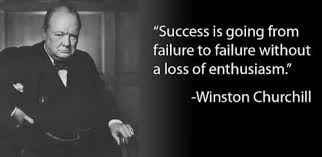 A righteous man falls seven times.
~Proverbs
But failure only leads to success if we learn the lessons it tries to teach us. Otherwise we prove the wisdom not of Solomon or Churchill but of Einstein and Hegel:
Insanity is doing the same thing over and over and expecting different results.
What experience and history teach is this — that people and governments never have learned anything from history, or acted on principles deduced from it.
 Yonason Goldson