Home » Posts tagged 'Communication' (Page 16)
Tag Archives: Communication

The Zen of Tom Harmon
 Palmer: So what do I do?
Gibbs: Give her what she wants.
Palmer: But I have no idea what that is.
Gibbs: Say hello to the rest of your life, Jimmy.

The Humpty Dumpty Deception
 “When I use a word,” Humpty Dumpty said, in rather a scornful tone, “it means just what I choose it to mean — neither more nor less.”
This would appear to be a powerful statement of personal empowerment and forward-thinking vision. In fact, it is precisely the opposite.
The truth is this: if we don’t master our language, we can’t be masters of ourselves. Because we think in words, sloppy speaking will inevitably produce sloppy thinking. And if we aren’t thinking clearly, then we don’t know who we are, what we believe in, or what we stand for.
Clichés, sound-bites, political correctness — these are all our enemies. The reflexive recitation of words bereft of authentic meaning constitutes much of talk radio, and it may offer a convenient refuge from having to defend our opinions with hard facts and sound reasoning. But we don’t open up lines of communication and cooperation by hiding from clarity and logic.
Verbal interchanges have become so glib, so vapid, and so superficial, that anything short of a complete overhaul of our language will not do. But some popular expressions are worse than others, and here is my short list of the worst offenders, phrases that should be punishable by law.

Why we can’t say what we mean
 A picture is worth a thousand words. Except when it isn’t.
You may have heard of Le Bateau, the work by French avant-garde painter Henri Matisse that hung upside down in New York’s Museum of Modern Art for 47 days back in 1961. Looking at the painting, it’s hard to see why it mattered.
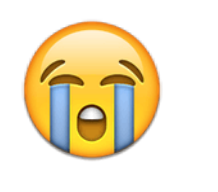
But that’s not the case when we communicate. According to a recent study by the University of Minnesota, the use of emoji — those little yellow emoticons — are almost as likely to cause confusion as they are to evoke the emotions for which they are named.
Interviewing 334 subjects, researchers discovered that people argued over whether emoji communicate positive, negative, or neutral emotions about 25% of the time. That’s a lot of befuddlement for a medium that’s supposed to make communication easier.
Hannah Miller, lead author of the study, told Fortune Magazine that people could solve much of this confusion by “putting emojis in context, adding words into the mix.”
Now there’s a novel idea: use actual words to say what you want to say.
 The problem is, even that doesn’t always help, since the putrefaction of language that has resulted from advertising and political correctness, together with the corrosive influence of texting, has degraded not only our ability to articulate our thoughts clearly but also our capacity for clear thinking altogether.
Whether the deterioration of thought has influenced the deterioration of language or vice versa is the topic of these musings from 2009.
 Yonason Goldson