Home » Posts tagged 'Conflict' (Page 12)
Tag Archives: Conflict

My interview with Bill Martinez
 Listen to my recent interview about faith and politics on Bill Martinez live.

Take action against terror
Rabbi Mici Mark, the beloved Executive Director of the Torat Shraga talmudic academy in Israel, was murdered by terrorists last month while driving his car on his way to Jerusalem to celebrate his mother’s 80th birthday. He was 46 years old. His wife, Chavi and 2 of his 10 children were in the car with him and, with G-d’s help, are recovering from their injuries.
The community of Otniel has suffered greatly from terror attacks. Mici, was the 11th victim.
Please participate in the Go Fund Me campaign to sponsor a bullet proof van to prevent the Otniel community from further tragedy and trauma.
Details can be found by clicking here.

Look in the Mirror, Mr. President
 “The Republican nominee is unfit to serve as president.”
Such is the gospel according to Barack Obama, who went on to defend his verdict by citing “the repeated denunciations of his statements by leading Republicans.”
He’s right, of course. But his critique might carry more weight if it were not a classic case of the pot calling the kettle black.
(OMG, did I just write that?)
Before his very public embrace and endorsement of Hillary Clinton at the Democratic convention, Mr. Obama might have taken a look at the recent incendiary assessment of Ms. Clinton by NYT columnist Maureen Dowd, who’s about as far to the left as one can get without falling off the edge of the earth.
Here are a few choice quotes:
[The Clintons’] vast carelessness drags down everyone around them…
In a mere 11 days, arrogant, selfish actions by the Clintons contaminated three of the purest brands in Washington…
Hillary willfully put herself above the rules — again — and a president, campaign and party are all left twisting themselves into pretzels defending her.
The Clintons work hard but don’t play by the rules. Imagine them in the White House with the benefit of low expectations.
If even the most ardent defenders of liberal ideology give Ms. Clinton a failing grade in character, surely that must call into question her credibility as an aspirant for the country’s highest office.
So answer us this, President Obama: how can you, with a straight face and in all earnest, chide Republicans for not rejecting an unfit candidate when you so brazenly refuse to do so yourself?

Between Heaven and Earth
Everyone I see should be smiling. A few of them are. Most of them aren’t, and I feel sorry for them, caught up in the distractions of earthly existence and overlooking the miracles that surround them.
Such is the human condition: the eyes betray the soul, and the heart grows deaf to its own inner voice, which vanishes into the rumble of routine that drums out the exhilaration of each new moment.
It should be easier here at the eye of the universe, and indeed it is. But easier is a relative term, and a hundred pounds might as well be a hundred tons when our muscles have atrophied from disuse. Just the same, in the absence of spiritual discipline, spirituality itself remains a cliché, a meaningless abstraction or, at best, a mere footnote in the narrative of life, an asterisk relegated to indices of the Sabbath, the Festivals, and the House of Worship.
Such an insidious lie. Such an insipid deception.

The Jewish liturgy begins each day with a series of 15 blessings acknowledging the gifts of fundamental existence and identity. How fortunate we are to have eyes that can behold the beauty of our world, limbs that can carry us to the corners of the earth, minds capable of discerning light from dark and good from evil; how reassured we are to commit ourselves to a higher purpose, to recognize that path we are meant to follow, and to trust the guiding Hand that gently steers us toward the fulfillment of our destiny; how much reason we have to rejoice that we are able to master our own passions, to summon the strength to meet failure with determination, and to discover new inspiration everyday amidst the monotony of life in the material world.
Yet still we forget. Even here in this place where heaven and earth kiss, even here at the focal point of human history, human nobility, and human aspiration. Too much light can blind even more effectively than too much darkness.
In the Old City of Jerusalem, the center of Creation, and in the ancient village of Tzefat, home of the greatest kabbalists of the last 500 years, the tension between the past and the present gives way to a supernal harmony that radiates from every rock and tree, that grows stronger as you turn every corner and pass through every archway. The voices of ages gone by whisper always in your ear, if you remember to listen for them.
Click here to read the whole essay from this month’s The Wagon Magazine.

The Continuing Culture of Violence
 I’ve had too many opportunities to repost this article. Violence begets violence, and as chaos becomes the new normal we have to find a way to restore order and civility to our societies. If we do, we can make Ft. Myers and Munich and Dallas and Boston nothing more than the names of cities once again.
https://yonasongoldson.com/2015/05/18/remembering-the-boston-bombing/
The Search for Nothing
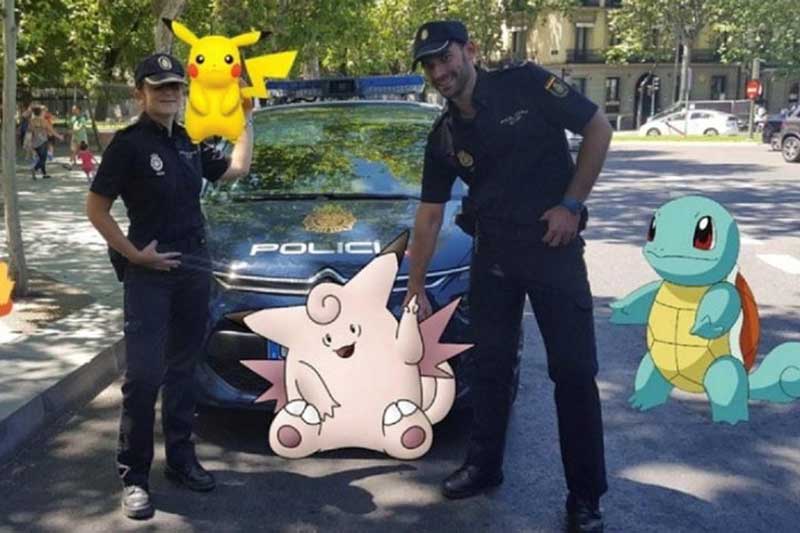 Of course, you know all about it. It has overshadowed all other headline news. It has become everyone’s passion. There’s no escaping it.
No, I’m not talking about the presidential elections, climate change, or global terror. I’m talking about something really important:
Pokemon Go.
If you haven’t heard of it, you probably live in a cave and won’t be reading this anyway. If you don’t understand what it is… well, that’s a different story.
For people of a certain age — not to mention a certain level of maturity and common sense — the latest tech-fad is barely comprehensible. Countless denizens of the virtual world have crawled out of the darkness and into the sunlight to search for animated characters that can only be seen on their cell phone screens in undisclosed locations. By wandering about pointing their phones hither and thither, players find cartoon critters, then take aim and “shoot” to catch their pixilated prey.
As inane as it may sound, the game seems relatively harmless. It also has the benefit of drawing participants off their couches and encouraging them to put their atrophying appendages back into use, sometimes by walking miles in pursuit of quarry. Guided by an all-knowing, all-seeing cosmic GPS mastermind, Pokemon creatures may crop up anywhere, leading players on quests of “augmented reality.”
But is it really harmless?

Days of Shame
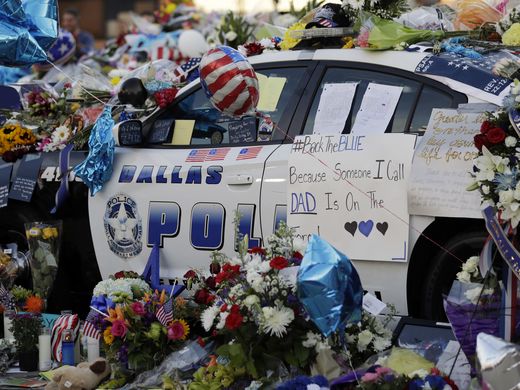 Five policemen cut down in the line of duty. Two more civilians cut down by errant policemen. A mistrustful population further convinced that there is no one deserving of their trust.
It’s more than a shame. It’s shameful. We need to point fingers, even as we recognize that finger-pointing lies at the heart of our problems.
Maybe there is a way to turn around the blame-game, to turn partisanship into hope of something positive. The only way to begin, however, is to acknowledge how we got here and to ask uncomfortable question of the people responsible… ourselves included.

Spitting Image 5:3 — Visions of Martyrdom
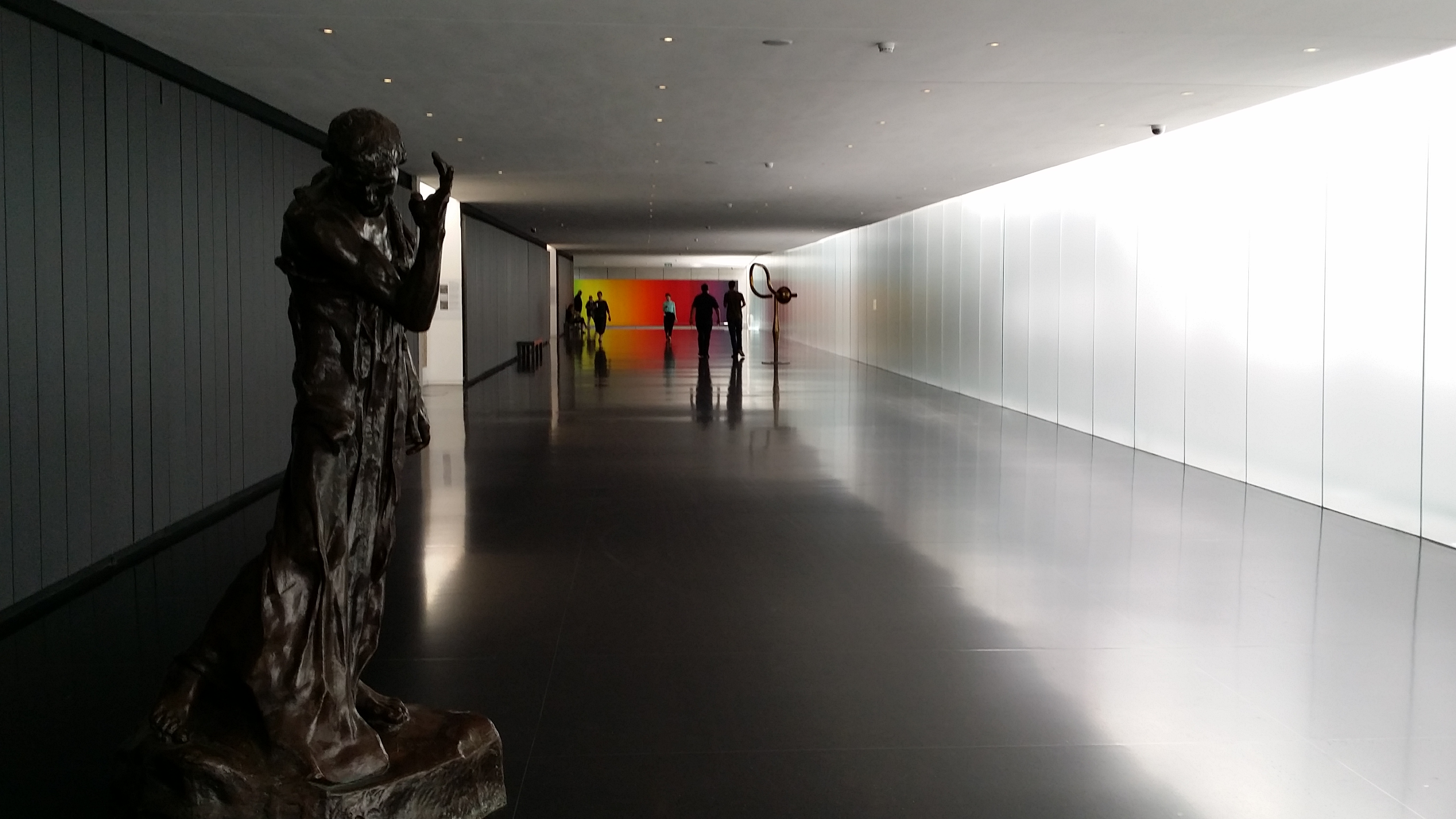
In the vast, austere entry hall to the Israel Museum, with its ultramodern monochrome walls, prismatic focal point, and symbiotic theme of shadow and luminescence, you happen upon a discordant figure: one of the Burghers of Calais, sculpted by the French master Auguste Rodin.
The original sextet of figures represents the city fathers of Calais who surrendered themselves to save their besieged city during the Hundred Years’ War. With heads and feet bare, ropes around their necks, and the keys of the town in their hands, the burghers were brought before the English king Edward III who ordered them beheaded.
Although their lives were eventually spared, Rodin has rendered their images as they prepare to meet what they believe will be their end, their respective expressions spanning the gamut from stoicism to despair.
As jarring as the image may appear in this contemporary setting, the story resonates deeply with ancient Jewish tradition. In the Yom Kippur liturgy, there figures prominently the narrative of the 10 Martyrs, the talmudic sages who received the Heavenly decree that their deaths would atone for the sins of their generation and deflect Divine wrath from their people. They too went to meet their end stoically, but without despair.
Martyrdom is not something we seek, but there are times that call for self-sacrifice of one kind or another. In this generation of selfish individualism, entitlement, and personal autonomy, we can look to the past to remind us that tribalism, senseless violence, and identity politics are all symptoms of a society that has forgotten how to commit itself to a higher sense of purpose, and that only by setting aside our superficial differences can we survive as one people.
Spitting Image 5:1 — Writing on the Wall
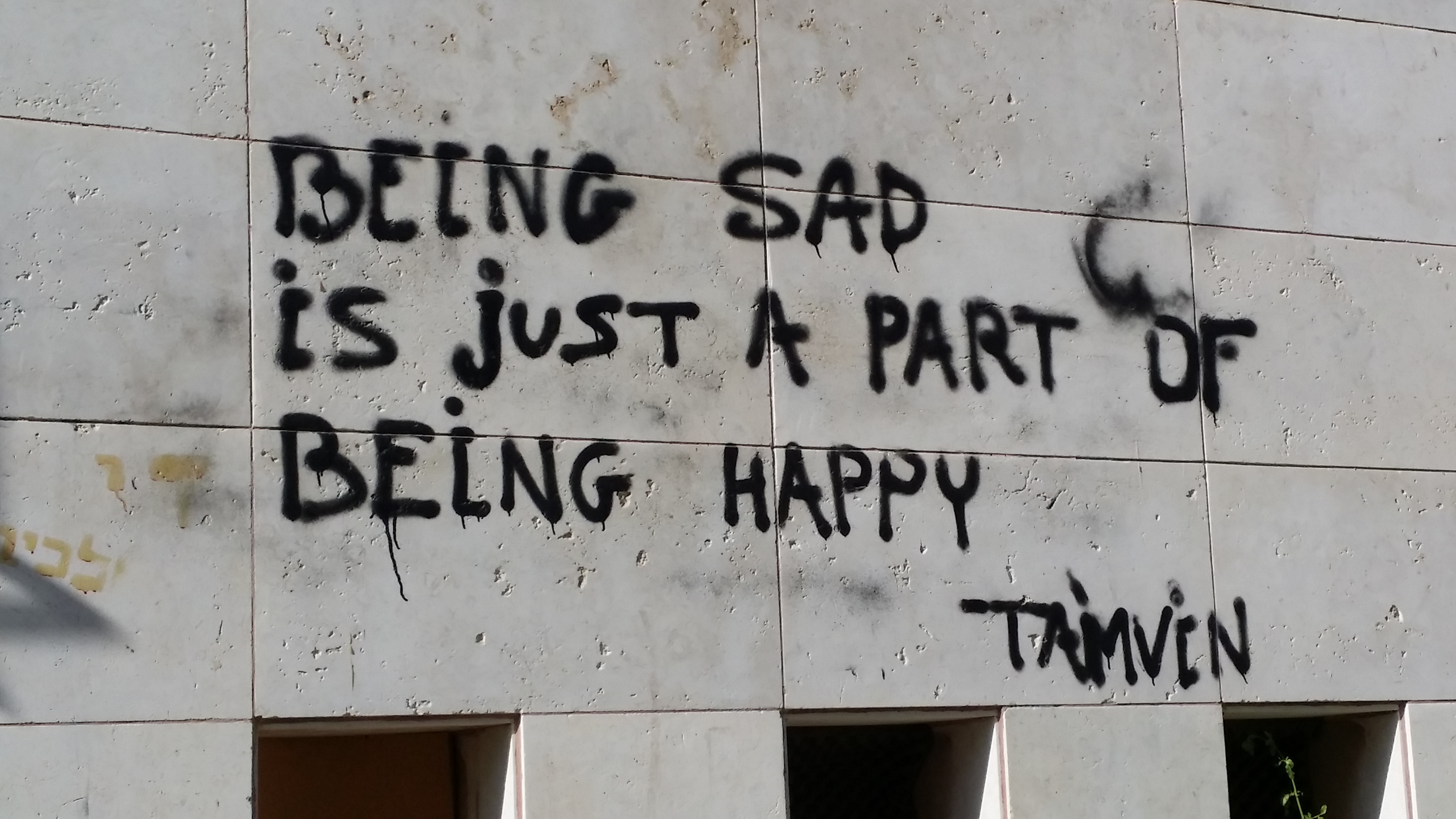 In Israel, even the graffiti aspires to wisdom and spiritual elevation.

The Divided States of America
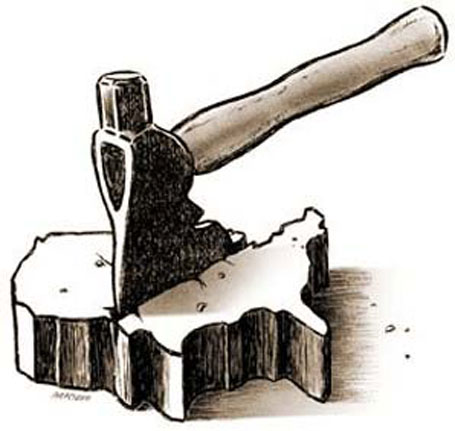 E pluribus unum — Out of many, one.
Such a glorious sentiment, 240 years old this week, destined for the dustbin of history.
In contrast to the vitriol of the broadsheets from two centuries ago — which belied a common commitment to basic, “self-evident truths” — the unfiltered invective filling our airwaves today reveals a wholesale abandonment of common values or, even worse, of any values at all.
With the general election now reduced to a choice between the two most unpopular candidates in American history, the undeniable takeaway is that our population has splintered into four intractable camps, each unwillingly come to terms with any other. Here is a snapshot of who we now are.
 Yonason Goldson