Home » Posts tagged 'Conflict' (Page 14)
Tag Archives: Conflict

Who we are not
 So here we are again, contemplating a general election that will give us a choice between the lesser of two evils. And the likely options look to be more noxious than any we’ve ever had to face.
Everyone is asking the same question: how did we get here? And the bad news — which is old news — is that negative advertising works.
But why does it work? Everyone hates it, everyone complains about it, everyone laments the decline of civility, the widening of the political divide, and the incurable blight of ideological gridlock. So why do we continue to respond to the very thing we can’t stand in a way that makes it keep getting worse?
A new study may offer a glimmer of explanation.

Spitting Image 2:6 — The FBI vs. Apple: Lessons Learned
 Good news, everybody! The FBI has found a workaround to break into the iPhone of suspected San Bernardino terrorist Syed Rizwan Farook, and the Department of Justice is backing down from Defcon 1. So now that the crisis is averted, what are some practical lessons we can learn about confrontation and conflict resolution?
Here are a few suggestions:
Both sides might be right. The FBI and Apple each claimed national security as its top concern. The FBI was thinking short-term — stop more terrorist attacks now; Apple was thinking long-term — don’t make ourselves vulnerable later. It’s entirely possible that both parties were sincere and correct.
So here’s the first takeaway. Until evidence proves otherwise, assume positive intent. Your adversary is not necessarily evil; he may just be looking at things from a different angle. Trying to understand his position before going into attack mode may avert conflict and promote mutually beneficial cooperation.
Go around roadblocks, not through them. Apple refused to cooperate. The FBI refused to back down. But as each party dug in and the deadlock stretched out, government officials did something that should renew our hope in government officials: they looked for another way of solving the problem. When the most straightforward plan of action isn’t panning out, don’t give up on finding a detour.
There might already be a solution. After arguing for months that it was impossible to break the phone’s encryption without Apple’s help, the government apparently found hackers who did what hackers said they could do from the beginning: find a way in. So if you don’t know what to do, ask someone who knows more than you do.
Nothing is foolproof. It’s a cliche, but cliches are usually true. Anything that can be protected can be broken into; and any plan can be thwarted. Or, as Yogi Berra used to say: Good pitching will always beat good hitting; and vice versa.
There are no perfect fixes. Although the Department of Justice isn’t releasing details, some believe that breaking into the phone may have caused some of its data to be irretrievably lost. A win doesn’t have to be 100%. In business, in diplomacy, and in most of life, it rarely is. If you end up with most of what you want, don’t let what you had to give up spoil your victory dance.
Save litigation as a last resort. Law suits cost everybody; except the lawyers. So if you’re not a lawyer, try everything else before you push the nuclear button.
Working together makes you look better. Black eyes and bloody noses are painful and unattractive, even when you win. I’m reminded of the Karate master who was accosted by hoods as he was leaving his dojo. “Do you want to beat me?” he asked. “Yeah, we want to beat you,” their leader replied.
The master could easily have dispatched the young miscreants without breaking a sweat. Instead, he took of his jacket and laid down on the sidewalk. “Now you have beaten me,” he said. The hoods looked at him in confusion, then drifted away.
Maybe cooperating means giving up a little more now. But you will almost certainly come out ahead in the end.

Spitting Image 2:5 — Keeping within the lines
 What’s wrong with this picture?
Well, that really depends; if there is no shortage of available parking spaces, or no handicapped spots open, perhaps nothing at all; if it is a one-time, careless indiscretion, it might be dismissed; if it is an expression of neurotic fear that others will damage the paint job by carelessly throwing open their doors, it might be understood, if not condoned.
But if it is symptomatic of indifference to the conventions of parking and the potential inconvenience to others, then it becomes something else entirely.
There is a good reason why lines are painted in parking lots. And there is more than one good reason to park one’s car between them.
We can apply the same principle to other conventions, some within the formal dictates of the law and others simply defined by custom and culture. Rolling stops at intersections, or disregarding stop signs altogether on a lonely road in the middle of the night. Changing lanes without signaling, or disturbing passengers on the subway with loud voices or offensive speech. Pushing into an elevator without waiting for its occupants to exit first, or cutting the line at the ticket booth. Setting the knife on the dinner table with blade turned outward, or not using cutlery at all.
Are there worse things? Of course there are. Should these things be legislated? For the most part, definitely not.
But is there something lost when we lose respect for these “trivial” conventions? Undeniably there is.
In his insightful book Civility, Stephen L. Carter explains the common root that turns “civility” into “civilization.” Of course we have to be a nation of laws; that’s a given. But just as important is being a nation of respectfulness, consideration, and self-reflection. Taking into account how our actions will affect others is not a matter for legislation; it is the symptom of a morally healthy world view, and of an awareness that what others expect from me is inseparable from what I can expect from others.
Like the proven “broken windows” theory of urban renewal, the respect I show for convention will serve as a model for others, making it easier for them to retain their own respect for the minutiae of personal conduct that produces a more pleasant society for everyone.
Even if we want to indulge our selfishness, respect for convention benefits us as well. The same discipline that makes me complete my set of 15 reps in the gym when I really want to stop after 12, that makes me finish my peas before I serve myself dessert, that makes me vacuum under the sofa even though no one is going to see the accumulated dust there — all these little concessions to doing things right reinforces our commitment to doing good and doing right on a grander scale by reminding us that there is a higher ideal in the world than our own individual comfort and convenience.
So there is good reason to park between the lines even when the parking lot is empty. Because you never know what other lines you may be tempted to cross, and you may not recognize the danger of crossing them until you’ve already gone over the edge.

Purim and the Jewish response to terror
After the horrific attacks in Brussels, especially coming as they did so close to the Festival of Purim, I’m revisiting these thoughts from 2005. Lest we forget.

Pogroms. Genocide. Jihad.
These are the devices our enemies have directed against us throughout the ages, for no other reason than because we are Jews. Yet for all that, the commitment to mercy and justice that defines us as a people and sets us apart from the other nations of the earth ensures that we would never seek the destruction of another people simply because of who they are.
Or wouldn’t we?
You shall erase the memory of Amolek from beneath the heavens. So the book of Deuteronomy commands us — a command renewed from generation to generation across the span of Jewish history — to strike down the nation of Amolek and obliterate its memory from the consciousness of mankind.
How is such a precept defensible? How can we claim the moral high ground over our enemies if we resort to the same tactics that they employ against us?
The decree against Amolek, however, is based upon neither racial hatred, ethnic struggle, religious ideology, nor even historical justification. Many nations have differed from the Jews in belief, practice, and culture, and many of these have waged war against us and sought our destruction. But only the nation of Amolek warrants such condemnation, not only that we seek out and destroy it, but that we never forget the reason why.
Remember what Amolek did to you on the way, as you departed from Egypt: How they fell upon you in the desert, when you were tired and weary, and cut down the weak who trailed behind you.
Why did Amolek attack us? Why did they descend upon us in the desert, unprovoked, and attempt to annihilate us?
At the time of the Jewish exodus from Egypt, 3328 years ago, the entire world witnessed an event both unprecedented and never to be repeated: The miraculous destruction of the most powerful nation on earth and the even more miraculous supremacy of a small and oppressed people. No one in the world doubted the involvement of the Divine Hand behind the upheaval, nor could anyone fail to recognize the significance of this fledgling nation: the rise of the Jewish nation introduced human civilization to such ideals as peace, collective conscience, social responsibility and, above all, a standard of moral values that would become the foundation of all ethics and human virtue.
Such ideals, previously unknown to human society, did not find immediate universal acceptance. Indeed, the values of Judaism have been rejected and discarded time after time throughout human history. But in the wake of the miraculous destruction of Egypt, every nation and every people recognized what the Jewish nation represented. And every nation stood in awe of them. Every nation except one.
The nation of Amolek despised the very concept of moral standards. They would accept no moral authority, would make every sacrifice to protect their moral autonomy, and would employ any tactic to strike out against the nation who, by teaching morality to the world, threatened to render them a pariah.
Why is it important that they cut down the weak who trailed behind you? What does it reveal that they chose the moment when an unsuspecting people were tired and weary to attack? What perverse strategy drove them to embark upon a hopeless campaign of violence that had no hope of success?
In short, Amolek introduced the world to the tactics of terrorism, launching a suicide campaign against the defenseless, against the tired and the weary, just as their ideological descendants would later blow themselves up to murder women and children, waging brutal physical and psychological war upon a civilian population — not for clearly defined political gain, but to spread chaos and the moral confusion of disorder.
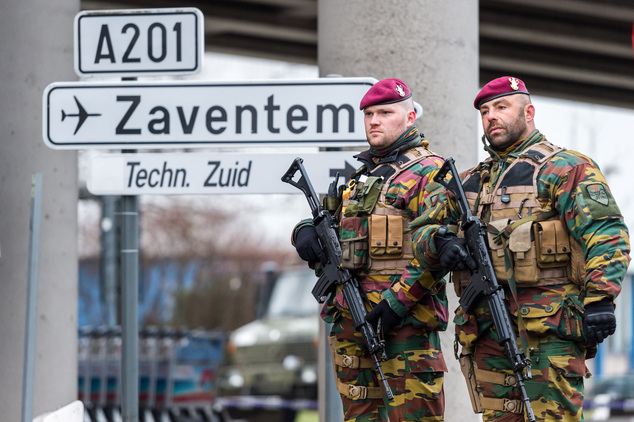
In response, the Torah teaches us the only possible answer to terror: Not negotiation, not compromise, not appeasement, not even military conquest and domination — none of these will ever succeed against the terrorist who seeks nothing less than the obliteration of his enemies, the terrorist driven by such singular purpose that he will sacrifice everything to achieve it and will stop at nothing until he has attained it. He will use others’ desire for peace, their respect for human life, and their confidence in the ultimate goodness of mankind as weapons to destroy them; he will make any promise and offer any gesture of goodwill to gain the opportunity to take another life, to cripple another limb, to break the spirit of all who stand between him and moral anarchy.
In confronting terror, little has changed over the course of 33 centuries. Four centuries after Amolek’s attack upon the Jews in the desert, King Saul showed a moment’s mercy to the king of Amolek, thereby allowing both that nation and its ideology of terror to survive. Five centuries after that, when the Jews of Persia thought to appease Haman, a descendant of Amolek, they very nearly brought about their own destruction, saved only by the miracle of Purim. Similarly did the governments of Europe seek to appease the greatest criminal in modern times, empowering him to send millions to meaningless death in pointless battle and incinerate millions more in an incomprehensible Holocaust.
And today, Western governments and ideologues continue to promote negotiation with and concession to terror, even as more and more innocents are murdered and maimed. Like King Saul, they prove the talmudic dictum that one who shows mercy at a time for cruelty will show cruelty at a time of mercy. For all its insistence upon compassion, upon virtue, upon love for our fellow man, Judaism teaches the cold practicality of confrontation with terror, that there can be no peace with those committed to violence, that there can be no offer of good faith to those who renounce faithfulness, that there can be no respect for the lives of those who devote their lives to dealing out death.
For those who live and die for the sake of terror, only one course of action exists to preserve the society that makes peace and justice possible: to erase their memory from beneath the heavens.

Nothing left to say, nothing right to say
 I’m going to make a greater effort to stay away from politics in general and Donald Trump in particular (although I’ve made that resolution before without much success). I’ve been baffled by the responses I’ve gotten from Trump supporters accusing me of dishonesty and spreading a message of hate.
It’s hard to imagine how individuals who claim sensitivity to lying and hate-mongering are able to overlook such an abundance of both in their own candidate’s rhetoric. But I’ve already addressed the proliferation of such double-standards and willful ignorance elsewhere.
So here is my parting shot (for now), excerpted from an article by the always-insightful Jonathan Rosenblum:
IF DONALD TRUMP SPEAKS to voters tired of being ignored and condescended to, he is nevertheless a disastrous representative of them. Nothing in his life until now has shown an iota of concern with those who now salute him, and he has not offered one serious policy prescription that would address their economic insecurities. All he offers is his boastful self-promotion and a call for the power to make America great again. However different in style he is to the polished and fluent Barack Obama, he offers the same promise of being some sort of miracle worker. (Remember when Obama pronounced his nomination as the day the oceans cease to rise.)
Trump is not the antidote to thought-stifling political correctness, as his supporters seem to think. Vulgarity and the lack of basic human decency are not the opposite of political correctness.
[Trump] has betrayed no understanding of the American system of checks and balances or three co-equal branches of government. Recently, he boasted that he would gut First Amendment protections of the press to make it easier for him to sue, in the manner of Turkey’s Erdogan, reporters and papers that get under his tissue-thin skin.
ONE OF THE WISEST OF THE FOUNDERS, Benjamin Franklin predicted, “Only a virtuous people are capable of freedom. As nations become corrupt and vicious, they have more need of masters.” And, as David French argues, “Trump is running not for president of a constitutional republic but to be the strongman of a failing state.”
One by one, many at first inclined to hold their noses and vote for Trump (and there is an argument for doing so) have determined that they cannot, for he will further lower the standards of an already debased culture. For some it was his casual dismissal of the courage of John McCain during six years of torture in North Vietnamese captivity, which left McCain permanently disabled.
For Andrew McCarthy, the lead government prosecutor in the first World Trade Center bombing, it is Trump’s boast that he will order American troops to become war criminals and target the wives and children of ISIS fighters. For Stephen Hayes of the Weekly Standard, it is the impossibility of explaining to his young children why someone would mock the physical disability of a crippled reporter. For the religious conservative David French, it is his pledge to keep funding Planned Parenthood to the tune of millions of dollars, so that it can continue killing hundreds of thousands of babies a year.
These thoughtful conservatives are shocked that Trump’s supporters rather than being appalled by his cruelty and malice are attracted by it. They see him as the artifact of a society from which the civic vitality catalogued by de Tocqueville has been lost and replaced by vitriol and demagoguery.
“Our Constitution was made for a moral and religious people,” wrote John Adams. “It is wholly inadequate for the governance of any other.” (Hat tip again to David French.) If so, America is grave danger on the evidence of this election season.
Hat tip: Sylvia Poe

Spitting Image 2:4 — Don’t say “Cheese!” Really?
ISIS threatens to bring terror to our shores. Iran and North Korea threaten to launch nuclear missiles against our cities. The national debt soars out of control. The divisions of ideology and race widen inexorably, as does the gap between rich and poor. The structure of the family continues to disintegrate, along with the core values that once gave us a sense of higher purpose and national identity.
 So what is the one issue that really gets people’s blood boiling? Apparently, it’s the suggestion that Hillary Clinton doesn’t smile enough.
I’ve never paid any attention to MSNBC host Joe Scarborough, so I have no preconceived notions, although he seems to be a surprising voice of moderation on that most immoderate network. And I wasn’t watching the news on election night, so I can’t comment on whether Hillary Clinton should or should not have been smiling more when Mr. Scarborough tweeted:
Smile. You just had a big night. #PrimaryDay
This was too much for many women. Of all the belittling, misogynistic comments that Mr. Scarborough might have made, this one crossed the line of lines.
As the Washington Post explains: Being told to “smile” may be the ultimate nails-on-the-chalkboard comment for women.
Sorry, ladies, but I’m with Mr. Scarborough on this one. Because the truth is that we all need to learn to lighten up and smile more.
Like almost everything else in our society, our view on humor is completely backwards. The most caustic personal attacks are the standard fare of light-night television, while innocent quips and casual banter are condemned as “microaggressions.” Biting sarcasm is seen as the pinnacle of wit, while self-effacing irony is misconstrued as condescension.
This has nothing to do with Hillary, and it’s not just about women. If we really want to do something about the rise of violence and the demise of civility, the answer is right here:
Smile more, take pleasure in the company of friends and strangers alike, find joy in good-natured wordplay, laugh at your own shortcomings and inconsistencies, and look for ways to connect with others instead of staking out claims and drawing battle lines.
Indeed, the sages of the Talmud urged us relentlessly to draw others into our sphere of happy influence. Here are a few examples:
 Rabbi Masya ben Charash said: Initiate a greeting to every person.
Rabbi Yishmoel said: Be respectful toward a superior, be pleasant to the young, and receive every person with joy.
Shammai said: Receive every person with a cheerful countenance.
Hillel said: Be like the disciples of Aaron — loving peace and pursuing peace, loving others and bringing them closer to the ways of wisdom.
Rabbi Chanina ben Dosa said: If the spirit of one’s fellows is pleased with him, the spirit of the Almighty is pleased with him as well.
So stop whining and start smiling.

Spitting Image 2:2 — When sacrifice is for the birds
 Would you sacrifice one of your children to save the other?
That was the unthinkable dilemma revealed at the climax of the Meryl Streep classic Sophie’s Choice, which left the heroine emotionally scarred for the rest of her life.
The poignancy of that final scene tears at the insides of anyone who’s ever seen it. Some things are too hideous even to contemplate, and we simultaneously rage against the evil of the Nazi tormentor and ache for the mother who had to choose and could never forgive herself for choosing.
But reality can be just as disturbing as fiction. A recent study by University of Florida scientists describes how herons, egrets, and storks living in the Everglades willingly sacrifice some of their young to alligators living below their nests so that the alligators will protect the remaining chicks from raccoon and possums.
The deal makes perfect sense for the alligators: they get a steady diet of baby birds falling from the sky almost straight into their mouths. And it makes perfect sense for the mothers as well: since birds typically have more young than they can care for, so giving up a few who wouldn’t survive anyway to protect the rest is practical, logical and, arguably, moral.
Except that it isn’t. What separates human beings from animals is conscience. When our moral compass is functioning as it should, simple pragmatism isn’t enough to govern our decision-making. And if the cost of cold, hard logic, no matter how sound, requires us to sacrifice our humanity, then it is our willingness to embrace the full measure of devotion to a higher moral standard that serves the greater good, even when no one else is watching and no one else will ever know.
Sacrifice of oneself for the benefit of others is the most noble quality of humankind. Sacrificing others for our own benefit shows us to be lower than the lowest animal. Because, unlike animals, we know better.
Or, at least, we should.

Behind the Hero on the Screen
 In the aftermath of this weekend’s Academy Awards Ceremony, I’m revisiting these thoughts from 2009. If you didn’t follow the link when I posted it a few weeks ago, now you have another chance.
Which of the following quotes does not belong with the others:
It is not what I am underneath, but what I do that defines me.
With great power comes great responsibility.
It is a far, far better thing that I do than I have ever done before.
Literary mavens will quickly identify the third quote as different from the first two for several reasons. First, it was written in the 19th century, where the others were written in the 21st. Second, it is a line from novel, where the others are lines from motion pictures. And third, it is the only one of the three not spoken by a Marvel Comic superhero.
On a more substantive level, however, all three have very much in common.
The first of the three is spoken by Bruce Wayne in his guise as Batman, explaining away his public playboy persona as a device to conceal his secret identity. The second is spoken by Peter Parker, aka Spiderman, explaining why he is walking away from the woman he loves in order to protect her from the enemies that would try to strike at him through the people closest to him.
The third quote is the closing line of Charles Dickens’s classic A Tale of Two Cities, in which the heretofore-undistinguished Sydney Carton expresses his love for Lucie Darnay by taking the place of her husband, Charles, and suffering death by guillotine so that Charles might live.
All three quotes issue from heroes who not only do great things at personal risk, but who sacrifice life, love, and reputation for a higher ideal. From a brooding moralizer like Dickens, we expect nothing less. From Hollywood scriptwriters and producers, however, we expect anything else.
FOLLOW THE MONEY
As the Oscar season descends upon us, its worth reflecting that Hollywood is known as Tinsel Town for good reason. Glitz, superficiality, and immediate gratification have become synonymous with the land responsible for most of today’s entertainment industry. Revolving door marriages and divorces, infidelity, and recreational drugs are only the most obvious symptoms of a culture that glorifies the pursuit of pleasure and the deification of personal autonomy.
Predictably, the film industry can be counted on to turn out major motion pictures that are thinly veiled propaganda pieces. Such unmemorable productions as Brokeback Mountain, Lions for Lambs, and The Good Shepherd may have curried favor with Hollywood politicos eager to promote alternative lifestyles or government conspiracy theories, but the movie-going public has shown considerably more enthusiasm for traditional good versus-evil-stories in which good triumphs in the end. (For the record, haven’t seen either Brokeback Mountain or Lions for Lambs.)
 If box office receipts are any indication, there can be no doubt that audiences will choose classic heroism every time. The musings of a couple of culturally conflicted cowboys on the open plain can hardly compete with such memorable moments as the President of the United States (played by Harrison Ford) throwing an international terrorist out the cargo hold of his plane in Air Force One or Kevin Kline’s presidential impersonator cutting government pork at a cabinet meeting to save funding for an orphanage in Dave.
That Hollywood did in fact release such movies as Batman Begins, Spiderman, and Air Force One, however, reveals an insight into Left Coast Culture that is at once obvious and surprising.
What is obvious is that money trumps ideology. When all is said and done, filmmakers would rather see increased revenues than the spread of counter-culture ideology. Fair enough. But what is truly remarkable is how well they understand the nobility, the selflessness, and the heroism of personal sacrifice that are so often at the heart of successful moviemaking.
MANKIND’S INNER HERO
Once upon a time, heroism in Hollywood was the norm. But we don’t have to go all the way back to Humphrey Bogart’s “the problems of three little people don’t add up to hill of beans” speech in Casablanca when he gives up Ingrid Bergman. When Helen Hunt refused to abandon her family for Tom Hanks in Cast Away, when Kelly McGillis refused to abandon her Amish community for Harrison Ford in Witness, when Robert Redford emptied out of his life’s savings to rescue Brad Pitt in Spy Games, the positive resolution of their inner conflicts provided some of the most powerful emotional climaxes in modern cinema. And let’s not forget this year’s biggest hit, The Dark Knight, in which Batman takes the blame for murder to allow Gotham City to keep its illusion of hope.
Perhaps the culture of make-believe that turns out movies of heroism is incapable of believing in either real heroism or the values that turn ordinary people into heroes. Why else would they persist in churning out so many ideological flops in between traditionalist blockbusters? One almost feels sorry for the creative geniuses that can portray such compelling drama on the screen but seem incapable of applying it to the reality of their lives.
The classical philosopher Rabbi Moshe Chaim Luzzato describes the human condition thus:
And so [man] finds himself truly in the midst of a raging battle, in which all the matters of the material world, whether good or evil, serve as trials for man. Poverty confronts him on the one side and wealth on the other… comfort on the one side, and suffering on the other, until he faces a battlefront before him and behind. But if he will be valiant and prevail against his adversaries on every side, then he will become a Complete Man.
Movies can remind us of the moral battles we face constantly in our own lives between what we know and what we feel, between what is right and what is pleasing, between rising to each new challenge or abdicating struggle for the line of least resistance. We rejoice when silver screen heroes emerge triumphant from their inner struggles, for they remind us that we too can emerge triumphant. But we despair when they fail, for they remind us how easily we too can fall prey to our inner demons.
It’s ironic that Hollywood filmmakers can describe the human condition so vividly with so little understanding of it. Perhaps they should watch their own movies – the ones that audiences go to see.

The Devil can’t make you do it
 Hey, mom. Post-partum depression got you down? Thinking of leaving your husband? Don’t fight it; just let him go. After all, it’s not your fault.
It’s your hormones. That’s the latest from the world of science. According to psychologist Jennifer Bartz of McGill University, researchers have identified a link between new parents divorcing and low levels of oxytocin.
Whatever the explanation, there seems to be a familiar eagerness by researchers to impose a chemical, as opposed to a psychological, explanation upon human behavior. Scientists often appear to prefer a model that links our choices to biological and evolutionary causes, further disassociating human decision-making from that most obvious explanation — free will.

Article of Faith: Victims and Survivors in Kalamazoo
Last Saturday evening, according to CNN, the Michigan shooter drove through the streets of Kalamazoo for seven hours, firing at eight people in different neighborhoods and killing six of them. In between attacks, he picked up and dropped of Uber passengers without incident.
 “There isn’t a connection that we’ve been able to establish between any of the three victim groups with each other, any of the three victim groups with the defendant,” said Michigan prosecutor Jeffrey Getting.
What could these victims have done to protect themselves? Why were the survivors chosen for life and not for death? The natural conclusion is that the world is a place of randomness, where we are left to the hands of fate without rhyme or reason.
Amidst all the pain and confusion, is there any way for us to confront the presence of evil in our world and the persistent appearance of disorder without retreating into bitterness and despair?
As we mourn and look for answers, I’d like to offer these thoughts from 2009.
Every night, most of us go to bed without questioning whether we’ll wake up the next morning or whether the sun will rise in the east. Every morning, most of us go to our front doors confident that our cars will start, that the trains will run, that our coworkers and customers will be respectively friendly, or sour, or aloof, each according to our expectation based upon experience.
Is this faith? Or is it rather the reasoned projection of logical extrapolation? Or is there a difference?
Over the past two decades, 50% more tornadoes have swept through the state of Illinois than the state of Alabama. Nevertheless, Alabama has suffered many more fatalities. An article in the journal Science has suggested the following explanation: Because people in Alabama tend to share the religious conviction that their destiny is in the hands of G-d, they resign themselves to the inevitability of Divine Providence. In contrast, people in Illinois more commonly believe that they are in control of their own destiny and masters of their own fate; consequently, they are more inclined to take action toward ensuring their own safety and welfare.
If correct, this analysis might imply that faith is vastly over-rated. If dependence upon the Almighty increases the likelihood of an early demise, perhaps we should all reject the notion of faith and conclude that God really does help those who help themselves.
Alternatively, we might re-evaluate our understanding of faith.
 The Hebrew word emunah — commonly translated as faith — is more accurately translated at faithfulness. It is less descriptive of our internal beliefs and more descriptive of our external behaviors. It describes not our feelings but the degree to which our commitment translates into concrete actions. Most significantly, it expresses our conviction that the Almighty keeps faith with us, even when we may fail to keep faith with Him.
Consider the husband on a business trip a thousand miles from home who resists the overtures of an attractive young woman in the hotel lounge, the teenager away at college who leaves a party when hard drugs start passing around, the lowly private who doggedly advances according to orders even when he is cut off from the rest of his company — all these are examples of faithfulness that endures even when human logic and fear of consequences offer no objection, even when peer-pressure urges us to abandon duty and loyalty. These are the truly unsung heroes, who set aside the relentless calling of self-interest and immediate gratification for nothing but the commitment to another person, to a code of honor, or to an ideal.
According to Jewish philosophy, our trust in the Almighty is not the “leap of faith” that comes from believing without logic or reason, but the confidence that comes from knowing that the Almighty has proven His faithfulness again and again over 3,300 years of uniquely supernatural history. It derives not from our faith that everything will turn out the way we want all of the time, but our certainty that everything is guided by Providence, and that the logic behind every divine edict is true and just — even when it is unfathomable to human understanding.
Finally, faithfulness does not require us, nor even advise us, to sit by passively and await the Divine Will to reveal itself before us. Rather, it requires us to act in our own best interest while adhering to the moral laws of God and man.
Almost everyone has heard the story of the clergyman forced to seek refuge on his rooftop by the rising waters of a flood. One boat comes and offers to save him, but he replies, “I have faith in God.” Another boat comes,and then another, but he refuses to accept help. Finally, a helicopter drops down a ladder and warns that they are the last of the rescuers. But the man of the cloth declares, “I have faith in God.”
The floodwaters continue to rise, and the clergyman drowns.
Upon arriving in the next world, he asks why, in spite of his devout faith, the Almighty did not save him. And God replies: “What did you want from Me? I sent you three boats and a helicopter.”
G-d does indeed help those who help themselves. But He ultimately rewards those who remain faithful, who recognize that there is both a time for taking matters into our own hands and a way to do so without compromising our faithfulness to the Master of the Universe. There is a time to live — through determined effort, with honor and dignity and self-respect. There is also a time to die — either when the cost of personal integrity becomes too great, or when one’s time is simply up, no matter how random the events that end a life may appear.
Learning to strike the perfect balance between determined effort and principled resignation is the work of a lifetime. It is also the key to achieving true faithfulness to God while taking comfort in the promise that, despite the illusion of chaos and the very real pain of loss, everything happens for a reason.
Originally published in Jewish World Review
 Yonason Goldson