Home » Posts tagged 'Conflict' (Page 18)
Tag Archives: Conflict
Unforgivable
Should Dylann Roof be Forgiven for the South Carolina Massacre?
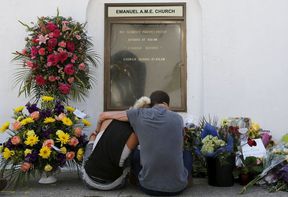 In an extraordinary example of human nobility, relatives of those killed in the Charleston, South Carolina, massacre expressed their forgiveness for Dylann Roof, the domestic terrorist who opened fire and took nine lives from the historic Emanuel A.M.E. church community. The mourners’ refusal to indulge their natural human impulse for revenge and to return love for hatred shows us all how it is possible to heal our fractured society.
Proverbial Beauty: Read now at Amazon.com
On a deeper level, however, the question of forgiveness is vastly more complicated.
One of the most compelling works of Holocaust literature is The Sunflower, an anthology built around the experience of survivor Simon Wiesenthal in the Lemberg Concentration Camp. In 1943, Mr. Wiesenthal was summoned to the deathbed of Karl Seidl, a Nazi soldier haunted by the atrocities he had committed, who wanted desperately to receive forgiveness from a Jew before he died.
Mr. Wiesenthal describes how he could find nothing to say and left the soldier without uttering a word. He then grapples with the question of whether he should have offered forgiveness, ultimately offering his answer by reframing the question:
ONE FOR ALL?
The crimes committed by the Nazis were not directed against individual Jews but against the Jewish people as a whole. Consequently, the torture and torment inflicted upon any Jew was in fact a crime against every Jew. Each individual victim was not a person but one of a people — the perpetrators didn’t care who he was but what he was — and therefore no individual had the power to grant forgiveness since an entire nation was targeted through each act of individual violence.
In other words, it wasn’t a matter of whether Mr. Wiesenthal should forgive, but whether forgiveness was his to give at all.
The same reasoning applies to all hate crimes. Whether the victim is black or white, Hispanic or Asian, Jew or Gentile, citizen or immigrant, rich or poor, any act of violence motivated by identity is not merely a crime against one person but a crime against mankind. As such, it transcends mere brutality or wickedness and rises to the level of gross inhumanity. By doing so, it becomes unforgivable.
So how can an act of forgiveness be both noble and impossible? Part of the confusion stems from a lack of clear definition. What is forgiveness? And why should forgiving evil ever be considered noble?
In the best-case scenario, forgiveness is a response to contrition. When a perpetrator recognizes the evil of his own actions, sincerely regrets them, and seeks to repair or atone for the harm he caused, then to withhold forgiveness becomes an act of evil itself. In such a case, to grant forgiveness becomes not merely noble but a moral obligation.
Proverbial Beauty: Read now at Amazon.com
But what if the perpetrator feels no remorse? Or what if he has no intention of righting the wrongs he has caused?
Even in that case, if one can understand, or even imagine, what motivated an act of evil, then it might be possible to forgive the offender for his own human weakness, whether it was a momentary lapse in temper or judgment, an innate lack of moral clarity or, as may or may not be the case with Dylann Roof, demonstrable psychological instability. To be able to see past one’s own pain and find a mitigating factor to excuse violence is truly noble… even saintly.
WITHOUT REMORSE
However, in the case of conscious, calculated evil, forgiveness may actually be a perversion of morality. Moral values should be so deeply rooted within that we can’t help responding to any violation of them with indignation and outrage. If we are truly committed to the values of good, how can we possibly tolerate evil, or those who do evil, especially when they do it in the name of good?
This is what the sages of the Talmud meant when they said, Be discerning in judgment. Look for every possible means of explaining away bad behavior. But after all is said and done, evil remains evil. Nonjudgmentalism is an empty slogan that allows evil to proliferate unchecked.
What often gets lost in the discussion of forgiveness is the matter of accountability. If I break your window, my apology means nothing unless I’m willing to pay for the window. And if I’ve caused damage that can’t be repaired, punitive restitution may be the only means through which society as a whole can preserve respect for the rule of law and confidence in the institutions of justice.
The particulars are open to debate. There are legitimate grounds to oppose the death penalty, mostly based in the real concern that an imperfect legal system cannot guarantee the guilt of those sentenced to death.
But to oppose capital punishment on the grounds that the state has no right to take a life misses a larger point. One who takes the life of another member of society forfeits his own place in that society; moreover, a society will retain its respect for the sanctity of life only with the recognition that by taking a life one forfeits his own right to life as well.
To take the life of any one person is, on some level, to take the life of every person. Justice must be served. Only then may it be possible to forgive.
Proverbial Beauty: Read now at Amazon.com
Click here to read this article and more from Yonason Goldson at Jewish World Review

9 Ways to Keep your Integrity
 Everyone likes a good story.
I have my share to tell, having spent my prodigal youth hitchhiking cross country and circling the globe, living abroad for a decade, and teaching high school for over 20 years.
But it still happens that friends and neighbors occasionally respond to my recollections by asking: “Did that really happen?”
Read the intro to Proverbial Beauty at Amazon.
Are my tales so truly unbelievable? After all, I never claim to have flown to the sun with Icarus, to have crossed the Rubicon with Julius Caesar, or to have followed Teddy Roosevelt’s charge up San Juan Hill.
No, I’ve merely sought to pluck insights from slightly quirky encounters and offer a bit wisdom from my observations on the human condition.
“I loved your article,” someone will say. And then, almost predictably: “Did that really happen?”
I even get it from my mother.
The new normal?
To be honest, it comes as no surprise. After all, honesty has seen its market value tumble over the years with countless reports of plagiarism, factual carelessness, and blatant fabrication.
But as troubling as such prevarication may be from the media, it’s far more disheartening when it becomes the norm among our political leaders.
The sad truth is that we expect our politicians to lie. But the brazenness with which they conjure up easily verifiable falsehoods grows ever more astonishing.
Once integrity disappears, the only motive not to lie is fear of not getting away with it — and get away with politicians have, in a society that has grown indifferent to lying.
But there is something we can do. Here are 9 ways we can prevent the erosion of our own integrity:
Life is no different
 Can I possibly count how many things I desperately wanted that I later rejoiced not having gotten?
Can I possibly remember how many things I thought I needed that I would have been better off without?
Can I possibly imagine how different my life would be if all my wishes had come true?
In medicine, the cures are often more painful than the afflictions. Life is no different.

The Art of Moving Forward

All around us is deception. Activity masquerades as action. Desire masquerades as direction. Preoccupation masquerades as love.
The Hebrew word yoda means knowledge. It also means intimacy.
Without knowledge, there can be no intimacy. Without closeness, there can be no knowledge. Without trust, there can be no closeness.
Speak Truth to Powers
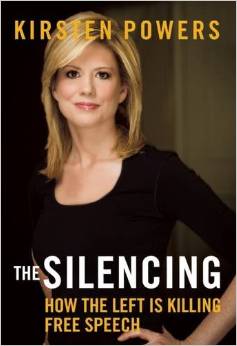 How refreshing that there are people like Kirsten Powers in the world.
In her new book, the outspoken, unapologetic liberal Democrat has taken aim at the militant search-and-destroy tactics employed by many liberals to shut down civil discourse and bully ideological opponents into submission.
Not surprisingly, many on the left have turned their attacks upon Ms. Powers and her book, proving her point by doing exactly what she accuses them of doing.
The intellectual laziness of groupthink lies at the heart of the deep divisions that are tearing this country apart. If more people would listen — listen to each other, and listen to Ms. Powers’s message — America might start turning back toward a culture of problem-solving and away from character assassination and political dogma.

How will we survive the drone culture?
I haven’t read this entire excerpt, but the rise of the drone raises more questions than the obvious ones concerning basic morality and “rules of engagement.”
 At the end of the movie classic “Patton,” the general responds to a reporter’s question about the “wonder weapons” of the coming era:
“Wonder weapons? By G-d, I don’t see the wonder in them. Killing without heroics? Nothing is glorified? Nothing is reaffirmed? No heroes, no cowards, no troops, no… generals. Only those who are left alive, and those who are left… dead. I’m glad I won’t live to see it.”
The message here is not the glorification of warfare. What Patton understood is that conflict brings out the true essence of a person. Cowards are revealed as cowards, providing the opportunity for reappraisal. Heroes are not merely revealed… they are created through their engagement on the field of combat. The heat of battle requires them to tap into unrealized potential.
This doesn’t require a battlefield of armies. It does require that we take up arms against our lesser selves and strive to conquer our baser impulses and inclinations. It demands that we grapple with the complex issues of good and evil and not take refuge in political slogans or groupthink.
In a culture of automation, we have a harder fight not to become automatons ourselves. We can comfortably join the army of drones, or we can meet the challenge, rise to the occasion, and emerge victorious as heroes.

Collateral Damage from the Grievance Industry
In a deeply insightful column, Thomas Sowell offers an observation that should be obvious to everyone:
 “[C]ommunities scattered across the country were disrupted by riots and looting because of the demonstrable lie that Michael Brown was shot in the back by a white policeman in Missouri — but there was not nearly as much turmoil created by the demonstrable fact that a fleeing black man was shot dead by a white policeman in South Carolina.” (Emphasis added.)
Mr. Sowell goes on to make the point that the grievance industry cares about neither truth nor justice. A guilty white cop indicted for killing an innocent black man isn’t newsworthy; an innocent white cop exonerated for killing a black criminal is cause for moral outrage.
And this is what is all comes down to: self-serving leaders and rabblerousers want outrage. They want to rail against the unfairness of it all, against the gap between rich and poor, against the indignity of stop-and-frisk, against the “legacy of slavery.” What they don’t want is to search for solutions, much less find them. That would mean an end to the victim-culture that has allowed them to exploit the disadvantages of their own brethren for their own profit and power.
“In a world where the truth means so little, and headstrong preconceptions seem to be all that matter, what hope is there for rational words or rational behavior, much less mutual understanding across racial lines?”
Let’s hope Mr. Sowell’s lament isn’t the sad epitaph for any hope of achieving, or restoring, a civil society.

Enjoy the little things
 Children grow up. Friends move away. Parents pass on.
We miss out on sunsets, and sunrises; we miss out on walks in the woods and float trips on the river. And we can’t even remember the reason for the fits and fights and pity parties that seemed so justified at the time.
It should be obvious what’s really important. But we find so many ways to rationalize the irrational.
Stubborn, aren’t we?
So smile more, give more compliments, hug your kids, call your parents, take time out for friends.
Sure, it’s all a cliche. But after all, don’t cliches become cliches because they’re true?
Dangerous Freedom
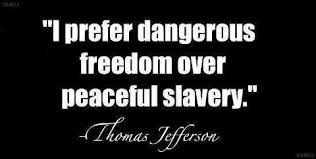 With the holiday of Passover behind us, the dangers of freedom become more threatening than ever.
Freedom is a privilege, not an inheritance. Freedom is an obligation, not a right. Freedom calls us to duty, not to indulgence.
And the illusion of freedom may be the cruelest tyrant of all, seducing us into accepting the slavery of ego, impulse, and comfort.
Every day we should ask ourselves: are we fighting to deserve and to preserve the freedom that our fathers fought so hard for us to have?
Keeping Trust
 Distance yourself from falsehood. – Exodus 23:7
We all like to think of ourselves as honest. But are we?
Do we rationalize white lies? Do we fudge our taxes? Do we return to the counter when we’re undercharged or when we get too much change? Do we make hasty promises that we forget to keep? Do we exaggerate? Do we embellish? Do we state as fact when in fact we aren’t so sure?
Do we lie outright when we’re caught in a compromising position?
It’s easy to justify “little” lies, or even big ones under pressure. How often are we lied to by our politicians — increasingly without shame or consequence? If they can do it, why shouldn’t we?
It comes down to trust. We want to be trusted. And we want to be able to trust others. So it’s not enough not to lie. Distance yourself from falsehood — whether a false word or a false thing or a false friend.
Not only do we become known by the company we keep; we become the company we keep. And once we lose our sensitivity to falsehood, it’s a near-impossible struggle to get it back.
 Yonason Goldson