Home » Posts tagged 'Culture Wars' (Page 14)
Tag Archives: Culture Wars

A Day of Remembrance Soon Forgotten
 So what was the point of last week’s Holocaust Memorial Day?
Once upon a time, the commemoration served as a warning against the consequences of unbridled nationalism. But in this generation, the memory of Nazi atrocities has mutated into a political football tossed about to score points for one ideological cause or against another.
IDF Major General Yair Golan made the most egregious fumble when he suggested last Wednesday that events in pre-war Germany are repeating themselves in modern-day Israel. Like all public figures who talk first and think later, the deputy chief of staff was soon scurrying to revise his comments, pleading that he hadn’t meant what he said and hadn’t said what he meant.
More likely, General Golan meant exactly what he said. And it’s likely that his heart was in the right place, even if his brain was out to lunch.

Giving offense vs. taking offense
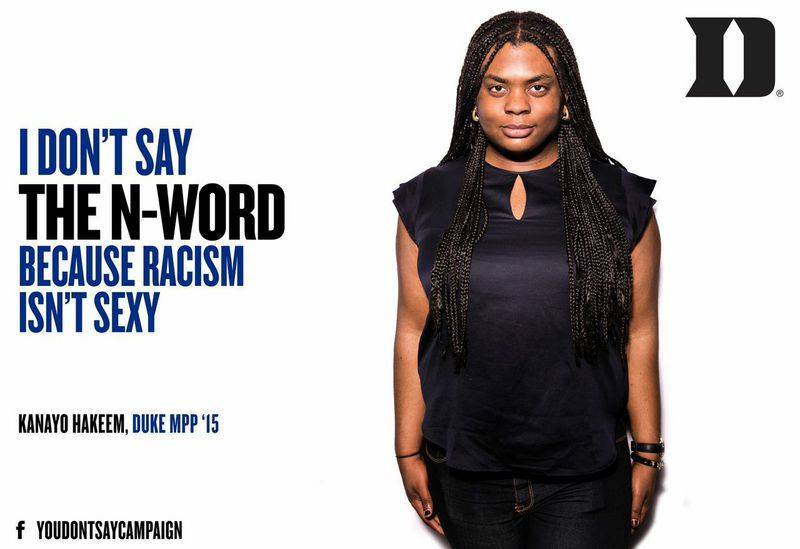 The political correctness police were out in force recently, correctly censuring Larry Wilmore for his use of the N-word and insanely condemning Hillary Clinton for uttering the words “off the reservation,” perceived as demeaning to Native Americans.
Starting with Mrs. Clinton’s turn of phrase, we might as well excise from the the lexicon of acceptability words such as “nosy” because it might offend people with large noses, “insightful” as insulting to myopics, “high-minded” as defamatory of marijuana users, and “thin skinned” for denigrating hemophiliacs. If we want to find reason for taking offense, we can find it everywhere.
The more noteworthy incident was Larry Wilmore’s use of the N-word at the White House Correspondents’ Association dinner, and his directing it toward the President of the United States, no less. Clearly the remark was intended to be affectionate and laudatory, which is how it was taken — without offense.
But that’s not really the point. In a society that is growing simultaneously disrespectful and intolerant of disrespectful speech, we need to elevate public discourse, not sink deeper into the gutter. If the N-word is too offensive to be broadcast — even news anchors reporting the story weren’t permitted to repeat it in quotation marks — then it is certainly unacceptable to be used in the presence of our president or, even worse, said to him.
Frankly, I’m more concerned by the use of President Obama’s first name, and his nickname at that. Maybe Mr. Obama and Mr. Wilmore are on a first-name basis. But in a formal context, such familiarity is utterly disrespectful from anyone other than a spouse, parent, or sibling.
This is the real threat of political correctness. It’s not just that we take offense in all the wrong places. It’s that we lose all sensitivity for the difference between what is respectful and what is disrespectful, we lose all sense of priorities, and we forget that refinement is a value. Nothing matters except the applause, the laugh, the ratings, and the votes.
This is why the same people who took offense at Mrs. Clinton’s use of “off the reservation” have no reservations about her pathological pattern of telling lies and misrepresenting political adversaries.
This is why our political and social institutions are in chaos.
And this is what we are teaching our children.

Passover, Freedom, and the War on Culture
 The responsibilities of freedom, the history of freedom, and the culture wars that threaten the values and the foundations of civilization.
Listen to my interview on the Bill Martinez show (interview begins at 33:00).

Passover and the price of freedom
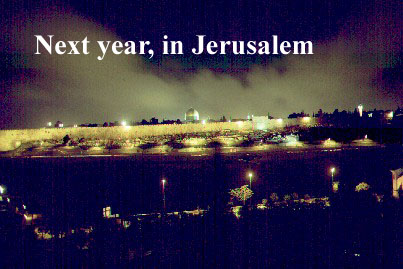 This Passover, let us all reflect upon the value of freedom, the price of freedom, the responsibilities of freedom, and the cost of taking freedom for granted. Only by standing strong against the forces within and without that never stop trying to enslave us will we remain free.

The Five Cups of Passover Wine?
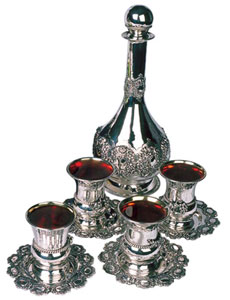 As everyone knows, on the first night of Passover we eat matzah and bitter herbs, we recline at the table, and we drink five cups of wine.
Five cups of wine? We drink four cups of wine, don’t we?
Well, that depends whom you ask.
Of course, it really is only four cups that we drink at the Passover seder. Acceptance of this practice, however, has not always been universal. Rather, it evolved as the best possible compromise between two contradictory Talmudic traditions. And only by going back to the root of the custom can we fully appreciate the relevance of our annual reenactment of the Exodus from Egypt.
The four cups of wine reflect four separate phases that concluded with the Jewish people’s transformation from Egyptian slaves into a free and autonomous nation. Within the narrative of the Exodus itself, four different expressions of redemption allude to the process through which the Jews attained their freedom — a freedom that was not born in an instant, but only as the culmination of four distinct and imperative stages.
Vehotzeisi. And I will take you out from the burdens of Egypt. Although Pharaoh endured ten plagues before he sent the Jews forth from Egypt, only half that many persuaded him to release them from their labors. This enabled the Jews to adjust to independence, to learn what it meant to make their own decisions before the time when they would be held accountable for the choices they would make.
Vehitzalti. And I will rescue you from their service. A slave whose master makes no demands upon him is still a slave. Having already been exempted from their labors, now the Jews were prepared to face the challenges of real freedom.
Vegoalti. And I will redeem you with an outstretched arm. History teaches us that freed slaves often fail to make the adjustment from slavery to freedom. The culture of slavery may be so deeply rooted in their psyches that they cannot succeed as free people. Similarly, the Jews needed divine assistance to purge their hearts and minds of the corrupt values of Egyptian culture, foreshadowing the way Jews all through history have had to struggle against the corrosive influence of foreign ideologies.
Velokachti. And I will take you to Me as a people. Once liberated from the physical and psychological bondage of Egypt, the Jews still faced the subtle dangers of unrestricted freedom. Only with a sense of identity and purpose, only with a clearly defined national mission, could the Jews emerge from cultural anarchy to embrace true freedom.
But there remains one final expression in the narrative of our collective transformation from slaves to free people: Veheiveisi. And I will bring you into the land. As a free and sovereign nation, could the Jewish people begin to fulfill their mission even before they established themselves in their land, in Israel? Or is it impossible for us as Jews to consider ourselves truly free while we remain exiled from our ancestral homeland? This is the essence of the debate whether we drink four or five cups of wine.
 What is our conclusion? We have none. We simply don’t know. However, we do know that we have to drink at least four cups. So that is what we do, then wait for Elijah the Prophet to come, not to drink the fifth cup, but to tell us whether or not we should drink it ourselves.
But some of us refuse to wait for Elijah to affirm our commitment to the Holy Land. This year, like every year, hundreds of Jewish high school graduates from around the country will defer their first year in college to study Jewish tradition and Jewish law in the land from which we are exiled. No threat of terrorist violence has been able to dissuade these young men and women from renewing their connection to the the heritage and land of their ancestors.
And, perhaps even more impressive, their parents have set aside their own fears and their own worst nightmares to encourage their children to travel half way around the world to pursue their highest calling: to rise to the challenge of Jewish freedom.
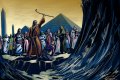
Passover and the First Holocaust
After yesterday’s terrorist bus bombing in Jerusalem, the first in years, Jews around the world felt the painful reminder of our precarious place among nations dedicated to our destruction. With the Passover festival approaching, these thoughts from 2005 remind us that Holocaust is not a phenomenon of the last century, or even the last millennium.

The extermination of six million Jews in the Nazi death camps represents but the most recent in a long history of Jewish holocausts. It was preceded by the Chmielnicki massacres in 17th century Poland, the Almohad massacres in 12th century Spain, the Inquisition and the Crusades and the relentless spilling of blood by the Roman legions — all these and similar chapters in the long, brutal history of attempted genocide against the Jewish people.
When did it all begin?
According to Jewish tradition, it began 3328 years ago, when nearly two and a half million Jews died in a single night.
It was the beginning of the plague of darkness, the penultimate blow in the systematic destruction of the Egyptians and their empire. Pharaoh had already released his Jewish slaves from their oppressive labor midway through the cycle of plagues, driven by the desperate hope that he could appease the G-d of the Jews. But he refused to grant them permission to leave.
For some Jews, the relaxation from their burdens offered an opportunity to reflect upon the responsibilities of freedom and the opportunity that had been promised them to build their own nation. For others, however, it gave time to grow comfortable in the paradise that was Egypt, to adopt an attitude of entitlement for their new-found prosperity, to forget that freedom is never free.
During their 210 years as slaves in Egypt, the Jews had gradually absorbed the corrupt values of that culture, its idolatry and its immorality, retaining only their names, their language, and their style of dress to set themselves apart from their Egyptian hosts. With no merit to deserve divine redemption, the Jewish people received their exodus on credit, credit to be repaid by accepting the Ten Commandments at Sinai and committing themselves to the higher moral and ethical standards of G-d’s chosen people.
600,000 Jews — 20% of their total number — accepted these terms, preparing themselves psychologically and physically to exchange the comfort and familiarity of Egypt for the uncertainty of the empty desert. Four times as many rejected the condition, refusing to make good, as it were, on the credit extended them from heaven, convincing themselves that, with the Egyptians humbled and the yoke of slavery removed from their necks, they could void their contract with the Almighty and remain unencumbered in the land of their former servitude.

David_Roberts-IsraelitesLeavingEgypt_1828
The human condition, however, is never static. One who stops growing immediately begins to die; one who stops moving forward instantly begins to slip backward. There is no standing still, no place to rest in this restless world, and the 2,400,000 Jews who thought to deny their destiny, who imagined they could stop the sands of time and were buried by them instead.
The fate of the 80% was not divine vengeance; it was spiritual inevitability. To survive for thirty three centuries, the Jewish nation would have to appreciate that it had no alternative other than survival. Assimilation, conversion, or abdication of Jewish identity may at times have seemed an attractive option to the burden of living as Jews, but the consequences of spiritual extinction are every bit as grave — indeed, much more so — than those of physical extinction.
Ask the Spanish Jews who converted to Christianity, only to be called marranos — pigs — by their Christian brothers and to be burned at the stake in the auto-de-fe of the Inquisition, if their abandonment of Jewish identity was worth the price. Ask the assimilated German Jews stripped of their property, forced to wear yellow stars, and incinerated in Nazi crematoria if they met a better end than those who refused to disavow their Judaism.
Indeed, the narrative of the exodus testifies that, as the Jews prepared to leave the ruins of Egypt after the plague upon the firstborn, “the Almighty gave the people favor in the eyes of the Egyptians.” As slaves forfeiting their identity within Egyptian society, the Egyptians regarded the Jews only with disdain. Once the Jews began to act with Jewish dignity, their former oppressors could not help but respect them.
And so it has been ever since. When we live as Jews, the rest of the world respects us for our values and our conviction. When we shirk our responsibility as upholders of morality to accommodated the ever-changing moral whims of the world around us, we bring upon ourselves nothing but suffering.
The freedom we celebrate at Passover is the freedom to remain true to who we are, who we always have been: The nation that introduced the world to the very concept of freedom, and the nation which has shown the world through the ages that the price of freedom is far less dear than the price of forsaking it.

Taking Pride in Prejudice
 Prejudice [prej–uh-dis]. Noun. 1. an unfavorable opinion or feeling formed beforehand or without knowledge, thought, or reason. 2. any preconceived opinion or feeling, either favorable or unfavorable. 3. unreasonable feelings, opinions, or attitudes, especially of a hostile nature, regarding an ethnic, racial, social, or religious group.
According to these definitions from Dictionary.com, it’s clear that there are two essential components to prejudice: first, it is a form of opinion, not fact; second, it must be unreasonable or preconceived.
Please follow closely here: this implies that, for any opinion to avoid being prejudicial, the one holding that opinion must be able to articulate three things: 1) why he believes his opinion is correct; 2) why those who believe otherwise think they are correct; and 3) why those with whom he argues are wrong.
This is a matter of simple logic. First, if I can’t explain what I believe, then my beliefs are — by definition — prejudicial. Second, if I can’t explain someone else’s opinion, then rejecting that opinion is — also by definition — prejudicial. And third, if I can’t explain why I disagree with someone else’s opinion, that is — again, by definition — prejudicial.
But who am I kidding? We live in a world of sound bites and slogans, a world in which image trumps substance, in which feelings trump logic, in which the loudest voice drowns out all opponents and the most inflammatory rhetoric attracts the largest audiences. The new morality that rages against prejudice is mostly smoke-and-mirrors; indeed, the people who cry out against prejudice the loudest are the most prejudicial people of all.
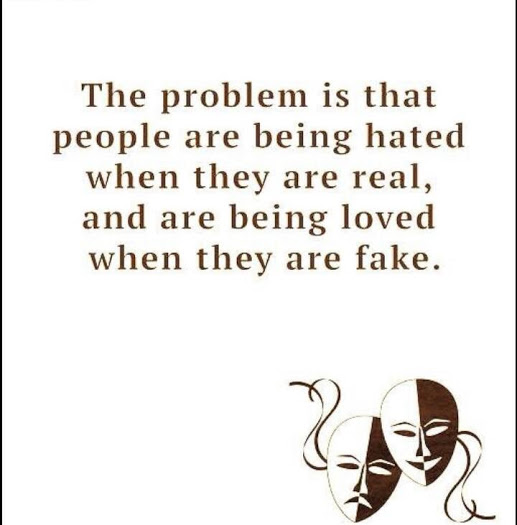

Political Correctness: the root of all evil
 Dear Future President:
If you want to fix the country, you can start with the root cause of all that ails our country:
Political Correctness.
The truth is that political correctness is not a new idea at all; it is simply the new label for an old, established moral postulate once accepted by all.
The word civility shares its linguistic root with the word civilization. It means taking into consideration the comfort of others before expressing what I think or doing what I want. It means remembering that other people have rights before I assert my own. It means reflecting upon how my actions are going to affect my community and recognizing that I have a responsibility to a society that is more than the sum of autonomous individuals.
So what was wrong with the term civility that the concept needed rebranding as political correctness? Most likely, it was the connotation of political ideology that spawned this illegitimate offspring of cultural nobility.
In this series, professionals provide advice for the next U.S. president.
#nextpresident

Why do we think so?
 We think so because all other people think so;
Or because—or because, after all, we do think so;
Or because we were told so, and think we must think so;
Or because we once thought so, and think we still think so;
Or because, having thought so, we think we will think so…
Henry Sidgewick
 Yonason Goldson