Home » Posts tagged 'Discipline' (Page 3)
Tag Archives: Discipline

Honor, Service, and Gratitude
“As we express our gratitude, we must never forget that the highest appreciation is not to utter words, but to live by them.”
—John F. Kennedy

“In the beginning of a change, the patriot is a scarce man, and brave, and hated and scorned. When his cause succeeds, the timid join him, for then it costs nothing to be a patriot.”
—Mark Twain

Why Ethics Matter — Part 1: Evil Algorithms
Technology is supposed to serve us. But what happens when we create technology that takes control of us and leads us places we don’t want to go?
If you enjoy this video, please subscribe to my YouTube channel. Click here and then click the red SUBSCRIBE button.
Thank you!

Confronting the Credibility Crisis
 Hillary Clinton has been called a lot of things. But branding her the “cancer” of the Democratic Party ratchets the vitriol up to a new level.
More significant is who’s doing the name-calling. When Donna Brazile, Former Democratic National Committee Chair and longtime party stalwart, launches an internecine assault worthy of Donald Trump, it’s hard not to take notice.
Robby Mook certainly noticed. “Her claims are laughable,” the former Clinton campaign manager told Anderson Cooper. But Elizabeth Warren wasn’t laughing. Instead, the Massachusetts Senator invoked Ms. Brazile’s account of Clintonian malfeasance as evidence that the Democratic primary had been “rigged.”
So what are we to believe? Mrs. Clinton has been getting away with moral murder for years. Are the party faithful finally drawing a line? Or is Ms. Brazile merely trying to sell books while Senator Warren postures for the 2020 election?
Time may tell. But in the meantime, the undeniable victim is credibility.
TOO MANY CROOKS
There was a time when hustlers and lawbreakers would abandon their denials once evidence of wrongdoing grew overwhelming and indisputable. But today’s culture of fake news and fake outrage has spawned a limitless capacity for brazenness.
I am not a crook. I did not have sex with that woman. If you like your doctor, you can keep your doctor. I remember landing under sniper fire. The Art of the Deal is the number one selling business book of all time.
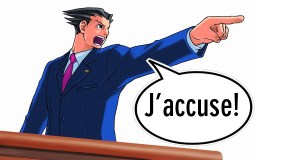 Even the investigators of corruption fall under suspicion. Robert Mueller, the special counsel looking into Russian election tampering, has himself been implicated in the scandal he is charged with investigating. Mr. Mueller arrived on the scene with bipartisan plaudits for his character and integrity. Now we aren’t sure if we can believe that, either.
You would think in an age like ours, when every word and deed appears instantaneously as part of the public record, that public figures would be exercise more caution in what they do and say. Instead, they seem to care less than ever.
It’s not hard to understand why. Mainstream news outlets largely ignore stories inconsistent with their political ideologies. News consumers visit only those outlets that provide stories confirming their political biases. And the epidemic of inaccuracy leaves us so jaded that we feel justified believing whatever we want about anyone we choose.
The crisis of confidence in our political system is reason enough for dismay. But there’s an even more profound cause for alarm – the corrosive effect of cynicism on our collective conscience and moral clarity.
LEMMING MENTALITY SYNDROME
There may be no more malignant phrase in the English language than everyone does it. Our parents didn’t tolerate hearing it from us, and as responsible parents we refuse to tolerate it from our children. But anything that is repeated enough plants itself in our consciousness, where it insidiously takes root and refuses to let go.
 All the more so when the media bombard us with evidence that we can’t trust our leaders, can’t trust our icons, can’t trust the spokesmen for moral values to uphold the values they espouse. And if the people I’m supposed to look up to act without scruples, why should I worry about how I look in the eyes of others?
The solution, therefore, is relatively straightforward: start looking in a different direction.
In the first verse of his first psalm, King David writes: Fortunate is the one who does not walk in the counsel of the wicked, does not stand in the path of misguided people, and does not sit in the company of cynics.
The more we associate with those who reject ethical values, the more automatically we adopt their ways. The more we expose ourselves to the influence of those who embrace moral relativism, the more we disable our own moral compass. The more we keep company with those who view everything and everyone in a negative light, the more we grow convinced that there is no reason to hold ourselves to a higher standard.
But if we remove ourselves from corrupting influences by seeking out company and counsel from people of integrity, and by searching out the good instead of fixating on the bad – then we will find ourselves drawn steadily upward, and we will begin to draw those around us upward as well.
Published by Jewish World Review
If you enjoyed this article, please share with others. Thanks!

Reflexive Dishonesty
 Michael Flynn is back in the news, now that Special Counsel Robert Mueller is pushing for further indictments as he probes into Russian election tampering.
But this isn’t about Russia.
When the story first broke nearly a year ago, columnist Charles Krauthammer called it a cover-up in search of a crime. Mr. Flynn, only a month into his term as Secretary of State, was forced to resign after he lied about communicating with the Russian government before officially assuming his cabinet post.
Sensationalist headlines and partisan posturing aside, months went by with no evidence of actual wrongdoing. It appeared to be just a little pre-game warmup to help grease the diplomatic wheels for later on.
So the obvious question at the time was:
Why did Michael Flynn lie?
There appeared to be three possibilities:

Are you telling the truth?
As fake news becomes the new normal, I’m revisiting these thoughts from 2010.
 After circling the globe one and a half times, living for nine years in Israel and one year in Hungary, and teaching adolescents for over two decades, it’s only natural that I have more than a few stories to tell. So it never fails to discomfit me when friends or neighbors respond to my essays by asking:
“Did that really happen?”
Are my anecdotes so truly unbelievable? After all, I never claimed to have flown to the moon on gossamer wings, to have crossed the Alps with Hannibal by elephant, or to have led the attack against Custer’s army at Little Big Horn. No, I’ve merely plucked useful insights from slightly quirky encounters in an attempt to uncover the wisdom that resides within myriad aspects of the human condition.
And so I’ve penned essays about my white fedora, which fellow travelers reported noticing as our paths crisscrossed throughout Europe; about the Israeli gentlemen who rebuked me in an elevator for wearing an earring while sporting tzitzis, the fringed tassels worn over the belt line according to Jewish custom; and about the ragged man who stopped in his tracks on the streets of Budapest, apparently overwhelmed and overjoyed to discover a religious Jew having survived the travails of the Holocaust and assimilation; these, together with assorted episodes from my high school class room.
“I loved your article,” an acquaintance will say. And then, with alarming frequency: “Did that really happen?”
I even get it from my mother.
To be honest, I can’t say that I’m surprised. After all, narrative accuracy has seen its market value tumble over the years. As candidate for president, John Kerry described how Christmas in Cambodia was “seared in his memory.” A stirring narrative, aside from the fact that he wasn’t actually there. In the Democratic primary four years later, Hillary Clinton reported that her parents had named her in honor of Sir Edmund Hillary — an impressive feat of prescience, since Sir Edmund had not conquered Mount Everest until five years after Ms. Clinton was born and named. Even Ronald Reagan, although never caught embellishing his own history, nevertheless brought tears to the eyes of his audiences with poignant war stories that turned out to be scenes from old movies.
Popular motion pictures that are “based on” or “inspired by” true stories often undergo such embellishment that they emerge bearing little resemblance to the events they claim to portray. Tonight Show host Jay Leno, in his autobiography, reportedly included anecdotes that actually happened to other people. Mr. Leno explained that he had permission to use one story, and that he had paid for the right to use the other.
As in so many cases, the biblical injunction against speaking untruths extends far beyond the simple meaning of the words. The verse MiDavar sheker tirchak translates, simultaneously, as “Distance yourself from a false word” and as “Distance yourself from a false thing.” Jewish philosophy teaches that words are not mere symbols or labels; they possess a substance and a reality all their own. Consider how a cruel word can inflict more pain than a sharp blow between the eyes, or how a well-placed compliment can produce more pleasure than the sweetest dessert.
When does a word or a thing become false? In principle, the slightest embellishment or exaggeration constitutes a violation of Jewish values, if not Jewish law. If one is uncertain about the details of a story, it is easy enough to add “I think” or “something like” to the narrative. That small concession to veracity helps us preserve our respect for the lines between truth and falsehood — lines that grow increasingly blurred in a society descending ever deeper into moral confusion.
 The Hebrew word emes, commonly translated as truth, is formed by the three letters that come, in sequence, at the very beginning, the precise middle, and the very end of the Hebrew alphabet. Before we can be certain that anything is true, we must have a sufficiently broad perspective; we must have all the information, accurately and in context; and we must have a clear understanding of the propriety of revealing that information and the consequences of doing so. Only then is it emes.
Consequently, sometimes even absolute truth may be considered false. In the case of malicious gossip, the accuracy of the information may result in harm even worse than slander by damaging relationships that would have been secure against rumor or innuendo. Similarly, details taken out of context, although factual, often imply conclusions that have no bearing on reality. They may be true, but they are not emes.
The distinction between words that are true and words that are emes easily leads us onto thin moral ice. What about “white lies” intended to spare the feelings of others, or “harmless” untruths meant to warm another person’s heart?
At first glance, Jewish tradition seems to endorse such ideas. The sages teach that Aaron, the High Priest, upon discovering that two friends had come to quarrel, ran back and forth reporting to each how sorry the other was and how desperately he longed for reconciliation, until the two parties resolved their dispute and became friends once again. The same sages tell us to always call a bride beautiful, no matter what she actually looks like.
But is it not true that true friends, divided by conflict, miss the relationship they once had and mourn their lost friendship? Is it not similarly true that every bride glows with an inner beauty projected at the moment of her greatest joy, and that she is truly beautiful in the eyes of her bridegroom? If so, is it not also true that the sages were offering us a profound lesson in how to interpret human nature?
Indeed, even if there may be cases that require us to speak some literal untruth to protect another person’s physical, mental, or spiritual welfare, such cases are few and far between. If we are honest with ourselves, we will concede that most of us will have rare occasion to bend or break the truth.
Perhaps, if we all exert more effort to ensure that all our words are words of emes, we will not find ourselves suspicious of those stories of little miracles and inspirational irony that can make our eyes sparkle and our hearts swell. And if a more profound commitment to honesty helps us become less cynical and more easily inspired, then what do we really have to lose?

Beware of the Ultras
 Where did all these fanatics come from?
History traces the origins of some, but others remain a mystery. My own personal theory is that one of the most fanatical sects of modern times was invented in the early 1980s by Time Magazine.
I’m talking about the group commonly identified as Ultra-Orthodox.
In truth, there is no such label. Nevertheless, ultra is a favorite adjective of the media: it implies radicalization and imposes a stigma of extremism on otherwise respectable individuals and institutions.
Ironically, the same tactic gave rise to the term Orthodox itself. In the early 19th Century, a movement coalesced among the Jews of Germany to bring “reform” to the 3100-year-old practices of Judaism. To augment their own legitimacy, these self-styled reformers branded Jews adhering to traditional practice as “orthodox,” a pejorative intended to marginalize mainstream adherents as out of date and out of touch.
HIGHWAY TO HEAVEN?
Every driver on the road believes that he alone is travelling at the correct speed – anyone going faster is a maniac, and anyone going slower is a plodder. And it’s no different with ideology, whether political or religious.
We all believe ourselves to be balanced in our worldviews. Anyone to this side is a zealot; anyone to the other side is a heretic. And there are always just enough true zealots and true heretics associated with any group so that detractors can point and declare, “See! They’re all like that.”
The sign of true leadership, therefore, is not to denounce opponents on the other side of the aisle or the divide; rather, it is to call out those on one’s own side whose irresponsible speech or behavior threatens to discredit one’s own affiliation.
Former President George W. Bush drew fire from the right last week for doing just that, when he denounced the incendiary rhetoric and tribalism that have become too common within his own party.
Should Mr. Bush have called out those across the aisle as well? Possibly. But perhaps he hoped that leaders on the other side might follow his example and demand proper conduct from their own. And indeed, only days later former President Jimmy Carter chastised the media for its open hostility toward Donald Trump, Colin Kaepernick and his cohorts for their disrespect of the national anthem, and Barak Obama for his “disappointing” presidency.
Meanwhile, two oceans away, a similar story of leadership unfolded.
A VOICE OF ULTRA-MODERATION
For decades, a large contingency among the community of Torah observant Jews in Israel has felt itself under attack by a secular government and secular society. Recent legislation to eliminate army service exemptions for seminary students sent sparks into the tinder, igniting last week into unruly protests that blocked traffic, intimidated bystanders, and cast a pall of chaos over the city of Jerusalem.
 In response, Rabbi Chaim Kanievsky, one of the Torah community’s most revered leaders, broke his characteristic silence by denouncing the protesters as “empty” and “reckless,” an “inflamed mob,” and “public desecrators.”
Yes, there is justifiable cause for anger and protest. But for those who choose to identify themselves as observant Jews, as children of Torah, and as students of the sages, it is inexcusably perverse to embrace the tactics of the street in order to defend a lifestyle of spiritual and moral refinement.
But the dark display brought forth a beacon of light, as Rabbi Kanievsky imparted the wisdom of true leadership upon the confused and misguided souls whose hearts may have been well-intentioned but whose reason clearly abandoned them. Whether they aspire to be truly Torah observant or Orthodox Jews, their “day of rage” exposed them as deserving of only one label:
Ultra.
May we soon witness leaders on every side and from every corner who demonstrate the courage and conviction to denounce not only opponents but allies whose extremism endangers the essence of civilization and civil society.

Guest Post: Stop “Talking” During the National Anthem
 117 seconds. That is how long it takes, on average, for the playing of the National Anthem. So why are these 117 seconds becoming some of the most controversial in America?
Because people are “talking” during it. It’s not a time to talk. It’s a time to listen. And the voices that are supposed to speak at that time can’t be heard if others are talking during the playing of the Anthem.
Click to read the rest of a Gulf War veteran’s stirring call to action.



 Yonason Goldson