Home » Posts tagged 'Good and Evil' (Page 8)
Tag Archives: Good and Evil




The Curse of Cowardice
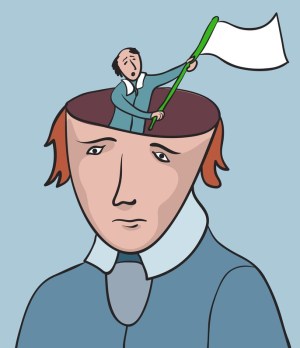 “The implications for our country are so serious that I feel a responsibility to my constituents… as well as to my conscience, to voice my concerns forthrightly and publicly. And I can think of no more appropriate place to do that than on this great Senate floor.”
~Democratic Sen. Joseph Lieberman, September 1998
It takes courage to stand up to our enemies, but even greater courage to stand up to our friends. And that’s precisely what is missing in modern political culture:
Courage.
In today’s world of groupthink, challenging the party line can be socially and professionally self-destructive. Friends and allies turn into assailants at the first whisper of dissent, at even the suggestion that there may be more than one side to any issue.
THE SOUNDS OF SILENCE
In June of last year, Maya Dillard Smith, head of the Georgia ACLU, came under attack for suggesting that the topic of transgender bathrooms warranted deeper discussion. To her credit, Ms. Smith resigned her position rather than remain part of an organization so fervently opposed to the principle of civil discourse.
The previous November, Professor Erika Christakis (together with her husband) lost her job at Yale after sending an email suggesting that students should be treated as adults, then compounding her transgression by attempting to engage demonstrators in reasoned debate.
And for years, moderate Republicans, disparaged as RINOs – Republicans in Name Only – have been hunted and attacked as traitors to their party.
In this age of polarization and partisanship, it’s much safer to attack the other party, whether from the right or the left. Republicans and Democrats alike circle the wagons to defend those among them who hurl even the most outrageous verbal projectiles across the aisle. To stand alone as the voice of reason by suggesting temperance, moderation, or compromise means taking your life in your hands.
After last week’s horrific shooting spree, which targeted Republican lawmakers as they practiced for the annual congressional baseball game, the obligatory expressions of unity and civility poured forth from both Democrats and Republicans. But it didn’t last long. By week’s end the rhetoric was already ratcheting up again, with each side blaming the other for creating a cultural atmosphere of toxic hate and violence.
Both sides are right. Yet neither is willing to offer more than lip service toward solving the problem.
SAY IT AIN’T SO, JOE
So who will be today’s Joe Lieberman? Who will speak out against entrenched power and political pressure to risk the slings and arrows of reprimand and reprisal? Who will show the courage to call out his or her own colleagues for their inflammatory excesses instead of taking the coward’s way out by indicting the other side while claiming the high moral ground from amidst the morass?
 Where are the mavericks, the lone wolves, and the white knights who fear the sting of their own conscience more than lash of their own party, who will bet their own future on the long odds that their example might spur others to join them in building a coalition of responsible statesmen to right the ship of state?
When Senator Lieberman took to the senate floor two decades ago, he directed his censure not only against his president and the leader of his party, but against his personal friend. It wasn’t easy, and it wasn’t safe. But loyalty to truth and responsibility to country outweighed emotional comfort or potential fallout. Abuse of power could not be tolerated. Corruption of office could not be sanctioned. Silence was not an option:
“The president is a role model and, because of his prominence in the moral authority that emanates from his office, sets standards of behavior for the people he serves.
“His duty… is nothing less than the stewardship of our values. So no matter how much the president or others may wish to compartmentalize the different spheres of his life, the inescapable truth is that the president’s private conduct can and often does have profound public consequences.”
If so, how much more so his public demeanor.
King Solomon teaches: When a ruler indulges falsehood, all his ministers disdain the law.
Herein lies the awesome responsibility of all who wield power. Every elected official, every appointed judge, every journalist and news anchor and editorialist has a moral obligation to ensure that his words are accurate, that his positions are based in fact and reason, and that his language is respectful.
And it is the moral obligation of We The People to hold our leaders accountable, and to support those among them who demand accountability.

Reclaiming Civility
 A child’s brain is like a sponge, absorbing everything with which it comes in contact. As the brain gets older it learns to process, to analyze, to interpret. And eventually it begins to slow, begins to forget, begins to lose function.
Few prospects are as forbidding as mental decline, the specter of which haunts us as we advance toward old age. And so the experts tell us to keep our minds active, that using the brain is the surest way to stave off mental deterioration.
- Crossword puzzles
- Sudoku
- Word games
- Logic problems
These are common recipes from the diet books for the mind. But don’t stop there; the more creative and more challenging, the better for your brain.
- Go traveling
- Take up knitting or gardening
- Learn Italian
- Drive a different way to work
- Get an advanced degree
Anything and everything that piques cognitive activity belongs in our catalogue of mental health activities.
“That’s all good,” says Barbara Strauch, author of The Secret Life of the Grown-Up Brain: The Surprising Talents of the Middle-Aged Mind and New York Times health and medical science editor. But the most intriguing advice Ms. Strauch has heard is this:




The French battle for ethics
 What is the world coming to?
It’s truly a sign of the times when France – of all nations – is leading the way in ethics reform. This is the country that for decades has destabilized the world by selling weapons to and buying oil from any regime willing to do business; it’s the culture that embraced casual illegitimacy centuries before the institution of marriage began crumbling elsewhere around the globe; and it’s the government that has recently taken the war on terror to its beaches by banning Muslim women from wearing “burkinis,” apparently based on the presumption that modesty leads to suicide bombings.
Then there are the endless tales of cronyism, kickbacks, and embezzlement among the political elites. Former President Nicolas Sarkozy gave himself a 170% raise shortly after taking office.
But there’s a new sheriff in town – President Emmanuel Macron – whose justice minister François Bayrou introduced sweeping ethics legislation last week into a system that has shown little interest in ethics.
Among the list of proposals we find:
- A ban on nepotism in appointments to government positions
- Increased scrutiny over the use of public money
- Stronger penalties for political corruption
- A public bank to finance and control political party funds
These are all worthy and admirable steps to restore a measure of integrity to a morally dysfunctional system. But they also demonstrate how imposing the battle for ethics really is.
THE EYE OF THE LAW
There are two ways of looking at legislation in general. The more common perspective views legality as the border-crossing of culpability. On one side of the line are things I’m allowed to do; on the other side of the line are things I get punished if I get caught doing.
And there’s the rub. It’s only illegal if I get caught, the conventional thinking goes. When that attitude becomes the accepted norm, inevitably the gray area of ethical ambiguity starts to spread like nuclear fallout, leaving in its wake countless casualties of radioactive rationalizing and moral mutation.
But what if instead we look at the law as an expression of civil values and responsibilities? Then we come away with an entirely different mindset, one in which the law is something to be upheld, not circumvented. And when that viewpoint takes hold, everything else begins to look different.
Imagine if the narrative inside our heads sounded like this:
- I don’t cheat on my taxes because I’m a member of a society that values honesty, not because I’m afraid of the IRS.
- I seek out the owner of a lost wallet because I empathize with his distress, not because the law might punish me if I don’t.
- I trip the fleeing purse snatcher and return the handbag to the little old lady not because there’s a Good Samaritan law, but because I see myself as a good citizen.
THE LETTER OF THE LAW
Really, laws should only be necessary as protection against miscreants and as a guide to morally ambiguous conflicts of interest. Instead of searching for loopholes that allow us to pervert the intent of legislation, we should seek to glean the spirit that guided those who designed the law and contemplate how we can contribute to a more civil society.
King Solomon says, The performance of justice is joy to the righteous, but ruinous to the workers of corruption.
 There is no greater joy than the feeling that comes from benefiting others through selflessness and service, from the sense of integrity that swells in our hearts when we know we’ve honored the values of society without being goaded by the fear of punishment that haunts the unscrupulous day and night.
So kudos to the French for their efforts to re-establish basic ethical standards in government. But to have any hope of real change, we must return to seeing the law as a foundation for moral conduct, not a snare of reprisal to be skirted at every opportunity.
After all, wouldn’t you rather live in a world where others think more about what they can contribute than what they can get away with? Isn’t the best first step to start thinking that way yourself?


The Day Civilization Began
 “The Jews started it all – and by it I mean so many of the things we care about, the underlying values that make all of us, Jew and Gentile, believer and atheist, tick. Without the Jews, we would see the world through different eyes, hear with different ears, even feel with different feelings … We would think with a different mind, interpret all our experiences differently, draw different conclusions from the things that befall us. And we would set a different course for our lives.”
Thomas Cahill, The Gifts of the Jews: How a Tribe of Desert Nomads Changed the Way Everyone Thinks and Feels
It all began on the sixth day of the Hebrew month of Sivan, when Moses ascended Sinai to receive the Torah. This week we celebrate the holiday of Shavuos when, on the fiftieth day after the exodus from Egypt, the Jewish people became a nation guided by divine law and moral freedom.
In an age when individual autonomy, relative truth, and non-judgmentalism have become the lodestones of our new “enlightenment,” we would be well-served to reflect on how critical personal responsibility and a well-calibrated moral compass are as the bedrock of civil society and a healthy world.
To learn more about the Festival of Shavuos, click here.


 Yonason Goldson