Home » Posts tagged 'Groupthink' (Page 7)
Tag Archives: Groupthink

Christopher Hitchens: Almost a Hero
 It’s remarkable how we can develop a deep fascination, sometimes to the point of fixation, toward people we despise.
This is not particularly healthy: we gain much more by studying those who are worthy of our admiration and reverence, both as models for the refinement of our own behavior and as sources of inspiration that demonstrate the heights to which human nobility can soar.
But human nature produces an incessant magnetism toward the negative, no matter how much we may know better. So I couldn’t resist clicking on Daniel Oppenheimer’s recent retrospective* on Christopher Hitchens, one of my least favorite intellectuals.
I’m glad I did.
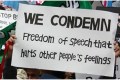
Too Tragic for Words
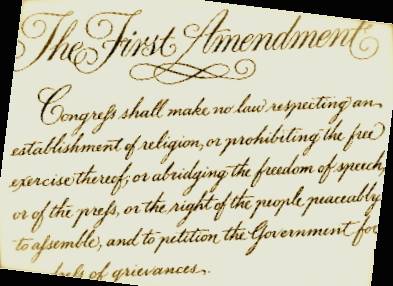 Would you sign a petition to repeal your right to petition? If not, you probably don’t attend Yale University.
Then mourn for our country.

Heading over the cliff
 Not following the usual conservative line, Bernie Goldberg articulates the train-wreck of Donald Trump, and Glenn Beck explains how we got here.

Maybe they really can’t handle the truth
 Earlier this week, James Zogby, president of the Arab-American Institute, told Andrea Mitchell on MSNBC that “Palestinian lives matter,” drawing a comparison between the violence in Israel and Ferguson, Missouri.
I was asked to comment on the Crane Durham radio program in a discussion about the historical and political origins of Mideast violence.
You can listen to the interview here.

Channeling Anger and Solving our Common Problems
My thanks to Dan Mason of KKOH in Reno for inviting me to be a guest on his show. We talked about the anger driving voters, resolving conflict, and transforming negatives into positives.

When Prejudices Become Principles
 Two cheers for Freedom to Marry, the gay-rights advocacy group that is taking the unorthodox step of closing its doors for no other reason than because it got what it wants — namely, the redefinition of marriage (according to Anthony Kennedy’s unilateral revision of the constitution). So I’m adding my small voice to that of the New York Post to praise the group’s president, Evan Wolfson — irrespective of how much I disagree with his position — for having the integrity to take his victory and go home rather than persisting in advocacy for the sake of advocacy.
Which doesn’t mean, of course, that all his allies will do the same. It took almost no time at all before ABC’s Nightline ran a segment on polyamory, clearly the next step in the dismantling of the nuclear family. “We’re just trying to be the pioneers like in the civil rights movement,” gushed one member of the “trailblazing triad” trumpeted by network.
Finally, in an inevitable but long-delayed surrender to the tide of history, the Boy Scouts of America have released their hold on traditional values by ending their ban on openly gay troop leaders. One feeble cheer to the organization for holding out as long as it did.
With the abyss of moral anarchy looming before us, I’m revisiting my thoughts on the subject from six years ago. At the very least, when archaeologists dig up the remains of Western Civilization some time in the distant future, let them see that Civilization didn’t go down without a fight.
“We must be ever on our guard, lest we erect our prejudices into legal principles.”
This concise jewel of wisdom, from former Supreme Court Justice Louis Brandeis, may eventually take its place as either the standard or the epitaph of Western Civilization. While the evolution of social sensitivity can claim an impressive record of civil rights legislation, we have now to question whether our collective obsession with personal privilege threatens the very foundations of the legal system that protects us.
For his inauguration this Tuesday, soon-to-be President Barak Obama has chosen evangelical pastor Rick Warren to deliver the invocation. Instantaneously, the politically correct Left launched its blitzkrieg, excoriating Reverend Warren for the unpardonable sin of supporting Proposition 8, California’s recent gay-marriage ban. Because he used his First Amendment rights to speak his conscience, and because he recognizes his obligation as a representative of religious conviction to defend religious doctrine, Reverend Warren finds himself where almost all defenders of moral integrity now find themselves: under attack by the zealots of moral anarchy.
The offensive against Reverend Warren may not rank among the most disturbing examples in the aftermath of California’s Proposition 8 referendum. In Riverside, California, 40 to 50 signs supporting Proposition 8 were found arranged in the form of a swastika on the front lawn of a Roman Catholic church. Mormon temples in Salt Lake City and Los Angeles, along with a Catholic Knights of Columbus printing press in Connecticut, received packages containing white powder presumably intended to imitate the 2001 anthrax scare. Reports from around the country include harassment, vandalism, and disruption of church services.
 What would Justice Brandeis say?
He probably would not agree with Justice John Paul Stevens, who quoted him in his dissent against the June 28th, 2000, Supreme Court decision allowing the Boy Scouts of America to dismiss an open homosexual from his position as scoutmaster. Invoking Justice Brandeis as a beacon of light to dispel the darkness of prejudice, Justice Stevens (together with the three justices who voted with him) cast his dissenting vote in an effort to canonize his own prejudices within the body of constitutional law.
But if Justice Stevens argued with the reasoning of colleagues in the majority, presumably he accepted the authority of their decision. Not so the moral and legal vigilantes who have deputized themselves as protectors of the American People against both due process of law and the erroneous decisions of the United States Supreme Court.
Back then, government officials and corporate officers across the country began cutting off financial support to the Boy Scouts and restricting their access to public and private resources. Sounding the charge, predictably, was the New York Times, which asserted that “by allowing a group that bans gays to use public facilities and supporting it, they violate their anti-discrimination statutes.” This, of course, was patently false for two reasons. First, BSA never issued any ban against gays, but only refused to allow leaders in its organization who openly advocated behaviors antithetical to BSA’s core values. Second, and most important, is that BSA was not violating any anti-discrimination statues, since that was precisely the point on which the highest court in the land has just ruled.
“Lest we erect our prejudices into legal principles.” Wasn’t this kind of self-righteous legalistic coercion precisely what Justice Brandeis warned against? Nothing about the policies of the Boy Scouts, who then faced accusations of prejudice, could be reasonably considered prejudicial. Quite the contrary: through their choice of leaders they have always endeavored to inculcate traditional morals and values among a generation of young people bombarded by the relentless media messages of self-indulgence and self-absorption. That they were vilified for adhering to a moral code should have raised a cry of outrage from every parent, every teacher, every community leader, and every responsible citizen in the nation. But all we heard instead, from the highest elected offices on down, was mealy-mouthed equivocation about diversity and open-mindedness.
Sometimes, however, we can be so open minded that our brains fall out. Indeed, the larger issue now, as then, is whether our personal-rights mentality has given birth to an amoral culture that is systematically becoming mandated by law. Even now, those activists who have announced their intention to turn their backs on Reverend Warren when he delivers his invocation are within their rights to do so and should not be legislated against. But what they consistently fail to realize is that respect for differing opinions that are reached through reason and integrity is essential to the survival of a free and democratic society.
Do we really want to live in the kind of lobotomized society where there is no greater sin than judgmentalism? By definition, where there is no judgment there is no justice. By intuition, where there is no civil discourse there is no civilization. To bash each other over the head with legalistic bludgeons is to act like cavemen, and it leads down the road to social chaos far more directly than it does toward social utopia. It doesn’t allow much room for personal freedom, either.
If there is any change that we should truly hope for, it is that this new administration will lead us into a new era in which we stop demanding that the law protects our every right and start acknowledging our responsibility to uphold the system that makes it possible for us to have any rights at all.

The Language of Confusion
 Political Correctness has reached a new high — or low — at the University of New Hampshire, where administrators have issued a Bias-Free Language Guide. Forbidden words include the following: “mothering, fathering, healthy, homosexual, rich, poor, senior citizen, and American.”
Perhaps we should find it comforting that a taxpayer-funded school is prepared to go so far to protect its students from hurt feelings. Presumably, educators believe that this measure will improve student’s self-esteem and thereby lead to greater success in the workplace.
Once again, life imitates art, as I discussed in this essay from 2009, written to honor the 60th anniversary of George Orwell’s 1984.
If only they would teach it in New Hampshire.
It never takes more than a day or two into the new school year before I hear the chant of my students’ favorite refrain: That makes no sense!
“What you mean,” I answer the first student who utters that unutterable phrase, “is that you don’t understand.”
“That’s what I said,” the student responds, predictably. “It makes no sense.”
“It makes perfect sense,” I insist, “as you will see once you understand it.”
The student doesn’t give up without a fight. “You know what I mean,” he says. “What difference does it make how I say it?”
“It makes no sense implies that, if the material we are learning does not conform to your way of thinking, then it must be wrong. I don’t understand acknowledges the possibility that the flaw in reasoning may reside in you, rather than in the material.”
He stares back at me, trying to digest this new idea. Over the course of the year, through constant repetition, most of my students will learn never to saythat makes no sense. At least not in my class.
I’ve been challenged on this many times. Is it really my job to belabor this point, to demand that my students express ideas concisely, even when the intent is clear? After all, I’m not a speech or language instructor. Why not just teach the material I’m being paid to teach?
WE THINK WHAT WE SPEAK
In his essay “The Principles of Newspeak,” the appendix to his classic novel, 1984 (published 60 years ago this month), George Orwell describes how the leaders of his totalitarian future have contrived to assure their hold on power by replacing English with Newspeak, a language containing no vocabulary for concepts contrary to the platform of the state-run Party. By controlling language, the Party controls its people’s very thoughts.
 Intuition suggests that language is a product of thought: if we think clearly, automatically we will speak clearly. Orwell demonstrates the opposite, that thought is a product of language. Because we formulate our thoughts in words and sentences, incompetent use of language guarantees muddled thinking. If there are no words for rebellion, uprising, or discontent people will find it difficult to formulate and articulate the concept of overthrowing even the most corrupt and oppressive government.
Students of Orwell will shudder when applying this simple axiom to the corruption of modern language. Advertisers and politicians have known for years that the best way to manipulate public perception is by arranging words in unconventional combinations. Car dealers know that potential customers will feel better buying cars that are “pre-owned” rather than “used.” A certain former president knew that the American people would not respond to the gravity of his presidential peccadilloes if distracted by pondering what the meaning of “is” is.
But linguistic confusion became institutionalized with the rise of political correctness. By dodging frantically out of the rain of potentially offensive terms, we soak ourselves in a torrent of euphemisms for simple words the thought-police deem pejorative. When illegal aliens become “undocumented workers,” we lose all sense of the danger posed by the porous condition of our borders. When terrorists become “insurgents,” we more readily accommodate the moral equivalence that blurs the line between aggressors and defenders. When abortion becomes “reproductive freedom,” the horror over the indiscriminate murder of innocents vanishes altogether.
Similarly, when marriage is bereft by judicial fiat of the definition that has served for thousands of years, the foundations of the family structure erode like sand castles before the approaching tide. And as it becomes taboo to make any direct reference to race, class, ability or performance without fear of hurting one group’s collective feelings or another group’s collective self-esteem, the words that form our thoughts and understanding end up so fully shorn of their dictionary definitions that they cease to mean much of anything at all. In short, nothing makes sense.
CONFUSION BY DESIGN
In truth, for advertisers, politicians, special interest groups, and the politically correct, the real purpose of language is no longer to convey meaning – it is to obscure meaning, to appeal to emotions while bypassing the intellect. Their motive is obvious: it is far easier to evoke a strong emotional response than it is to present a logically developed argument. But by allowing meaning to be drained from our language and our words, we have not only denuded them of their clarity, but also of their depth.
Even worse, we are no longer allowing confusion to reign free but legislating it into the public square. Earlier this year, London decided to remove apostrophes from its street signs. King’s Heath will now become Kings Heath. What’s the reason? Apostrophes are too confusing.
According to Councilor Martin Mullaney, who heads the city’s transport scrutiny committee, “Apostrophes denote possessions that are no longer accurate, and are not needed,” he said. “More importantly, they confuse people. If I want to go to a restaurant, I don’t want to have an A-level (high school diploma) in English to find it.”
Linguistic laziness in both syntax and vocabulary has worn smooth the sharpness of our minds. When I say that I love my wife, and I love my car, and I love ice cream, am I not indulging a subtle self-hypnosis that affirms an equation between all three, that suggests that my feelings for my wife is no more profound than my taste for Baskin Robbins and BMW? By impoverishing our words, we impoverish our thoughts as well.
 What is love? And what is honor? and loyalty? and commitment? As we strip our language of both its clarity and its nobility, these concepts become caricatures of what they once were, defined by the mass media who, like the Orwellian Party, have as their only concern the selling of their own values and their own agenda. And as much as we the people are willing to buy, they will continue to sell.
“Teachers, be careful with your words,” warns the Talmud, “lest the disciples who follow you will drink of evil waters and die.” When the waters of wisdom become polluted with confusion and contradiction, it is society’s youth who will pay the price through the erosion of moral clarity and moral principles.
Back in the classroom, my student continues to stare at me, contemplating my rebuke for a few more seconds before he responds. “What I meant to say,” he finally answers, “is that it makes no sense to me.”
I shake my head. “Don’t make it sound like what you want it to mean,” I tell him. “Just say it the way it is.”

Jewish Billionaires put their Mouths where their Money is
Jewish billionaires Sheldon Adelson and Haim Saban have organized the first meeting of its kind, bringing together 50 Israeli and pro-Jewish corporations to push back against anti-Israel boycotts (BDS).
The real tragedy is that their efforts are necessary. The superficiality that typifies the Western World is self-evident with even the most feeble efforts to scratch the patina of political correctness that turns perpetrators into victims and victims into provocateurs.
 Shame on those who perpetuate the myth that Israel is the source of Arab suffering. Shame on those who provide the millions in aide that Gaza Arabs never see because their leaders spend it on high-tech tunnels for attacking Israeli civilians. Shame on those who caused hundreds of West Bank Arabs to lose their jobs by pressuring Soda Stream to move their production plant back across the “green line.” Shame on those who don’t hold the leaders of surrounding Arab nations accountable for ignoring the plight of Arab refugees for 60 years so they can vilify Israel for their own criminal negligence.
And shame on Jimmy Carter and his ilk who perpetuate the demonstrable lie that Israel is an apartheid state.
Would an apartheid state produce an Arab citizenry that has a higher standard of living, literacy, and longer life expectancy than that of the surrounding Arab nations? Would it have permitted a sitting Arab Supreme Court justice, Arab ministers, generals, ambassadors, and consulate-generals, an Arab Israeli national soccer team captain , and an Arab Miss Israel?
But ideologues never let facts get in the way of ideology. The successful western world must be held responsible for every evil in the world, even as radicals sacrifice their own lives to destroy the societies that allow well-meaning fools to enable the agents of their own self-destruction.
Speak Truth to Powers
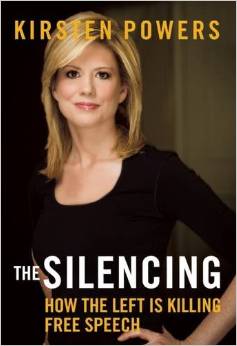 How refreshing that there are people like Kirsten Powers in the world.
In her new book, the outspoken, unapologetic liberal Democrat has taken aim at the militant search-and-destroy tactics employed by many liberals to shut down civil discourse and bully ideological opponents into submission.
Not surprisingly, many on the left have turned their attacks upon Ms. Powers and her book, proving her point by doing exactly what she accuses them of doing.
The intellectual laziness of groupthink lies at the heart of the deep divisions that are tearing this country apart. If more people would listen — listen to each other, and listen to Ms. Powers’s message — America might start turning back toward a culture of problem-solving and away from character assassination and political dogma.
Higher Education?
 On March 9, the Supreme Court refused to hear an appeal by the University of Iowa College of Law challenging Teresa Wagner’s successful lawsuit claiming political discrimination for her conservative views.
The decision comes a year after a more dramatic victory by Mike Adams, a conservative sociology professor who won a similar suit. Professor Adams was awarded a promotion, a raise, $50,000 in back pay and $710,000 in legal fees from the University of North Carolina-Wilmington.
Underlying both stories is the more serious concern that the culture of ideological narrow-mindedness and bullying has transformed college campuses around the nation from centers of higher thinking into indoctrination centers for political and philosophical uniformity.
 And it’s not just universities. My Google search for this story turned up only two headlines, one from the conservative Washington Times and the other from the local Iowa Press Citizen. The print media, it seems, has no more interest in open discussion and debate over opposing viewpoints than does academia. Better to man the battlements and defend the ivory towers from that most dangerous of all enemy attackers — rational thinking and reasoned argument.
The same principle holds true in business, in education, in religion, and in every arena of social discourse. If we can’t articulate the position of our ideological opponents, we can’t refute their arguments and, more important, we can’t fully understand our own.
For a more thorough discussion regarding the evils of groupthink, please see my article here.
 Yonason Goldson