Home » Posts tagged 'Integrity' (Page 22)
Tag Archives: Integrity
Reflect the reality you want
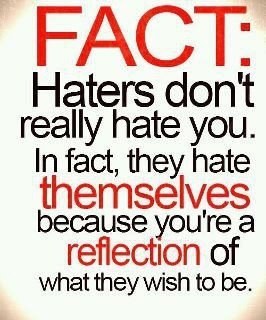 If you want to be happy, let happy people shape your mood.
If you want to be successful, let successful people show you the way.
If you want to be wise, walk in the ways of wisdom.
If you want to be appreciated, show appreciation.
If you want to be respected, act worthy of respect.
If you want to be loved, love others.
If you want to make a difference, learn right from wrong, and have the courage to do what’s right.
Send us your email, and we will send you the first four chapters of Proverbial Beauty – free!


Dangerous Freedom
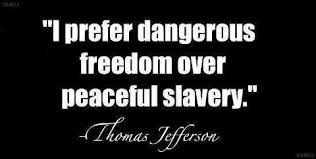 With the holiday of Passover behind us, the dangers of freedom become more threatening than ever.
Freedom is a privilege, not an inheritance. Freedom is an obligation, not a right. Freedom calls us to duty, not to indulgence.
And the illusion of freedom may be the cruelest tyrant of all, seducing us into accepting the slavery of ego, impulse, and comfort.
Every day we should ask ourselves: are we fighting to deserve and to preserve the freedom that our fathers fought so hard for us to have?
Keeping Trust
 Distance yourself from falsehood. – Exodus 23:7
We all like to think of ourselves as honest. But are we?
Do we rationalize white lies? Do we fudge our taxes? Do we return to the counter when we’re undercharged or when we get too much change? Do we make hasty promises that we forget to keep? Do we exaggerate? Do we embellish? Do we state as fact when in fact we aren’t so sure?
Do we lie outright when we’re caught in a compromising position?
It’s easy to justify “little” lies, or even big ones under pressure. How often are we lied to by our politicians — increasingly without shame or consequence? If they can do it, why shouldn’t we?
It comes down to trust. We want to be trusted. And we want to be able to trust others. So it’s not enough not to lie. Distance yourself from falsehood — whether a false word or a false thing or a false friend.
Not only do we become known by the company we keep; we become the company we keep. And once we lose our sensitivity to falsehood, it’s a near-impossible struggle to get it back.
Courage
 Doing what’s right instead of what’s popular;
doing what’s important instead of what’s convenient;
doing what’s necessary instead of what feels good;
doing what’s risky instead of what’s comfortable;
doing what’s challenging instead of what’s easy;
doing what’s best for everyone instead of what’s best for yourself;
doing what others will condemn instead of what others will applaud;
following the heart when the mind is misguided;
following the mind when the heart is seduced;
persevering when others tell you to turn back;
turning back when it’s clear you’ve taken the wrong path;
speaking out against evil;
keeping silent in the face of insult;
telling those you love how much they mean to you.
Just who are “we”?
Tonto: What is wrong, Kimosabe?
Lone Ranger: We’re surrounded by bloodthirsty indians, Tonto. What are we going to do?
Tonto: What you mean, “we,” white man?
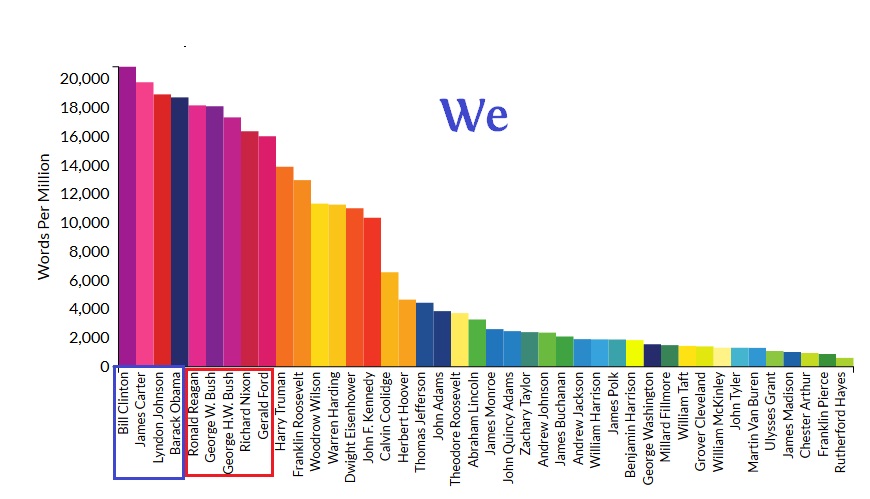 Thanks to Jay Livingston for this post on behalf of the Montclair State Sociology Department. He paints a compelling picture of how the collective language of “we” has been increasingly conscripted by modern politicians to create — or fabricate — an impression of common purpose and common allegiance.
With politics dividing us more deeply than ever, it might seem beneficial to employ rhetoric designed to bridge the ideology gap. In practice, however, disingenuous expressions of harmony and unified vision can do a lot more harm than good.
For one, when a demonstrably divisive leader — a U. S. president, for example — claims that he is the leading advocate of unity and cooperation, he makes himself a lightning rod for accusations of hypocrisy and manipulation that breed cynicism in place of optimism. For another, by claiming the high ground, he implicitly vilifies all who oppose him, even if they do so from positions of principle. Either way, the ideological rift grows wider, not narrower.
Perhaps worst of all, the collective “we” diffuses responsibility from the individual onto the collective: since all of us are responsible, none of us is responsible. This produces the effective equivalent of such politicalisms as “Mistakes were made.” Somewhere, someone did something wrong. There’s plenty of blame to go around, but nowhere for it to stick.
In short, fake unity achieves the opposite of unification.
But when there really is cohesion, whether within a team, a business, a community, or a society, the collective “we” becomes a priceless asset, including the lowly with the high, the rank and file with the leaders, the grunts with the visionaries. Like it or not, we’re all in it together. And the more we try to shoulder our collective burdens with one mind and one heart, the more we will succeed.
Integrity
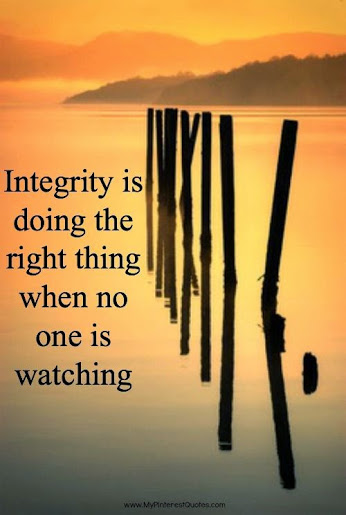 Of course, it’s easier when you know that Someone is always watching.
 Yonason Goldson