Home » Posts tagged 'King Solomon' (Page 4)
Tag Archives: King Solomon

Let the truth set you free
 “James Comey better hope that there are no “tapes” of our conversations before he starts leaking to the press!”
@realDonaldTrump 12 May 2017
This was one of President Trump’s tamer tweets, although you wouldn’t know it by the ensuing chorus of condemnation from the media.
“There’s no good motive for saying this except to intimidate James Comey,” said news anchor Greta Van Susteren in an interview with Democratic Senator Ed Markey of Massachusetts, who emphatically echoed her indictment.
Unpresidential? Possibly. But intimidating?
ALL A-TWITTER
No reasonable person can deny that Donald Trump has made a mockery of himself and his office with his litany of derisive, degrading, and delusional tweets. There is no excuse for any public figure, much less the President of the United States, to whine that he is the victim of the “single greatest WITCH HUNT in American history,” to assert that a distinguished senator from his own party is an “embarrassment” to his home state, or to spew adolescent invectives regarding the physical appearance or psychological stability of media personalities, no matter how slanted and unprofessional their reporting might be.
There should be a code of ethics — whether implicit or explicit — governing the use of social media, which relentlessly eats away the foundations of civil society. But the misuse of modern communication in general, and of Twitter in particular, does not make it all bad all the time.
In a world where the media has grown increasingly untrustworthy, unfair, and unbalanced, the power of social media to circumvent inaccurate or misleading reporting should be warmly welcomed. But that power is so easily abused that it routinely invalidates its own effectiveness as an alternative information source.
Which brings us back to Mr. Trump’s tweet warning that James Comey’s own words might be subject to verification.
Was that intimidation? Was it coercion?
FOR THE RECORD
Well, let’s see. Mr. Trump did not say that he had any tapes. He did not even say that he might have tapes. He did not threaten Mr. Comey with reprisal or retribution of any kind. He did not suggest that Mr. Comey should in any way distort or omit the truth.
What he did do was raise the specter that Mr. Comey’s statements might come back to haunt him if found to contradict anything Mr. Comey himself had previously said.
Come to think of it, this might be the most cogent message Donald Trump has tweeted since he launched his campaign to run for president. By what twisted logic can it now be suggested that confronting public figures with the truth is a form of intimidation?
Has our moral compass spun completely off its axis?
The humorist Charles Marshall wrote, seriously, that, “Integrity is doing the right thing when you don’t have to — when no one else is looking or will ever know — when there will be no congratulations or recognition for having done so.”
That is a universal truth. But it’s all the more relevant in an age when everyone carries a camera, when anything and everything we do could end up on YouTube or the evening news. If there is any upside to the ubiquitous presence of recording devices lurking in every shadow, it is that we have to consider the very real possibility that someone is always watching, and that anything we say or do might be used against us.
King Solomon said, Curse not the king even in your thoughts, and curse not the rich in your bedchamber; for a bird of the air shall carry your voice, and that which has wings shall make the matter known.
More than ever, there are flies on the walls, and the walls have ears. Rather than worrying that we might be overheard, wouldn’t we be better off making sure that nothing leaves our mouths that we wouldn’t want repeated or retweeted?
Video: What are Ethics? Part 23
Short-Term Seduction



The Curse of Cowardice
 “The implications for our country are so serious that I feel a responsibility to my constituents… as well as to my conscience, to voice my concerns forthrightly and publicly. And I can think of no more appropriate place to do that than on this great Senate floor.”
~Democratic Sen. Joseph Lieberman, September 1998
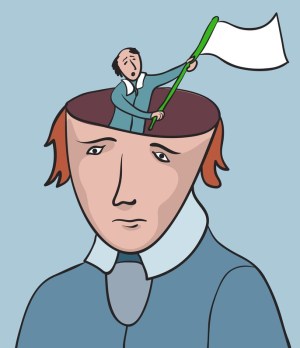
It takes courage to stand up to our enemies, but even greater courage to stand up to our friends. And that’s precisely what is missing in modern political culture:
Courage.
In today’s world of groupthink, challenging the party line can be socially and professionally self-destructive. Friends and allies turn into assailants at the first whisper of dissent, at even the suggestion that there may be more than one side to any issue.
THE SOUNDS OF SILENCE
In June of last year, Maya Dillard Smith, head of the Georgia ACLU, came under attack for suggesting that the topic of transgender bathrooms warranted deeper discussion. To her credit, Ms. Smith resigned her position rather than remain part of an organization so fervently opposed to the principle of civil discourse.
The previous November, Professor Erika Christakis (together with her husband) lost her job at Yale after sending an email suggesting that students should be treated as adults, then compounding her transgression by attempting to engage demonstrators in reasoned debate.
And for years, moderate Republicans, disparaged as RINOs – Republicans in Name Only – have been hunted and attacked as traitors to their party.
In this age of polarization and partisanship, it’s much safer to attack the other party, whether from the right or the left. Republicans and Democrats alike circle the wagons to defend those among them who hurl even the most outrageous verbal projectiles across the aisle. To stand alone as the voice of reason by suggesting temperance, moderation, or compromise means taking your life in your hands.
After last week’s horrific shooting spree, which targeted Republican lawmakers as they practiced for the annual congressional baseball game, the obligatory expressions of unity and civility poured forth from both Democrats and Republicans. But it didn’t last long. By week’s end the rhetoric was already ratcheting up again, with each side blaming the other for creating a cultural atmosphere of toxic hate and violence.
Both sides are right. Yet neither is willing to offer more than lip service toward solving the problem.
SAY IT AIN’T SO, JOE
So who will be today’s Joe Lieberman? Who will speak out against entrenched power and political pressure to risk the slings and arrows of reprimand and reprisal? Who will show the courage to call out his or her own colleagues for their inflammatory excesses instead of taking the coward’s way out by indicting the other side while claiming the high moral ground from amidst the morass?
 Where are the mavericks, the lone wolves, and the white knights who fear the sting of their own conscience more than lash of their own party, who will bet their own future on the long odds that their example might spur others to join them in building a coalition of responsible statesmen to right the ship of state?
When Senator Lieberman took to the senate floor two decades ago, he directed his censure not only against his president and the leader of his party, but against his personal friend. It wasn’t easy, and it wasn’t safe. But loyalty to truth and responsibility to country outweighed emotional comfort or potential fallout. Abuse of power could not be tolerated. Corruption of office could not be sanctioned. Silence was not an option:
“The president is a role model and, because of his prominence in the moral authority that emanates from his office, sets standards of behavior for the people he serves.
“His duty… is nothing less than the stewardship of our values. So no matter how much the president or others may wish to compartmentalize the different spheres of his life, the inescapable truth is that the president’s private conduct can and often does have profound public consequences.”
If so, how much more so his public demeanor.
King Solomon teaches: When a ruler indulges falsehood, all his ministers disdain the law.
Herein lies the awesome responsibility of all who wield power. Every elected official, every appointed judge, every journalist and news anchor and editorialist has a moral obligation to ensure that his words are accurate, that his positions are based in fact and reason, and that his language is respectful.
And it is the moral obligation of We The People to hold our leaders accountable, and to support those among them who demand accountability.


 Yonason Goldson