Home » Posts tagged 'Moral Compass' (Page 34)

Tag Archives: Moral Compass

Is Anyone Still Wild About Harry?

53985-oAs a boy in junior high school, I bought the soundtrack of “Give ’em Hell, Harry” at a school book and record sale.  I have no idea what prompted me to spend a dollar on that particular piece of vinyl — I wasn’t living in Missouri then, but in Los Angeles, California.

Whatever the reason, it proved one of the best investments of my life.  By the time I reached high school, I had practically committed James Whitmore’s entire 90-minute monologue to memory, and Harry Truman had become my hero.

I found the video on YouTube recently and, just last week, returned to the beloved performance.  With my recent essay on honesty and integrity so freshly pressed, the following words jumped out and seized hold of me:

“Dictatorship?  No, it’ll never happen.  The Constitution will stop ‘em every time.

“I’ll tell you, there’s only one way that could happen, and that’s if we had a liar in public office.  There’s nothing more dangerous on this earth than a liar in public office, because the people might believe him.

“But if the people every found a fellow like that they ought to show him the same amount of compassion that he showed the constitution.  No more, no less.”

What would Harry Truman say about a president like Barack Obama who, according to the Washington Post, claims three of the twelve most egregious lies of 2014 and three of the ten biggest lies of 2013?  What would Harry say about a candidate like Hillary Clinton, the “congenital liar” who seems emboldened to tell ever-inflating whoppers without a shred of shame or contrition?

And what would Mr. Truman have to say about an American electorate willing to overlook the brazen dishonesty of politicians willing to say and do anything to get into office and push through their self-serving agendas?

As the song says:  Harry, where are you, now that we need you?

Can we Stay Honest in a Dishonest World?

DENVER, CO. - MARCH 07: Colorado's high court hears school funding lawsuit arguments, March, 07, 2013. The case, Lobato vs. State of Colorado, was filed in 2005 by a group of parents from around the state and school districts from the San Luis Valley.   LEFT TO RIGHT:  Nathan Coates, Gregory Hobbs, Michael Bender, Nancy Rice, Allison Eyd and Brian Boatright.  , (Photo By RJ Sangosti/The Denver Post)

The biggest tragedy of the Supreme Court decisions on Obamacare and gay marriage was not the decisions themselves. It was the perception, by both winners and losers, that these decisions were not reached based on legal principle but upon political ideology and personal bias.

Which means that, regardless of which side won, the country as a whole lost.

Honesty has seen its market value tumble over the years with countless reports of plagiarism, factual carelessness, and blatant fabrication. It’s bad enough when such prevarication comes from the media. But what’s really cause for alarm when it becomes the norm among our political leaders.

The sad truth is that truth from our politicians has become far more the exception than the rule. But the brazenness with which they conjure up easily verifiable falsehoods grows ever more astonishing.

Once integrity disappears, the only motive not to lie is fear of not getting away with it — and get away with they have, in a society that has grown indifferent to lying.

We may not be able to stop the lying in politics. But here are ten ways we can prevent the erosion of our own integrity.

Expanded and updated from an article published earlier this year.  Click here to read the whole article.

How to Survive the Age of Advertising

KoenigJulianAfter the Stone Age came the Iron Age, then the Industrial Age, and now the Age of Advertising. Regardless of what the experts say, we are not living in the age of a consumer economy, but of an advertising economy.

With companies trading for billions without producing proportional revenue — or any at all — we can only imagine how far things can go and how far the markets will climb before this latest bubble bursts, exposed for the pyramid scheme that it is. Indeed, the inability to distinguish between reality and illusion is precisely the goal of modern advertising.

Nevertheless, there is some small hope that escape from its influence might still be possible, no matter how far its tendrils have reached. That evidence comes in the person of Julian Keonig,  perhaps the greatest legend in advertising history, who passed away last year at age 93.

Readers of a certain age will remember the classic Timex slogan, “It takes a licking and keeps on ticking,” and the self-validating tagline for the Volkswagen Beetle — think small — voted the most successful ad of the last century. Both were the creations of Julian Keonig; but neither was what he considered his most inspired brainstorm.

And neither provides us with an insight into his most important legacy.

Click here to read the whole article.

Elbowing God Out

the-pledge-of-allegiance-and-an-american-flagBack when I possessed the charming innocence of a twelve-year-old, I took offense at the wording of the Pledge of Allegiance. Why, I wondered, was I expected to pledge my allegiance to a flag? Proclaiming loyalty to my country I could understand, but to a piece of fabric?

Moreover, as I had concluded with unshakable, preadolescent self-confidence that human existence was nothing more than a cosmic accident, I found the phrase “under God” equally offensive.

So while my classmates were loudly reciting the full text of the Pledge of Allegiance, I was quietly editing my own recitation: I pledge allegiance… to the United States of America… one nation… indivisible, with liberty and justice for all.

By my final year in high school, however, having acquired a sufficient measure of sophistication to appreciate the importance of symbolism, I no longer resented being asked to swear loyalty to a flag. But we weren’t reciting the Pledge of Allegiance any more, so I had no chance to mend my ways.

I was also less certain concerning the existence of a Creator. Six years of secondary education had opened my eyes to a universe so enormously complex that to embrace any world view as extreme as atheism seemed the height of arrogance. The phrase “under God,” therefore, struck me as a comforting expression of humility, that we as a nation recognized the grandeur of our universe and conceded its unfathomability.

Perhaps the circuit court judges who ruled the phrase “under God” unconstitutional might have interpreted the law with more humility if they had familiarized themselves not only with the letter, but with the spirit of the Constitution. Perhaps they might have better understood the intent of the Framers if they had read, or remembered, the words of Alexander Hamilton: “The sacred rights of mankind… are written, as with a sun beam in the whole of human nature, by the hand of the divinity itself; and can never be erased or obscured by mortal power.”

ScreenShot2014-08-01at3.09.15PMConsidering the many references to the Almighty among the writings of the Framers of the Constitution, it’s astonishing how often we hear the Constitution invoked as the basis for expurgating every reference to God from the public arena. If the founding fathers weren’t afraid of mentioning God in the Declaration of Independence, why should we fear the utterance of His name in our courthouses or schools? But many among us are afraid, afraid with a fear born of insecurity.

Indeed, what is more terrifying than the unknown, and what is less known than what awaits us when we depart this mortal coil? As Prince Hamlet pondered: “To sleep? Perchance to dream! Ay, there’s the rub.” For the devout atheist, there is no greater dread than the haunting suspicion that he might be wrong, that there might truly be a Creator and an accounting before Him upon arrival in the hereafter. To the atheist, every reference to God is an unwelcome reminder that the rest of the world is not so certain that our existence is random and without purpose.

The great Rabbi Joseph B. Soloveitchik summed it up like this: “All extremism, fanaticism and obscurantism come from a lack of security. A person who is secure cannot be an extremist.” And, indeed, extremism in the form of radical religion or radical nihilism is one and the same. The 19th century anarchist used techniques not unlike the suicide bomber of today to advance his own variety of jihad. The modern anarchist uses manipulation of the law to advance his cause, supremely confidant that he understands the Constitution better than its authors.

The Talmud describes how, during the last days of the second Temple in Jerusalem, the Jewish people observed the law of the Torah meticulously according to its letter. But they failed to look beyond the letter of the law, to strive for understanding and fulfilling of the spirit of the law, to labor in applying the essence of the law toward the transformation of their character. This failure, together with a senseless hatred born of mutual suspicion, mutual contempt and, ultimately, the uncompromising assertion of their own egos, resulted in the destruction of the Temple, the deaths of millions of Jews, and the beginning of our long, dark exile scattered among the nations of the earth.

It has been observed that the word ego is in fact an acronym for Elbow God Out. A daily reminder that we should receive our national freedoms with humility is among the surest means of preserving those freedoms for our children. Close to two thousand years ago, instead of subduing their egos before the Highest Authority, instead of subjugating their ideological differences to the pursuit of shalom, peace, the Jews distorted Divine law to serve their own agendas, thereby sealing their fate and the fate of the Temple.

The sages teach that any generation that does not rebuild the Temple is considered to have destroyed it. But if we return to the law with humility and reverence, then we can truly hope to rebuild that which for so long has been lost.

Adapted from an article previously published by the St. Louis Post-Dispatch, the Baltimore Sun, and Aish.com.

In Memoriam: Nicholas Winton, 1909-2015

Nicholas Winton, a Briton who said nothing for a half-century about his role in organizing the escape of 669 mostly Jewish children from Czechoslovakia on the eve of World War II, a righteous deed like those of Oskar Schindler and Raoul Wallenberg, died on Wednesday in Maidenhead, England. He was 106.


It was only after Mr. Winton’s wife found a scrapbook in the attic of their home at Maidenhead, in 1988 — a dusty record of names, pictures and documents detailing a story of redemption from the Holocaust — that he spoke of his all-but-forgotten work in the deliverance of children who, like the parents who gave them up to save their lives, were destined for Nazi concentration camps and extermination.

For all his ensuing honors and accolades in books and films, Mr. Winton was a reluctant hero, often compared to Schindler, the ethnic German who saved 1,200 Jews by employing them in his enamelware and munitions factories in Poland and Czechoslovakia, and to Wallenberg, the Swedish businessman and diplomat who used illegal passports and legation hideaways to save tens of thousands of Jews in Nazi-occupied Hungary.

May we all be inspired by a life of extraordinary heroism and modesty.  Click here to read the New York Times retrospective.

Why Marriage Matters

Just married couple, holding hands and walking in nature

From the United States Constitution to the French Revolution, from the Emancipation Proclamation to the 19th Amendment, from the Civil Rights Act to last week’s Supreme Court decision affirming the right to gay marriage, the world has taken (by a vote of 5 to 4) another great step forward on the road to universal equality and justice.

That’s what the pundits would like us to think.  Except that it wasn’t a step forward.

And, more important, it was never about the right to marry…

As an institution, marriage created a moral structure upon which all other moral structures found purchase:  Partnership, self-sacrifice and, perhaps most critically, respect for the natural boundaries and limits imposed by the design of the universe in which we live.  Human beings took for granted the imperative to conform to nature’s laws and nature’s plan.  Individual desire and ambition learned to submit to a higher reality and universal truths.  Personal gratification was not the ultimate arbiter of right and wrong in a society that required cooperative spirit and collective commitment to ideals that extended beyond oneself.

Click here to read the whole article.

Proverbial Beauty: Read now at Amazon.com

…as effortless as drawing breath

PB Meme -- For the virtuous

Order now on Amazon and learn to love life

Unforgivable

Should Dylann Roof be Forgiven for the South Carolina Massacre?

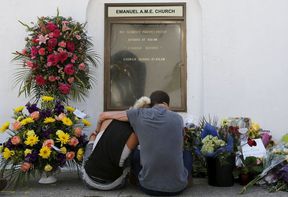
1276260-thumb-288xauto-1105590In an extraordinary example of human nobility, relatives of those killed in the Charleston, South Carolina, massacre expressed their forgiveness for Dylann Roof, the domestic terrorist who opened fire and took nine lives from the historic Emanuel A.M.E. church community. The mourners’ refusal to indulge their natural human impulse for revenge and to return love for hatred shows us all how it is possible to heal our fractured society.

Proverbial Beauty: Read now at Amazon.com

On a deeper level, however, the question of forgiveness is vastly more complicated.

One of the most compelling works of Holocaust literature is The Sunflower, an anthology built around the experience of survivor Simon Wiesenthal in the Lemberg Concentration Camp. In 1943, Mr. Wiesenthal was summoned to the deathbed of Karl Seidl, a Nazi soldier haunted by the atrocities he had committed, who wanted desperately to receive forgiveness from a Jew before he died.

Mr. Wiesenthal describes how he could find nothing to say and left the soldier without uttering a word. He then grapples with the question of whether he should have offered forgiveness, ultimately offering his answer by reframing the question:

ONE FOR ALL?

The crimes committed by the Nazis were not directed against individual Jews but against the Jewish people as a whole. Consequently, the torture and torment inflicted upon any Jew was in fact a crime against every Jew. Each individual victim was not a person but one of a people — the perpetrators didn’t care who he was but what he was — and therefore no individual had the power to grant forgiveness since an entire nation was targeted through each act of individual violence.

In other words, it wasn’t a matter of whether Mr. Wiesenthal should forgive, but whether forgiveness was his to give at all.

The same reasoning applies to all hate crimes. Whether the victim is black or white, Hispanic or Asian, Jew or Gentile, citizen or immigrant, rich or poor, any act of violence motivated by identity is not merely a crime against one person but a crime against mankind. As such, it transcends mere brutality or wickedness and rises to the level of gross inhumanity. By doing so, it becomes unforgivable.

So how can an act of forgiveness be both noble and impossible? Part of the confusion stems from a lack of clear definition. What is forgiveness? And why should forgiving evil ever be considered noble?

In the best-case scenario, forgiveness is a response to contrition. When a perpetrator recognizes the evil of his own actions, sincerely regrets them, and seeks to repair or atone for the harm he caused, then to withhold forgiveness becomes an act of evil itself. In such a case, to grant forgiveness becomes not merely noble but a moral obligation.

Proverbial Beauty: Read now at Amazon.com

But what if the perpetrator feels no remorse? Or what if he has no intention of righting the wrongs he has caused?

Even in that case, if one can understand, or even imagine, what motivated an act of evil, then it might be possible to forgive the offender for his own human weakness, whether it was a momentary lapse in temper or judgment, an innate lack of moral clarity or, as may or may not be the case with Dylann Roof, demonstrable psychological instability. To be able to see past one’s own pain and find a mitigating factor to excuse violence is truly noble… even saintly.

WITHOUT REMORSE

However, in the case of conscious, calculated evil, forgiveness may actually be a perversion of morality. Moral values should be so deeply rooted within that we can’t help responding to any violation of them with indignation and outrage. If we are truly committed to the values of good, how can we possibly tolerate evil, or those who do evil, especially when they do it in the name of good?

This is what the sages of the Talmud meant when they said, Be discerning in judgment. Look for every possible means of explaining away bad behavior. But after all is said and done, evil remains evil. Nonjudgmentalism is an empty slogan that allows evil to proliferate unchecked.

What often gets lost in the discussion of forgiveness is the matter of accountability. If I break your window, my apology means nothing unless I’m willing to pay for the window. And if I’ve caused damage that can’t be repaired, punitive restitution may be the only means through which society as a whole can preserve respect for the rule of law and confidence in the institutions of justice.

The particulars are open to debate. There are legitimate grounds to oppose the death penalty, mostly based in the real concern that an imperfect legal system cannot guarantee the guilt of those sentenced to death.

But to oppose capital punishment on the grounds that the state has no right to take a life misses a larger point. One who takes the life of another member of society forfeits his own place in that society; moreover, a society will retain its respect for the sanctity of life only with the recognition that by taking a life one forfeits his own right to life as well.

To take the life of any one person is, on some level, to take the life of every person. Justice must be served. Only then may it be possible to forgive.

Proverbial Beauty: Read now at Amazon.com

Click here to read this article and more from Yonason Goldson at Jewish World Review

The Power to Change the World

With so much senseless violence dominating the headlines, from Charleston, South Carolina, to Syria and beyond, it’s worth revisiting this story of heroism and the power of the individual to change the world.

On the afternoon of September 18th, 2014, a teenage driver lost control of his SUV as he sped down Salt Lake City’s Indiana Avenue. The GMC Yukon tore through the safety barrier, went airborne into a ravine, and landed upside down in three feet of water and the bottom of the gully. Dazed or unconscious, strapped in by their seat belts, the driver and his two passengers had minutes before they would drown.

article-0-21869C9000000578-789_634x608What happened next offers a welcome relief from the relentless litany of strife and suffering that fills the headlines. Moments after the crash, nearly a dozen bystanders waded into the waist-high water and, working in unison, flipped the massive vehicle over onto its wheels, lifting the crash victims out from under the water and saving their lives.

But it might never have happened. As horrified onlookers stood frozen and stared at the capsized SUV, Leo Montoya, Jr., an out-of-work locksmith, overcame the Bystander Effect, plunged into the current and dove under the water in an effort to save the occupants. Unable to free them from their seat belts, only one option presented itself.

Turning toward the crowd, Mr. Montoya shouted, “We have to get this vehicle back on its wheels. Now, now, now!” Prompted by his commands, some of the men standing on the roadside began following him into the water. With so many pairs of hands and shoulders at work together, the Yukon rolled up and over until it was back on all four wheels and the passengers were clear of the water. When firefighters arrived, they freed the occupants and rushed them to the hospital.

The collective effort of bystanders saved three lives. But only because one person showed them the way and convinced them to follow.

The incident calls to mind another scene that happened 3,326 years ago after the exodus from Egypt at the splitting of the Sea. Faced with Pharaoh’s chariots bearing down on them from behind and the imposing expanse of water ahead, the Jewish people’s faith in God wavered. “Were there not enough graves in Egypt that you had to bring us out here to die?” they railed against Moses. The situation was impossible; there was no hope.

Until one man spoke up. Nachshon ben Aminadav, the prince of the tribe of Yehudah, cried out to the people: “If the only way to escape the Egyptian army is to go forward, then forward we must go. Let us do what we can and trust God to do the rest.” And with that, he waded out into the sea.

Inspired by his words, the people followed him. Deeper and deeper they advanced into the waters until, as the water reached Nachshon’s chin, the sea split before and around them, offering both the means of the Jews’ escape and the method of the Egyptians’ destruction.

What kind of person marches into the sea assuming that a path will open up to make way for a desperate nation? The same type of person who would charge forth and rally a dozen men to overturn a ton of steel, the type of person who understands that no matter how daunting the odds, there is no way to know the limit of human potential until we have pushed human potential to the limit.

What’s more, the potential of the many may remain unrealized until a singular individual shows that he has no interest in probabilities and, through sheer determination, awakens the collective spirit through which the impossible becomes reality.

We all want to be good and do good, and change the world for the better. But we lack confidence in ourselves, we lack the conviction to act, we lack the courage to risk failure. So we miss opportunities for greatness – not just by failing to charge into the breach, but by not expecting more from ourselves, by not setting the bar of human achievement and human integrity a little higher.

In one heroic moment, one man can inspire a world of others to change themselves. And the more we change ourselves, the more we change the world.

Just ask Leo Montoya. “As far as I know, a couple of kids get to live because of my actions,” Mr. Montoya told reporters. “I feel like I’m somebody.”

Originally published at Aish.com.


The Unfairness Doctrine

With the biggest FIFA scandal to date dominating the headlines, I’m revisiting this piece from a couple of years ago about the growing indifference to justice throughout the world community.

cdn-media.nationaljournalThere are certainly more important things than soccer to get worked up over — especially here in the United States, where we already have baseball, basketball, hockey, and (American) football.

Maybe that’s an argument in defense of referee Koman Coulibaly, who infuriated American soccer fans by disallowing a winning goal by team USA with no apparent justification. After all, it’s only a game. Wouldn’t all that passion be better directed against the gulf oil disaster or Iran’s nuclear weapons program?

In this case, at least, the Federation Internationale de Football Association (FIFA) might agree. According to the New York Times, FIFA president Sepp Blatter “does not want video replay or extra referees on the end line at the World Cup. He favors debate over decisiveness and human frailty over intrusive technology, thinking that subjectivity helps soccer more than it hurts.”

Now there’s an interesting philosophy: human error by judges, umpires, and referees enhances competitive sports. But don your body armor before making that suggestion to Detroit Tigers pitcher Armando Galarraga. Only two weeks earlier, you may remember, a blown call by umpire Jim Joyce on the last play of the game denied Mr. Galarraga baseball’s most coveted distinction — a perfect game.

In the aftermath, pundits have suggested that the baseball mishap did more for the sport than a perfect game ever could have. Mr. Galarraga was the model of graciousness, upset at being robbed but apparently harboring no resentment. For his part, Mr. Joyce appeared not only contrite but genuinely heartbroken. A week later, the league itself showed impressive quality of character when a hundred MLB players voted the repentant umpire the best in the game. All around, a sport that has been plagued with steroid and contract scandals produced extraordinary examples of dignity, restraint and — to revive an expression near to extinction — class.

In contrast, Mr. Coulibaly has yet to offer a single word of explanation, much less apology, for his inexplicable whistle-blowing. (However, mounting pressure may convince FIFA to reverse its own policy of refusing to comment on calls by the time this sees publication. Nothing challenges core values like bad press.)

But is it only a game? Every parent knows that the way children play reveals much about who they are deep down. It seems reasonable to assume the same about cultures: the way they play speaks volumes about their moral values.

MORE THAN A GAME
In American sports, everyone from fans to players to officials to high commissioners has weighed in on the use of instant replay to ensure the accuracy of calls at critical moments. Some argue that, in the interest of fairness, every available technology should be employed to ascertain the umpiric accuracy. Others are afraid that instant replay will slow down gamesalready mired in strategic interruptions and commercial breaks. But no one claims that accuracy doesn’t matter. And certainly no one has ever hinted that inaccuracy is good for the game.

What the Armando Galarraga incident so refreshingly demonstrates is that, to a large degree, Americans still care about facts and fairness. Umpire Jim Joyce acknowledged his mistake, expressed sincere remorse, and all was forgiven. What the Koman Coulibaly debacle indicates is that, to a large degree, the international community has lost all interest in truth and justice.

When such indifference to right and wrong confines itself to the playing field, we might pass it off as a sad but inconsequential character defect of sports celebrities. But this kind of skewed perception of reality long ago began seeping inexorably into the world of politics and social justice, most notably the assault by the community of nations against the State of Israel.

By all accounts, Israel should be the darling of the non-Arab world. Largely secular, the only democracy in the Mideast and the only Middle Eastern countryto have made concessions for peace, a socialist nation that has nevertheless become a burgeoning economic powerhouse, and a lone David surrounded by a hoard of Goliaths, Israel meets every criterion of European values. And yet, the European Economic Community and the European-dominated United Nations have, time and time again, cast Israel as aggressor and censured Israel for intransigence while ignoring facts and history that prove precisely the opposite.

Perhaps the United Nations should field its own soccer team. Perhaps Koman Coulibaly should seek nomination for the position of U.N. Secretary-General.

THE LAST EXILE
In his prophetic dream, the patriarch Jacob beheld celestial emissaries ascending and descending a ladder with its feet upon the earth and its top reaching the heavens. The sages of the Talmud teach that Jacob witnessed the guardian angel of Babylon go up seventy rungs and then descend, foreshadowing the Babylonian exile of 70 years. He then saw the guardian angels of Persia and Greece ascend 56 years and 180 years respectively, corresponding to the duration each would rule over the Jews. Finally, Jacob watched the guardian angel of Edom go up and up the ladder until he cried out to the Almighty, “Master of the World! Will this angel never come down?”

“Even if it reaches the gates of heaven,” replied G-d, “I will cast it down Myself,” implying that the nation of Edom would rule Israel until the arrival of the messianic era.

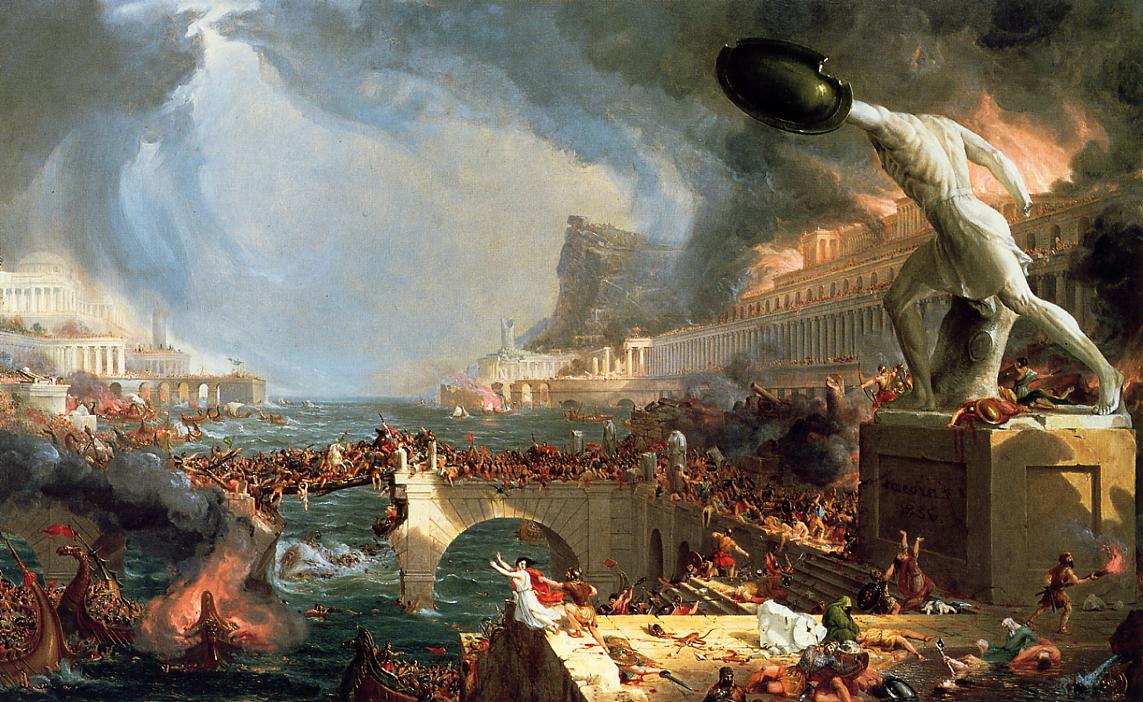
the-fall-of-the-roman-empire-romes-destruction-paintingNearly 2000 years ago, the sages identified the Roman Empire as the spiritual descendant of Edom, which was itself descended from Jacob’s wicked brother, Esau. But if the Roman Empire fell over 1500 years ago, how are we to understand the image of Rome’s guardian angel reaching the gates of heaven and surviving until the coming of the Messiah?

Esau was called Edom — meaning red — not because of his red complexion but because of his peculiar request that Jacob serve him “that red stuff,” by which he meant the bean stew he found his brother preparing when he came in hungry from the field. Color is the least intrinsic quality an object possesses, describing only the most external, cosmetic appearance without acknowledging function or purpose.

In this single moment, Esau revealed his defining quality as superficiality, the total lack of concern with anything other than outward appearances. And although the empires of Edom and Rome have long disappeared from the earth, the culture of superficiality that characterized them has become the salient characteristic of Western Civilization. In today’s culture wars, the final battleground between good and evil has become one in which evil claims to be good, conflating right and wrong with the empty sophistries of moral equivalence and political correctness, advancing arguments so thin and insubstantial that they fool no one who cares to look beneath the surface.

And yet, hardly anyone cares to look.

Soccer may be only a game, but it has become an international obsession. The contempt for truth articulated by its highest officials exposes a dangerous cultural bias and explains why the Europeans community would rather condemn the beleaguered nation of Israel than risk the consequences of antagonizing Israel’s belligerent and oil-rich enemies.

Jews around the world can take some comfort in the ability of America and Americans to still respond with passion in defense of truth. At the same time, the willingness of the current administration and so many in the media to rush to judgment against Israel offers unsettling evidence that we are approaching the fulfillment of the prophecy that, at the End of Days, Israel will stand against the world alone.

Originally published on Jewish World Review.