Home » Posts tagged 'Personal Development' (Page 12)
Tag Archives: Personal Development

Channeling Anger and Solving our Common Problems
My thanks to Dan Mason of KKOH in Reno for inviting me to be a guest on his show. We talked about the anger driving voters, resolving conflict, and transforming negatives into positives.

Email of the Week — Making “Friends”
 Presently, I am trying to make friends outside of Facebook while applying the principles of Facebook.
So every day I walk down on the street and tell the passers-by what I have eaten, how I feel, what I did yesterday and what I will do tomorrow.
Then I give them pictures of my family, of my dog, and of me gardening and spending time in my pool. I also listen to their conversations and I tell them I love them.
And it works. I already have 3 persons following me:
2 police officers and a psychiatrist.

What is happiness, and how do we get it?
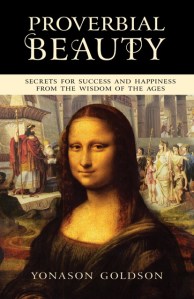
Order on Amazon today.
Proverbial Beauty, a new book on how to achieve happiness and success, offers a practical guide to changing our outlooks and our fortunes. Here’s an excerpt:
In a single, ringing phrase, Thomas Jefferson captured the essence of the American dream when he declared that all men have the right to “life, liberty, and the pursuit of happiness.” And yet, despite Mr. Jefferson’s noble sentiments and laudable achievements, the enduring lyricism of his words spawned an epidemic of confusion and despondency that continues to spread like pestilence through western society.
How precisely does one pursue happiness? We may pursue wealth, pursue fame, pursue gratification of one form or another. But the fiction of pursuing happiness has become a collective obsession that consumes our lives, either by goading us into chasing impossible dreams or by tarnishing the quality of our existence with unwarranted regrets.
Before we set off in pursuit of anything, we ought to know what it is and how to get it. Like many other words and expressions, we toss about the word “happiness” without really knowing what we mean. The definition seems obvious, but the inconvenient truth is that we really have no idea what we’re talking about.
So what is happiness, and how does one get it?
Read the whole excerpt here:
http://www.jewishworldreview.com/0815/Goldson_pursuit_of_happiness.php3

The Miracle of Music
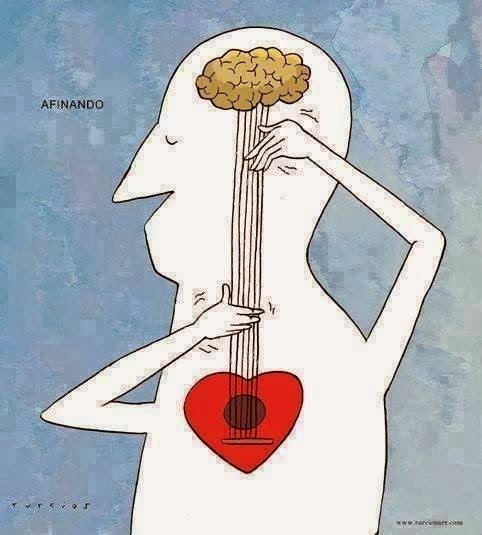 Why do the human mind and heart respond so passionately to an arrangement of sounds and words that provide absolutely no tangible or evolutionary benefit? The answer reveals much about ourselves and the world we live in.
We spend much of our lives looking and hoping for miracles. But the greatest miracle of all is right before our eyes: nature itself, the seamless fusion of all the forces of the world into a unified, unvarying system.
Science itself testifies to this: the principle of entropy, intrinsic to Newton’s second law of thermodynamics, describes the natural state of the universe as tending always toward disorder. In other words, nature’s law cannot account for the laws of nature, cannot explain the original ordering of the natural world that produced the immutable regularity of nature itself. What greater testimony to intelligent design can one find than the unnatural, persistent order evident in every aspect of the workings of Creation?
But what does this have to do with music?
Read the whole article here: http://www.learning-mind.com/the-miracle-of-music-how-sounds-affect-the-human-mind-and-heart/


Embrace Illusion
We see what we want. We don’t see what’s right in front of us. We need to learn how to look if we want to see what we’ve been missing.
Time — 4:13

Acquire the Gift of Giving
When she was 8 years old, Lara Aknin convinced her little brother to trade his dimes for her nickels. It was an easy sell… after all, nickels are bigger and must therefore be worth more.
 Now a psychologist at Canada’s Simon Fraser University, Dr. Aknin has discovered a mistake more profound than youthful embezzlement: in truth, her motivation itself was built on a misunderstanding of human nature.
In an interview with NPR’s Shankar Vendatam, Dr. Aknin describes the experiment in which her team asked toddlers to feed candies to hand-puppets which, they were told, would really enjoy the treats. Considering that these children were still too young to have absorbed any cultural awareness of giving as a value, the results produced two surprises. Explains Dr. Aknin:
“Children smiled significantly more when they were giving treats away than when they received the treats themselves. But what we thought was particularly exciting was that children actually smiled significantly more when they gave away one of their own treats than an identical treat provided by the experimenter.”
In other words, the greatest feelings of joy may come from giving up that which we treasure the most.
But does the impulse remain as we grow into adulthood?

The Orchestra of Mankind

Find tranquility in the midst of conflict. Develop attitudes that deepen relationships. Gain clarity through times of darkness and confusion. Decrease cynicism and find joy in the daily miracles that fill our lives.
Where did I leave my keys?
 Have you noticed how the more we try to push God out of our lives, the more insurmountable our problems seem to become?
Remember Einstein’s definition of insanity?
How many times have we spent the morning looking for our keys, cursing the fool who moved them, until we discover that we carelessly dropped them someplace where we were certain not to find them?
How often do we blame other people for the problems we caused ourselves, and look to others for the solutions that we hold in our own hands?
Isn’t it time we learned better?

Clean up your act and become a better person
 Counting your change as you exit the local supermarket, you discover that the cashier accidentally handed you back a ten dollar bill instead of a five. You pause, debating whether to go back and correct the error or pocket your modest windfall.
What you do next may depend on how fresh the fruit smelled in the produce section. If the tomatoes were over-ripe enough to emit an unpleasant odor, that might be all it takes to set your moral compass spinning.
In a series of social science experiments, researchers observed how exposure to disgusting smells or images can influence our attitudes and behavior: the same self-protective reflex that makes us back away from an assault upon our senses can also make us recoil from offensive behavior. Needless to say, rotten tomatoes have nothing to do with personal character; but once our feelings of disgust have been activated toward repugnant pictures or noxious odors we are more likely to feel aversion toward objectionable conduct and become increasingly repelled by unethical behavior.
That’s the good news. What’s really ironic, however, is that the same stimuli that make us less tolerant of improper actions by others make us more likely to engage in those same kinds of actions ourselves.
Respect the boundaries of the world…

Proverbial Beauty now available on Amazon.com
 Yonason Goldson