Home » Posts tagged 'Personal Growth' (Page 6)
Tag Archives: Personal Growth

No Re-entry

“I can only show you the door. You have to walk through it.”
~ Morpheus, The Matrix
Life is a series of doorways, each leading into the future. Fear and complacency try to convince us not to go through one; complacency and arrogance try to convince us that there’s no need to go through another.
Either way, once we go through, there’s no going back. All we can do is be careful which doors we choose to open, and learn from our mistakes so that we don’t repeat them.
Here’s a deeper look, excerpted from my book Proverbial Beauty:
Fortunate is the man who listens for me, attentively waiting at my doors day by day, keeping watch by the doorposts of my entryways (Proverbs 8:34).
In the language of Solomon, a doorway symbolizes a point of transition, a threshold of spiritual growth, and an opportunity not only to realize but to increase one’s personal potential. And so wisdom says, as it were: “None is more fortunate than those who listen to me, who learn my ways and commit themselves to my principles, who wait eagerly and attentively for every opportunity to rise to the challenges demanded by moral discipline, who do not rest on their laurels but follow every moral victory by hastening to the next ‘entranceway’ and waiting for the next ‘door’ of opportunity to open up for them.”
It sounds a simple formula, but although “change” may make an effective campaign slogan, human nature deplores change and yearns for the status quo. For many, nothing is more frightening than the unknown that lies on the other side of the next “door.” And human creativity knows no bounds in its efforts to avoid knocking at the doors life places in our path.
In the mythical town of Khelm, the synagogue beadle would rise at dawn each morning to go around the town, knocking on doors to rouse the parishioners for the morning prayer service.
Years went by, and as the beadle grew older it became increasingly difficult for him to make the rounds. One winter, after a particularly heavy snowfall, he told the synagogue elders that he would be unable to make it out the next morning to knock on doors.
The wise men of Khelm convened an emergency meeting. Without the beadle to knock on the doors of the townspeople, there was no way to ensure that they would have the requisite quorum of ten men for the morning service. But appointing a replacement also posed a problem. For one thing, the beadle had served the community loyally for decades, and it seemed unappreciative to unceremoniously remove him from his post. For another, it was difficult to think of a replacement as reliable and trustworthy as the beadle had been.
After lengthy consideration, the wise men finally devised a solution. No replacement would be necessary after all. Instead, they hired workers to remove the doors from all the homes in the town and line them up in the beadle’s house. The next morning, the beadle rose at his usual time, knocked on every door without having to leave the comfort of his home, and then went back to bed.
Even if we make it through one doorway, our problems are still not over. For just as fear and self-interest are eager to turn us back before we pass through any given door, arrogance and complacency are waiting to pounce upon us after we make it to the other side, urging us to be satisfied with what we have achieved and warning us not to risk what we have by trying to accomplish something more.
Of course, the most successful deceptions are the ones closest to the truth. There is always risk in aspiring to greatness, and reaching for the unattainable is as certain a recipe for failure as not attempting to reach at all.
This is why we find some doors closed to us. It is for our own benefit that fate may bar us from pursuing the most appealing pathways: those ways could lead to crippling failures if we tried to follow them, or else leave us giddy with pride and quash further opportunities for success.
No one ever said life was simple. Only through self-reflection, sincere introspection, and seeking counsel from the wise can we hope to choose rightly and wisely. If we make every effort to push ourselves to the limits of our potential without giving in to impulse or ego, more often than not we can expect to succeed in our endeavors. And if we find that some doors remain closed to us, with perseverance we will discover that other doors open to lead us toward the same, or better, destinations.

Going all Waze at once
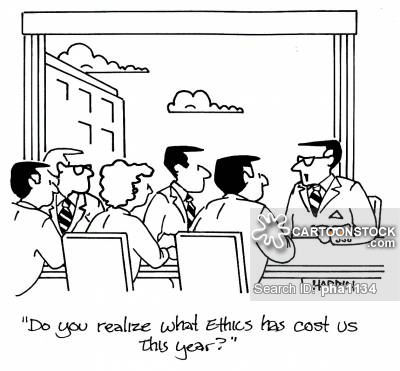
‘Do you realize what ethics has cost us this year.’
Driving in any unfamiliar city can be daunting, disorienting, and disconcerting. Driving in a foreign country can be downright dyspeptic. Driving in Israel can be a flirtation with catastrophe.
In some ways it’s better than it used to be. Traffic has gotten so dense that drivers simply cannot indulge the reckless habits that once prevailed. It’s hard to bob and weave when your car is stuck in gridlock.
But when the traffic starts moving, the experience can be harrowing, made all the more stressful as you try to find your way along unfamiliar boulevards and position yourself to make quick turns with little notice.
Thank goodness for Waze.
Just plug in your destination, follow the directions, and voila! Oh, sure, we made a few wrong turns, but even then Waze got us right back on track.
Most of the time.
Click here to read the whole article.
Hat tip: Rabbi Yehoshua Binyamin Falk

My interview with Bill Martinez
 Listen to my recent interview about faith and politics on Bill Martinez live.
The Perils of Social Grade Inflation
 Here’s a no-brainer.
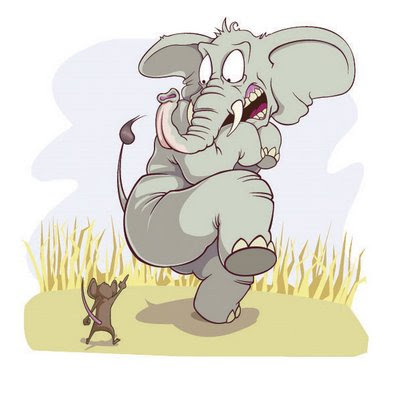
You want to improve your basketball game. Would you rather practice one-on-one with your older brother, who’s on the JV team, or with Kobe Bryant?
Unless you possess a serious streak of masochism, you did not choose Kobe Bryant — for reasons that should be obvious: while you will definitely improve playing with someone marginally better than yourself, you will accomplish nothing by playing with someone exponentially better than you are. Except, in all likelihood, the rapid deflation of your self-esteem.
Applying this principle more broadly, it’s easy to see how associating with peers slightly better than ourselves — whether academically, professionally, or morally — will push us to higher levels in our own conduct and performance. But the benefits of implied social pressure disappear when we perceive our peer group to be functioning on a higher level than it actually is.

Falling Skies
 The death of any young person is tragic, and all the more tragic when unnecessary. In today’s world where sensory-gratification is king and accountability is unknown, few question the wisdom of jumping out of an airplane for kicks, especially when the chances of anything going awry are so small.
But those odds assert themselves eventually, as they did last month in Acampo, California. The two young men who lost their lives were jumping about an hour’s drive from where I jumped myself almost four decades ago. It seemed like a good idea at the time. But I’ve come to reconsider, as I explain in this essay from 1999, originally published in the St. Louis Post-Dispatch.
“Middle age has finally arrived,” I said to myself as I confronted a life insurance application form for the first time ever. But as I filled in the blanks and checked off the boxes, I suddenly paused, suspended between youth and old age, as I read and reread one question midway through the form: Have you ever been skydiving?
I consider myself an honest person, so I found myself in the midst of a moral struggle as I contemplated how I should answer. The reasoning behind the question seemed obvious: why should any business gamble a quarter of a million dollars on the life of someone foolish enough to jump out of an airplane?
The way I figured it, however, there are three reasonable explanations why an otherwise sane person would do such a thing.
One, as in the case of former President George Bush, to save his life when his plane has been hit by enemy fire in WWII.
Two, also as in the case of George Bush celebrating his 75th birthday, when one is winding down his life and figures he hasn’t much of it left to lose anyway.
And three, as in my own case, when one is not yet sufficiently mature to appreciate that his life is far too precious a thing to be thrown casually out of an open hatch at 3000 feet.
Barring any of these three excuses, an insurer would be entirely justified in refusing coverage or inflating charges. But why, since I now regard jumping from an airplane as ample cause for mandatory psychiatric observation, should I be burdened with doubled insurance premiums because of a momentary lapse in good sense when I was half my present age?
As it turned out, I went with a different company, one whose application phrased the question this way: “Have you been skydiving in the last ten years?” That’s much more fair, I think.
Of course, insurance companies may just be looking for excuses to jack up their prices. After all, compared to BASE jumping, ice climbing, and other extreme sports, skydiving is positively run of the mill. Could George Bush, a former president of the United States, former director of the CIA, and former member of the NRA, be so completely off-the-wall? (Never mind that the poor former first lady could hardly bear to watch her husband’s escapades.)
Indeed, my diving instructor (whose name was also George) told us repeatedly: “Skydiving is no riskier than crossing the street!”
George isn’t alive any more. He wasn’t killed crossing the street, either.
 As a 19-year-old undergraduate still looking for a major course of study, life seemed to have little to offer me except cheap thrills. If something would go wrong, and I would splatter against the plowed earth of the Sacramento valley, well, what was the point of being alive if I didn’t experience all life had to offer?It goes without saying that children of all ages will be drawn like moths to the fire of every kind of sensory stimuli. It is our job as responsible adults to shield them from the flames of both real danger or virtual thrills, to gently prod them along the road to wisdom by exposing them to more rewarding and enduring highs than those brought on by adrenaline rush.
In the same way that chomping on spearmint gum deadens the palate to the subtle complexities of fine food and wine, the instant gratification of putting one’s life at risk may, in the end, kill off any hope of ever savoring the subtle joys of maturity, even if those dangerous pastimes do not themselves prove fatal.
The Talmud offers the following insight into human nature: “If someone says, ‘I struggled but did not achieve,’ don’t believe him; if he says, ‘I achieved without struggle,’ don’t believe him; but if he says, ‘I struggled and achieved,’ believe him.”
The Talmud goes beyond the simple axiom that there is no sense of accomplishment without exertion. It tells us that exertion and effort will inevitably produce a sense of accomplishment. And unlike the transient high produced by LSD, PCP, or any contrived brush with danger, the sense of accomplishment produced by struggle will not vanish into nothingness, leaving behind an emotional void or the anguish of physical or psychological withdrawal. It will endure, and spur us on to greater struggles and greater accomplishments.
Without intellectual effort, we would never graduate from Dr. Seuss to Shakespeare, from Marvel Comics to Monet, or from music videos to Mozart. Without psychological effort we would never learn the practical skills to succeed professionally or the interpersonal skills to succeed as spouses and parents and friends and neighbors. Without effort we would never learn to appreciate the small, subtle pleasures life has to offer because we would be ever waiting impatiently for the next emotional quick-fix.
Acquired taste is accessible to the young. As parents, we must not shy away from the challenge of inculcating patience and prudence in our children. Through persistent effort we can teach them that cultivating a taste for the more refined pleasures of life is not so hard, no harder really than falling out of an airplane.

The Zen of Tom Harmon
 Palmer: So what do I do?
Gibbs: Give her what she wants.
Palmer: But I have no idea what that is.
Gibbs: Say hello to the rest of your life, Jimmy.

Between Heaven and Earth
Everyone I see should be smiling. A few of them are. Most of them aren’t, and I feel sorry for them, caught up in the distractions of earthly existence and overlooking the miracles that surround them.
Such is the human condition: the eyes betray the soul, and the heart grows deaf to its own inner voice, which vanishes into the rumble of routine that drums out the exhilaration of each new moment.
It should be easier here at the eye of the universe, and indeed it is. But easier is a relative term, and a hundred pounds might as well be a hundred tons when our muscles have atrophied from disuse. Just the same, in the absence of spiritual discipline, spirituality itself remains a cliché, a meaningless abstraction or, at best, a mere footnote in the narrative of life, an asterisk relegated to indices of the Sabbath, the Festivals, and the House of Worship.
Such an insidious lie. Such an insipid deception.

The Jewish liturgy begins each day with a series of 15 blessings acknowledging the gifts of fundamental existence and identity. How fortunate we are to have eyes that can behold the beauty of our world, limbs that can carry us to the corners of the earth, minds capable of discerning light from dark and good from evil; how reassured we are to commit ourselves to a higher purpose, to recognize that path we are meant to follow, and to trust the guiding Hand that gently steers us toward the fulfillment of our destiny; how much reason we have to rejoice that we are able to master our own passions, to summon the strength to meet failure with determination, and to discover new inspiration everyday amidst the monotony of life in the material world.
Yet still we forget. Even here in this place where heaven and earth kiss, even here at the focal point of human history, human nobility, and human aspiration. Too much light can blind even more effectively than too much darkness.
In the Old City of Jerusalem, the center of Creation, and in the ancient village of Tzefat, home of the greatest kabbalists of the last 500 years, the tension between the past and the present gives way to a supernal harmony that radiates from every rock and tree, that grows stronger as you turn every corner and pass through every archway. The voices of ages gone by whisper always in your ear, if you remember to listen for them.
Click here to read the whole essay from this month’s The Wagon Magazine.
The Search for Nothing
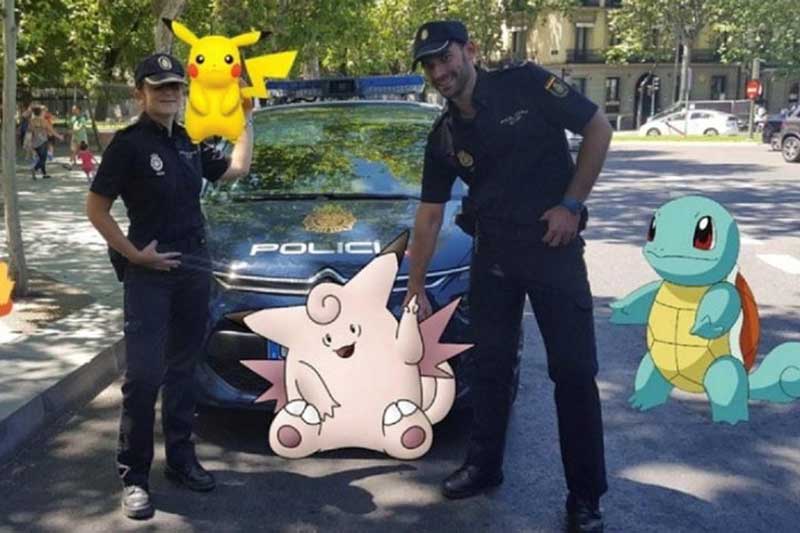 Of course, you know all about it. It has overshadowed all other headline news. It has become everyone’s passion. There’s no escaping it.
No, I’m not talking about the presidential elections, climate change, or global terror. I’m talking about something really important:
Pokemon Go.
If you haven’t heard of it, you probably live in a cave and won’t be reading this anyway. If you don’t understand what it is… well, that’s a different story.
For people of a certain age — not to mention a certain level of maturity and common sense — the latest tech-fad is barely comprehensible. Countless denizens of the virtual world have crawled out of the darkness and into the sunlight to search for animated characters that can only be seen on their cell phone screens in undisclosed locations. By wandering about pointing their phones hither and thither, players find cartoon critters, then take aim and “shoot” to catch their pixilated prey.
As inane as it may sound, the game seems relatively harmless. It also has the benefit of drawing participants off their couches and encouraging them to put their atrophying appendages back into use, sometimes by walking miles in pursuit of quarry. Guided by an all-knowing, all-seeing cosmic GPS mastermind, Pokemon creatures may crop up anywhere, leading players on quests of “augmented reality.”
But is it really harmless?

The Humpty Dumpty Deception
 “When I use a word,” Humpty Dumpty said, in rather a scornful tone, “it means just what I choose it to mean — neither more nor less.”
This would appear to be a powerful statement of personal empowerment and forward-thinking vision. In fact, it is precisely the opposite.
The truth is this: if we don’t master our language, we can’t be masters of ourselves. Because we think in words, sloppy speaking will inevitably produce sloppy thinking. And if we aren’t thinking clearly, then we don’t know who we are, what we believe in, or what we stand for.
Clichés, sound-bites, political correctness — these are all our enemies. The reflexive recitation of words bereft of authentic meaning constitutes much of talk radio, and it may offer a convenient refuge from having to defend our opinions with hard facts and sound reasoning. But we don’t open up lines of communication and cooperation by hiding from clarity and logic.
Verbal interchanges have become so glib, so vapid, and so superficial, that anything short of a complete overhaul of our language will not do. But some popular expressions are worse than others, and here is my short list of the worst offenders, phrases that should be punishable by law.

Which Road Not Taken?

Tel Dan Nature Preserve in northern Israel
I recently read an account of a girls’ high school graduation ceremony. The writer described the collective sigh of resignation that whispered through the assembled relatives and friends as one of the graduate-speakers began by reciting Robert Frost’s classic poem, “The Road Not Taken.” The captive audience seemed to anticipate a predictable excursion along the overly well-trodden road of invoking Frost’s verse as a paean to individuality and non-conformism.
Instead, the writer was pleasantly surprised. Departing from the expected formula, the young speaker argued with Frost’s message by defending those with the courage to walk the well-traveled road of tradition in the face of social pressure to reject establishment and convention. It is indeed refreshing to hear the voice of youth, albeit second hand, recognizing the fallacy of a new conformism that preaches non-conformity — or, even worse, anti-conformity.
However, in my days as a student of literature at the University of California, I learned that Robert Frost is among the most famously misunderstood of poets. The attentive reader discovers that it was never Frost’s style to merely paint landscapes out of words or to render such trite messages as “favor the road less-traveled.” Frost had a sharp, unforgiving eye that focused not on the beauties of nature but upon man’s frequent failure to recognize his own place in the natural world.
And so “The Road Not Taken,” like so many of Frost’s poems, ripples with subtle but troubling inconsistencies. Frost asserts that he chose the road
having perhaps the better claim Because it was grassy and wanted wear.
However, he immediately contradicts himself by declaring,
Though as for that the passing there Had worn them really about the same.
So which is it? Were the roads the same or were they different? And if they were the same, then what did it matter which one he chose?
Frost offers his first clue in his first line:
Two roads diverged in a yellow wood…
 Why did the wood have to be yellow? Since we generally visualize forests as green, would we not expect the wood to be described as emerald, or verdant, or leafy? Why did Frost choose to depict his forest as yellow, the color of the first turning of the leaves with the onset of autumn?
Since Frost is clearly describing not a ramble through the woods but a journey through life, the autumnal image of the yellow wood suggests the last years of middle age, the time when one is set in his ways and resistant to — but not yet incapable of — change. It may be a time when one begins to reflect upon opportunities missed, upon chances not taken, upon the caution that urges the traveler to consider the roads ahead and look
down one as far as I could To where it bent in the undergrowth.
As his choices and options diminish with the anticipated approach of his twilight years, it is here that the traveler through life hopes to catch sight of his final destination before committing himself irrevocably to one path or the other.
Taken thus, the yellow wood represents not the habit of age but the habit of human nature. We favor the familiar, the easy, the undemanding. We resist the unknown, the untried, the untested. When facing decision, human nature prods us along the path of least resistance, the path that poses the least danger, the least challenge and, consequently, the least opportunity for personal growth.

The two roads diverging in Frost’s yellow wood lay equally trodden in absolute terms. But for the narrator, the inclination born of habit predisposed him in one direction, where a different traveler inclined by his own forces of habit might find himself predisposed to take the other path.
And so Frost does not ponder the choice between roads more or less traveled by others, but contemplates which kind of road he has traveled more or less himself. To challenge ourselves with the unfamiliar, to force ourselves to overcome new obstacles, to seek out opportunities to discover new resources of talent, ability, and creativity — these are the pathways that, “somewhere ages and ages hence” will be what “has made all the difference.”
Who is mighty? asks the Talmud. The one who conquers his inclination. Traditionally, we apply this statement to the battle against the desire for physical gratification and amoral self-interest. But perhaps it applies equally well to the inclination of habit and routine. When we fear the unfamiliar, when we refuse to look down new roads for no reason other than because we have never traveled them before, we rob ourselves of the chance to discover the limitless potential with which the Creator has endowed every one of us.
Originally published in 2008 by Aish.com.
 Yonason Goldson