Home » Posts tagged 'Philosophy' (Page 5)

Tag Archives: Philosophy

Fighting Political Correctness — Civilly

DissentConservatives across America are cheering University of Chicago dean John Ellison for his recent letter informing incoming students that they may have to suffer the indignity of confronting people they don’t agree with and ideas that make them uncomfortable.

Needless to say, the position was immediately denounced by zealots who sincerely believe that the only way to preserve intellectual freedom is by muzzling any and every utterance that they find threatening to their own feelings and worldview.

The sad reality is that there are racists and sexists in the world, just as some people are intellectually dishonest and plain rude.  (Some of them are running for president of the United States.)

But people such as these will not go away or change their stripes because others attempt to silence them.  The only effect of censorship is to drive people into more insulated camps and encourage their withdrawal into more extreme factions where groupthink reigns and all meaningful exchange of ideas is prohibited.

The freedom to disagree and engage in civil discourse is what keeps a society healthy, and a college campus is where intellectual and moral maturity are supposed to take root and blossom.  It’s a challenging process; but there’s a reason for the expression growing pains.

When such distinguished figures at Condoleezza Rice and George Will — not to mention Binyamin Netanyahu — are disinvited on account of pressure from students who would rather hide from opposing viewpoints than defend their own positions, it is obvious that American universities are no longer serving their students or society at large.

A free society depends upon the ability to differentiate between legitimate opinions that differ from our own and pathological ideologies corrosive to moral values and human dignity.  As such, we have to allow those who embrace the latter free voice so that we can then refute them from a position of reason, not opposing ideology.

In his book Civility, Stephen L. Carter makes the critical point that civil behavior — which is the foundation of civilization — requires a sensitivity to a code of personal conduct that goes beyond the letter of the law.  By attempting to legislate free speech and codify free thought, we forfeit the essential value that human culture is built upon a commitment to seek and to do good, not merely to abstain from what is forbidden.

With courage and clarity of thought, we can engage those with whom we disagree in a way that is both civil and respectful.  By doing so, we can promote mutual respect and understanding, while effectively marginalizing those who reject civility without needing to stifle all dissenting opinions.

This is not merely a prescription for American college campuses.  It would serve to foster a much needed atmosphere of unity and fellowship in all our communities, at home and around the world.

Published in the Times of Israel blogs.

When we aren’t who we think we are

83a61e759284e01c80d632c4d8b7143c-20a0g4sFor the second time in one year, two men in Canada have discovered that they were switched at birth four decades ago.  Just last week, DNA testing confirmed that Leon Swanson and David Tait, Jr., were swapped in the government-run Norway House Hospital in 1975.

Close to tears at a press conference, Mr Tait said he felt “distraught, confused and angry”. He said: “I want answers so bad. It’s going to affect us one way or the other, I know that. It’s going to be a long journey.”

Eric Robinson, a former cabinet minister in Manitoba province, told reporters:  “What happened to them is criminal. Lives were stolen. You can’t describe it as anything less than that.”

A similar case was reported in Oregon back in 2009.  Here are my thoughts from then, originally published in Jewish World Review.


It sounds like a movie. Nurses bring a newborn daughter back to her mother after bathing. The mother insists that she’s been given the wrong baby. The nurses, who clearly know better, dismiss her concerns.

But 56 years later, DNA testing proves that Marjorie Angell, the real mother in this real story, was right.

Kay Rene Reed and DeeAnn Angell were both born on the third of May, 1953 in eastern Oregon’s Pioneer Memorial Hospital. As babies they were switched, presumably while being given baths, and grew up to become wives, mothers, and grandmothers. Less than a year ago Kay Rene’s brother discovered an old photograph of Kay Rene in middle school. Except that it wasn’t a picture of Kay Rene; rather, the schoolgirl who could have been her twin was in fact the sister of DeeAnn.

Subsequent DNA testing proved what had already become obvious. Kay Rene wasn’t a Reed, and DeeAnn wasn’t an Angell.

“I cried,” said Kay Rene. “My life wasn’t my life.”

MISTAKEN IDENTITY

flat,800x800,070,fImagine waking up one morning and discovering that you were someone else. Nothing has changed, yet everything has changed. You have the same friends, the same family, the same job. But you also have another family and another past — a whole different identity about which you know nothing. A careless moment over which you had no control and an innocent mistake outside your knowledge conspired to leave you wondering how your whole life might have unfolded if not for that momentary twist of fate.

What would you do? What would you think? How would you feel?

If you have lived a happy and well-adjusted life, you’d probably wrestle with some inner confusion and then return to your friends and family. But if your life had been difficult, if you had endured an existence of hardships and traumas that had left you broken and bitter, how might you cry out against the cruelty of chance that had snatched away the happy life you might have had.

And what if, somehow, it had actually been your own fault?

THE ULTIMATE ANGUISH

The Sages of the Talmud teach that when a soul departs from this world, it lets out a scream that can be heard from one end of the universe to the other. Contemporary scholars have explained their meaning as follows:

Once freed from the bonds of physical existence, every soul ascends to the next world and comes before the Heavenly tribunal for judgment. Upon our arrival, each of us will witness a reenactment of his entire life on earth, as if projected upon a giant screen, with all of our good deeds and accomplishments, but also with all our carelessness and self-absorption. Recognizing the futility of either excuses or apologies, we will feel the shame and remorse of a life poorly lived, with no further chance of redemption.

Simultaneously, as if on a split-screen, a different story plays out. Here we will behold the life of a tzaddik, a truly pious individual whose every thought and deed is for others and whose efforts are directed entirely toward moral and spiritual self-perfection. The contrast between the two images will be astonishing.

As the painful exercise concludes, each of us will pose a question to the court: “I recognize my own life, but who is this tzaddik that lived so perfect a life, and why was his story projected next to mine?”

“That tzaddik,” the court replies, “is the person you could have been.”

Will sudden clarity, the ascendant soul will understand the consequences of a life lived in pursuit of physical pleasure and material goals. Perceiving that there had resided within him the potential to become someone else altogether and, realizing that it is too late to go back and relive his life, the unfortunate soul will emit a scream that can be heard from one end of the universe to the other.

BEFORE IT’S TOO LATE

04As long as we remain alive in this world, however, there is time to go back. What’s past is not necessarily past, for the Creator has programmed into his universe the extraordinary capability to go back in time and reshape what has already been done. This is teshuva — repentance or, literally, return.

The Jewish concept of repentance is not mere chest-clopping and confession.Teshuva is a process of self-transformation, of changing ourselves into the kinds of individuals incapable of ever again committing our earlier transgressions and indiscretions. Through sincere self-reflection, our genuine remorse will catapult us to new levels of spiritual and moral sensitivity. By returning to the straight path the Creator laid out before us from the moment we were born, we literally re-create ourselves and severe all connection to the errors of the past.

What’s done is now undone, and we have nothing to fear from the ultimate Day of Judgment. It is no longer our past that defines us. It is what we have made of ourselves, and what we do from this point forward, that will define our future.

The two women switched at birth have gotten on with their lives, and they have even become friends. Kay Rene introduces DeeAnn as her “swister.”

“I’m trying to move forward and look at the positive,” DeeAnn said. “You can’t look back. It just drives you crazy.”

Falling Skies

Screen shot 2015-11-16 at 12_44_36 PMThe death of any young person is tragic, and all the more tragic when unnecessary.  In today’s world where sensory-gratification is king and accountability is unknown, few question the wisdom of jumping out of an airplane for kicks, especially when the chances of anything going awry are so small.

But those odds assert themselves eventually, as they did last month in Acampo, California.  The two young men who lost their lives were jumping about an hour’s drive from where I jumped myself almost four decades ago.  It seemed like a good idea at the time.  But I’ve come to reconsider, as I explain in this essay from 1999, originally published in the St. Louis Post-Dispatch.

“Middle age has finally arrived,” I said to myself as I confronted a life insurance application form for the first time ever. But as I filled in the blanks and checked off the boxes, I suddenly paused, suspended between youth and old age, as I read and reread one question midway through the form: Have you ever been skydiving?

I consider myself an honest person, so I found myself in the midst of a moral struggle as I contemplated how I should answer. The reasoning behind the question seemed obvious: why should any business gamble a quarter of a million dollars on the life of someone foolish enough to jump out of an airplane?

The way I figured it, however, there are three reasonable explanations why an otherwise sane person would do such a thing.

One, as in the case of former President George Bush, to save his life when his plane has been hit by enemy fire in WWII.

Two, also as in the case of George Bush celebrating his 75th birthday, when one is winding down his life and figures he hasn’t much of it left to lose anyway.

And three, as in my own case, when one is not yet sufficiently mature to appreciate that his life is far too precious a thing to be thrown casually out of an open hatch at 3000 feet.

Barring any of these three excuses, an insurer would be entirely justified in refusing coverage or inflating charges. But why, since I now regard jumping from an airplane as ample cause for mandatory psychiatric observation, should I be burdened with doubled insurance premiums because of a momentary lapse in good sense when I was half my present age?

As it turned out, I went with a different company, one whose application phrased the question this way: “Have you been skydiving in the last ten years?” That’s much more fair, I think.

Of course, insurance companies may just be looking for excuses to jack up their prices. After all, compared to BASE jumping, ice climbing, and other extreme sports, skydiving is positively run of the mill. Could George Bush, a former president of the United States, former director of the CIA, and former member of the NRA, be so completely off-the-wall? (Never mind that the poor former first lady could hardly bear to watch her husband’s escapades.)

Indeed, my diving instructor (whose name was also George) told us repeatedly: “Skydiving is no riskier than crossing the street!”

George isn’t alive any more. He wasn’t killed crossing the street, either.

Cool-Skydiving-Desktop-Wallpaper-With-Sunset-ViewAs a 19-year-old undergraduate still looking for a major course of study, life seemed to have little to offer me except cheap thrills. If something would go wrong, and I would splatter against the plowed earth of the Sacramento valley, well, what was the point of being alive if I didn’t experience all life had to offer?It goes without saying that children of all ages will be drawn like moths to the fire of every kind of sensory stimuli. It is our job as responsible adults to shield them from the flames of both real danger or virtual thrills, to gently prod them along the road to wisdom by exposing them to more rewarding and enduring highs than those brought on by adrenaline rush.

In the same way that chomping on spearmint gum deadens the palate to the subtle complexities of fine food and wine, the instant gratification of putting one’s life at risk may, in the end, kill off any hope of ever savoring the subtle joys of maturity, even if those dangerous pastimes do not themselves prove fatal.

The Talmud offers the following insight into human nature: “If someone says, ‘I struggled but did not achieve,’ don’t believe him; if he says, ‘I achieved without struggle,’ don’t believe him; but if he says, ‘I struggled and achieved,’ believe him.”

The Talmud goes beyond the simple axiom that there is no sense of accomplishment without exertion. It tells us that exertion and effort will inevitably produce a sense of accomplishment. And unlike the transient high produced by LSD, PCP, or any contrived brush with danger, the sense of accomplishment produced by struggle will not vanish into nothingness, leaving behind an emotional void or the anguish of physical or psychological withdrawal. It will endure, and spur us on to greater struggles and greater accomplishments.

Without intellectual effort, we would never graduate from Dr. Seuss to Shakespeare, from Marvel Comics to Monet, or from music videos to Mozart. Without psychological effort we would never learn the practical skills to succeed professionally or the interpersonal skills to succeed as spouses and parents and friends and neighbors. Without effort we would never learn to appreciate the small, subtle pleasures life has to offer because we would be ever waiting impatiently for the next emotional quick-fix.

Acquired taste is accessible to the young. As parents, we must not shy away from the challenge of inculcating patience and prudence in our children. Through persistent effort we can teach them that cultivating a taste for the more refined pleasures of life is not so hard, no harder really than falling out of an airplane.

The Seasons of our Discontent

thomas_more1I received the following email in response to my article last week about Donald Trump and Tony Soprano.  I think it’s well worth posting here:

Dear Rabbi,

His point was that Donald Trump’s crude, impulsive, petty, and narcissistic behavior has no bearing on his fitness for office.

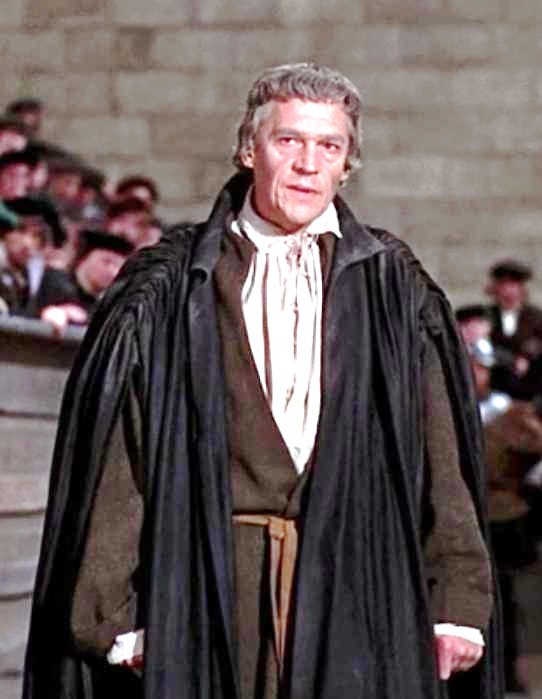
As I read these words in your email, a scene from the 1966 movie A Man for All Seasons came to my mind. The scene occurs at the beginning of the film between Cardinal Wolsey (Orson Welles) and Sir Thomas More (Paul Scofield). This whole scene, all of it worth quoting and so marvelously acted, is one of my favorite “duets” in all movies but I’ll limit myself to the quote below. .

WOLSEY:
Let the dynasty die with Henry Vlll
and we’ll have dynastic wars again.
Blood-witted barons ramping the country
from end to end.
Is that what you want? Very well.
England needs an heir.
Certain measures, perhaps regrettable…
…perhaps not, there’s much in the Church
which needs reformation, Thomas.
All right, regrettable.
But necessary to get us an heir.
Now, explain how you, as a councillor
of England, can obstruct these measures
for the sake of your own private conscience.

SIR THOMAS MORE:
I think that when statesmen forsake
their own private conscience
for the sake of their public duties
they lead their country
by a short route to chaos.

Your usually clear headed good friend is willing to jettison his own private conscience for the sake of political expediency. Millions of other Americans who are also willing to do so are leading our country by a short route to chaos.

Paul-Muni-Emile-Zola-The-Life-of-Emile-ZolaYour statement

The Hitlers, Stalins, and Ahmadinejads of the world may love their children and may have had troubled youths, but evil remains evil whether we choose to look it in the face or to bury our heads in the sand

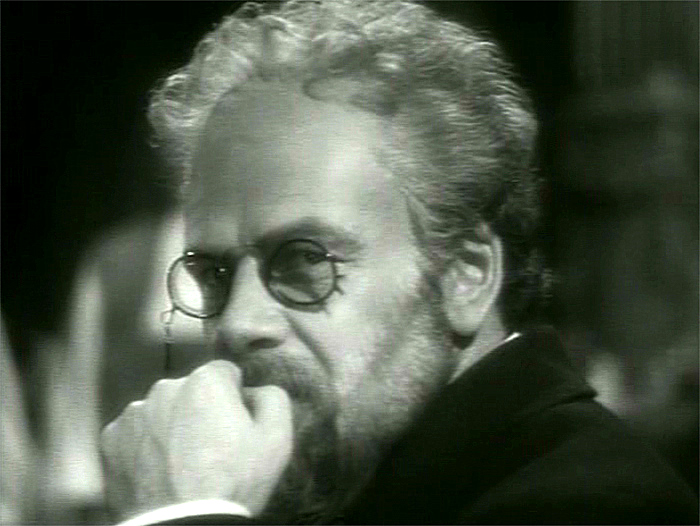
likewise brought to my mind an excerpt from the 1936 movie The Life of Emil Zola, delivered by Zola (played by the incomparable Paul Muni) during Zola’s trial which came about because of Zola’s accusations against the army with regard to the injustice of the Dreyfus affair:

The minister of war,
the chief of the general staff…
…and the assistant chief never doubted
that the famous bordereau…
…was written by Esterhazy…
…but the condemnation of Esterhazy
involved revision of the Dreyfus verdict…
…and that the general staff
wished to avoid at all cost.
For over a year, the minister of war
and the general staff have known…
…that Dreyfus is innocent…
…but they have kept this knowledge
to themselves.
And those men sleep…
…and they have wives
and children they love.

Evil, depravity and mediocrity come in all shapes and sizes. When we are willing to dispense with our own moral consciences and standards in support of  that evil for whatever reason we have permitted ourselves to become one with that evil and become just as guilty.

Regards,

Bill Meisler

Tony Soprano Redux

Trump_ProfileA good friend of mine, who is usually more clear-headed, sent me a slimy little video asserting that character doesn’t matter, since both FDR and Winston Churchill smoked and drank while Adolf Hitler was a teetotaler and a vegetarian.  His point was that Donald Trump’s crude, impulsive, petty, and narcissistic behavior has no bearing on his fitness for office.

While it is true that people are complicated, and that no one is completely virtuous or completely lacking in virtue, the indulgence in moral relativism is particularly galling when it comes from the right, after so many years of denouncing it as the Kool-Aid of choice among the left.

But the blurring of lines has been going on for a long time.  It particularly hit its stride about ten years ago with the success of the Sopranos, which prompted an op-ed that I revisit here.

Psychoanalyst Glen Gabbard, author of The Psychology of The Sopranos: Love, Death, Desire and Betrayal in America’s Favorite Gangster Family, has an interesting take on the phenomenon of Tony Soprano.

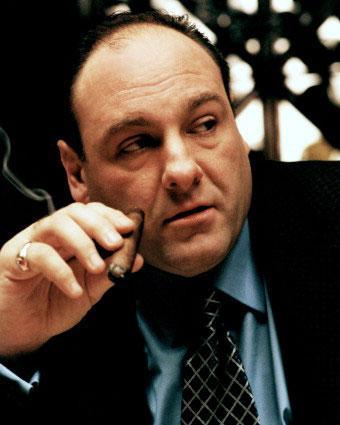
sopranoThe success of The Sopranos, it seems, depends not on Tony Soprano the mobster, but on Tony Soprano the psychoanalysis patient. Whereas in daily life, Tony is a crook, a thug, and a murderer, on the couch Tony is a regular guy, with the same hopes, dreams, problems, and anxieties as the rest of us.

Dr. Gabbard explains that people love to root for Tony the regular guy to prevail over Tony the violent criminal; they want more than anything to be able to find a noble everyman at the heart of the worst of the worst and the lowest of the low.

Simply stated, viewers don’t want to believe that anyone is really evil.

This is a remarkable turnabout from the early 80s when everyone’s favorite television creep was J.R. Ewing on Dallas. Back when “Who shot J.R.?” was on everybody’s lips, it wasn’t because we wanted to see the would-be assassin brought up on charges — we wanted to see him handed the key to the city. We didn’t want to understand J.R. — we wanted to hate him. We loved to hate him.

hqdefaultJ.R. never killed anybody, never even beat anyone up, yet we cheered from our couches when he got what was coming to him and hoped desperately that his every nasty scheme would fail. If so, why do viewers in record numbers forgive everything for Tony Soprano, the Godfather who terrorizes and murders for fun and profit, just because he worries about his marriage and his children? C’mon, even J.R. loved his daddy.

Perhaps there’s no better barometer for the moral pressure of society than our relationship with television’s most popular characters. When we cheer for the good guys and boo the bad guys, isn’t it because of our desire to see that justice is done?

But when we sympathize with a violent criminal, when we identify with him because he cares about his kids just as we do, isn’t it a sign of abandoning the commitment to differentiate between right and wrong?

The job of making moral decisions, of balancing right and wrong in complex circumstances, is no simple business. But instead of challenging us to recognize that Tony is a villain in spite of his human side, The Sopranos (and, more generally, the entertainment industry) manipulates us into identifying with Tony’s humanity so that we overlook his wickedness.

Based on Dr. Gabbard’s assessment, it seems that we yearn to deny that genuine evil walks this earth. Indeed, it may be admirable to look for the good in all people and give our neighbor the benefit of the doubt, but not to the exclusion of recognizing that sometimes there is no doubt, that what little good remains in some people has been hopelessly buried under a mountain of evil. The Hitlers, Stalins, and Ahmadinejads of the world may love their children and may have had troubled youths, but evil remains evil whether we choose to look it in the face or to bury our heads in the sand.

Too often, it seems, we avoid looking evil in the face at any cost. It should come as no surprise, therefore, that a growing element in our society blames the United States for Pearl Harbor, blames Israel for Palestinian suicide bombers, blames all of Western Civilization for September 11. But making excuses for evil does not make evil go away.

It just keeps coming back, each time bolder and more brazen than before.

The Talmud warns us to distance ourselves from a bad neighbor and not to associate with a wicked friend. Even if he loves his kids. Even if his name is Tony Soprano. Perhaps, especially if his name is Tony Soprano.

Originally published in 2007 by the St. Louis Post-Dispatch, Jewish World Review, and Aish.com.

Between Heaven and Earth

Everyone I see should be smiling.  A few of them are.  Most of them aren’t, and I feel sorry for them, caught up in the distractions of earthly existence and overlooking the miracles that surround them.

Such is the human condition:  the eyes betray the soul, and the heart grows deaf to its own inner voice, which vanishes into the rumble of routine that drums out the exhilaration of each new moment.

It should be easier here at the eye of the universe, and indeed it is. But easier is a relative term, and a hundred pounds might as well be a hundred tons when our muscles have atrophied from disuse.  Just the same, in the absence of spiritual discipline, spirituality itself remains a cliché, a meaningless abstraction or, at best, a mere footnote in the narrative of life, an asterisk relegated to indices of the Sabbath, the Festivals, and the House of Worship.

Such an insidious lie.  Such an insipid deception.


wildflowers 1


The Jewish liturgy begins each day with a series of 15 blessings acknowledging the gifts of fundamental existence and identity.  How fortunate we are to have eyes that can behold the beauty of our world, limbs that can carry us to the corners of the earth, minds capable of discerning light from dark and good from evil; how reassured we are to commit ourselves to a higher purpose, to recognize that path we are meant to follow, and to trust the guiding Hand that gently steers us toward the fulfillment of our destiny; how much reason we have to rejoice that we are able to master our own passions, to summon the strength to meet failure with determination, and to discover new inspiration everyday amidst the monotony of life in the material world.

Yet still we forget.  Even here in this place where heaven and earth kiss, even here at the focal point of human history, human nobility, and human aspiration.  Too much light can blind even more effectively than too much darkness.

In the Old City of Jerusalem, the center of Creation, and in the ancient village of Tzefat, home of the greatest kabbalists of the last 500 years, the tension between the past and the present gives way to a supernal harmony that radiates from every rock and tree, that grows stronger as you turn every corner and pass through every archway.  The voices of ages gone by whisper always in your ear, if you remember to listen for them.

Click here to read the whole essay from this month’s The Wagon Magazine.

A Tale of Too Many Egos

iaam-logoThis isn’t about the 2016 presidential campaign. It’s not about the candidates or the conventions; it’s not about about political ideology or the political process.

It’s all about We The People.

But that requires talking about — at least briefly — the candidates I’d rather not talk about.

Some of us had dared to hope that Donald Trump, after securing the Republican nomination, would disclose that it had all indeed been an act and that he was ready to start acting like an adult. After all, he’s a super-successful billionaire real estate mogul. And he has such great kids. Surely, he’s capable of acting presidential.

Ah, hope springs eternal.

Then the ghost of Ted Cruz reappeared. To be fair, Mr. Trump has a legitimate grievance against Mr. Cruz, who should have either endorsed his former rival or declined the invitation to speak from the convention pulpit. As a career politician, Senator Cruz must understand that the purpose of a national convention is to inspire party solidarity, not to posture for the next election cycle. Mustn’t he?

Of course, life isn’t any better in Philadelphia, where DNC head Debbie Wasserman-Schultz finally agreed to disappear into the night in exchange for one last grandstand, after she was caught exploiting her position to skew the supposedly even-handed primary process in favor of Hillary Clinton.

Not than anyone was surprised. Whatever your political bent, principles have largely become a thing of the past.

That may be because too many Americans have no notion of the values on which this country was founded: Equal opportunity, equal rights, and equal protection under the law. These do not ensure equal wealth or power. But they are part of a culture that once recognized a moral, as opposed to a legal, commitment to place the lowest rung of the ladder of fortune within reach of its most downtrodden citizens, to protect the minority from the tyranny of the majority, and to shape a society bound together by commitment to higher values and national destiny.

Click here to read the whole article.

Spitting Image 5:2 — Inversion

?

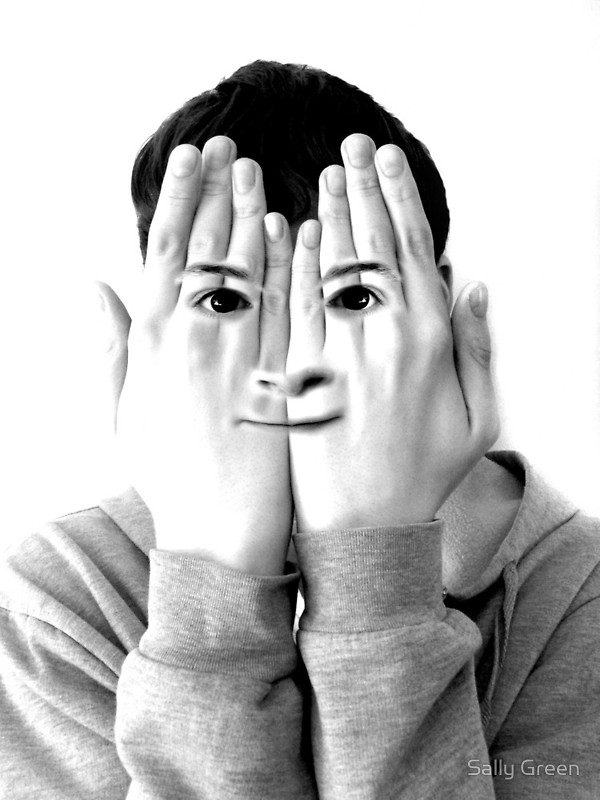
This provocative image from the Israel Museum provides one of the most compelling examples of what modern art can accomplish.  Even as the values of contemporary society become more tangled, our priorities more topsy-turvy, our ideals more overgrown with deadwood, and the roots of civilized society increasingly shriveled, it’s not too late to take a fresh look at where we are and where we’re headed.

We just need to look with open eyes and clear minds.

The Talmud compares a person whose wisdom exceeds his good deeds to a tree with many branches and few roots.  Ideas that fail to materialize into positive action may be worse than no ideas at all, since they allow us to live in the world of the mind and praise ourselves for our noble intentions while we stand idly by and allow evil to reign.

Only by recognizing the contradictions in our own lives will we be able to turn the world right-side-up again and restore order amidst the chaos.

The Divided States of America

america_divided_bigE pluribus unum — Out of many, one.

Such a glorious sentiment, 240 years old this week, destined for the dustbin of history.

In contrast to the vitriol of the broadsheets from two centuries ago — which belied a common commitment to basic, “self-evident truths” — the unfiltered invective filling our airwaves today reveals a wholesale abandonment of common values or, even worse, of any values at all.

With the general election now reduced to a choice between the two most unpopular candidates in American history, the undeniable takeaway is that our population has splintered into four intractable camps, each unwillingly come to terms with any other. Here is a snapshot of who we now are.

Click here to read the whole article.

Near-death experience

1You’re ten years old and a sound sleeper, so it’s already unusual that something has woken you up in the middle of the night.  You go out into the hall to investigate.  There are strangers in the house and flashing lights out the window.  Your father tells you to go back to bed.

When you wake up the next morning, your mother has disappeared from your life.

It’s 1970, before school counselors or lettered conditions like PTSD.  Your father means well, but he’s not the communicative type, not one for expressing his feelings to others or eliciting others to share their feelings with him.  He’s from the Depression Era, and he barely saw his own father growing up during those desperate years.  He’s a veteran of the Second World War; difficulties are part of life.

He’s also dealing with his own trauma, as his wife lingers between life and death.

You get shipped off to stay with friends, or with your grandmother.  Very little is explained to you, and you understand even less.  Years later, there won’t be much that you remember, aside from the indelible images of that first night.

You won’t remember waking up the next morning to find your grandmother home with you instead of you parents.  You won’t remember when they took you to visit your mother one last time because no one thought she had much time left.  You won’t remember shouting at her for having abandoned you.  You won’t remember the outgoing, cheerful little boy you were before that cold, winter’s night.

You only remember how hard it was for you to talk to people from that moment forward.  You remember how easily you cried during the years that followed, and how much you hated yourself for crying so easily without understanding what made you that way.  You remember how you considered taking your own life, but always managed to convince yourself that you could do it tomorrow.

A decade passes before you really recover.  In some ways, you never recover at all.

Click here to read the whole essay.