Home » Posts tagged 'Philosophy' (Page 6)
Tag Archives: Philosophy

Spitting Image 4:1 — Face the East, Love the West
The sages of the Talmud teach us that the center of spirituality is in the east, but the Divine Presence resides in the West. The essence of divinity cannot be perceived directly, but is reflected in the wonders of nature, the magnificence of the universe, and the acts of moral dignity that elevate Man from an animal to above the highest angels, illuminating the world with the glory of the Creator.




One step closer to Eden
Awake from the north and come from the south! Blow upon My garden and let its spices flow. Let My beloved come to his garden and partake of its precious fruit.
— Song of Songs 4:16
Would the world be better off without mankind?
Many environmentalists think so. It’s hard to deny that, from a purely ecological point of view, life on earth would do much better without human beings around to interfere with the natural order.
But without mankind, there would be no point and, ultimately, no reason for the world to exist at all. Only Man seeks to create; only Man strives to become more than he is; and only Man directs his efforts toward ideals that transcend mere survival and procreation.
If we are to act as responsible custodians of the world, however, we have to stop from time to time and let the world remind us what those ideals are.

In the late 1800s, the great Rabbi Samson Raphael Hirsch announced his plan to travel from Germany to see the storied mountain ranges of Switzerland. This was entirely in keeping with Rabbi Hirsch’s philosophy of integrating worldly knowledge and experience into his religious outlook. That being said, the incomparable leader of Orthodox Jewry was well into his seventies, seemingly much too old to undertake such an adventure.
Some of the rabbi’s closets acolytes questioned the wisdom of embarking on such a strenuous journey at his advanced age. The rabbi replied that it was precisely because of his age that he felt it necessary to go.
“I may not have much longer to live,” explained Rabbi Hirsch. “And when I stand in judgment upon my arrival in the World to Come, what will I say when the Almighty asks me, “Samson, why did you not see My Alps?”
Rabbi Hirsch understood what we too easily forget: That the wonder and beauty of the world are here for us to experience, for us to enjoy, and for us to find inspiration in the masterful Hand that fashioned all of Creation.
But North Americans need not travel to Switzerland to find their inspiration. Within our own borders we have the “American Alps.” That’s what Louis Hill, president of the Great Northern Railway, called the mountains of Glacier National Park. It was Hill who found the region so extraordinary that he lobbied congress to designate Glacier as a national park in 1910. And it was Hill who influenced the Alpine design of the park’s hotels and facilities to echo the mountains’ namesake across the sea.
Even from the same continent, getting to the park in northern Montana is no simple matter. My wife and I flew into Spokane, Washington, then rented a car and began to drive, first across the Washington border, then through Idaho, and ultimately into Montana. The roads were mostly straight and flat as the miles sped by; it took us six hours just to reach the outskirts of 1,583 square-mile wilderness. But as my own rabbi likes to say, the best things in life are rarely found on the beaten path.
Click here to read the whole article from this month’s Wagon Magazine.

Giving offense vs. taking offense
 The political correctness police were out in force recently, correctly censuring Larry Wilmore for his use of the N-word and insanely condemning Hillary Clinton for uttering the words “off the reservation,” perceived as demeaning to Native Americans.
Starting with Mrs. Clinton’s turn of phrase, we might as well excise from the the lexicon of acceptability words such as “nosy” because it might offend people with large noses, “insightful” as insulting to myopics, “high-minded” as defamatory of marijuana users, and “thin skinned” for denigrating hemophiliacs. If we want to find reason for taking offense, we can find it everywhere.
The more noteworthy incident was Larry Wilmore’s use of the N-word at the White House Correspondents’ Association dinner, and his directing it toward the President of the United States, no less. Clearly the remark was intended to be affectionate and laudatory, which is how it was taken — without offense.
But that’s not really the point. In a society that is growing simultaneously disrespectful and intolerant of disrespectful speech, we need to elevate public discourse, not sink deeper into the gutter. If the N-word is too offensive to be broadcast — even news anchors reporting the story weren’t permitted to repeat it in quotation marks — then it is certainly unacceptable to be used in the presence of our president or, even worse, said to him.
Frankly, I’m more concerned by the use of President Obama’s first name, and his nickname at that. Maybe Mr. Obama and Mr. Wilmore are on a first-name basis. But in a formal context, such familiarity is utterly disrespectful from anyone other than a spouse, parent, or sibling.
This is the real threat of political correctness. It’s not just that we take offense in all the wrong places. It’s that we lose all sensitivity for the difference between what is respectful and what is disrespectful, we lose all sense of priorities, and we forget that refinement is a value. Nothing matters except the applause, the laugh, the ratings, and the votes.
This is why the same people who took offense at Mrs. Clinton’s use of “off the reservation” have no reservations about her pathological pattern of telling lies and misrepresenting political adversaries.
This is why our political and social institutions are in chaos.
And this is what we are teaching our children.

Passover and the price of freedom
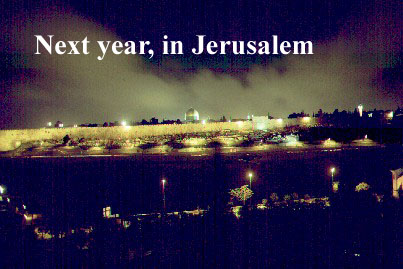 This Passover, let us all reflect upon the value of freedom, the price of freedom, the responsibilities of freedom, and the cost of taking freedom for granted. Only by standing strong against the forces within and without that never stop trying to enslave us will we remain free.

Passover: the Illusion of Freedom
 After generations of slavery and oppression, amidst miracles unprecedented and unrepeated, the Children of Israel marched forth out of Egypt and into the wilderness as a free people for the first time in their collective memory. Fifty days later they stood together at Sinai to receive the Torah — the code of 613 commandments that would define every aspect of their lives.
What happened to freedom? What happened to the promise of redemption when all that really happened was the trading of one master for another?
Much of the modern world has built its understanding of freedom upon Thomas Jefferson’s famous formulation of “life, liberty, and the pursuit of happiness.” But what would life be like in a society of unrestricted freedom? How many of us would choose to live in with no rules at all, where everyone was free to drive on either side of the road, to take whatever they desired regardless of rightful ownership, to indulge every whim and impulse without a thought of accountability? The absolute “freedom” of pure anarchy would provide no protection for the rights to life, liberty, and the pursuit of happiness. Consequently, it would provide no freedom at all.
Intuitively, we understand that some freedoms have to be sacrificed in order to preserve order and ensure the common welfare. If so, we are forced to refine our concept of freedom. In contrast to ancient Egypt, in which our ancestors were coerced by the rod and the whip to bow before Pharaoh’s will, the G-d of our redemption allows us the freedom from immediate retribution. By doing so, the Almighty empowers us with the freedom to make our own choices, to take responsibility of our own actions, and to transform ourselves from creatures of physical impulse into beings of spiritual refinement.
Ultimately, the freedom we possess is the freedom to choose our own master, to choose the leaders and system of laws that will best serve our collective interests in the long run.
Because we live in a society with others who also demand freedom, our choices will necessarily be limited by the conventions of society. More significantly, the values of the society in which we live will shape our own attitudes, influencing the ways we think that priorities we hold dear. From the moment we are born, our impressions are determined by others: our parents, our teachers, and our peers, as well as writers, celebrities, sports stars, and advertisers.
How often have we asked ourselves whether the ideas that govern our choices as spouses, as parents, and as community members are truly our own? How often do we stop to reflect whether we have acquired the values that guide us in our relationships and our careers through thoughtful contemplation or through cultural osmosis?
The illusion of freedom convinces us that our own gratification comes before our obligations to others, before even our obligations to ourselves. If we allow our desire for unrestricted freedom to steer our lives, we will find ourselves enslaved by our desires no less than a chain smoker is a slave to his cigarettes or an alcoholic is a slave to his gin. Convinced that freedom is a goal in itself, we will sacrifice everything of true value for the cruel master of self-indulgence. Deceived into believing that responsibility is the antithesis of freedom, we will invest ourselves, consciously or unconsciously, in philosophies like this one:
Freedom’s just another word for nothing left to lose, Nothing don’t mean nothing honey if it ain’t free, now now. And feeling good was easy, L-rd, when he sang the blues, You know feeling good was good enough for me, Good enough for me and my Bobby McGee.
These are the words that made Janis Joplin into a counterculture idol, before she died of a heroin overdose at the age of 27.
 Less dramatic examples confront us every day. Politicians, movie icons, and athletes destroy their careers and their family lives for a few fleeting moments of pleasure. Parents allow their children to grow up without direction or discipline lest they quash their creativity or damage their egos by imposing structure and meaning upon their lives. A once-productive citizenry increasingly looks to receive support on the backs of others, whether through welfare, lawsuits, or pyramid schemes that leave countless victims footing the bill.
More than anything, Passover celebrates the freedom to think, to take stock of our lives and reassess our values, to take a fresh look at our own motivations and our own decisions, to acknowledge where we may have lost sight of truly meaningful goals and sincerely commit ourselves to striking out on a truer course.
Last year we were slaves to our inner masters; this year we have a chance to set ourselves free to seek the paths of truth and follow them toward the destination of enduring spiritual redemption.

Marriage of Convenience
 We are what we pretend to be, so we must be careful about what we pretend to be.
― Kurt Vonnegut
The orderly rolled my gurney to a stop before an imposing double doorway. “Okay,” he said, “This is where you get your kiss.” I couldn’t tell if he was speaking to me or to my wife. In any case, my wife kissed me and laughed and cried all at once. Then I was rolling again.
I arrived in surgery and scooted over onto the operating table. I joked with the anesthesiologist. He found my vein on the first try. I recited Psalms to myself and wondered distantly why I wasn’t scared out of my wits.
They sliced me open, broke my sternum, compressed my lungs like empty sugar bags, and stopped my heart to patch the hole between its upper chambers with a piece of my pericardium while redirecting the blood that flowed through an anomalous vein.
I don’t remember that part.
I also don’t remember my hands clawing the air, straining against nylon straps, struggling to tear the ventilator mask from my face and the dressing from my chest. My wife stifled a cry when she saw me in recovery. Apart from the convolutions of my fingers, the pallor of my face starkly mirrored the countenance of death.
“He looks so good,” the nurse told her.
When I did regain consciousness the next day, numbed by morphine and dazed by the residue of anesthesia, I asked my cardiologist if he could release me that afternoon. “I have to catch a flight to Jacksonville this evening,” I said.
I was trying to be funny. He thought I was delirious.
EXPECT THE UNEXPECTED
![[ File # csp3608269, License # 1131644 ] Licensed through http://www.canstockphoto.com in accordance with the End User License Agreement (http://www.canstockphoto.com/legal.php) (c) Can Stock Photo Inc. / Eraxion](https://proverbsandprovidence.com/wp-content/uploads/2016/04/anatomy-lungs.jpg)
Lacking prescience, however, I had no excuse for the cavalier attitude with which I approached this whole business. No matter how distinguished my surgeon’s credentials, and no matter how casually he explained away the operation as routine (with the probability of success better than 99%), cardiac surgery remains as heart-stopping as it sounds: they carve open your chest and, during an extended period of clinical death, cut and paste around your most vital organ before sewing you back together.
Call it what you like; it hardly ranks among the more attractive forms of elective surgery.
Yet “elective surgery” was how the doctor had described it. After all, I had virtually no symptoms, and my condition might not advance for twenty years. Then again, deterioration could begin within months, or even weeks. And so, at my cardiologist’s insistence, I opted to exchange the distant prospect of lingering death for the immediate promise of physical pain followed by months-long recovery.
That was what I expected. Instead, from beginning to end, while my wife and children and parents were dealing with their respective emotional traumas, the greatest discomfort I suffered throughout the entire episode came not from the incision, not from anesthesia withdrawal, not even from the mild pneumonia I contracted during recovery, but from a persistent hangnail that nagged me from the day after surgery until I returned home and exorcised it with my cuticle clippers.
THERE IS A LESSON
The great tennis player Arthur Ashe, after contracting AIDS via blood transfusion, was reported to have said, “If I ask why this has happened to me, then I must also ask concerning all the good that I have had in my life.”
Indeed, Mister Ashe, may you rest in peace — you should have asked both questions, as should we all.
If life is all One Great Accident, then there is no why. But the exquisitely textured fabric of our universe, the elegant design of our world, and the transcendent nobility of Man when he listens to the calling of his soul — all these testify to the genius of an invisible Conductor who guides the symphony of Creation.
And if there is a plan behind the apparent chaos, then whatever happens for good or for bad should prompt us to ask, “Why?”
Click here to read the whole essay, from my column in the inaugural issue of The Wagon Magazine

Caravan to Midnight with John B. Wells
 Listen to my recent interview with John B. Wells on Caravan to Midnight:
Ancient wisdom for modern times (interview starts at about 1:40:00).

Spitting Image 1:2 — The Soldier and the Soul
 My son told me this morning that, as he was just beginning his training in the IDF special forces, he met a soldier who was just finishing his service in the same unit, the Gadsar Reconnaissance Division of the Nahal Brigade.
“I envy you, ” said the retiring warrior. “And I feel sorry for you. I envy you for the incredible experience you’re about to have. And I feel sorry for you because it will be harder than you can imagine.”
I immediately imagined two souls passing as one descends from on high to take its place inside a newborn child and the other departs this world on its way to receive its eternal reward.
“I envy you,” says the ascending soul to the one about to enter the material world. “And I feel sorry for you. I envy you for the joy you will find serving the Master of the Universe, a joy that I will never know again now that my time on earth is over. And I feel sorry for you, for you have no idea how difficult it will be for you to remember who you are and what your purpose is amidst so much pain and confusion.”
The more we seek to avoid pain, the more we deprive ourselves of the inner pleasure that is the source of true happiness. The more we rise to meet the obstacles and challenges that confront us, the more we find joy in this world and make ourselves deserving of the pleasure that awaits us once our time here has passed.

The Devil can’t make you do it
 Hey, mom. Post-partum depression got you down? Thinking of leaving your husband? Don’t fight it; just let him go. After all, it’s not your fault.
It’s your hormones. That’s the latest from the world of science. According to psychologist Jennifer Bartz of McGill University, researchers have identified a link between new parents divorcing and low levels of oxytocin.
Whatever the explanation, there seems to be a familiar eagerness by researchers to impose a chemical, as opposed to a psychological, explanation upon human behavior. Scientists often appear to prefer a model that links our choices to biological and evolutionary causes, further disassociating human decision-making from that most obvious explanation — free will.

Article of Faith: Victims and Survivors in Kalamazoo
Last Saturday evening, according to CNN, the Michigan shooter drove through the streets of Kalamazoo for seven hours, firing at eight people in different neighborhoods and killing six of them. In between attacks, he picked up and dropped of Uber passengers without incident.
 “There isn’t a connection that we’ve been able to establish between any of the three victim groups with each other, any of the three victim groups with the defendant,” said Michigan prosecutor Jeffrey Getting.
What could these victims have done to protect themselves? Why were the survivors chosen for life and not for death? The natural conclusion is that the world is a place of randomness, where we are left to the hands of fate without rhyme or reason.
Amidst all the pain and confusion, is there any way for us to confront the presence of evil in our world and the persistent appearance of disorder without retreating into bitterness and despair?
As we mourn and look for answers, I’d like to offer these thoughts from 2009.
Every night, most of us go to bed without questioning whether we’ll wake up the next morning or whether the sun will rise in the east. Every morning, most of us go to our front doors confident that our cars will start, that the trains will run, that our coworkers and customers will be respectively friendly, or sour, or aloof, each according to our expectation based upon experience.
Is this faith? Or is it rather the reasoned projection of logical extrapolation? Or is there a difference?
Over the past two decades, 50% more tornadoes have swept through the state of Illinois than the state of Alabama. Nevertheless, Alabama has suffered many more fatalities. An article in the journal Science has suggested the following explanation: Because people in Alabama tend to share the religious conviction that their destiny is in the hands of G-d, they resign themselves to the inevitability of Divine Providence. In contrast, people in Illinois more commonly believe that they are in control of their own destiny and masters of their own fate; consequently, they are more inclined to take action toward ensuring their own safety and welfare.
If correct, this analysis might imply that faith is vastly over-rated. If dependence upon the Almighty increases the likelihood of an early demise, perhaps we should all reject the notion of faith and conclude that God really does help those who help themselves.
Alternatively, we might re-evaluate our understanding of faith.
 The Hebrew word emunah — commonly translated as faith — is more accurately translated at faithfulness. It is less descriptive of our internal beliefs and more descriptive of our external behaviors. It describes not our feelings but the degree to which our commitment translates into concrete actions. Most significantly, it expresses our conviction that the Almighty keeps faith with us, even when we may fail to keep faith with Him.
Consider the husband on a business trip a thousand miles from home who resists the overtures of an attractive young woman in the hotel lounge, the teenager away at college who leaves a party when hard drugs start passing around, the lowly private who doggedly advances according to orders even when he is cut off from the rest of his company — all these are examples of faithfulness that endures even when human logic and fear of consequences offer no objection, even when peer-pressure urges us to abandon duty and loyalty. These are the truly unsung heroes, who set aside the relentless calling of self-interest and immediate gratification for nothing but the commitment to another person, to a code of honor, or to an ideal.
According to Jewish philosophy, our trust in the Almighty is not the “leap of faith” that comes from believing without logic or reason, but the confidence that comes from knowing that the Almighty has proven His faithfulness again and again over 3,300 years of uniquely supernatural history. It derives not from our faith that everything will turn out the way we want all of the time, but our certainty that everything is guided by Providence, and that the logic behind every divine edict is true and just — even when it is unfathomable to human understanding.
Finally, faithfulness does not require us, nor even advise us, to sit by passively and await the Divine Will to reveal itself before us. Rather, it requires us to act in our own best interest while adhering to the moral laws of God and man.
Almost everyone has heard the story of the clergyman forced to seek refuge on his rooftop by the rising waters of a flood. One boat comes and offers to save him, but he replies, “I have faith in God.” Another boat comes,and then another, but he refuses to accept help. Finally, a helicopter drops down a ladder and warns that they are the last of the rescuers. But the man of the cloth declares, “I have faith in God.”
The floodwaters continue to rise, and the clergyman drowns.
Upon arriving in the next world, he asks why, in spite of his devout faith, the Almighty did not save him. And God replies: “What did you want from Me? I sent you three boats and a helicopter.”
G-d does indeed help those who help themselves. But He ultimately rewards those who remain faithful, who recognize that there is both a time for taking matters into our own hands and a way to do so without compromising our faithfulness to the Master of the Universe. There is a time to live — through determined effort, with honor and dignity and self-respect. There is also a time to die — either when the cost of personal integrity becomes too great, or when one’s time is simply up, no matter how random the events that end a life may appear.
Learning to strike the perfect balance between determined effort and principled resignation is the work of a lifetime. It is also the key to achieving true faithfulness to God while taking comfort in the promise that, despite the illusion of chaos and the very real pain of loss, everything happens for a reason.
Originally published in Jewish World Review
 Yonason Goldson