Home » Posts tagged 'Politics' (Page 18)
Tag Archives: Politics

The Language of Confusion
 Political Correctness has reached a new high — or low — at the University of New Hampshire, where administrators have issued a Bias-Free Language Guide. Forbidden words include the following: “mothering, fathering, healthy, homosexual, rich, poor, senior citizen, and American.”
Perhaps we should find it comforting that a taxpayer-funded school is prepared to go so far to protect its students from hurt feelings. Presumably, educators believe that this measure will improve student’s self-esteem and thereby lead to greater success in the workplace.
Once again, life imitates art, as I discussed in this essay from 2009, written to honor the 60th anniversary of George Orwell’s 1984.
If only they would teach it in New Hampshire.
It never takes more than a day or two into the new school year before I hear the chant of my students’ favorite refrain: That makes no sense!
“What you mean,” I answer the first student who utters that unutterable phrase, “is that you don’t understand.”
“That’s what I said,” the student responds, predictably. “It makes no sense.”
“It makes perfect sense,” I insist, “as you will see once you understand it.”
The student doesn’t give up without a fight. “You know what I mean,” he says. “What difference does it make how I say it?”
“It makes no sense implies that, if the material we are learning does not conform to your way of thinking, then it must be wrong. I don’t understand acknowledges the possibility that the flaw in reasoning may reside in you, rather than in the material.”
He stares back at me, trying to digest this new idea. Over the course of the year, through constant repetition, most of my students will learn never to saythat makes no sense. At least not in my class.
I’ve been challenged on this many times. Is it really my job to belabor this point, to demand that my students express ideas concisely, even when the intent is clear? After all, I’m not a speech or language instructor. Why not just teach the material I’m being paid to teach?
WE THINK WHAT WE SPEAK
In his essay “The Principles of Newspeak,” the appendix to his classic novel, 1984 (published 60 years ago this month), George Orwell describes how the leaders of his totalitarian future have contrived to assure their hold on power by replacing English with Newspeak, a language containing no vocabulary for concepts contrary to the platform of the state-run Party. By controlling language, the Party controls its people’s very thoughts.
 Intuition suggests that language is a product of thought: if we think clearly, automatically we will speak clearly. Orwell demonstrates the opposite, that thought is a product of language. Because we formulate our thoughts in words and sentences, incompetent use of language guarantees muddled thinking. If there are no words for rebellion, uprising, or discontent people will find it difficult to formulate and articulate the concept of overthrowing even the most corrupt and oppressive government.
Students of Orwell will shudder when applying this simple axiom to the corruption of modern language. Advertisers and politicians have known for years that the best way to manipulate public perception is by arranging words in unconventional combinations. Car dealers know that potential customers will feel better buying cars that are “pre-owned” rather than “used.” A certain former president knew that the American people would not respond to the gravity of his presidential peccadilloes if distracted by pondering what the meaning of “is” is.
But linguistic confusion became institutionalized with the rise of political correctness. By dodging frantically out of the rain of potentially offensive terms, we soak ourselves in a torrent of euphemisms for simple words the thought-police deem pejorative. When illegal aliens become “undocumented workers,” we lose all sense of the danger posed by the porous condition of our borders. When terrorists become “insurgents,” we more readily accommodate the moral equivalence that blurs the line between aggressors and defenders. When abortion becomes “reproductive freedom,” the horror over the indiscriminate murder of innocents vanishes altogether.
Similarly, when marriage is bereft by judicial fiat of the definition that has served for thousands of years, the foundations of the family structure erode like sand castles before the approaching tide. And as it becomes taboo to make any direct reference to race, class, ability or performance without fear of hurting one group’s collective feelings or another group’s collective self-esteem, the words that form our thoughts and understanding end up so fully shorn of their dictionary definitions that they cease to mean much of anything at all. In short, nothing makes sense.
CONFUSION BY DESIGN
In truth, for advertisers, politicians, special interest groups, and the politically correct, the real purpose of language is no longer to convey meaning – it is to obscure meaning, to appeal to emotions while bypassing the intellect. Their motive is obvious: it is far easier to evoke a strong emotional response than it is to present a logically developed argument. But by allowing meaning to be drained from our language and our words, we have not only denuded them of their clarity, but also of their depth.
Even worse, we are no longer allowing confusion to reign free but legislating it into the public square. Earlier this year, London decided to remove apostrophes from its street signs. King’s Heath will now become Kings Heath. What’s the reason? Apostrophes are too confusing.
According to Councilor Martin Mullaney, who heads the city’s transport scrutiny committee, “Apostrophes denote possessions that are no longer accurate, and are not needed,” he said. “More importantly, they confuse people. If I want to go to a restaurant, I don’t want to have an A-level (high school diploma) in English to find it.”
Linguistic laziness in both syntax and vocabulary has worn smooth the sharpness of our minds. When I say that I love my wife, and I love my car, and I love ice cream, am I not indulging a subtle self-hypnosis that affirms an equation between all three, that suggests that my feelings for my wife is no more profound than my taste for Baskin Robbins and BMW? By impoverishing our words, we impoverish our thoughts as well.
 What is love? And what is honor? and loyalty? and commitment? As we strip our language of both its clarity and its nobility, these concepts become caricatures of what they once were, defined by the mass media who, like the Orwellian Party, have as their only concern the selling of their own values and their own agenda. And as much as we the people are willing to buy, they will continue to sell.
“Teachers, be careful with your words,” warns the Talmud, “lest the disciples who follow you will drink of evil waters and die.” When the waters of wisdom become polluted with confusion and contradiction, it is society’s youth who will pay the price through the erosion of moral clarity and moral principles.
Back in the classroom, my student continues to stare at me, contemplating my rebuke for a few more seconds before he responds. “What I meant to say,” he finally answers, “is that it makes no sense to me.”
I shake my head. “Don’t make it sound like what you want it to mean,” I tell him. “Just say it the way it is.”

Mike Huckabee’s the Bomb Thrower?

“This President’s foreign policy is the most feckless in American history. It is so naive that he would trust the Iranians. By doing so, he will take the Israelis and march them to the door of the oven. This is the most idiotic thing, this Iran deal.”
These are the incendiary words of Mike Huckabee in an interview with the Breitbart News Network. Woe upon us.
It’s hardly surprising that Barack Obama found the governor’s words offensive; for six years the president has taken offense at every utterance that isn’t laudatory, obeisant, or downright reverential.
It’s also no surprise that John Kerry found the governor’s comments offensive. The Iran deal is Mr. Kerry’s only shot at a Nobel Peace Prize, and the unwelcome reality check of fear-mongers like Prime Minister Netanyahu and Governor Huckabee might, if they find traction (which they won’t), jeopardize his chance to join the ranks of such great historic peacemakers as Jimmy Carter, Al Gore, and Yasir Arafat.

Napoleon’s Wisdom
 According to legend, Napoleon was riding through the streets of Paris one evening when he ordered his carriage driver to stop. Passing by a synagogue and glancing in the window, he had witnessed an entire congregation of Jews sitting on the floor by candlelight and raising their voices in cries of sorrow.
Napoleon sent his aide to investigate, and was informed that it was the ninth day of the month of Av, when the Jews were mourn the destruction of the Temple in Jerusalem.
“How long ago was it destroyed?” asked the Emperor.
“Over 1700 years ago,” he was told.
“1700 years and they’re still mourning!” exclaimed Napoleon. “Such a nation will endure forever and will rise to power again.”
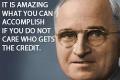
Is Anyone Still Wild About Harry?
 As a boy in junior high school, I bought the soundtrack of “Give ’em Hell, Harry” at a school book and record sale. I have no idea what prompted me to spend a dollar on that particular piece of vinyl — I wasn’t living in Missouri then, but in Los Angeles, California.
Whatever the reason, it proved one of the best investments of my life. By the time I reached high school, I had practically committed James Whitmore’s entire 90-minute monologue to memory, and Harry Truman had become my hero.
I found the video on YouTube recently and, just last week, returned to the beloved performance. With my recent essay on honesty and integrity so freshly pressed, the following words jumped out and seized hold of me:
“Dictatorship? No, it’ll never happen. The Constitution will stop ‘em every time.
“I’ll tell you, there’s only one way that could happen, and that’s if we had a liar in public office. There’s nothing more dangerous on this earth than a liar in public office, because the people might believe him.
“But if the people every found a fellow like that they ought to show him the same amount of compassion that he showed the constitution. No more, no less.”
What would Harry Truman say about a president like Barack Obama who, according to the Washington Post, claims three of the twelve most egregious lies of 2014 and three of the ten biggest lies of 2013? What would Harry say about a candidate like Hillary Clinton, the “congenital liar” who seems emboldened to tell ever-inflating whoppers without a shred of shame or contrition?
And what would Mr. Truman have to say about an American electorate willing to overlook the brazen dishonesty of politicians willing to say and do anything to get into office and push through their self-serving agendas?
As the song says: Harry, where are you, now that we need you?

Elbowing God Out
 Back when I possessed the charming innocence of a twelve-year-old, I took offense at the wording of the Pledge of Allegiance. Why, I wondered, was I expected to pledge my allegiance to a flag? Proclaiming loyalty to my country I could understand, but to a piece of fabric?
Moreover, as I had concluded with unshakable, preadolescent self-confidence that human existence was nothing more than a cosmic accident, I found the phrase “under God” equally offensive.
So while my classmates were loudly reciting the full text of the Pledge of Allegiance, I was quietly editing my own recitation: I pledge allegiance… to the United States of America… one nation… indivisible, with liberty and justice for all.
By my final year in high school, however, having acquired a sufficient measure of sophistication to appreciate the importance of symbolism, I no longer resented being asked to swear loyalty to a flag. But we weren’t reciting the Pledge of Allegiance any more, so I had no chance to mend my ways.
I was also less certain concerning the existence of a Creator. Six years of secondary education had opened my eyes to a universe so enormously complex that to embrace any world view as extreme as atheism seemed the height of arrogance. The phrase “under God,” therefore, struck me as a comforting expression of humility, that we as a nation recognized the grandeur of our universe and conceded its unfathomability.
Perhaps the circuit court judges who ruled the phrase “under God” unconstitutional might have interpreted the law with more humility if they had familiarized themselves not only with the letter, but with the spirit of the Constitution. Perhaps they might have better understood the intent of the Framers if they had read, or remembered, the words of Alexander Hamilton: “The sacred rights of mankind… are written, as with a sun beam in the whole of human nature, by the hand of the divinity itself; and can never be erased or obscured by mortal power.”
 Considering the many references to the Almighty among the writings of the Framers of the Constitution, it’s astonishing how often we hear the Constitution invoked as the basis for expurgating every reference to God from the public arena. If the founding fathers weren’t afraid of mentioning God in the Declaration of Independence, why should we fear the utterance of His name in our courthouses or schools? But many among us are afraid, afraid with a fear born of insecurity.
Indeed, what is more terrifying than the unknown, and what is less known than what awaits us when we depart this mortal coil? As Prince Hamlet pondered: “To sleep? Perchance to dream! Ay, there’s the rub.” For the devout atheist, there is no greater dread than the haunting suspicion that he might be wrong, that there might truly be a Creator and an accounting before Him upon arrival in the hereafter. To the atheist, every reference to God is an unwelcome reminder that the rest of the world is not so certain that our existence is random and without purpose.
The great Rabbi Joseph B. Soloveitchik summed it up like this: “All extremism, fanaticism and obscurantism come from a lack of security. A person who is secure cannot be an extremist.” And, indeed, extremism in the form of radical religion or radical nihilism is one and the same. The 19th century anarchist used techniques not unlike the suicide bomber of today to advance his own variety of jihad. The modern anarchist uses manipulation of the law to advance his cause, supremely confidant that he understands the Constitution better than its authors.
The Talmud describes how, during the last days of the second Temple in Jerusalem, the Jewish people observed the law of the Torah meticulously according to its letter. But they failed to look beyond the letter of the law, to strive for understanding and fulfilling of the spirit of the law, to labor in applying the essence of the law toward the transformation of their character. This failure, together with a senseless hatred born of mutual suspicion, mutual contempt and, ultimately, the uncompromising assertion of their own egos, resulted in the destruction of the Temple, the deaths of millions of Jews, and the beginning of our long, dark exile scattered among the nations of the earth.
It has been observed that the word ego is in fact an acronym for Elbow God Out. A daily reminder that we should receive our national freedoms with humility is among the surest means of preserving those freedoms for our children. Close to two thousand years ago, instead of subduing their egos before the Highest Authority, instead of subjugating their ideological differences to the pursuit of shalom, peace, the Jews distorted Divine law to serve their own agendas, thereby sealing their fate and the fate of the Temple.
The sages teach that any generation that does not rebuild the Temple is considered to have destroyed it. But if we return to the law with humility and reverence, then we can truly hope to rebuild that which for so long has been lost.
Adapted from an article previously published by the St. Louis Post-Dispatch, the Baltimore Sun, and Aish.com.

The Unfairness Doctrine
With the biggest FIFA scandal to date dominating the headlines, I’m revisiting this piece from a couple of years ago about the growing indifference to justice throughout the world community.
 There are certainly more important things than soccer to get worked up over — especially here in the United States, where we already have baseball, basketball, hockey, and (American) football.
Maybe that’s an argument in defense of referee Koman Coulibaly, who infuriated American soccer fans by disallowing a winning goal by team USA with no apparent justification. After all, it’s only a game. Wouldn’t all that passion be better directed against the gulf oil disaster or Iran’s nuclear weapons program?
In this case, at least, the Federation Internationale de Football Association (FIFA) might agree. According to the New York Times, FIFA president Sepp Blatter “does not want video replay or extra referees on the end line at the World Cup. He favors debate over decisiveness and human frailty over intrusive technology, thinking that subjectivity helps soccer more than it hurts.”
Now there’s an interesting philosophy: human error by judges, umpires, and referees enhances competitive sports. But don your body armor before making that suggestion to Detroit Tigers pitcher Armando Galarraga. Only two weeks earlier, you may remember, a blown call by umpire Jim Joyce on the last play of the game denied Mr. Galarraga baseball’s most coveted distinction — a perfect game.
In the aftermath, pundits have suggested that the baseball mishap did more for the sport than a perfect game ever could have. Mr. Galarraga was the model of graciousness, upset at being robbed but apparently harboring no resentment. For his part, Mr. Joyce appeared not only contrite but genuinely heartbroken. A week later, the league itself showed impressive quality of character when a hundred MLB players voted the repentant umpire the best in the game. All around, a sport that has been plagued with steroid and contract scandals produced extraordinary examples of dignity, restraint and — to revive an expression near to extinction — class.
In contrast, Mr. Coulibaly has yet to offer a single word of explanation, much less apology, for his inexplicable whistle-blowing. (However, mounting pressure may convince FIFA to reverse its own policy of refusing to comment on calls by the time this sees publication. Nothing challenges core values like bad press.)
But is it only a game? Every parent knows that the way children play reveals much about who they are deep down. It seems reasonable to assume the same about cultures: the way they play speaks volumes about their moral values.
MORE THAN A GAME
In American sports, everyone from fans to players to officials to high commissioners has weighed in on the use of instant replay to ensure the accuracy of calls at critical moments. Some argue that, in the interest of fairness, every available technology should be employed to ascertain the umpiric accuracy. Others are afraid that instant replay will slow down gamesalready mired in strategic interruptions and commercial breaks. But no one claims that accuracy doesn’t matter. And certainly no one has ever hinted that inaccuracy is good for the game.
What the Armando Galarraga incident so refreshingly demonstrates is that, to a large degree, Americans still care about facts and fairness. Umpire Jim Joyce acknowledged his mistake, expressed sincere remorse, and all was forgiven. What the Koman Coulibaly debacle indicates is that, to a large degree, the international community has lost all interest in truth and justice.
When such indifference to right and wrong confines itself to the playing field, we might pass it off as a sad but inconsequential character defect of sports celebrities. But this kind of skewed perception of reality long ago began seeping inexorably into the world of politics and social justice, most notably the assault by the community of nations against the State of Israel.
By all accounts, Israel should be the darling of the non-Arab world. Largely secular, the only democracy in the Mideast and the only Middle Eastern countryto have made concessions for peace, a socialist nation that has nevertheless become a burgeoning economic powerhouse, and a lone David surrounded by a hoard of Goliaths, Israel meets every criterion of European values. And yet, the European Economic Community and the European-dominated United Nations have, time and time again, cast Israel as aggressor and censured Israel for intransigence while ignoring facts and history that prove precisely the opposite.
Perhaps the United Nations should field its own soccer team. Perhaps Koman Coulibaly should seek nomination for the position of U.N. Secretary-General.
THE LAST EXILE
In his prophetic dream, the patriarch Jacob beheld celestial emissaries ascending and descending a ladder with its feet upon the earth and its top reaching the heavens. The sages of the Talmud teach that Jacob witnessed the guardian angel of Babylon go up seventy rungs and then descend, foreshadowing the Babylonian exile of 70 years. He then saw the guardian angels of Persia and Greece ascend 56 years and 180 years respectively, corresponding to the duration each would rule over the Jews. Finally, Jacob watched the guardian angel of Edom go up and up the ladder until he cried out to the Almighty, “Master of the World! Will this angel never come down?”
“Even if it reaches the gates of heaven,” replied G-d, “I will cast it down Myself,” implying that the nation of Edom would rule Israel until the arrival of the messianic era.
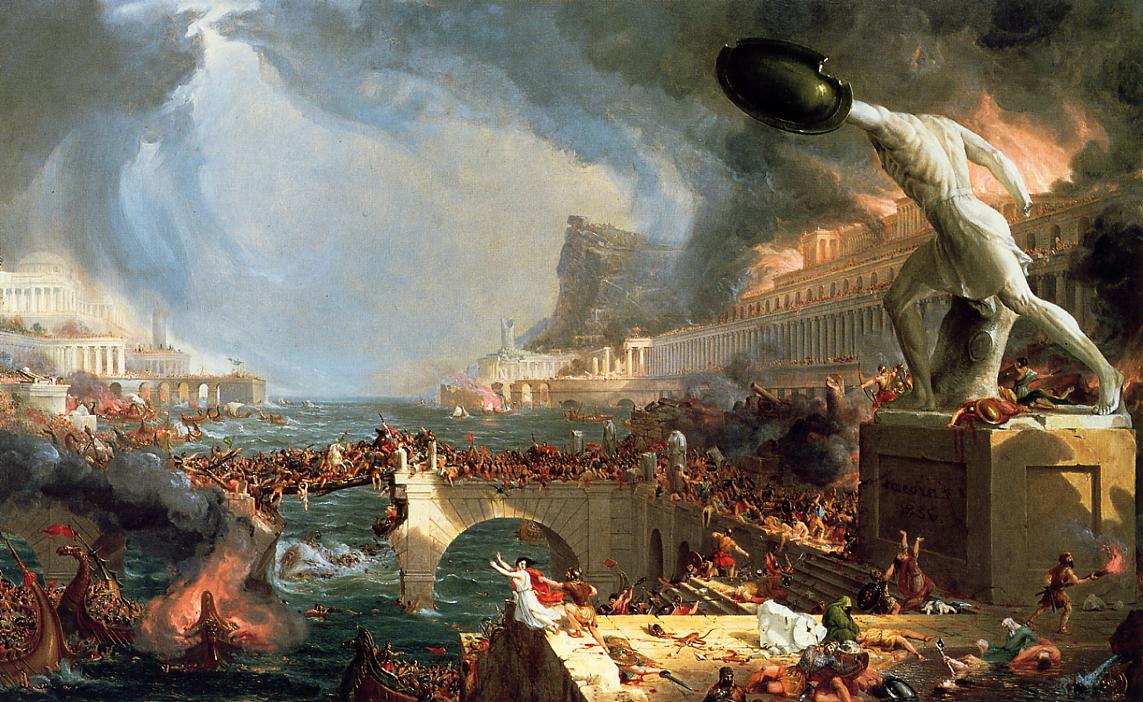 Nearly 2000 years ago, the sages identified the Roman Empire as the spiritual descendant of Edom, which was itself descended from Jacob’s wicked brother, Esau. But if the Roman Empire fell over 1500 years ago, how are we to understand the image of Rome’s guardian angel reaching the gates of heaven and surviving until the coming of the Messiah?
Esau was called Edom — meaning red — not because of his red complexion but because of his peculiar request that Jacob serve him “that red stuff,” by which he meant the bean stew he found his brother preparing when he came in hungry from the field. Color is the least intrinsic quality an object possesses, describing only the most external, cosmetic appearance without acknowledging function or purpose.
In this single moment, Esau revealed his defining quality as superficiality, the total lack of concern with anything other than outward appearances. And although the empires of Edom and Rome have long disappeared from the earth, the culture of superficiality that characterized them has become the salient characteristic of Western Civilization. In today’s culture wars, the final battleground between good and evil has become one in which evil claims to be good, conflating right and wrong with the empty sophistries of moral equivalence and political correctness, advancing arguments so thin and insubstantial that they fool no one who cares to look beneath the surface.
And yet, hardly anyone cares to look.
Soccer may be only a game, but it has become an international obsession. The contempt for truth articulated by its highest officials exposes a dangerous cultural bias and explains why the Europeans community would rather condemn the beleaguered nation of Israel than risk the consequences of antagonizing Israel’s belligerent and oil-rich enemies.
Jews around the world can take some comfort in the ability of America and Americans to still respond with passion in defense of truth. At the same time, the willingness of the current administration and so many in the media to rush to judgment against Israel offers unsettling evidence that we are approaching the fulfillment of the prophecy that, at the End of Days, Israel will stand against the world alone.
Originally published on Jewish World Review.

Jewish Billionaires put their Mouths where their Money is
Jewish billionaires Sheldon Adelson and Haim Saban have organized the first meeting of its kind, bringing together 50 Israeli and pro-Jewish corporations to push back against anti-Israel boycotts (BDS).
The real tragedy is that their efforts are necessary. The superficiality that typifies the Western World is self-evident with even the most feeble efforts to scratch the patina of political correctness that turns perpetrators into victims and victims into provocateurs.
 Shame on those who perpetuate the myth that Israel is the source of Arab suffering. Shame on those who provide the millions in aide that Gaza Arabs never see because their leaders spend it on high-tech tunnels for attacking Israeli civilians. Shame on those who caused hundreds of West Bank Arabs to lose their jobs by pressuring Soda Stream to move their production plant back across the “green line.” Shame on those who don’t hold the leaders of surrounding Arab nations accountable for ignoring the plight of Arab refugees for 60 years so they can vilify Israel for their own criminal negligence.
And shame on Jimmy Carter and his ilk who perpetuate the demonstrable lie that Israel is an apartheid state.
Would an apartheid state produce an Arab citizenry that has a higher standard of living, literacy, and longer life expectancy than that of the surrounding Arab nations? Would it have permitted a sitting Arab Supreme Court justice, Arab ministers, generals, ambassadors, and consulate-generals, an Arab Israeli national soccer team captain , and an Arab Miss Israel?
But ideologues never let facts get in the way of ideology. The successful western world must be held responsible for every evil in the world, even as radicals sacrifice their own lives to destroy the societies that allow well-meaning fools to enable the agents of their own self-destruction.
Speak Truth to Powers
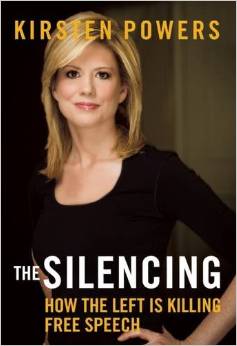 How refreshing that there are people like Kirsten Powers in the world.
In her new book, the outspoken, unapologetic liberal Democrat has taken aim at the militant search-and-destroy tactics employed by many liberals to shut down civil discourse and bully ideological opponents into submission.
Not surprisingly, many on the left have turned their attacks upon Ms. Powers and her book, proving her point by doing exactly what she accuses them of doing.
The intellectual laziness of groupthink lies at the heart of the deep divisions that are tearing this country apart. If more people would listen — listen to each other, and listen to Ms. Powers’s message — America might start turning back toward a culture of problem-solving and away from character assassination and political dogma.

O Frabjous Day in the UK
 How wonderful when pundits get it so magnificently wrong.
‘Twas brillig in Britain this week when David Cameron vanquished his frumious foes and went galumphing back to 10 Downing Street, chortling all the way.
The best part is not that the conservatives won, but that the pollsters were — again — so whifflingly off the mark. Just as last September’s referendum on Scottish cessation — predicted “too close to call” — was defeated by an easy ten-point margin, similarly did Mr. Cameron’s party cut off the head of the opposition with a deft snicker-snack.
Isn’t it mimsy that life — especially politics — can still hold a few surprises? Maybe we can learn not to vote for the front-runners just because they’re the front-runners.
Of course, the victorious Prime Minister shouldn’t get too beamish. A resurgent Scottish National party promises renewed efforts to split what’s left of the British Empire. To be sure, the next jabberwock lies in wait right around the corner.
As John Simpson, my political science professor at the University of Edinburgh, once remarked:
“The world of politics is like what you see when you lift up a great, flat stone and watch all the wee beasties running around beneath it.”
Callooh! Callay!
Send us your email, and we will send you the first four chapters of Proverbial Beauty – free!


A Dybbuk in the White House?
 “What gives in the White House? If the genie is out the bottle what made, of all world leaders the most powerful, let it out? Who, or what, is the mischief maker behind the nuclear talks? What spirit runs amok in the corridors of power? The freak alignments lately fashioned point to some fiend on a depraved mission. American bombers now support Iranian troops to keep a chemical-weapon-dropping Syrian madman in power. Saudis and Israelis co-operate to stymie an American-made pact. An emissary from the White House supposedly told the Argentine government not to pursue Iranian murderers of eighty-odd Jews in Buenos Aries. Obama gives tacit blessing to the sale of a Russian ground-to-air missile system to Iran, which will make it more difficult for Israel to flatten those nuclear sites. A US President who sets all this, and more, in motion would have to be possessed.”
Read the rest of Steve Apfel’s inspired op-ed here.
Hat tip: Steve Glassman
 Yonason Goldson