Home » Posts tagged 'Psychology' (Page 25)
Tag Archives: Psychology
Just Plain Ugly
 Here’s another lovely headline:
Top 15 Celebrities who are Just Plain Ugly
And no, I’m not including the link.
Why would anyone write an article like this? Why would anyone read it?
Sadly, the answers are obvious. Someone wrote it because he knew people would read it. And people read it either out of pure voyeurism or, even worse, because they need to tear down others to feel good about themselves.
Maybe we should revisit some old cliches:
- Don’t judge a book by its cover
- Beauty is only skin deep
- All that glitters is not gold
Sure, they’re cliches. But remember: cliches become cliches because people recognize their truth enough to repeat them over and over and over.
When we make the effort to see the best in others, that makes our world brighter. With practice, recognizing what’s good in others can motivate us to be like them, which will make us feel better about ourselves.
After all, the grass isn’t really greener on the other side of the fence.
Speak your mind… or not
 How much damage is caused talking about other people? And for what? Usually to make ourselves feel superior at the expense of others.
And what if it’s true? So what if it is? If there’s no benefit, why say it?
How much time do we spend talking about the obvious or the irrelevant? The weather? The economy? Last night’s episode of Letterman?
As an icebreaker, small talk serves a purpose. But if it becomes a staple, if it leads nowhere except the next inanity, wouldn’t we be better off with silence?
Of course, that would leave us alone with our own thoughts, and that can be a pretty scary place to be.
The Illusion of Knowledge
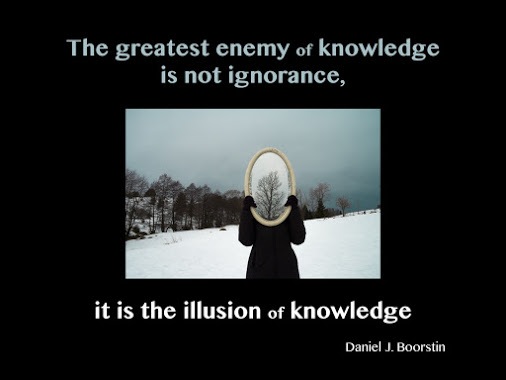
Nothing could be more true in the age of unlimited access and information overload. King Solomon wrote in Ecclesiastes, “One who tears a hole in a fence invites in a snake.” In other words, no fence is better than a broken fence, since the former demands constant vigilance while the latter allows a false sense of security. The more we think we know, the more ignorant we actually are.
Please take a look at how modern research backs this up here.
Before it’s too late
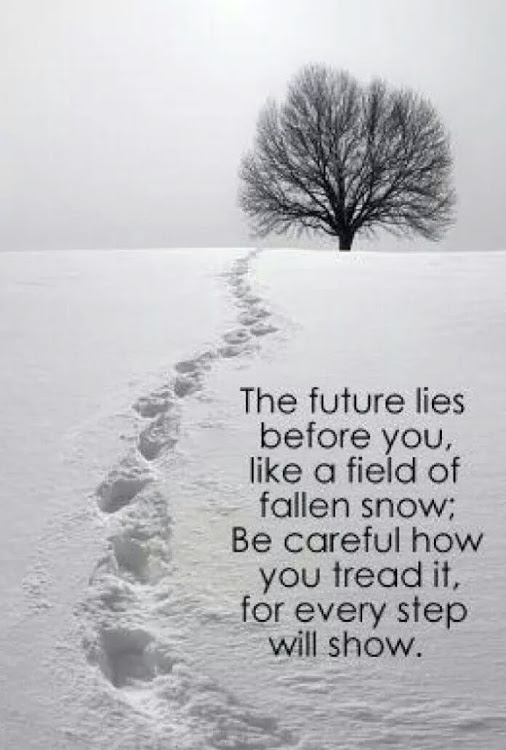 Like the genie let out of the bottle, words can never be taken back once they leave our lips, and actions cannot be undone once we’ve done them.
There are few sadder feelings than the regret of wishing to undo the past.
Think first. Then think again.
But don’t overthink. Inaction can be worse than the wrong action.
Yes, life is complicated.
The Grateful Whale
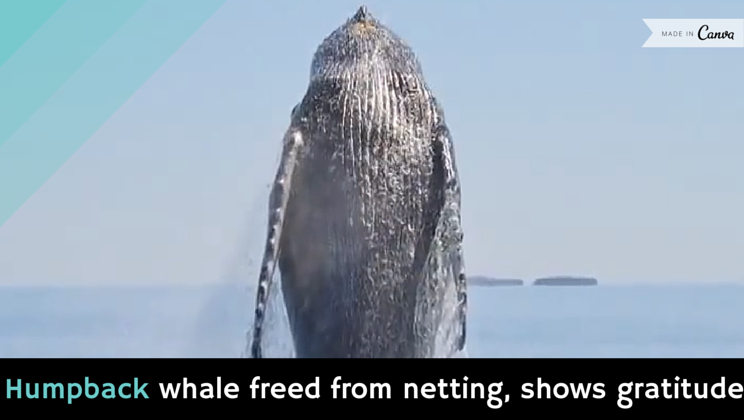 Swimmers worked an hour to free this humpback whale tangled in fishing net. To see the whale’s reaction, skip to 6:40 on the video. Perhaps the display was one of sheer elation at being freed, or perhaps an unbridled expression of gratitude.
This whale knows something too many of us have forgotten. Our society has embraced the culture of convenience, entitlement, and victimization to the point where we barely feel appreciation anymore. In a world where everything is supposed to be available and instantaneous, we’ve responded with the attitude that everything takes too long, takes too much thought, takes too much effort. Our expectations are so high that we are forever frustrated and disgruntled.
In biblical Hebrew, the term for gratitude is hakoras hatov — literally, “recognizing the good.” Before we can appreciate, we have to look for the good in our lives, see it as good, recognize how we have benefited from it as good; once we have that recognition, not only can we experience true appreciation but we inevitably will feel appreciative. How can we not, with that which has benefited us so clear before our eyes?
“The wise man’s eyes are in his head,” says King Solomon in Proverbs. Only if we see through the lens of our minds’ eye can we truly perceive, truly understand, and truly achieve the lofty human reactions that should be uniquely ours, but which sometimes we have to learn from the creatures with which we share our world.
How sad for us if they get it and we don’t.
End of an Icon
 Darrell Winfield, one of the original Marlboro Men who rode on horseback across the western countryside in cigarette ads, has died at age 85.
The image of rugged individualism is credited with the most successful advertising campaign in history, according to the Guinness Book of World Records, transforming an obscure brand into the world’s number one seller.
Which should make us ask ourselves: what are the influences that drive us in the decisions we make? As Eric Fromm wrote, everyone knows that the blonde in the ad doesn’t come with the sports car, but the mere possibility that the buyer might end up with her makes the sale anyway.
The questions extend far beyond cigarettes and cars; they apply to every aspect of our lives: What are we being sold? Who are the salesmen? How much are we paying?
Why we love conspiracy theories
 In short, we want the world to make sense, so ideological cabals and aliens offer a more attractive solution to the appearance of randomness than does randomness itself. On the one hand, we have to temper our impulse to impose order on chaos by reining in our imaginations with common sense, logic, and civil discussion.On the other hand, this reveals our deeply rooted conviction that there is a purpose to our existence and that there is true meaning in our lives and in our world.
The Aroma of Ideology
 A NYT op-ed cites a study by social scientists at Brown, Harvard, and Penn State that people we agree with smell better to us.
For a theological critique, see my article, The Scent of Spirit.
Symbiosis — Blueprint for Peace
 Here’s a beautiful spread from Cosmos Magazine on cooperation in nature. If natural enemies can make peace with one another for mutual advantage, shouldn’t human communities be able to recognize how much more we stand to gain by setting aside our petty differences… or even working through our substantive differences?
It’s largely a matter of will. We have to want to resolve our disagreements more than we want to be right. Some earlier thoughts on conflict resolution here.
Thanks to Rabbi Yaakov Feitman for his article in this week’s Mishpacha Magazine.
Don’t Beat Stress… Meet Stress
 Doctors can’t tell you much about migraines. According to Healthline.com, a partial list of triggers includes lack of sleep, caffeine, foods, food additives, hunger, dehydration, alcohol, strong odors, bright lights, loud sounds, weather change, exercise, hormones and — my personal favorite — stress.
At their best, migraines will interrupt my sleep several times a night. At their worst, they shoot burning needles of agony into my brain for 14 hours straight until I finally pass out from exhaustion.
I’ve dealt with migraines for about a quarter century now. During my last series, a new neurosurgeon put me on steroids to relax my muscles, a regimen that prevents headache Armageddon while allowing the cycle to slowly run its course.
It’s working, mostly, for which I’m enormously grateful. But not without a curious side-effect.
Now I’m too relaxed.
 Yonason Goldson