Home » Posts tagged 'Society' (Page 12)
Tag Archives: Society

Strangers on a Train
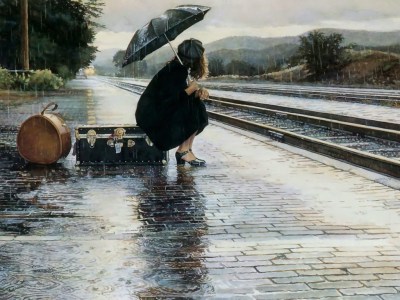 There is an art to travelling with small children by public transportation.
We had managed to balance our seven bags in and atop our two baby strollers. Needless to say, this left them unavailable for babies. My wife, Sara, shifted one-year-old Jake into long-distance-hip-riding mode while our new friend Blythe did the same with her own one-year-old, Joshie. Zeke and I, the husbands and designated sherpas, prepared to push the makeshift luggage carts.
The problem was, we had no idea where we were going.
Sara and I had arrived in Budapest less than a week earlier, and our feelings of apprehension had been deepening by the hour. Through the mercy of divine intervention, the principal of our new school was on our flight from Israel. Otherwise, we might have taken up residence in Ferihegy International Airport like Tom Hanks in The Terminal.
A haze of disorientation enveloped us almost immediately, progressively growing thicker and darker. Principal Haraszti – whose name I soon began to slur into Horrorstory – deposited us in our apartment with a loaf of bread, a bag of apples, and a box of milk. There was no crib for Jake and no bed for three-year-old Abby. Horrorstory promised to call the next morning, which he did – an hour late. Relief, if not gratitude, came naturally. We had no money, had yet to find anyone who spoke English, and didn’t know our own address or phone number.
Why had no preparations been made? we asked. After all, the administration had had all summer to prepare for our arrival.
We received the answer we were to hear again and again: the matter will be resolved.
We proceeded to deal with one ineptitude after another. Of course, that made it easy to forge a bond of friendship and alliance with Blythe and Zeke, the other American couple who had parachuted in from across the globe to find themselves similarly neglected.
Generally speaking, the end of the week allows us to shrug off our troubles and anxieties with the arrival of the Sabbath, and we had been assured that all our needs were taken care of. The school had arranged an orientation camp for the students an hour outside the city, and we were expected to participate. Horrorstory told us which train to take and where to get off. The camp, he said, was “right across the street from the train station.”
 Most of his information was accurate. All of it, actually, except the last part. Across the street from the train station stood a lovely expanse of woodland, with no sign of life other than birds and rodents. There was no attendant behind the station window, either. He probably wouldn’t have spoken English anyway.
As we pondered our options, I found myself already thinking in Hungarian: the matter will be resolved.
So we loaded up the strollers and headed off in the opposite direction, only to find ourselves wandering through an industrial area almost as deserted as the woods. It would be the sundown in a few hours, and the specter of welcoming the arrival of the Sabbath in the middle of nowhere loomed ominously before us.
We asked the few passersby if they knew of the camp, but no one had any idea what we were talking about. Eventually, we flagged down a young German tourist on a bicycle. He knew no more than we did; but he took pity on us, turned back the way he had come, and set off as if in search of the Holy Grail. A few minutes later he returned. The camp was indeed across the street from the station. Just a half-mile down the road and hidden entirely from view.
So we survived our first week in Budapest, our first Sabbath in Hungary, and our first encounter with students who looked at us as if we had just emerged from the ghettos of their grandparents’ tortured memories.
***
The return trip to Budapest was somewhat more relaxed. It hadn’t started off that way, however. We had just finished loading up the strollers for our hike to the train station when the rain began to fall. A quarter hour searching for a taxi turned up nothing and left us nowhere.
Then the camp director took pity on us. Miraculously, he succeeded in cramming four adults, four children, and all our baggage into his matchbox sedan, and off we went.
Whatever their idiosyncrasies, Hungarians do have a certain passion for coming to the rescue of others. The camp director raced us to the station, somehow gathered up most of our belongings and carried them single-handed through the pedestrian underpass and into the first-class cabin of the train, which pulled up as if on cue for us to board. We hadn’t planned on traveling first class, but once there we had no interest in packing up to relocate. Aside from that, the price of $3.50 U.S. – albeit triple the second-class fare – seemed eminently reasonable; at least for rich Americans like us.
We had the entire train car to ourselves.
The money gap would follow us everywhere. On Sundays, Sara and I crossed the street from our apartment to let Jake and Abby frolic in Városliget, Budapest’s central park. Often we would buy the children giant balloons, shaped like rabbits or roosters, almost as big as they were. The locals, never shy about staring at strangers, glared with a mixture of resentment and awe at the wealthy Westerners who could afford two balloons. They cost a dollar apiece.
Our Hungarian salary was about $200 a month, which covered food and basic living expenses. That was what most Hungarians lived on. We received a separate American salary which, back in the States, would have kept us at subsistence level. But in Hungary we were able to save most of it (which had a lot to do with why we were there in the first place).
There was something unsettling, however, about being seen as rich. It was one more thing that set us apart in a country where we stood out noticeably already. And even if it wasn’t objectively true, it was relatively true; and that taught us an uncomfortable lesson about the reality of perception.
In a way, we are what other people think we are, no matter what we think we are, and no matter what we really are.
That sense of displacement tarnished the pleasure of our train ride back to Budapest. If not for us, the first-class car would have been empty. Ergo, it should have been empty. We didn’t belong there. No one did.
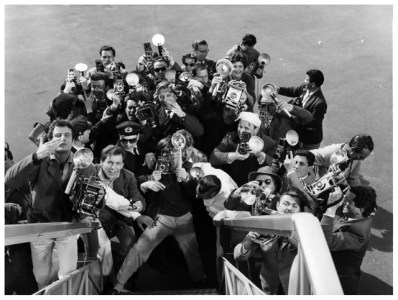 The train pulled into the station and we descended from our private car. Porters raced each other for the privilege, and expected gratuity, of carrying our luggage. But these were no ordinary porters. They were like the cast of surreal characters from a Federico Fellini movie. The withered septuagenarian who got to us first beat out two comrades, one hobbling on a crutch and the other with his arm in a sling.
We let him take one of the lighter bags, with which he struggled, uncomplaining, as he hauled it to the taxi stand. The cabbie demanded the extortionate price of 300 forint – about three dollars – to drive us back to our apartment, where Blythe and Zeke joined us. The work crew that was supposed to have completed repairs on their apartment was running behind schedule.
It wouldn’t take much longer, they were told. The matter would be resolved.
Published in this month’s issue of The Wagon Magazine.

The Day Civilization Began
 “The Jews started it all – and by it I mean so many of the things we care about, the underlying values that make all of us, Jew and Gentile, believer and atheist, tick. Without the Jews, we would see the world through different eyes, hear with different ears, even feel with different feelings … We would think with a different mind, interpret all our experiences differently, draw different conclusions from the things that befall us. And we would set a different course for our lives.”
Thomas Cahill, The Gifts of the Jews: How a Tribe of Desert Nomads Changed the Way Everyone Thinks and Feels
It all began on the sixth day of the Hebrew month of Sivan, when Moses ascended Sinai to receive the Torah. This week we celebrate the holiday of Shavuos when, on the fiftieth day after the exodus from Egypt, the Jewish people became a nation guided by divine law and moral freedom.
In an age when individual autonomy, relative truth, and non-judgmentalism have become the lodestones of our new “enlightenment,” we would be well-served to reflect on how critical personal responsibility and a well-calibrated moral compass are as the bedrock of civil society and a healthy world.
To learn more about the Festival of Shavuos, click here.



A day like no other, a place like no other

June 7, 1967, is a date planted forever in my memory. It was on that day my family moved into the house I grew up in.
Decades later, I discovered that it was also the day when the Jewish people reclaimed sovereignty over their eternal capital after 2000 years of foreign rule.
I didn’t just grow up in the house that became my home. I saw it built, literally from the ground up. My father was the contractor, so I watched as trenches were dug for water and sewage pipes, as concrete was poured for the foundation, as wooden framing gave it shape and stucco exterior transformed it into a dwelling.
I was six years old the day we moved in. For the next eleven years, that house was the place that sheltered me from the uncertainties of life and gave me refuge from all the scrapes and traumas of childhood and adolescence.
But then something unexpected happened. I went away to college. I made new friends. I experienced the thrill of new ideas and the passion of intellectual exchange. And when summer arrived and I returned to visit my parents, the place they lived was just a house, just a way-station for waiting out the days until I went back to where I belonged.
The following year my parents sold the house. I never missed it.
But college didn’t remain home, either. Even before graduation, I felt something pulling at me, calling me to search somewhere else for home.
THE END OF THE LINE
I remember the day before I first arrived in Israel. The ship that carried me cut across a Mediterranean Sea as still and clear as a sheet of glass, utterly surreal as it reflected the color of the sky. Night descended, and the lights of Haifa glittered on the water. Israel was not my first port of call, but an inexplicable feeling of anticipation stirred inside me, a feeling that could only be described with one word:
Homecoming.
The next afternoon I was in Jerusalem; by an unlikely turn of events, I found myself being led through the stone labyrinth that is the Old City. As dusk fell on that Friday evening, I turned a corner and found myself face-to-face with the ancient stones drenched by generations of tears.
In that instant, everything stopped.
I knew nothing about my own heritage, nothing about Jewish tradition or Jewish history. I’d heard of the Western Wall, heard it called the Wailing Wall, but that was all I knew. I’d heard of the Sabbath, but the word meant nothing to me except as a holy anachronism. I wasn’t even sure if I believed in God.
But right then, as the last rays of the sun caught the top of those living stones and the mingled voices of hundreds of faithful wafted up from the courtyard, I felt an irrefutable connection to the three thousand years of tradition, devotion, and moral freedom that has kept my people alive while the countless empires that tried to destroy us have all vanished from the earth.
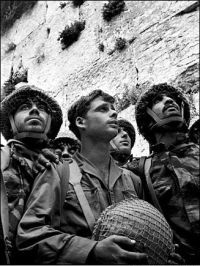
I had no memory of the iconic picture of the Israeli soldiers looking up in awe and wonder at the moment they liberated the Wall. But in a single moment, 14 years later, I felt what they must have felt: the vastness of infinity and the echo of destiny. I couldn’t imagine how I had lived my life without knowing what this was or what it meant. And my life has never been the same.
THE BEGINNING OF TIME
50 years ago today, according to the Hebrew calendar, on the 28th day of the month of Iyar, a small company of Israeli soldiers charged through Lion’s Gate and into the Old City of Jerusalem. Winding their way through the narrow passageways, they emerged at the epicenter of world history, at the last surviving remnant of the physical Temple from which the light of divine wisdom illuminated the world so many lifetimes ago.
The battle was over. But the war would go on.

The war goes on still: the war against self-serving leaders who oppress their own people, turning victimhood into a weapon against the tiny Jewish nation that wants only to live in peace; the war against irresponsible journalists who fabricate monoliths of falsehood from splinters of fractured truth; the war against well-meaning fools who enable the purveyors of hatred and bloodshed by legitimizing their cause; and the war against ignorance of history, which permits the loudest voices to rewrite the past.
But these are battles we will win. Because ultimately, Jerusalem is our capital and Israel is our true home, our only home. We built her from the ground up; we gave our lives for her and placed our souls under her protection. We will never abandon her; and she will never abandon us.
As long as we remember all Jerusalem stands for, we will carry her in our hearts and in our minds wherever we go, wherever we are. We will never stop fighting against ignorance and injustice, and we will never doubt the inevitable and undeniable truth of the words we cry out again and again, Next year in Jerusalem!

No More Flake News
 It’s bad enough that we have to endure fake news. But at least untruths and half-truths can be debunked.
More insidious than fake news is flake news — those trifling stories peeping out from beneath lurid headlines trying desperately to generate buzz without even the most lethargic mosquito’s wings to carry them.
SEE IT: Melania slaps away Trump’s hand in Israel, screams the Daily News, proving once again how the media can overlook the most substantive world events in rabid pursuit of the inconsequential.
The brief episode of finger-play probably meant nothing. And if the Trumps’ marriage is on the rocks, no doubt we will find out about it in good time. For the moment, however, let’s table the issue to devote a little more attention to the war on global terror and the quest for world peace.
Shall we?

Tapping the Power of Hidden Potential
From this week’s Jewish World Review
 A mutated spider bites Peter Parker and transforms him into Spiderman. Steve Rogers receives and injection of super-soldier serum and develops into Captain America. David Banner doses himself with gamma rays and mutates into the Incredible Hulk.
These are the fantastic tales of American comic book culture, in which ordinary people find themselves suddenly endowed with extraordinary powers and thrust, willingly or unwillingly, into the role of heroes. Indeed, who among us hasn’t fantasized about acquiring superpowers and using them to conquer his personal demons or to save the world?
But what if it weren’t a fantasy?
In 2006, Derek Amato dove into the shallow end of a swimming pool and stuck his head against the concrete bottom. The resulting concussion left him with chronic headaches and sensitivity to light, it also turned him into a musical virtuoso. Lacking either musical training or the ability to read music, Mr. Amato’s fingers dance over a keyboard like Mikhail Baryshnikov on a stage. He doesn’t know how he does it, but his life has been utterly transformed.
His case is not unique. After suffering a head injury in a childhood fall, Alonzo Clemens began producing exceptionally lifelike clay sculptures. A 10-year-old boy knocked unconscious by a baseball acquired the ability to do calendar calculations: he now remembers every detail of every minute of his life. A 58-year-old builder became an artist and poet in the wake of a stroke. A teenage boy woke up speaking fluent Spanish after he was hit in the head by a soccer ball.
Examples of acquired-savant, or accidental genius, go on and on. Who knows what potential for greatness lies within every one of us?
ILLUMINATING THE DARKNESS
One of the most compelling episodes from Jewish history is the story of Rabbi Akiva. He was an illiterate shepherd, content with his life as a simple laborer until his wife Rachel recognized his potential for greatness. At her urging, the 40-year-old Akiva found a kindergarten teacher to instruct him in the Hebrew aleph-beis so that he might learn to read and study.
But Akiva’s adult brain found the challenge of childhood learning too formidable a task. Dispirited over his failure, he was ready to abandon his efforts. But then he came upon a large stone marred by a curious indentation. When he inquired where the hollow in the stone had come from, he was told that the steady dripping of water over time had worn away the solid rock.
“If water can make an impression on stone,” he said to himself, “then surely the wisdom of the ages can make an impression on me.”
With that, he returned to his studies. Over the course of the next 24 years, he developed into the greatest sage in the history of his people, second only to Moses the Lawgiver.
TRIAL AND ERROR
But Rabbi Akiva’s life was not without hardship. He witnessed the destruction of the Temple in Jerusalem and the bloody suppression of the Bar Kochba rebellion against the Roman Empire. Worst of all, he saw the apparent undoing of all he had accomplished with the death of his many students.
 At the height of his career, Rabbi Akiva oversaw an academy of 24,000 talmudists, a generation of scholars virtually unparalleled in their intellectual prowess. But something went wrong. For all their brilliance and erudition, these students somehow failed to fully absorb Rabbi Akiva’s fundamental lesson to love one’s fellow as oneself. They were not openly uncivil. But their academic accomplishment infected them with a whisper of overconfidence, which ever-so-slightly eroded the respect they showed for one another.
For such exceptional students, blessed with the greatest of teachers, this tiny flaw proved fatal. A mysterious plague began killing them off in horrifying numbers, and the survivors refused to look within themselves toward self-improvement until they too succumbed. Over the course of seven weeks, the entire academy was wiped out, and the light of its wisdom extinguished.
Rabbi Akiva might have mourned his failure and retreated into despondency. But the same resolution that drove him forward decades earlier steeled him in the face of tragedy. He renewed his efforts and, with a handful of disciples, rebuilt all that was lost and secured the future of the Jewish people.
One of his protégés was Rabbi Shimon bar Yochai, whose life and accomplishments were celebrated this week with the Jewish holiday of Lag B’Omer. Building upon his teacher’s wisdom, he brought a new light of inspiration into the world, dispelling the suffering and confusion of exile by revealing the divine wisdom of eternity with a radiance that has inspired the Jewish people for nearly 2000 years.
THE LIGHT OF PERSEVERANCE
 Heroism is not solely the stuff of comic books or legend. If a blow to the head can actualize hidden talents and abilities, what does that tell us about the potential that lies dormant within every human mind and heart? We may never become Vincent Van Gogh or Itzhak Perlman, but with persistence and determination any one of us can unlock talents and abilities we never imagined we might have.
In a way, the impatient, unfocused predisposition of contemporary culture might work to our benefit. In a world where everyone thrives on instant and effortless gratification, the competition for genuine achievement grows less and less. If 90% of life is just showing up, the advantage of those who truly apply themselves grows exponential.
The real measure of success is not money, fame, or power. It lies in self-respect, and in the respect we earn from people of quality who still recognize the virtues of discipline, refinement, and integrity. Pursue those values with sincerity, and every other blessing will follow.

A Short History of Hazing
 “I expect to lose half of you before I’m finished. I will use every means necessary — fair and unfair — to trip you up, to expose your weaknesses.”
This line sets the tone for Louis Gossett, Jr.’s, Academy Award winning role as Gunnery Sergeant Emil Foley in An Officer and a Gentlemen. It’s also a fairly accurate depiction of the drill sergeants address military recruits — especially those training for elite corps.
The philosophy is simple. An army is a team. Every soldier’s life depends on his ability and the ability of his comrades to carry out orders. There is no room for hesitation in battle, no latitude for second-guessing orders, no accommodation for individual objectives or priorities.
In other words, there is no allowance for ego.
 Yonason Goldson