Home » Posts tagged 'Terrorism' (Page 3)
Tag Archives: Terrorism

Remembering 9/11: Visionaries and Ideology
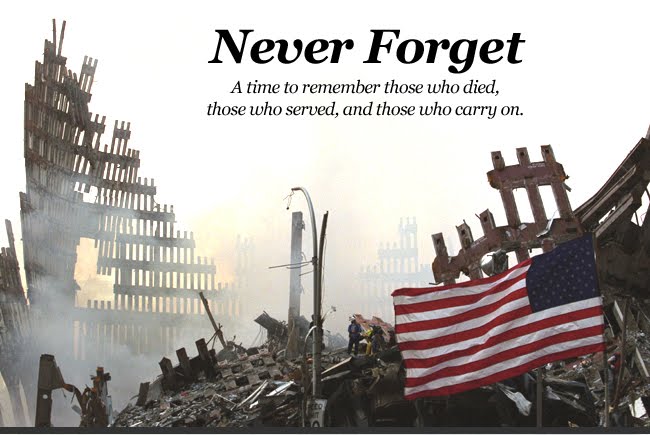 Who knew a trip to New York could be so emotional?
Our first stop was the 9/11 museum. I marveled at the artistic vision that had conceived the memorial pools, the water channeling down in rivulets that mirrored the face of the fallen towers, the continuous downward rush balanced by the redemptive feeling of water — the source of life — returning to the heart of the world. Here there was solace, closure, and consolation.
But a very different feeling accosted me inside. Almost upon entering the doors a single word brandished itself across my mind’s eye: Holocaust.
Obviously there is no comparison between the monstrosity of wantonly dehumanizing genocide and any single act of terror; obviously there is no equivalence between the systematic psychological, spiritual, and physical destruction of millions and a few thousand relatively instantaneous murders.
But then again, yes there is.
Read the whole article here:
Balancing the Scales of Freedom
Originally published in the St. Louis Post-Dispatch the week after 9/11, between Rosh HaShonah and Yom Kippur.
 It was Judgment Day — exactly one week after the World Trade Center buildings collapsed and so many illusions along with them.
“Judgment Day” is the expression found in the traditional liturgy for Rosh HaShonah, the first day of the Jewish new year. And as I stood in the midst of the congregation intoning the High Holiday prayers, the vision of exploding passenger planes and twin towers crumbling to dust hovered before my eyes.
On Rosh HaShonah we will be inscribed … who will live and who will die … who by water and who by fire … who by storm and who by plague … Who will have peace and who will suffer … who will be cast down and who will be exalted.
The judgment upon Jews became kinder after the United States opened her doors to us a century ago. Where no one else would have us, America took us in, allowing us to live both as Americans and as Jews without persecution.
Yet for all that, American Jews often feel torn by opposing cultural forces, especially approaching our Day of Judgment in a society where there is no greater sin than “judgmentalism.”
Without judgment, however, society cannot endure. As good citizens we must judge others – not based on race or religion but upon actions and behavior. And we must judge ourselves as well, by constantly reexamining our motives and our prejudices and our values and our goals. To condemn even this kind of judgment as a threat to freedom is to retreat from our responsibility to discern right from wrong; it is to embrace the illusion of absolute theoretical freedom – moral anarchy – which is in reality no freedom at all.
September 11 brought us face to face with moral anarchy in the form of incomprehensible evil. Perhaps the first step toward confronting it is to remind ourselves that freedom is not a right – it is a privilege, and privileges carry with them obligations that are often inconvenient and occasionally painful. When Thomas Jefferson wrote that the tree of liberty must sometimes be refreshed with the blood of patriots, he warned that the threat against freedom can only be met by not taking freedom for granted.
Freedom is not democratic, as less than a score of suicidal zealots understood when they commandeered four transcontinental airliners. The duties of freedom are non-negotiable, as New York firefighters and policemen understood when they rushed into crumbling skyscrapers. And the rules of freedom cannot always be legislated: sometimes we have to choose between necessary evils, as the passengers aboard United Airlines flight 93 understood when they drove their plane into a Pennsylvania field.
These are the kinds of judgments we must make, every day and every year, to preserve our society, all the more so in a nation built out of so many cultures and beliefs as ours. Every freedom of the individual cannot be permitted if it threatens the collective, nor can every interest of the collective be observed if it oppresses the individual. But when we share the collective will to make our society stable and secure, then the individual will set aside his personal freedoms for the national good and the nation will bend over backward to protect individual freedom.
This is the mark of a great civilization, and it rests upon an informed and devoted citizenry prepared to debate, sometimes passionately but always civilly, the moral direction of our collective journey.
This Rosh HaShonah I stood shoulder to shoulder with friends and neighbors singing ancient liturgical poems in praise of our Creator, just as so many Americans stood together the week before singing “G-d Bless America.” There were no agendas, no politics, no grudges, no rivalries. All of a sudden we were one nation, indivisible, a people with one noble history and many noble ideals whose differences vanished in the shadow of our many common values and common goals.
As the Jews have had ample opportunity to learn, now America has learned that nothing brings us together like a common enemy. What we have yet to learn is how to continue to stand together even in times of peace.

A Letter to Every Senate Democrat
Dear Senator,
 The president’s deal with Iran will make the world safer. That’s what President Obama has told us. But there are no facts to support his claim.
Not only has Iran has repeatedly violated UN resolutions, but the administration and other governments may have worked to conceal those violations. Iran has declared its intent to destroy the United States — the Great Satan. The demands upon Iran are minimal, temporary, and unverifiable. Even before the ink is dry, Iran is violating the treaty with Maj. Gen. Ghasem Soleimani’s trip to Russia. Iran will only grow more brazen, because its leaders know that they will not be held accountable by a weak president and an international community in denial.
Senator, this deal is built on a fantasy. The lessons of Neville Chamberlain’s appeasement are written on the monuments to the martyrs of the Holocaust and World War II. The lessons of Jimmy Carter’s appeasement treaty are written on the nuclear arsenal of North Korea. Do we really want to risk the world’s future so that Barack Obama and John Kerry can claim a fictitious victory that is worse than useless?
You don’t have to be Thomas Jefferson to recognize that you can’t make peace with people who don’t want to make peace with you. Do you really want your name appended to the list of Obama loyalists who will choose politics over common sense?

The Road to Compromise
 After last week’s “historic” Obama-Kerry Compromise with Iran, it’s instructive to take a look back to see how little has changed. I published this op-ed in the St. Louis Post-Dispatch on 2 August 2002.
Henry Clay earned his reputation as “the great compromiser” when he forestalled the outbreak of the Civil War by ten years. Even so, one has to wonder whether even Mr. Clay’s genius for mediation could save the Mideast peace process from becoming a towering embarrassment to US foreign policy.
Compromise, according to Webster’s, is “a method of reaching agreement in a dispute, by which each side surrenders something that it wants.” This shouldn’t be hard to comprehend for anyone with a background in high school civics. What does remain incomprehensible is how otherwise reasonable people might seriously apply the term “compromise” to past peace proposals, and why anyone thinks it will be different the next time around.
Definitions notwithstanding, immediately after the Camp David negotiations in the summer of 2000 the New York Times observed that Yasir Arafat’s “willingness for more talks suggests room for compromise.”
The Times deserved credit for optimism and imagination, but won few points for objective editorial insight. Indeed, only a month earlier (on July 11 of that year), the Times reported that, “The Palestinians want a settlement based on United Nations Resolution 242,” implying that if not for Israeli intransigence, there would have been peace in the region long before.
Let’s see. Resolution 242 mandates 1) the “withdrawal of Israeli armed forces from territories occupied in the recent conflict,” and 2) the “termination of all claims or states of belligerency and respect for and acknowledgement of the sovereignty, territorial integrity and political independence of every State in the area and their right to live in peace within secure and recognized boundaries free from threats or acts of force.”
For its part, Israel returned more than 90% of the Sinai to Egypt in 1981, and offered to give more than 90% of Judea and Samaria to the Palestinians under former Prime Minister Ehud Barak. Pretty good, for a compromise.
From the Palestinian side, however, it’s been hard to detect even a whiff of compliance. Rather, these are the ways the Palestinian Authority has terminated its claims and belligerency: all government and schoolbook maps, as well as children’s television programs, identify the whole of Israel as “Palestine;” teenagers at Palestinian “summer camps” train with automatic weapons to fight Israelis; Arafat has named squares and streets after Hamas suicide bombers; Israeli security has caught PA officials smuggling numerous weapons, including anti-tank weapons, into Israel. The list could easily fill this column.
Ehud Barak had been prepared to overlook all that. But then the Camp David talks broke down anyway, largely because of Palestinian insistence of absolute sovereignty over East Jerusalem. Yet Jerusalem has been the heart and soul of Israel for over 3000 years, the holiest site on earth according to Jewish tradition and the Old Testament. The Arab’s spiritual capital is Mecca, whereas Jerusalem is merely a religious and historical footnote, not mentioned by name even once in the Quran. What’s more, from 1948 to 1967, when Jordan controlled East Jerusalem, not one Arab ruler visited the city, except Jordon’s own King Hussein. Electricity and water services were neglected, and no government offices or cultural centers were set up there.
So what does the Palestinian Authority want? What it has always wanted: everything. The very concept of compromise appears utterly foreign to the thinking of Palestinian leaders, and is entirely absent from their behavior. It’s hard to see what the PA has ever thought it’s bringing to the negotiating table, except for the vague promise of controlling terrorism and the hazy commitment of conceding Israel’s right to exist, a right already granted by the United Nations over half a century ago.
In hindsight, it’s also hard to see what Ehud Barak hoped to accomplish by bargaining away so much for so little. According to Mideast analyst David Makovsky, Mr. Barak’s objective was “peace without illusions.” Peace between governments, the former Prime Minister believed, is the only possible goal presently within grasp; peace between peoples is generations away.
Mr. Barak assumed that once a treaty is signed, all of Israel’s Arab neighbors will abide by its conditions, gradually leading to normalization and the eventual cessation of the hateful rhetoric that foments Arab violence.
The trouble is, there’s no evidence it would work. Whatever the terms, any deal that produces even the coldest peace must rest on the foundation of compromise, a foundation that doesn’t exist. The indoctrination of children with hatred of Israel continues, even in Egypt, nearly three decades after it grudgingly traded political recognition for the return of its land.
 Other Arab nations have refused to offer even this little olive branch; they have never demonstrated the slightest willingness to compromise. Neither Israel nor the United States should take another step forward until they do. Let us hope that the new U. S. president will learn from the errors of his failed namesake and not put his hope in false promises that have already led nowhere.
Unforgivable
Should Dylann Roof be Forgiven for the South Carolina Massacre?
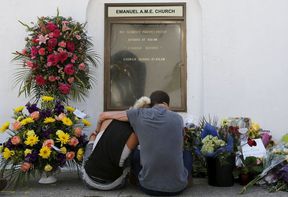 In an extraordinary example of human nobility, relatives of those killed in the Charleston, South Carolina, massacre expressed their forgiveness for Dylann Roof, the domestic terrorist who opened fire and took nine lives from the historic Emanuel A.M.E. church community. The mourners’ refusal to indulge their natural human impulse for revenge and to return love for hatred shows us all how it is possible to heal our fractured society.
Proverbial Beauty: Read now at Amazon.com
On a deeper level, however, the question of forgiveness is vastly more complicated.
One of the most compelling works of Holocaust literature is The Sunflower, an anthology built around the experience of survivor Simon Wiesenthal in the Lemberg Concentration Camp. In 1943, Mr. Wiesenthal was summoned to the deathbed of Karl Seidl, a Nazi soldier haunted by the atrocities he had committed, who wanted desperately to receive forgiveness from a Jew before he died.
Mr. Wiesenthal describes how he could find nothing to say and left the soldier without uttering a word. He then grapples with the question of whether he should have offered forgiveness, ultimately offering his answer by reframing the question:
ONE FOR ALL?
The crimes committed by the Nazis were not directed against individual Jews but against the Jewish people as a whole. Consequently, the torture and torment inflicted upon any Jew was in fact a crime against every Jew. Each individual victim was not a person but one of a people — the perpetrators didn’t care who he was but what he was — and therefore no individual had the power to grant forgiveness since an entire nation was targeted through each act of individual violence.
In other words, it wasn’t a matter of whether Mr. Wiesenthal should forgive, but whether forgiveness was his to give at all.
The same reasoning applies to all hate crimes. Whether the victim is black or white, Hispanic or Asian, Jew or Gentile, citizen or immigrant, rich or poor, any act of violence motivated by identity is not merely a crime against one person but a crime against mankind. As such, it transcends mere brutality or wickedness and rises to the level of gross inhumanity. By doing so, it becomes unforgivable.
So how can an act of forgiveness be both noble and impossible? Part of the confusion stems from a lack of clear definition. What is forgiveness? And why should forgiving evil ever be considered noble?
In the best-case scenario, forgiveness is a response to contrition. When a perpetrator recognizes the evil of his own actions, sincerely regrets them, and seeks to repair or atone for the harm he caused, then to withhold forgiveness becomes an act of evil itself. In such a case, to grant forgiveness becomes not merely noble but a moral obligation.
Proverbial Beauty: Read now at Amazon.com
But what if the perpetrator feels no remorse? Or what if he has no intention of righting the wrongs he has caused?
Even in that case, if one can understand, or even imagine, what motivated an act of evil, then it might be possible to forgive the offender for his own human weakness, whether it was a momentary lapse in temper or judgment, an innate lack of moral clarity or, as may or may not be the case with Dylann Roof, demonstrable psychological instability. To be able to see past one’s own pain and find a mitigating factor to excuse violence is truly noble… even saintly.
WITHOUT REMORSE
However, in the case of conscious, calculated evil, forgiveness may actually be a perversion of morality. Moral values should be so deeply rooted within that we can’t help responding to any violation of them with indignation and outrage. If we are truly committed to the values of good, how can we possibly tolerate evil, or those who do evil, especially when they do it in the name of good?
This is what the sages of the Talmud meant when they said, Be discerning in judgment. Look for every possible means of explaining away bad behavior. But after all is said and done, evil remains evil. Nonjudgmentalism is an empty slogan that allows evil to proliferate unchecked.
What often gets lost in the discussion of forgiveness is the matter of accountability. If I break your window, my apology means nothing unless I’m willing to pay for the window. And if I’ve caused damage that can’t be repaired, punitive restitution may be the only means through which society as a whole can preserve respect for the rule of law and confidence in the institutions of justice.
The particulars are open to debate. There are legitimate grounds to oppose the death penalty, mostly based in the real concern that an imperfect legal system cannot guarantee the guilt of those sentenced to death.
But to oppose capital punishment on the grounds that the state has no right to take a life misses a larger point. One who takes the life of another member of society forfeits his own place in that society; moreover, a society will retain its respect for the sanctity of life only with the recognition that by taking a life one forfeits his own right to life as well.
To take the life of any one person is, on some level, to take the life of every person. Justice must be served. Only then may it be possible to forgive.
Proverbial Beauty: Read now at Amazon.com
Click here to read this article and more from Yonason Goldson at Jewish World Review

Jewish Billionaires put their Mouths where their Money is
Jewish billionaires Sheldon Adelson and Haim Saban have organized the first meeting of its kind, bringing together 50 Israeli and pro-Jewish corporations to push back against anti-Israel boycotts (BDS).
The real tragedy is that their efforts are necessary. The superficiality that typifies the Western World is self-evident with even the most feeble efforts to scratch the patina of political correctness that turns perpetrators into victims and victims into provocateurs.
 Shame on those who perpetuate the myth that Israel is the source of Arab suffering. Shame on those who provide the millions in aide that Gaza Arabs never see because their leaders spend it on high-tech tunnels for attacking Israeli civilians. Shame on those who caused hundreds of West Bank Arabs to lose their jobs by pressuring Soda Stream to move their production plant back across the “green line.” Shame on those who don’t hold the leaders of surrounding Arab nations accountable for ignoring the plight of Arab refugees for 60 years so they can vilify Israel for their own criminal negligence.
And shame on Jimmy Carter and his ilk who perpetuate the demonstrable lie that Israel is an apartheid state.
Would an apartheid state produce an Arab citizenry that has a higher standard of living, literacy, and longer life expectancy than that of the surrounding Arab nations? Would it have permitted a sitting Arab Supreme Court justice, Arab ministers, generals, ambassadors, and consulate-generals, an Arab Israeli national soccer team captain , and an Arab Miss Israel?
But ideologues never let facts get in the way of ideology. The successful western world must be held responsible for every evil in the world, even as radicals sacrifice their own lives to destroy the societies that allow well-meaning fools to enable the agents of their own self-destruction.

Remembering the Boston Bombing
After the sentencing of Boston Marathon bomber Dzhokhar Tsarnaev last week, I’m revisiting some thoughts from the days after the 2013 bombing:
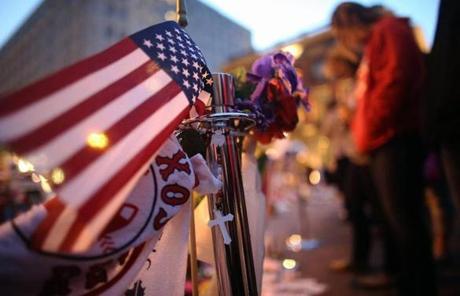 Zebadiah Carter describes himself living in “an era when homicide kills more people than cancer and the favorite form of suicide is to take a rifle up some tower and keep shooting until the riot squad settles it.” In 1980, this remark by the main character in a Robert Heinlein novel sounded like the science fiction that it was. Now it echoes like a prophecy.
Random acts of mass violence in the United States still horrify us but no longer shock us. We’ve heard too many stories, seen too many pictures. And too many of them are depressingly the same:
- 20 students and 6 adults murdered at Sandy Hook Elementary School.
- 12 killed and 58 wounded at the Century Theater in Aurora, Colorado.
- 13 killed and 30 wounded at Fort Hood.
- 32 dead and 17 wounded in the Virginia Tech massacre.
And those are only the bloodiest atrocities going back to 2007. The Columbine school shooting in 1999 adds another 39 victims to the tally. And, of course, Timothy McVeigh’s bombing of the Federal Building in Oklahoma City in 1995 claimed 168 lives and injured nearly 700.
Now we have to try and make sense of this latest act of senselessness — the Boston Marathon bombings, which shattered an iconic American institution and shook our already precarious sense of order and security.
Amidst all the suffering and all the investigation, the question we most want answered is why?
We’ve asked the same question before. According to reports, Adam Lanza was bullied as a student at Sandy Hook; Eric Harris and Dylan Klebold were bullied at Columbine High School; so was Timothy McVeigh as a boy in Pendleton, New York. There were also histories of psychiatric problems, as there were with Seung-Hui Cho before his attack on Virginia Tech, James Eagan Holmes before Aurora, and Nidal Malik Hasan before Fort Hood.
But these explanations offer little in the way of real answers. Almost all of us were bullied when we were younger without seeking murderous retribution against our tormentors, and most of us can lay claim to at least some kind of neurosis. More to the point, why is random violence on the rise, if the root causes have been around for generations? According to data assembled by Mother Jones Magazine, nearly 40% of mass shootings since 1982 have taken place in the last seven years (excluding robberies and gang-related incidents). If so, what has changed? And can we expect it to get worse?
Ultimately, it may be all about control. “These kids often feel powerless,” psychiatrist Peter Langman told LiveScience. “The one way they can feel like they’re somebody is to get a gun and kill people.”
“Out of control” is a term that seems increasingly characteristic of the world we live in. On the one hand, technology provides us with the power of information, opportunity, and access at a level unimaginable barely a decade ago. But on the other hand, our inability to manipulate so much power leaves us feeling both frustrated and inadequate, while the triumphs of others make us feel like pawns in a game we can never win. With the world at our fingertips, success and happiness remain damnably elusive.
 And so we flail about with increasing desperation, constantly trying to push ourselves just a little harder and work just a little faster. Day by day, our sense of anger and resentment toward a society that promises so much and delivers so little builds within us until we feel ready to explode. In a world gone mad, what else can we do but get mad at the world?
The fallacy, however, is the world has not made sense since the beginning of time. So observed King Solomon, the wisest of all men, in his Book of Ecclesiastes, compiled over a lifetime spent searching for meaning and justice:
And I returned and saw under the sun that the race is not to the swift nor the battle to the strong, neither is there bread to the wise, nor riches to men of understanding, nor yet favor to men of knowledge; but time and death will overcome them all.
Really, all that has changed is our expectation. We have been taught to believe that anything we desire is within our grasp, that we are entitled to the love of poets, the wealth of kings, the pleasures and the power of the gods. Our culture has etched upon our collective consciousness the inalienable right to life, liberty, and the pursuit of happiness. And although Thomas Jefferson had the wisdom not to assert the right to happiness itself, that subtle distinction is lost on most of our generation.
Given the fantasy images of Pixar and Dreamworks, the superhero illusions of the silver screen, and the miracle gadgets that fit in the palm of our hands, what can we expect from a youth wholly unprepared for reaching the age of responsibility? And when they confront the seeming impossibility of leaving their mark on the world through any positive contribution, why should we be surprised when they choose violence as their final recourse to make the world take notice of their existence?
And yet, for all that, Solomon himself did not give in to despair and hopelessness, despite the words of lamentation with which he begins Ecclesiastes:
Futility of futilities — all is futile!
But it is not Solomon’s opening words that contain his ultimate message. It is the words he offers at the end, in sharp contrast to all the observations he offers before:
The sum of the matter, when all is heard: Fear the Divine and keep His commandments, for this is the entirety of Man.
Viewed superficially, this world is a place of chaos, without rhyme or reason, without justice or pity. Says Solomon: do not look at the outer trappings of creation, but search for the nobility of man. Recognize the greatness that compels a 27 year old first grade teacher, with scarcely a moment’s notice, to give up her life in the protection of her innocent charges. Admire the reflexive heroism of bystanders who rushed to help the injured at the finish line, without regard for whether another explosion might make them victims themselves. Do not lose hope in the face of wanton violence, but take inspiration from the lofty heights to which Man can rise.
In the marathon of life, some finish and some fall. But greatness is measured by perseverance, by pursuing the unique potential that resides within each of us us, by our determination to choose good over evil and show the world that the divine spark of the human spirit will never die.
St. Patrick’s Day — Searching for the way out of exile
 At first glance, the soggy, green downs of Ulster bear little resemblance to the parched and craggy hills of Israel. But a gentle tugging at the cultural fabric of either place unravels an unmistakable common thread: two peoples, impossibly close geographically, impossibly distant ideologically, with more than enough fuel for hatred between them to burn until the coming of the Messiah. Tromping over hills and through city streets, however, first in one place and then in the other, I discovered a more compelling similarity: the bitter struggle of humanity in exile.
“Which are the bad parts of town, the ones I should avoid?” I asked the owner of the bed-and-breakfast where I passed my first night in Belfast.
She dutifully pointed out the Shankhill neighborhood on my map, cautioning me to steer clear of it. I thanked her and, with sophomoric self-confidence, proceeded there directly.
 It was the summer of 1984, in the midst of “the Troubles,” and central Belfast exuded all the charm of a city under martial law. Policemen on patrol wore flack jackets. An armored personnel carrier idled at a major intersection waiting for the signal to change. Blown out shells of buildings sprouted weeds, and street signs warned, DO NOT LEAVE CAR UNATTENDED. But as I worked my way up Shankhill, I discovered even more disconcerting landmarks: elementary school yards swathed in barbed-wire and churches pocked with scars from automatic-rifle fire.
I stopped in at a corner pub and took a seat at the bar beside two locals. Each was nursing a pint of Guinness. Another glass, two-thirds full with boiled snails, rested between them. The men took turns using a bent eight-penny nail to dig each snail out of its shell before popping the meat into their mouths.
I was half-way through my own pint of ale when the nearest one began chatting me up. “Yootoorin?” he said.
“I beg your pardon?”
“Yootoorin?” he repeated.
“I’m sorry, I don’t understand.”
“You touring? You traveling around?”
I needed several minutes to adjust to his accent. I never did get used to his indifference to life in a war zone.
“It’s no big deal,” he said with a wave of his hand. “There’s not many bombs going off any more, except on the big anniversaries, and everyone expects it then.” He extracted another snail from its shell, tossed it into his mouth, and chased it down with a swig of Guinness.
“Nobody lets the fighting get in the way of their getting on with life,” my friend continued. “You get used to it, you know?”
 I was carried away to captivity in Ireland with so many thousands of persons, as we deserved, because we departed away from the Almighty … [and He] brought upon us the fury of His anger and scattered us among many nations as far as the end of the earth…
So writes St. Patrick, Ireland’s patron saint, echoing the prophecy in Deuteronomy 28 according to which, four centuries earlier, the Children of Israel had been exiled at the beginning of the great Diaspora. Yet Patrick applied it without hesitation to his own time and place, presuming that the right of a nation to reside peacefully in its land depends upon the character and integrity of its people.
My wanderings ultimately led me from Belfast to Jerusalem, where I also found people living amidst violence and without fear. And there, as St. Patrick had done in Ireland, I discovered the ancient lessons of my own people, who have found neither peace with their neighbors nor peace with one another.
Exile, I gradually came to understand, does not require banishment to the ends of the earth. It can happen right at home, and it can take many forms. Indeed, which is the more profound Diaspora: being scattered to distant lands, or living under siege in one’s own home? And if we do find ourselves exiles in our own land, to where can we escape?
Today, the residents of both Israel and Northern Ireland fight among themselves over definitions, over identity, and over direction. In this they are like so many other peoples in this uncertain world, laboring to learn that the only way any of us can find the path leading out of exile is by shouldering the responsibilities of freedom.
Originally published in the St. Louis Post-Dispatch, 1999.
 Yonason Goldson