Home » Posts tagged 'Values' (Page 26)
Tag Archives: Values

Giving offense vs. taking offense
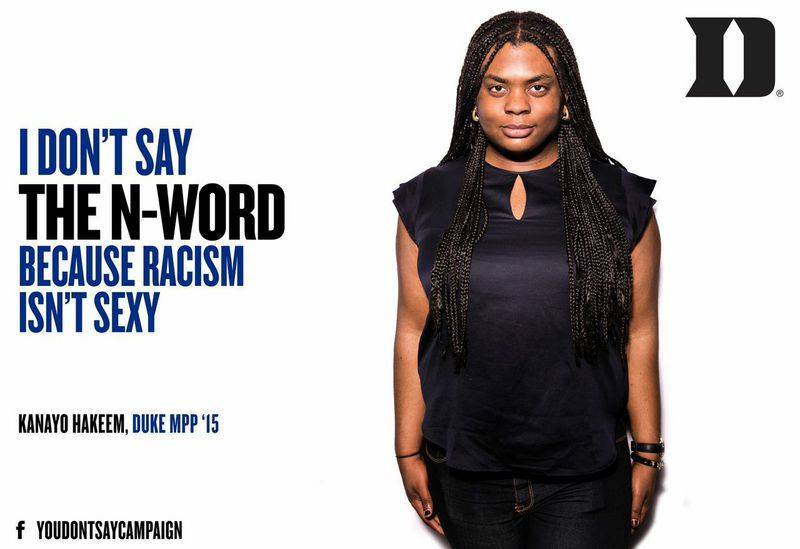 The political correctness police were out in force recently, correctly censuring Larry Wilmore for his use of the N-word and insanely condemning Hillary Clinton for uttering the words “off the reservation,” perceived as demeaning to Native Americans.
Starting with Mrs. Clinton’s turn of phrase, we might as well excise from the the lexicon of acceptability words such as “nosy” because it might offend people with large noses, “insightful” as insulting to myopics, “high-minded” as defamatory of marijuana users, and “thin skinned” for denigrating hemophiliacs. If we want to find reason for taking offense, we can find it everywhere.
The more noteworthy incident was Larry Wilmore’s use of the N-word at the White House Correspondents’ Association dinner, and his directing it toward the President of the United States, no less. Clearly the remark was intended to be affectionate and laudatory, which is how it was taken — without offense.
But that’s not really the point. In a society that is growing simultaneously disrespectful and intolerant of disrespectful speech, we need to elevate public discourse, not sink deeper into the gutter. If the N-word is too offensive to be broadcast — even news anchors reporting the story weren’t permitted to repeat it in quotation marks — then it is certainly unacceptable to be used in the presence of our president or, even worse, said to him.
Frankly, I’m more concerned by the use of President Obama’s first name, and his nickname at that. Maybe Mr. Obama and Mr. Wilmore are on a first-name basis. But in a formal context, such familiarity is utterly disrespectful from anyone other than a spouse, parent, or sibling.
This is the real threat of political correctness. It’s not just that we take offense in all the wrong places. It’s that we lose all sensitivity for the difference between what is respectful and what is disrespectful, we lose all sense of priorities, and we forget that refinement is a value. Nothing matters except the applause, the laugh, the ratings, and the votes.
This is why the same people who took offense at Mrs. Clinton’s use of “off the reservation” have no reservations about her pathological pattern of telling lies and misrepresenting political adversaries.
This is why our political and social institutions are in chaos.
And this is what we are teaching our children.

Passover, Freedom, and the War on Culture
 The responsibilities of freedom, the history of freedom, and the culture wars that threaten the values and the foundations of civilization.
Listen to my interview on the Bill Martinez show (interview begins at 33:00).

Passover and the price of freedom
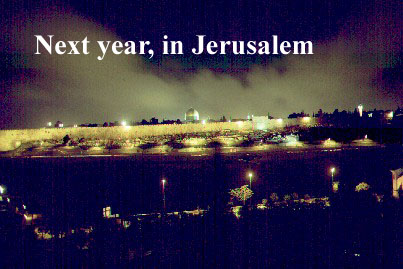 This Passover, let us all reflect upon the value of freedom, the price of freedom, the responsibilities of freedom, and the cost of taking freedom for granted. Only by standing strong against the forces within and without that never stop trying to enslave us will we remain free.

The Five Cups of Passover Wine?
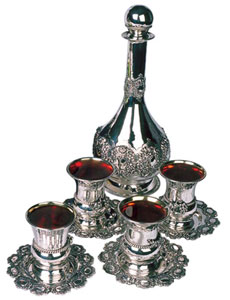 As everyone knows, on the first night of Passover we eat matzah and bitter herbs, we recline at the table, and we drink five cups of wine.
Five cups of wine? We drink four cups of wine, don’t we?
Well, that depends whom you ask.
Of course, it really is only four cups that we drink at the Passover seder. Acceptance of this practice, however, has not always been universal. Rather, it evolved as the best possible compromise between two contradictory Talmudic traditions. And only by going back to the root of the custom can we fully appreciate the relevance of our annual reenactment of the Exodus from Egypt.
The four cups of wine reflect four separate phases that concluded with the Jewish people’s transformation from Egyptian slaves into a free and autonomous nation. Within the narrative of the Exodus itself, four different expressions of redemption allude to the process through which the Jews attained their freedom — a freedom that was not born in an instant, but only as the culmination of four distinct and imperative stages.
Vehotzeisi. And I will take you out from the burdens of Egypt. Although Pharaoh endured ten plagues before he sent the Jews forth from Egypt, only half that many persuaded him to release them from their labors. This enabled the Jews to adjust to independence, to learn what it meant to make their own decisions before the time when they would be held accountable for the choices they would make.
Vehitzalti. And I will rescue you from their service. A slave whose master makes no demands upon him is still a slave. Having already been exempted from their labors, now the Jews were prepared to face the challenges of real freedom.
Vegoalti. And I will redeem you with an outstretched arm. History teaches us that freed slaves often fail to make the adjustment from slavery to freedom. The culture of slavery may be so deeply rooted in their psyches that they cannot succeed as free people. Similarly, the Jews needed divine assistance to purge their hearts and minds of the corrupt values of Egyptian culture, foreshadowing the way Jews all through history have had to struggle against the corrosive influence of foreign ideologies.
Velokachti. And I will take you to Me as a people. Once liberated from the physical and psychological bondage of Egypt, the Jews still faced the subtle dangers of unrestricted freedom. Only with a sense of identity and purpose, only with a clearly defined national mission, could the Jews emerge from cultural anarchy to embrace true freedom.
But there remains one final expression in the narrative of our collective transformation from slaves to free people: Veheiveisi. And I will bring you into the land. As a free and sovereign nation, could the Jewish people begin to fulfill their mission even before they established themselves in their land, in Israel? Or is it impossible for us as Jews to consider ourselves truly free while we remain exiled from our ancestral homeland? This is the essence of the debate whether we drink four or five cups of wine.
 What is our conclusion? We have none. We simply don’t know. However, we do know that we have to drink at least four cups. So that is what we do, then wait for Elijah the Prophet to come, not to drink the fifth cup, but to tell us whether or not we should drink it ourselves.
But some of us refuse to wait for Elijah to affirm our commitment to the Holy Land. This year, like every year, hundreds of Jewish high school graduates from around the country will defer their first year in college to study Jewish tradition and Jewish law in the land from which we are exiled. No threat of terrorist violence has been able to dissuade these young men and women from renewing their connection to the the heritage and land of their ancestors.
And, perhaps even more impressive, their parents have set aside their own fears and their own worst nightmares to encourage their children to travel half way around the world to pursue their highest calling: to rise to the challenge of Jewish freedom.

Passover: the Illusion of Freedom
 After generations of slavery and oppression, amidst miracles unprecedented and unrepeated, the Children of Israel marched forth out of Egypt and into the wilderness as a free people for the first time in their collective memory. Fifty days later they stood together at Sinai to receive the Torah — the code of 613 commandments that would define every aspect of their lives.
What happened to freedom? What happened to the promise of redemption when all that really happened was the trading of one master for another?
Much of the modern world has built its understanding of freedom upon Thomas Jefferson’s famous formulation of “life, liberty, and the pursuit of happiness.” But what would life be like in a society of unrestricted freedom? How many of us would choose to live in with no rules at all, where everyone was free to drive on either side of the road, to take whatever they desired regardless of rightful ownership, to indulge every whim and impulse without a thought of accountability? The absolute “freedom” of pure anarchy would provide no protection for the rights to life, liberty, and the pursuit of happiness. Consequently, it would provide no freedom at all.
Intuitively, we understand that some freedoms have to be sacrificed in order to preserve order and ensure the common welfare. If so, we are forced to refine our concept of freedom. In contrast to ancient Egypt, in which our ancestors were coerced by the rod and the whip to bow before Pharaoh’s will, the G-d of our redemption allows us the freedom from immediate retribution. By doing so, the Almighty empowers us with the freedom to make our own choices, to take responsibility of our own actions, and to transform ourselves from creatures of physical impulse into beings of spiritual refinement.
Ultimately, the freedom we possess is the freedom to choose our own master, to choose the leaders and system of laws that will best serve our collective interests in the long run.
Because we live in a society with others who also demand freedom, our choices will necessarily be limited by the conventions of society. More significantly, the values of the society in which we live will shape our own attitudes, influencing the ways we think that priorities we hold dear. From the moment we are born, our impressions are determined by others: our parents, our teachers, and our peers, as well as writers, celebrities, sports stars, and advertisers.
How often have we asked ourselves whether the ideas that govern our choices as spouses, as parents, and as community members are truly our own? How often do we stop to reflect whether we have acquired the values that guide us in our relationships and our careers through thoughtful contemplation or through cultural osmosis?
The illusion of freedom convinces us that our own gratification comes before our obligations to others, before even our obligations to ourselves. If we allow our desire for unrestricted freedom to steer our lives, we will find ourselves enslaved by our desires no less than a chain smoker is a slave to his cigarettes or an alcoholic is a slave to his gin. Convinced that freedom is a goal in itself, we will sacrifice everything of true value for the cruel master of self-indulgence. Deceived into believing that responsibility is the antithesis of freedom, we will invest ourselves, consciously or unconsciously, in philosophies like this one:
Freedom’s just another word for nothing left to lose, Nothing don’t mean nothing honey if it ain’t free, now now. And feeling good was easy, L-rd, when he sang the blues, You know feeling good was good enough for me, Good enough for me and my Bobby McGee.
These are the words that made Janis Joplin into a counterculture idol, before she died of a heroin overdose at the age of 27.
 Less dramatic examples confront us every day. Politicians, movie icons, and athletes destroy their careers and their family lives for a few fleeting moments of pleasure. Parents allow their children to grow up without direction or discipline lest they quash their creativity or damage their egos by imposing structure and meaning upon their lives. A once-productive citizenry increasingly looks to receive support on the backs of others, whether through welfare, lawsuits, or pyramid schemes that leave countless victims footing the bill.
More than anything, Passover celebrates the freedom to think, to take stock of our lives and reassess our values, to take a fresh look at our own motivations and our own decisions, to acknowledge where we may have lost sight of truly meaningful goals and sincerely commit ourselves to striking out on a truer course.
Last year we were slaves to our inner masters; this year we have a chance to set ourselves free to seek the paths of truth and follow them toward the destination of enduring spiritual redemption.

Passover: the Freedom to Serve
 “This year we are here, next year in Jerusalem! This year we are slaves, next year — free people!”
This is how the Passover seder begins, as Jewish families all over the world prepare to re-experience their people’s historic exodus from Egypt.
Herein lies the essence of the evening and of the holiday: the national transformation from servitude to freedom. As we well know, Western culture recognizes no loftier ideal than freedom, no more contemptible degradation than slavery.
And yet, there seems to be a contradiction. When the Jewish patriarch Jacob looked with trepidation at the beginnings of exile as he prepares to lead his family down into Egypt, the Almighty reassured him with the words, “al tiroh avdi Yaakov — Do not fear, My servant Jacob.” The sages observe that only ten were called by G-d, “My servant,” and that there is no greater accolade than to be considered a servant of the Divine.
How can this be? We were servants to Pharaoh in Egypt, and on Passover we celebrate freedom. If freedom is our goal, why is My servant the highest praise with which Jacob and the other luminaries of Jewish tradition can be lauded?
The answer is really self-evident. To serve a higher goal, a higher purpose, or a higher ideal is not servitude at all. It is rather to connect with something greater than oneself and, thereby, to become greater in the process.
On the gate to Harvard Yard these words from university president Charles William Eliot were inscribed over a century ago: Enter to grow in wisdom. Depart better to serve thy country and mankind. One can only hope the message is still heeded. In the language of biblical Hebrew, there is no distinction between service and servitude except the context in which they are used. We were slaves to Pharaoh because we had no choice, because the whips and rods of Pharaoh’s taskmasters bloodied our backs and crippled our bodies if we slackened in our labor. But freedom from Pharaoh gave us the opportunity to enter freely into the service of heaven, to accept upon ourselves the yoke of the Torah and its commandments in devotion to a higher purpose and in pursuit of spiritual fulfillment.
But even so, Pharaoh’s army drowned in the waters of the Sea of Reeds 3,328 years ago. How are the words of the Haggadah, this year we are slaves, still relevant after so many generations?
 Freedom is not a goal; it is an opportunity — and freedom misused often results in slavery. Is the chain smoker addicted to nicotine truly free? Is the alcoholic who cannot give up his drink or the workaholic who cannot relax from his business truly free? And what of the status seeker who worships designer labels and fancy cars; the teenager who worships the false god of cool; the couch potato who worships his soda and his chips and his remote control; or the anorexic who worships her skeletal reflection in the mirror and imagines herself a goddess — is any one of them truly free?
Finally, what of the cosmopolitan, the progressive, the enlightened thinker who has cast off what he believes to be the shackles of tradition in favor of the values of modern society, the rational humanist who believes himself to be the better judge of morals and ethics than the eternal transmission of his own heritage? Is he truly free, or has he not in fact allowed himself to become the unwitting slave of yet another master?
This year we have been slaves — slaves to our prejudices and biases, slaves to our own impulses and egos, slaves to the expectations of the culture that surrounds us. But Passover reminds us that we are as free as we choose to be, that we alone hold the keys to the chains that hold us back from acquiring the most precious gift of all — a closer relationship with the ultimate Master.

Taking Pride in Prejudice
 Prejudice [prej–uh-dis]. Noun. 1. an unfavorable opinion or feeling formed beforehand or without knowledge, thought, or reason. 2. any preconceived opinion or feeling, either favorable or unfavorable. 3. unreasonable feelings, opinions, or attitudes, especially of a hostile nature, regarding an ethnic, racial, social, or religious group.
According to these definitions from Dictionary.com, it’s clear that there are two essential components to prejudice: first, it is a form of opinion, not fact; second, it must be unreasonable or preconceived.
Please follow closely here: this implies that, for any opinion to avoid being prejudicial, the one holding that opinion must be able to articulate three things: 1) why he believes his opinion is correct; 2) why those who believe otherwise think they are correct; and 3) why those with whom he argues are wrong.
This is a matter of simple logic. First, if I can’t explain what I believe, then my beliefs are — by definition — prejudicial. Second, if I can’t explain someone else’s opinion, then rejecting that opinion is — also by definition — prejudicial. And third, if I can’t explain why I disagree with someone else’s opinion, that is — again, by definition — prejudicial.
But who am I kidding? We live in a world of sound bites and slogans, a world in which image trumps substance, in which feelings trump logic, in which the loudest voice drowns out all opponents and the most inflammatory rhetoric attracts the largest audiences. The new morality that rages against prejudice is mostly smoke-and-mirrors; indeed, the people who cry out against prejudice the loudest are the most prejudicial people of all.

Panama Papers: the New Ashley-Madison

Photo Credit: Kacper Pempel
So now it all comes down to Costa Rica.
With the American elections devolving into the absurdity of a bad reality-show, it has become simply too embarrassing to continue living in the United States. When Ted Cruz starts to look moderate and even-keeled in comparison to every other viable candidate, you know it’s time to find a new place to live.
Of course, Israel would be my next choice. But I have two children living in Israel now, and the last thing twentysomethings want is for mom and dad to move in down the street while they’re trying to discover who they are and decide what they want to do when they grow up.
(The fact that I’m still trying to figure out what I want to do when I grow up does not make things better.)
I could move to Canada, of course, but fleeing across the northern border is such a cliche I wouldn’t be able to live with myself. And Mexico is too risky; after all, what happens if I decide I want to come back and Donald Trump won’t let me in?
Europe is in chaos, Asia is too crowded, Africa is too hot, and Australia is too close to the South Pole. Brazil and Venezuela teeter on the brink of catastrophe, threatening to pull the entire South American continent down with them.
So I found myself left with only two possibilities: Panama and Costa Rica. But after last week’s headlines, Panama is off the table as well.
The revelations in the Panama Papers have exposed a dark side of human nature almost beyond human imagination.

Political Correctness: the root of all evil
 Dear Future President:
If you want to fix the country, you can start with the root cause of all that ails our country:
Political Correctness.
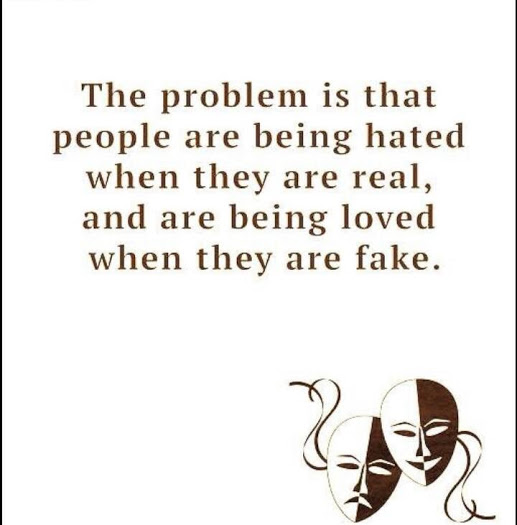
The truth is that political correctness is not a new idea at all; it is simply the new label for an old, established moral postulate once accepted by all.
The word civility shares its linguistic root with the word civilization. It means taking into consideration the comfort of others before expressing what I think or doing what I want. It means remembering that other people have rights before I assert my own. It means reflecting upon how my actions are going to affect my community and recognizing that I have a responsibility to a society that is more than the sum of autonomous individuals.
So what was wrong with the term civility that the concept needed rebranding as political correctness? Most likely, it was the connotation of political ideology that spawned this illegitimate offspring of cultural nobility.
In this series, professionals provide advice for the next U.S. president.
#nextpresident
 Yonason Goldson