Home » Posts tagged 'Values' (Page 36)
Tag Archives: Values

Balancing the Scales of Freedom
Originally published in the St. Louis Post-Dispatch the week after 9/11, between Rosh HaShonah and Yom Kippur.
 It was Judgment Day — exactly one week after the World Trade Center buildings collapsed and so many illusions along with them.
“Judgment Day” is the expression found in the traditional liturgy for Rosh HaShonah, the first day of the Jewish new year. And as I stood in the midst of the congregation intoning the High Holiday prayers, the vision of exploding passenger planes and twin towers crumbling to dust hovered before my eyes.
On Rosh HaShonah we will be inscribed … who will live and who will die … who by water and who by fire … who by storm and who by plague … Who will have peace and who will suffer … who will be cast down and who will be exalted.
The judgment upon Jews became kinder after the United States opened her doors to us a century ago. Where no one else would have us, America took us in, allowing us to live both as Americans and as Jews without persecution.
Yet for all that, American Jews often feel torn by opposing cultural forces, especially approaching our Day of Judgment in a society where there is no greater sin than “judgmentalism.”
Without judgment, however, society cannot endure. As good citizens we must judge others – not based on race or religion but upon actions and behavior. And we must judge ourselves as well, by constantly reexamining our motives and our prejudices and our values and our goals. To condemn even this kind of judgment as a threat to freedom is to retreat from our responsibility to discern right from wrong; it is to embrace the illusion of absolute theoretical freedom – moral anarchy – which is in reality no freedom at all.
September 11 brought us face to face with moral anarchy in the form of incomprehensible evil. Perhaps the first step toward confronting it is to remind ourselves that freedom is not a right – it is a privilege, and privileges carry with them obligations that are often inconvenient and occasionally painful. When Thomas Jefferson wrote that the tree of liberty must sometimes be refreshed with the blood of patriots, he warned that the threat against freedom can only be met by not taking freedom for granted.
Freedom is not democratic, as less than a score of suicidal zealots understood when they commandeered four transcontinental airliners. The duties of freedom are non-negotiable, as New York firefighters and policemen understood when they rushed into crumbling skyscrapers. And the rules of freedom cannot always be legislated: sometimes we have to choose between necessary evils, as the passengers aboard United Airlines flight 93 understood when they drove their plane into a Pennsylvania field.
These are the kinds of judgments we must make, every day and every year, to preserve our society, all the more so in a nation built out of so many cultures and beliefs as ours. Every freedom of the individual cannot be permitted if it threatens the collective, nor can every interest of the collective be observed if it oppresses the individual. But when we share the collective will to make our society stable and secure, then the individual will set aside his personal freedoms for the national good and the nation will bend over backward to protect individual freedom.
This is the mark of a great civilization, and it rests upon an informed and devoted citizenry prepared to debate, sometimes passionately but always civilly, the moral direction of our collective journey.
This Rosh HaShonah I stood shoulder to shoulder with friends and neighbors singing ancient liturgical poems in praise of our Creator, just as so many Americans stood together the week before singing “G-d Bless America.” There were no agendas, no politics, no grudges, no rivalries. All of a sudden we were one nation, indivisible, a people with one noble history and many noble ideals whose differences vanished in the shadow of our many common values and common goals.
As the Jews have had ample opportunity to learn, now America has learned that nothing brings us together like a common enemy. What we have yet to learn is how to continue to stand together even in times of peace.

Rosh Hashanah: Letting our spirits soar
 When my youngest daughter was three years old, she discovered the helium balloons in the flower section of our local supermarket, handed out free to every child who asks. I tied the string around her wrist so the precious balloon wouldn’t escape up to the rafters. She bounced it on its string as I pulled it this way and that to avoid bumping other shoppers. She hugged it as we climbed into the car for the ride home.
As I pulled into the driveway, my daughter flew out of the car, her balloon bobbing along behind her, raced in through the front door and out again to our back yard, slipped the string off her wrist and gazed upward as the balloon rose into the sky and slowly drifted away.
“Why did you let go of your balloon?” I asked, slightly miffed that she had so casually cast away the new toy she had been fussing over for the last half hour.
My daughter just shrugged, giggled, and watched the balloon disappear from sight.
After our next trip to the market she did it again. Then again, over and over for months. Every time I asked the same question. “Why did you let go of your balloon?”
Finally I got an answer. My daughter looked me in the eye and replied, “It’s a present for God.”
* * *
She doesn’t do it anymore. And part of me mourns for the pure, innocent faith that prompted a little girl to give up her toy as an offering to the Almighty.
For all our experience and the sophistication, for all our indulgent smiles at the simplicity of our children’s beliefs, is it not likely that our children know something we don’t, something they themselves soon won’t know or even remember they once knew? And perhaps it is precisely their power of belief that sets them apart from the adults they will become.
Children believe in God, believe in their parents, believe in their country and their school and their friends and that good will always win out over evil. Their trust and faith haven’t yet been sullied by the lies of politicians, the corruption of law and justice, the avarice of sports heroes, the superficiality of Hollywood or, most importantly, the cynicism of their parents, who may try for a time to put on an act to spare their children from their own disillusionment.
But what if it worked the other way, that we could learn an old lesson from our children instead of imposing yet another new lesson upon them? What if we could turn the clock back and recapture even a whiff of the innocence of youth? Would we reach out to grasp it, or have we grown too jaded even to try?
 This Rosh Hashana, Jews around the world will fill synagogues to inaugurate the first day of the Jewish new year. But Rosh Hashana celebrates much more than the beginning of another calendrical cycle. It celebrates birth and rebirth; it celebrates beginning and renewal, for it commemorates nothing less than the Creation of the world and Mankind.
As we approach the New Year, let us ask ourselves how we can turn back the clock, exchanging bad habits for new challenges, routine for renewal, and cynicism for enthusiasm. Instead of smiling with adult condescension at the innocence of children, let us consider instead that the difference between childhood and maturity is not whether we give presents to our Creator, but what kind of presents we choose to give. A child serves God by sending a balloon up into the sky. An adult serves God by releasing his spirit to soar to the heights of Godliness.
Have we given charity in proportion with our means? Have we visited the sick and comforted the distressed? Have we consistently spoken with kindness to our neighbors, with respect to our superiors, and with patience to our children? Have we honored the Sabbath and studied the ancient wisdom of our people?
It’s not enough to make resolutions; we need to inspire ourselves to see them through. We need to awaken in ourselves an awe of the Almighty by reflecting upon the vastness of creation, the unfathomability of the stars in their courses, the mysteries of life, and the limitless potential of the soul — to behold for a lingering moment the immeasurable beauty and majesty of our universe.
And if we can follow through, if we can make the moment last without slipping back into our well-traveled rut of discounting every noble and beautiful thought and deed, then perhaps we can retain our faith in those things truly worthy of faith throughout the coming year.
Originally published by the St. Louis Post-Dispatch and Aish.com
The End of Man
Rabbi Levitas of Yavneh said: Be extremely lowly of spirit, for the end of man is worms.
Pirkei Avos (Ethics of Father) 4:4

Hat tip: @DreamingJannah

The Virginia Shooting: Nihilism and the Culture of Anarchy
 “What has happened to us as a society that we now devalue life to such a level? What has happened in our society that people have become so violent? That’s the fundamental question we need to confront… We have a societal problem in our country. It reminds us of the most important job any of us will ever have … the job of a mother, a father or a parent.”
Senator Marco Rubio summed it up nicely… or tragically. But the deeper question is this: How do we stop the cultural inertia that is driving our society ever further into nihilism and moral anarchy?
Senator Rubio gets the answer perfect: If it doesn’t start in the home, then there really is no hope for the future. Without respect for traditional values, without recovering the lost ideals of civility, selflessness, modesty, and integrity, then the tide of history will sweep us away as it did the Roman Empire and leave behind a new Age of Darkness.
Bill O’Reilly makes the same point with his usual brass-knuckled pithiness here.



Channeling Anger and Solving our Common Problems
My thanks to Dan Mason of KKOH in Reno for inviting me to be a guest on his show. We talked about the anger driving voters, resolving conflict, and transforming negatives into positives.

Email of the Week — Making “Friends”
 Presently, I am trying to make friends outside of Facebook while applying the principles of Facebook.
So every day I walk down on the street and tell the passers-by what I have eaten, how I feel, what I did yesterday and what I will do tomorrow.
Then I give them pictures of my family, of my dog, and of me gardening and spending time in my pool. I also listen to their conversations and I tell them I love them.
And it works. I already have 3 persons following me:
2 police officers and a psychiatrist.

What is happiness, and how do we get it?
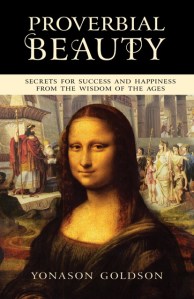
Order on Amazon today.
Proverbial Beauty, a new book on how to achieve happiness and success, offers a practical guide to changing our outlooks and our fortunes. Here’s an excerpt:
In a single, ringing phrase, Thomas Jefferson captured the essence of the American dream when he declared that all men have the right to “life, liberty, and the pursuit of happiness.” And yet, despite Mr. Jefferson’s noble sentiments and laudable achievements, the enduring lyricism of his words spawned an epidemic of confusion and despondency that continues to spread like pestilence through western society.
How precisely does one pursue happiness? We may pursue wealth, pursue fame, pursue gratification of one form or another. But the fiction of pursuing happiness has become a collective obsession that consumes our lives, either by goading us into chasing impossible dreams or by tarnishing the quality of our existence with unwarranted regrets.
Before we set off in pursuit of anything, we ought to know what it is and how to get it. Like many other words and expressions, we toss about the word “happiness” without really knowing what we mean. The definition seems obvious, but the inconvenient truth is that we really have no idea what we’re talking about.
So what is happiness, and how does one get it?
Read the whole excerpt here:
http://www.jewishworldreview.com/0815/Goldson_pursuit_of_happiness.php3

Email of the Week — The Haircut
 Blessed are those that can give without remembering, and take without forgetting.
One day a florist went to the barber for a haircut. When the barber finished he said to the florist, “I can’t take your money: I’m doing community service this week.” The florist was pleased and left the shop.
When the barber went to open his shop the next morning, there was a Thank You card and a dozen roses waiting for him at his door.
Later, a policeman came in for a haircut. When he tried to pay his bill, the barber again explained, “I can’t take your money: I’m doing community service this week.” The officer was happy and left the shop.
The next morning when the barber went to open up, there was a Thank You card and a dozen donuts waiting for him at his door.
Then a Congressman came in for a haircut. “I can’t take your money,” said the barber once again. “I’m doing community service this week.” The Congressman was very happy and left the shop.
The next morning, when the barber went to open up, there were a dozen Congressmen lined up waiting for a free haircut.
And that, my friends, illustrates the fundamental difference between the citizens of our country and the politicians who run it.
As Mark Twain said:
Both politicians and diapers need to be changed often, and for the same reason.
Hat tip: Mom and Ginny Harrigan

Embrace Illusion
We see what we want. We don’t see what’s right in front of us. We need to learn how to look if we want to see what we’ve been missing.
Time — 4:13
 Yonason Goldson