Home » Posts tagged 'Values' (Page 39)
Tag Archives: Values

The Art of Moving Forward

All around us is deception. Activity masquerades as action. Desire masquerades as direction. Preoccupation masquerades as love.
The Hebrew word yoda means knowledge. It also means intimacy.
Without knowledge, there can be no intimacy. Without closeness, there can be no knowledge. Without trust, there can be no closeness.
Speak Truth to Powers
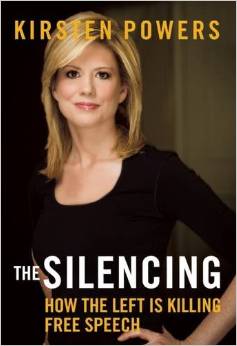 How refreshing that there are people like Kirsten Powers in the world.
In her new book, the outspoken, unapologetic liberal Democrat has taken aim at the militant search-and-destroy tactics employed by many liberals to shut down civil discourse and bully ideological opponents into submission.
Not surprisingly, many on the left have turned their attacks upon Ms. Powers and her book, proving her point by doing exactly what she accuses them of doing.
The intellectual laziness of groupthink lies at the heart of the deep divisions that are tearing this country apart. If more people would listen — listen to each other, and listen to Ms. Powers’s message — America might start turning back toward a culture of problem-solving and away from character assassination and political dogma.

How will we survive the drone culture?
I haven’t read this entire excerpt, but the rise of the drone raises more questions than the obvious ones concerning basic morality and “rules of engagement.”
 At the end of the movie classic “Patton,” the general responds to a reporter’s question about the “wonder weapons” of the coming era:
“Wonder weapons? By G-d, I don’t see the wonder in them. Killing without heroics? Nothing is glorified? Nothing is reaffirmed? No heroes, no cowards, no troops, no… generals. Only those who are left alive, and those who are left… dead. I’m glad I won’t live to see it.”
The message here is not the glorification of warfare. What Patton understood is that conflict brings out the true essence of a person. Cowards are revealed as cowards, providing the opportunity for reappraisal. Heroes are not merely revealed… they are created through their engagement on the field of combat. The heat of battle requires them to tap into unrealized potential.
This doesn’t require a battlefield of armies. It does require that we take up arms against our lesser selves and strive to conquer our baser impulses and inclinations. It demands that we grapple with the complex issues of good and evil and not take refuge in political slogans or groupthink.
In a culture of automation, we have a harder fight not to become automatons ourselves. We can comfortably join the army of drones, or we can meet the challenge, rise to the occasion, and emerge victorious as heroes.

Collateral Damage from the Grievance Industry
In a deeply insightful column, Thomas Sowell offers an observation that should be obvious to everyone:
 “[C]ommunities scattered across the country were disrupted by riots and looting because of the demonstrable lie that Michael Brown was shot in the back by a white policeman in Missouri — but there was not nearly as much turmoil created by the demonstrable fact that a fleeing black man was shot dead by a white policeman in South Carolina.” (Emphasis added.)
Mr. Sowell goes on to make the point that the grievance industry cares about neither truth nor justice. A guilty white cop indicted for killing an innocent black man isn’t newsworthy; an innocent white cop exonerated for killing a black criminal is cause for moral outrage.
And this is what is all comes down to: self-serving leaders and rabblerousers want outrage. They want to rail against the unfairness of it all, against the gap between rich and poor, against the indignity of stop-and-frisk, against the “legacy of slavery.” What they don’t want is to search for solutions, much less find them. That would mean an end to the victim-culture that has allowed them to exploit the disadvantages of their own brethren for their own profit and power.
“In a world where the truth means so little, and headstrong preconceptions seem to be all that matter, what hope is there for rational words or rational behavior, much less mutual understanding across racial lines?”
Let’s hope Mr. Sowell’s lament isn’t the sad epitaph for any hope of achieving, or restoring, a civil society.

Don Draper and the Illusion of Influence
Mad Men is coming to an end, concluding a luminescent seven-season run that began in 2007. But the show was into its third season before I first heard the name Don Draper.
I guess that proves hopelessly I’m out of touch with contemporary culture — a term that has increasingly become an oxymoron.
 Nonetheless, I can’t say that I was embarrassed in 2009 to have never heard of the personality voted Most Influential Man in America. What mortified me far more was to find myself living in a society that could consider a fictional character to be its most significant public figure.
I had to strain my memory to place that year’s first runner-up, track star Usain Bolt. I’m still straining my powers of reason to comprehend why a Jamaican sprinter should have been considered the most influential real person in United States.
Number three on the list was President Barack Obama. I had heard of him, and it’s hard to argue that the president is not supremely influential in his own country, no matter what one may think of his policies.
The rankings lay in the hands of readers polled annually by AskMen.com, a website (of which I had also never heard) devoted to men and their lifestyles. Topping the list as well were, in order: Facebook CEO Mark Zuckerberg, American Idol judge Simon Cowell, late pop star Michael Jackson, Apple CEO Steve Jobs, tennis champion Roger Federer, quarterback Peyton Manning, and Ultimate Fighting Championship president Dana White.
But grabbing the most votes was Don Draper, lead character in the Emmy-winning drama Mad Men. And for the first time in the poll’s history, the most influential man in American does not actually exist.
According to Reuters, AskMen.com editor-in-chief James Bassil explained the vote this way: “One of the big themes this year was that men really want to take on these traditional roles — as fathers, working men, provider at home, leader at the office. I think they are yearning for what is a solid past.”
That would be a comforting thought … if it were actually true. Indeed, one wonders if Mr. Bassil has watched the show or read his own magazine.
The AskMen.com website had this to say: “[Draper is] a postwar archetype, both a brilliant career man and a temptation-swayed philanderer who sincerely wants to be a family man… permanently conflicted over how to reconcile his morals and his desires.” The website for Mad Men describes the show as a “sexy, stylized and provocative drama [that] follows the lives of the ruthlessly competitive men and women of Madison Avenue advertising, an ego-driven world where key players make an art of the sell.”
Were that not enough to debunk Mr. Bassil’s rose-colored analysis, the list of the top ten winners is more than enough. Celebrities, athletes, billionaire businessmen, and an ideologically far-left president hardly reflect a trend back toward traditional values.
 In truth, the evidence suggests just the opposite, that Americans are increasingly obsessed with glitz and glamour, with power and wealth, with conquest and ego-gratification. The sad moral of the story was that the poll-winners are genuinely influential in steering our society toward superficial hopes and unrealistic dreams. How fitting that the most influential man was not only a fictional character, but a profoundly flawed and ambivalent one at that.
The bright side of the story, however, is that the poll revealed the attitudes and aspirations not of Americans as a whole but of AskMen.com readers. If the publication is anything like its forerunners, Playboy and GQ, it is hardly a fair representation of the country. Indeed, it would seem to say more about the inner conflict of testosterone-driven alpha males than those typical family men who may already be living — not merely yearning for — traditional values.
I never have watched the show, so I can’t comment on where the main character’s ambivalence has led him over the years. But it seems a good bet that those acolytes of Don Draper (and his real-world alter-egos) are likely to end up leading similarly conflicted lives, following him into the oblivion of the world of illusion.
Whereas those who live their lives according to traditional values understand that it is those very values that teach us the difference between good and evil, between truth and falsehood, between reality and illusion. Without the fantasy of Hollywood or the glamour of Madison Avenue, theirs are the lives of real substance and enduring reward.

Fighting for whose rights?
Here we go again.
Socrates gave up his life for the ideal of pure wisdom. Galileo was threatened with torture for his commitment to scientific truth. Nelson Mandela spent 27 years in prison for his campaign to end apartheid.
 And now, attorney Steven Wise is seeking to be the next torchbearer for virtue and justice by seeking legal personhood for two chimpanzees currently deprived of their primatial integrity by incarceration in the anatomy department of New York’s Stony Brook University. Mr. Wise has even found a judge willing to hear his case.
This is a natural outgrowth of our collective obsession with rights and entitlement which has, proportionally, shrouded our notion of personal responsibility. A healthy culture recognizes that it has a moral obligation to show compassion to all living creatures. But as the very concept of morality flickers and fades from social consciousness, only the assertion of rights prevents the rapid disintegration of society.
And as we lose our sense of responsibility, the distinction between man and animals grows harder to define until, ultimately, it all but disappears. In California, the “rights” of a little fish trump the welfare of humans: crops wither in arid fields during the worst drought on record as the state dumps trillions of gallons of fresh water into the ocean.
It’s worth noting that in 1933, two years before the Nuremberg Laws stripped German Jews of both civil and human rights, the Nazi government passed some of history’s most progressive laws for the protection of animals, legislation considered emblematic of the highest moral values of a people.
Elevating animals to the level of human beings inevitably results in human beings acting worse than animals.

Enjoy the little things
 Children grow up. Friends move away. Parents pass on.
We miss out on sunsets, and sunrises; we miss out on walks in the woods and float trips on the river. And we can’t even remember the reason for the fits and fights and pity parties that seemed so justified at the time.
It should be obvious what’s really important. But we find so many ways to rationalize the irrational.
Stubborn, aren’t we?
So smile more, give more compliments, hug your kids, call your parents, take time out for friends.
Sure, it’s all a cliche. But after all, don’t cliches become cliches because they’re true?
The New Narcissism
 Have we finally reached the point where narcissism is no longer an epidemic but an institution? Is this the legacy of the “Me Generation” of the ’70s, bequeathing a cultural norm of such enormous self-absorption that self-absorption has itself become a virtue?
Joe Holleman asks the question. I fear that the answer is self-evident. The mantra of our generation has become:
Ask not what you can do for others; ask what you can demand that others must do for you.

Can you be Good Without God?
 Most of us consider ourselves good people. We want to live moral lives, want to do what’s right, want to earn the respect of others. Our intentions are almost always good. But we all know about a certain road paved with good intentions.
So how do we figure it out? We try to follow the law, but the law is written by imperfect human beings, and every day we read in the headlines about some miscarriage of justice perpetrated by the very system that is supposed to ensure that justice is done. We try to listen to our conscience, but our neighbor’s moral compass points south and ours points north.
Historically, man has turned to religion, but there too the headlines are filled with disillusionment, and history records countless atrocities perpetrated in the name of heaven. And even when we manage to achieve moral clarity, in the next moment temptation presents itself and our heartfelt resolutions fly out the window.
 Yonason Goldson