Home » Posts tagged 'Wisdom' (Page 29)
Tag Archives: Wisdom

One step closer to Eden
Awake from the north and come from the south! Blow upon My garden and let its spices flow. Let My beloved come to his garden and partake of its precious fruit.
— Song of Songs 4:16
Would the world be better off without mankind?
Many environmentalists think so. It’s hard to deny that, from a purely ecological point of view, life on earth would do much better without human beings around to interfere with the natural order.
But without mankind, there would be no point and, ultimately, no reason for the world to exist at all. Only Man seeks to create; only Man strives to become more than he is; and only Man directs his efforts toward ideals that transcend mere survival and procreation.
If we are to act as responsible custodians of the world, however, we have to stop from time to time and let the world remind us what those ideals are.

In the late 1800s, the great Rabbi Samson Raphael Hirsch announced his plan to travel from Germany to see the storied mountain ranges of Switzerland. This was entirely in keeping with Rabbi Hirsch’s philosophy of integrating worldly knowledge and experience into his religious outlook. That being said, the incomparable leader of Orthodox Jewry was well into his seventies, seemingly much too old to undertake such an adventure.
Some of the rabbi’s closets acolytes questioned the wisdom of embarking on such a strenuous journey at his advanced age. The rabbi replied that it was precisely because of his age that he felt it necessary to go.
“I may not have much longer to live,” explained Rabbi Hirsch. “And when I stand in judgment upon my arrival in the World to Come, what will I say when the Almighty asks me, “Samson, why did you not see My Alps?”
Rabbi Hirsch understood what we too easily forget: That the wonder and beauty of the world are here for us to experience, for us to enjoy, and for us to find inspiration in the masterful Hand that fashioned all of Creation.
But North Americans need not travel to Switzerland to find their inspiration. Within our own borders we have the “American Alps.” That’s what Louis Hill, president of the Great Northern Railway, called the mountains of Glacier National Park. It was Hill who found the region so extraordinary that he lobbied congress to designate Glacier as a national park in 1910. And it was Hill who influenced the Alpine design of the park’s hotels and facilities to echo the mountains’ namesake across the sea.
Even from the same continent, getting to the park in northern Montana is no simple matter. My wife and I flew into Spokane, Washington, then rented a car and began to drive, first across the Washington border, then through Idaho, and ultimately into Montana. The roads were mostly straight and flat as the miles sped by; it took us six hours just to reach the outskirts of 1,583 square-mile wilderness. But as my own rabbi likes to say, the best things in life are rarely found on the beaten path.
Click here to read the whole article from this month’s Wagon Magazine.

Don’t count down — count up
 Between Passover and the festival of Shavuos (Pentacost, celebrating the Almighty’s revelation at Sinai), tradition calls for every Jew to count the days and the weeks connecting the freedom of the exodus from Egypt with the responsible application of that freedom.
These seven weeks are a time filled with opportunity for personal growth, beginning with the awareness that little changes can add up to extraordinary transformation.

Your dog doesn’t love you — get over it
 Okay, I’m guilty.
As a high school teacher, I strive to maintain a persona of impeccable professionalism every moment of every day. Almost.
On rare occasions, however, when I can no longer resist the impulse to really get under my students’ skin, I indulge a streak of sadism and utter those few words guaranteed to enrage even the most mild-mannered teenager.
Are you ready? This is what I say:
“Your dog doesn’t love you.”
And I don’t stop there. Pausing a few seconds to allow the full measure of indignation to begin boiling over, I follow up with:
“And you don’t love your dog.”
I have plenty of ammunition in my arsenal to defend my point. But in addition to the logic of my argument, I now have a current study that supports my claim.

Giving offense vs. taking offense
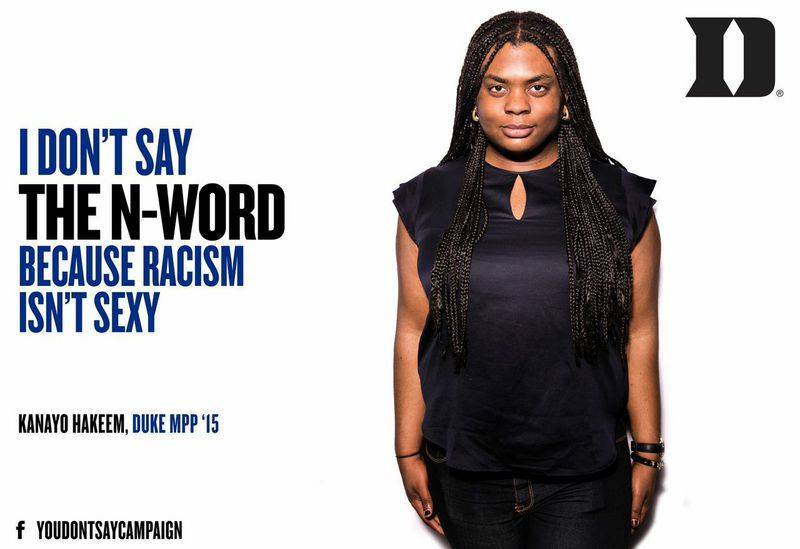 The political correctness police were out in force recently, correctly censuring Larry Wilmore for his use of the N-word and insanely condemning Hillary Clinton for uttering the words “off the reservation,” perceived as demeaning to Native Americans.
Starting with Mrs. Clinton’s turn of phrase, we might as well excise from the the lexicon of acceptability words such as “nosy” because it might offend people with large noses, “insightful” as insulting to myopics, “high-minded” as defamatory of marijuana users, and “thin skinned” for denigrating hemophiliacs. If we want to find reason for taking offense, we can find it everywhere.
The more noteworthy incident was Larry Wilmore’s use of the N-word at the White House Correspondents’ Association dinner, and his directing it toward the President of the United States, no less. Clearly the remark was intended to be affectionate and laudatory, which is how it was taken — without offense.
But that’s not really the point. In a society that is growing simultaneously disrespectful and intolerant of disrespectful speech, we need to elevate public discourse, not sink deeper into the gutter. If the N-word is too offensive to be broadcast — even news anchors reporting the story weren’t permitted to repeat it in quotation marks — then it is certainly unacceptable to be used in the presence of our president or, even worse, said to him.
Frankly, I’m more concerned by the use of President Obama’s first name, and his nickname at that. Maybe Mr. Obama and Mr. Wilmore are on a first-name basis. But in a formal context, such familiarity is utterly disrespectful from anyone other than a spouse, parent, or sibling.
This is the real threat of political correctness. It’s not just that we take offense in all the wrong places. It’s that we lose all sensitivity for the difference between what is respectful and what is disrespectful, we lose all sense of priorities, and we forget that refinement is a value. Nothing matters except the applause, the laugh, the ratings, and the votes.
This is why the same people who took offense at Mrs. Clinton’s use of “off the reservation” have no reservations about her pathological pattern of telling lies and misrepresenting political adversaries.
This is why our political and social institutions are in chaos.
And this is what we are teaching our children.

Spitting Image 3:1 — A Journey of a Thousand Miles…
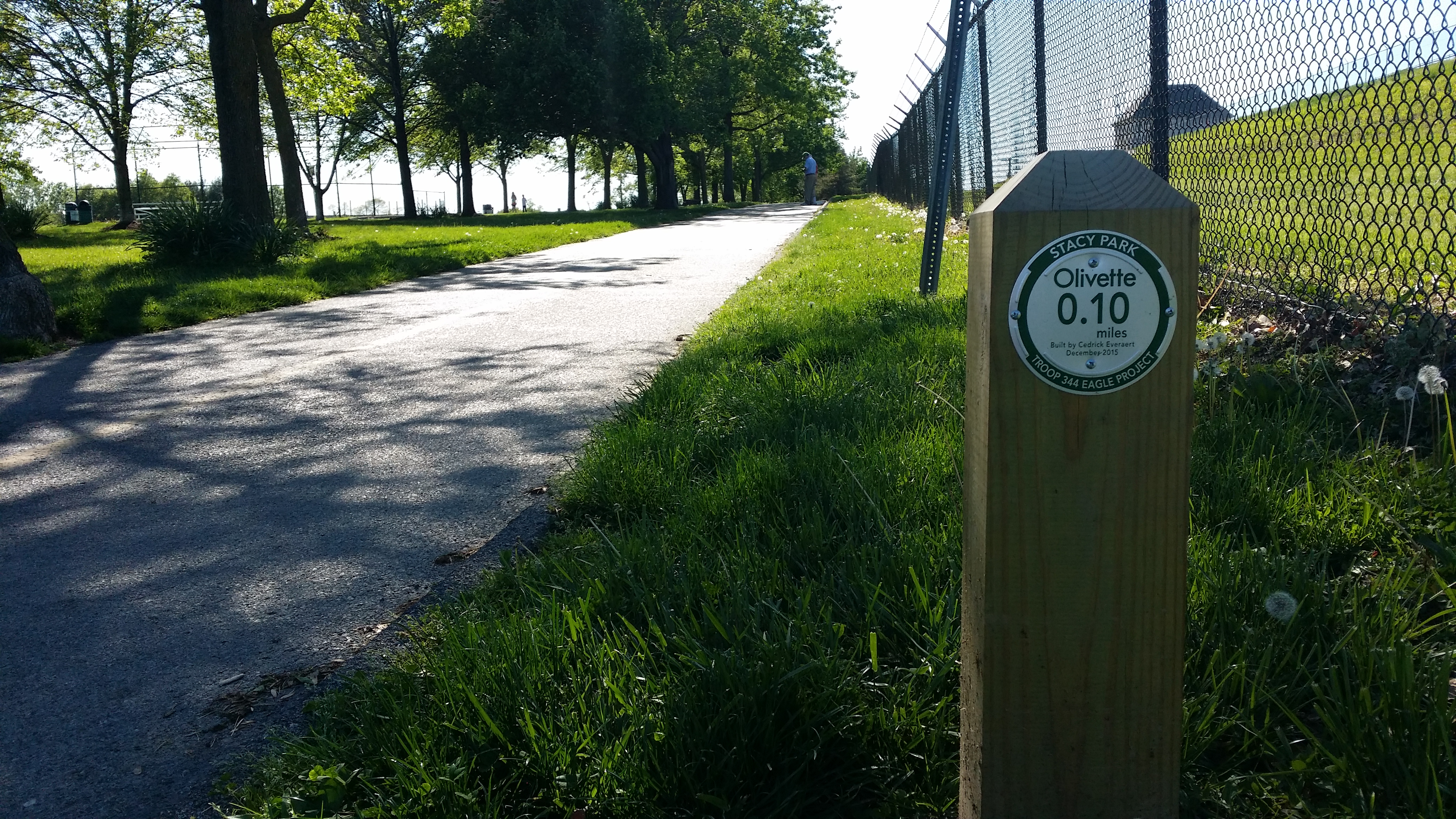 The road beckons, and our heart longs for adventure. But the way is long, and who knows what might befall us along our journey?
How many times have we turned back, turned aside, or given up before we’ve given ourselves time to either succeed or fail? How many opportunities have we missed, how many victories have we left unwon, how many heroic failures have we traded for cold comfort and abandoned hopes?
All beginnings are difficult, say the sages of the Talmud. And when we concede the race before we start, all we have left is a scrapbook of empty dreams.

Passover, Freedom, and the War on Culture
 The responsibilities of freedom, the history of freedom, and the culture wars that threaten the values and the foundations of civilization.
Listen to my interview on the Bill Martinez show (interview begins at 33:00).

Passover and the price of freedom
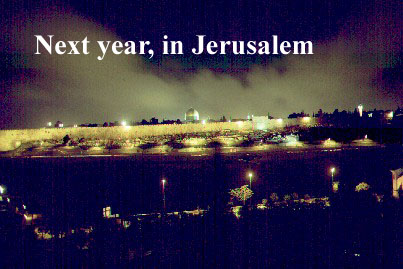 This Passover, let us all reflect upon the value of freedom, the price of freedom, the responsibilities of freedom, and the cost of taking freedom for granted. Only by standing strong against the forces within and without that never stop trying to enslave us will we remain free.

The Five Cups of Passover Wine?
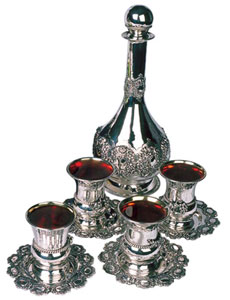 As everyone knows, on the first night of Passover we eat matzah and bitter herbs, we recline at the table, and we drink five cups of wine.
Five cups of wine? We drink four cups of wine, don’t we?
Well, that depends whom you ask.
Of course, it really is only four cups that we drink at the Passover seder. Acceptance of this practice, however, has not always been universal. Rather, it evolved as the best possible compromise between two contradictory Talmudic traditions. And only by going back to the root of the custom can we fully appreciate the relevance of our annual reenactment of the Exodus from Egypt.
The four cups of wine reflect four separate phases that concluded with the Jewish people’s transformation from Egyptian slaves into a free and autonomous nation. Within the narrative of the Exodus itself, four different expressions of redemption allude to the process through which the Jews attained their freedom — a freedom that was not born in an instant, but only as the culmination of four distinct and imperative stages.
Vehotzeisi. And I will take you out from the burdens of Egypt. Although Pharaoh endured ten plagues before he sent the Jews forth from Egypt, only half that many persuaded him to release them from their labors. This enabled the Jews to adjust to independence, to learn what it meant to make their own decisions before the time when they would be held accountable for the choices they would make.
Vehitzalti. And I will rescue you from their service. A slave whose master makes no demands upon him is still a slave. Having already been exempted from their labors, now the Jews were prepared to face the challenges of real freedom.
Vegoalti. And I will redeem you with an outstretched arm. History teaches us that freed slaves often fail to make the adjustment from slavery to freedom. The culture of slavery may be so deeply rooted in their psyches that they cannot succeed as free people. Similarly, the Jews needed divine assistance to purge their hearts and minds of the corrupt values of Egyptian culture, foreshadowing the way Jews all through history have had to struggle against the corrosive influence of foreign ideologies.
Velokachti. And I will take you to Me as a people. Once liberated from the physical and psychological bondage of Egypt, the Jews still faced the subtle dangers of unrestricted freedom. Only with a sense of identity and purpose, only with a clearly defined national mission, could the Jews emerge from cultural anarchy to embrace true freedom.
But there remains one final expression in the narrative of our collective transformation from slaves to free people: Veheiveisi. And I will bring you into the land. As a free and sovereign nation, could the Jewish people begin to fulfill their mission even before they established themselves in their land, in Israel? Or is it impossible for us as Jews to consider ourselves truly free while we remain exiled from our ancestral homeland? This is the essence of the debate whether we drink four or five cups of wine.
 What is our conclusion? We have none. We simply don’t know. However, we do know that we have to drink at least four cups. So that is what we do, then wait for Elijah the Prophet to come, not to drink the fifth cup, but to tell us whether or not we should drink it ourselves.
But some of us refuse to wait for Elijah to affirm our commitment to the Holy Land. This year, like every year, hundreds of Jewish high school graduates from around the country will defer their first year in college to study Jewish tradition and Jewish law in the land from which we are exiled. No threat of terrorist violence has been able to dissuade these young men and women from renewing their connection to the the heritage and land of their ancestors.
And, perhaps even more impressive, their parents have set aside their own fears and their own worst nightmares to encourage their children to travel half way around the world to pursue their highest calling: to rise to the challenge of Jewish freedom.

Passover: the Illusion of Freedom
 After generations of slavery and oppression, amidst miracles unprecedented and unrepeated, the Children of Israel marched forth out of Egypt and into the wilderness as a free people for the first time in their collective memory. Fifty days later they stood together at Sinai to receive the Torah — the code of 613 commandments that would define every aspect of their lives.
What happened to freedom? What happened to the promise of redemption when all that really happened was the trading of one master for another?
Much of the modern world has built its understanding of freedom upon Thomas Jefferson’s famous formulation of “life, liberty, and the pursuit of happiness.” But what would life be like in a society of unrestricted freedom? How many of us would choose to live in with no rules at all, where everyone was free to drive on either side of the road, to take whatever they desired regardless of rightful ownership, to indulge every whim and impulse without a thought of accountability? The absolute “freedom” of pure anarchy would provide no protection for the rights to life, liberty, and the pursuit of happiness. Consequently, it would provide no freedom at all.
Intuitively, we understand that some freedoms have to be sacrificed in order to preserve order and ensure the common welfare. If so, we are forced to refine our concept of freedom. In contrast to ancient Egypt, in which our ancestors were coerced by the rod and the whip to bow before Pharaoh’s will, the G-d of our redemption allows us the freedom from immediate retribution. By doing so, the Almighty empowers us with the freedom to make our own choices, to take responsibility of our own actions, and to transform ourselves from creatures of physical impulse into beings of spiritual refinement.
Ultimately, the freedom we possess is the freedom to choose our own master, to choose the leaders and system of laws that will best serve our collective interests in the long run.
Because we live in a society with others who also demand freedom, our choices will necessarily be limited by the conventions of society. More significantly, the values of the society in which we live will shape our own attitudes, influencing the ways we think that priorities we hold dear. From the moment we are born, our impressions are determined by others: our parents, our teachers, and our peers, as well as writers, celebrities, sports stars, and advertisers.
How often have we asked ourselves whether the ideas that govern our choices as spouses, as parents, and as community members are truly our own? How often do we stop to reflect whether we have acquired the values that guide us in our relationships and our careers through thoughtful contemplation or through cultural osmosis?
The illusion of freedom convinces us that our own gratification comes before our obligations to others, before even our obligations to ourselves. If we allow our desire for unrestricted freedom to steer our lives, we will find ourselves enslaved by our desires no less than a chain smoker is a slave to his cigarettes or an alcoholic is a slave to his gin. Convinced that freedom is a goal in itself, we will sacrifice everything of true value for the cruel master of self-indulgence. Deceived into believing that responsibility is the antithesis of freedom, we will invest ourselves, consciously or unconsciously, in philosophies like this one:
Freedom’s just another word for nothing left to lose, Nothing don’t mean nothing honey if it ain’t free, now now. And feeling good was easy, L-rd, when he sang the blues, You know feeling good was good enough for me, Good enough for me and my Bobby McGee.
These are the words that made Janis Joplin into a counterculture idol, before she died of a heroin overdose at the age of 27.
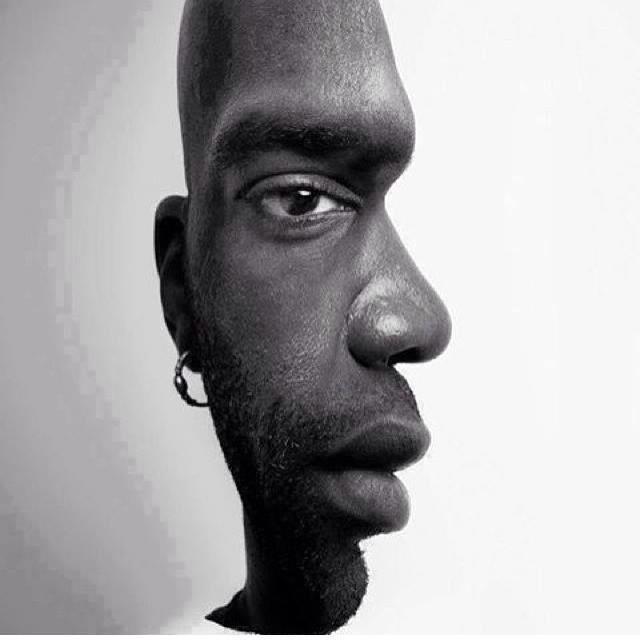 Less dramatic examples confront us every day. Politicians, movie icons, and athletes destroy their careers and their family lives for a few fleeting moments of pleasure. Parents allow their children to grow up without direction or discipline lest they quash their creativity or damage their egos by imposing structure and meaning upon their lives. A once-productive citizenry increasingly looks to receive support on the backs of others, whether through welfare, lawsuits, or pyramid schemes that leave countless victims footing the bill.
More than anything, Passover celebrates the freedom to think, to take stock of our lives and reassess our values, to take a fresh look at our own motivations and our own decisions, to acknowledge where we may have lost sight of truly meaningful goals and sincerely commit ourselves to striking out on a truer course.
Last year we were slaves to our inner masters; this year we have a chance to set ourselves free to seek the paths of truth and follow them toward the destination of enduring spiritual redemption.
Passover and the First Holocaust
After yesterday’s terrorist bus bombing in Jerusalem, the first in years, Jews around the world felt the painful reminder of our precarious place among nations dedicated to our destruction. With the Passover festival approaching, these thoughts from 2005 remind us that Holocaust is not a phenomenon of the last century, or even the last millennium.

The extermination of six million Jews in the Nazi death camps represents but the most recent in a long history of Jewish holocausts. It was preceded by the Chmielnicki massacres in 17th century Poland, the Almohad massacres in 12th century Spain, the Inquisition and the Crusades and the relentless spilling of blood by the Roman legions — all these and similar chapters in the long, brutal history of attempted genocide against the Jewish people.
When did it all begin?
According to Jewish tradition, it began 3328 years ago, when nearly two and a half million Jews died in a single night.
It was the beginning of the plague of darkness, the penultimate blow in the systematic destruction of the Egyptians and their empire. Pharaoh had already released his Jewish slaves from their oppressive labor midway through the cycle of plagues, driven by the desperate hope that he could appease the G-d of the Jews. But he refused to grant them permission to leave.
For some Jews, the relaxation from their burdens offered an opportunity to reflect upon the responsibilities of freedom and the opportunity that had been promised them to build their own nation. For others, however, it gave time to grow comfortable in the paradise that was Egypt, to adopt an attitude of entitlement for their new-found prosperity, to forget that freedom is never free.
During their 210 years as slaves in Egypt, the Jews had gradually absorbed the corrupt values of that culture, its idolatry and its immorality, retaining only their names, their language, and their style of dress to set themselves apart from their Egyptian hosts. With no merit to deserve divine redemption, the Jewish people received their exodus on credit, credit to be repaid by accepting the Ten Commandments at Sinai and committing themselves to the higher moral and ethical standards of G-d’s chosen people.
600,000 Jews — 20% of their total number — accepted these terms, preparing themselves psychologically and physically to exchange the comfort and familiarity of Egypt for the uncertainty of the empty desert. Four times as many rejected the condition, refusing to make good, as it were, on the credit extended them from heaven, convincing themselves that, with the Egyptians humbled and the yoke of slavery removed from their necks, they could void their contract with the Almighty and remain unencumbered in the land of their former servitude.

David_Roberts-IsraelitesLeavingEgypt_1828
The human condition, however, is never static. One who stops growing immediately begins to die; one who stops moving forward instantly begins to slip backward. There is no standing still, no place to rest in this restless world, and the 2,400,000 Jews who thought to deny their destiny, who imagined they could stop the sands of time and were buried by them instead.
The fate of the 80% was not divine vengeance; it was spiritual inevitability. To survive for thirty three centuries, the Jewish nation would have to appreciate that it had no alternative other than survival. Assimilation, conversion, or abdication of Jewish identity may at times have seemed an attractive option to the burden of living as Jews, but the consequences of spiritual extinction are every bit as grave — indeed, much more so — than those of physical extinction.
Ask the Spanish Jews who converted to Christianity, only to be called marranos — pigs — by their Christian brothers and to be burned at the stake in the auto-de-fe of the Inquisition, if their abandonment of Jewish identity was worth the price. Ask the assimilated German Jews stripped of their property, forced to wear yellow stars, and incinerated in Nazi crematoria if they met a better end than those who refused to disavow their Judaism.
Indeed, the narrative of the exodus testifies that, as the Jews prepared to leave the ruins of Egypt after the plague upon the firstborn, “the Almighty gave the people favor in the eyes of the Egyptians.” As slaves forfeiting their identity within Egyptian society, the Egyptians regarded the Jews only with disdain. Once the Jews began to act with Jewish dignity, their former oppressors could not help but respect them.
And so it has been ever since. When we live as Jews, the rest of the world respects us for our values and our conviction. When we shirk our responsibility as upholders of morality to accommodated the ever-changing moral whims of the world around us, we bring upon ourselves nothing but suffering.
The freedom we celebrate at Passover is the freedom to remain true to who we are, who we always have been: The nation that introduced the world to the very concept of freedom, and the nation which has shown the world through the ages that the price of freedom is far less dear than the price of forsaking it.
 Yonason Goldson