Home » 2016 (Page 16)
Yearly Archives: 2016

Spitting Image 1:1 — Long Island Iced Tea
Looking at ourselves reflected in the mirror of headline news
 An Egyptian military court sentenced a 3 1/2 year-old boy to life in prison for murdering three people — two years ago, at age one. Apparently, the court confused the boy with his 51 year old uncle.
A 16 year-old Swedish girl was rescued from ISIS, where she had been held captive after she traveled to Syria with a boyfriend she met online. ” I don’t know anything about Islam or ISIS or something,” the girl explained, “so I didn’t know what he meant. Then he said he want(ed) to go to ISIS, and I said OK, no problem.”
Republican party voters are poised to nominate a cartoon caricature of a candidate who has no chance of winning the general election… or, even worse, might actually win.
Star Trek fans are all abuzz with excitement over the prospect of the forthcoming movie including the character of Demora, daughter of Hikaru Sulu from the original series.
According to Amnesty International, human rights deteriorated globally over the course of 2015, much to nobody’s surprise.
I’ll date myself here, as I imagine these headline stories read by Chevy Chase of the original Saturday Night Live cast, along with the perennial breaking news that Generalissimo Francisco Franco is still dead.
Equal parts of the surreal, the maddening, the farcical, the tragic, and the inane mix together in a cocktail akin to Long Island Iced Tea, blending five toxic shots into an innocent-tasting libation of bizarre banality that leaves your head spinning before you get to the end.
The inability of our culture to discern reality from illusion is what allows evil free rein. And the problem grows more acute, literally from day to day.
If we want to reclaim clarity, we have to start by wanting it a lot more urgently.

The Devil can’t make you do it
 Hey, mom. Post-partum depression got you down? Thinking of leaving your husband? Don’t fight it; just let him go. After all, it’s not your fault.
It’s your hormones. That’s the latest from the world of science. According to psychologist Jennifer Bartz of McGill University, researchers have identified a link between new parents divorcing and low levels of oxytocin.
Whatever the explanation, there seems to be a familiar eagerness by researchers to impose a chemical, as opposed to a psychological, explanation upon human behavior. Scientists often appear to prefer a model that links our choices to biological and evolutionary causes, further disassociating human decision-making from that most obvious explanation — free will.

Is Ted Cruz to blame?
 This isn’t about politics. It’s not even about Ted Cruz. It’s about life.
If you want people to trust you, you have to appear trustworthy. All the more so if you’re going to accuse your opponents of dishonesty and make TrusTed your campaign slogan.
Senator Cruz did the right thing — the only possible thing, really — by firing top aid Rick Tyler for his role in circulating a video falsely accusing Marco Rubio of disparaging the Bible.
But it may be too late for damage control. Because the question everyone’s asking is this: whether or not Ted Cruz knew about or approved of the video, was Rick Tyler only doing what he thought his boss would want him to do?
I’m not suggesting that I know the answer. I’m only underscoring the urgency of the question. And I’m offering this historical precedent.
After leading the Children of Israel to victory in the battle against Jericho, Joshua received a message from the Almighty accusing the entire Jewish people of having lied, stolen, and violated their covenant with the Divine.
In fact, it had been one person who had stolen one object from the banned spoils of war — and this without any other person even knowing of the perpetrator’s actions. If so, why was the entire nation condemned as if they were complicit in the crime?
The answer is simple: the thief would never have committed his act of thievery unless he believed that he would be able to get away with it. Had there been a sufficient awareness of social conscience, had there been a palpable sense woven into the fabric of Jewish society that no one would tolerate his crime, the would thief never have dared to reach out his hand to take something that was not his.
Because an atmosphere of moral complacency permeated the national culture, the entire nation was held accountable for the actions of one man.
If we want to live in a society governed by integrity and character, we have to hold others to a high standard of personal behavior. But that only works if we hold ourselves to an even higher standard, and show the same disdain for corruption toward our friends as we do toward our enemies.

Article of Faith: Victims and Survivors in Kalamazoo
Last Saturday evening, according to CNN, the Michigan shooter drove through the streets of Kalamazoo for seven hours, firing at eight people in different neighborhoods and killing six of them. In between attacks, he picked up and dropped of Uber passengers without incident.
 “There isn’t a connection that we’ve been able to establish between any of the three victim groups with each other, any of the three victim groups with the defendant,” said Michigan prosecutor Jeffrey Getting.
What could these victims have done to protect themselves? Why were the survivors chosen for life and not for death? The natural conclusion is that the world is a place of randomness, where we are left to the hands of fate without rhyme or reason.
Amidst all the pain and confusion, is there any way for us to confront the presence of evil in our world and the persistent appearance of disorder without retreating into bitterness and despair?
As we mourn and look for answers, I’d like to offer these thoughts from 2009.
Every night, most of us go to bed without questioning whether we’ll wake up the next morning or whether the sun will rise in the east. Every morning, most of us go to our front doors confident that our cars will start, that the trains will run, that our coworkers and customers will be respectively friendly, or sour, or aloof, each according to our expectation based upon experience.
Is this faith? Or is it rather the reasoned projection of logical extrapolation? Or is there a difference?
Over the past two decades, 50% more tornadoes have swept through the state of Illinois than the state of Alabama. Nevertheless, Alabama has suffered many more fatalities. An article in the journal Science has suggested the following explanation: Because people in Alabama tend to share the religious conviction that their destiny is in the hands of G-d, they resign themselves to the inevitability of Divine Providence. In contrast, people in Illinois more commonly believe that they are in control of their own destiny and masters of their own fate; consequently, they are more inclined to take action toward ensuring their own safety and welfare.
If correct, this analysis might imply that faith is vastly over-rated. If dependence upon the Almighty increases the likelihood of an early demise, perhaps we should all reject the notion of faith and conclude that God really does help those who help themselves.
Alternatively, we might re-evaluate our understanding of faith.
 The Hebrew word emunah — commonly translated as faith — is more accurately translated at faithfulness. It is less descriptive of our internal beliefs and more descriptive of our external behaviors. It describes not our feelings but the degree to which our commitment translates into concrete actions. Most significantly, it expresses our conviction that the Almighty keeps faith with us, even when we may fail to keep faith with Him.
Consider the husband on a business trip a thousand miles from home who resists the overtures of an attractive young woman in the hotel lounge, the teenager away at college who leaves a party when hard drugs start passing around, the lowly private who doggedly advances according to orders even when he is cut off from the rest of his company — all these are examples of faithfulness that endures even when human logic and fear of consequences offer no objection, even when peer-pressure urges us to abandon duty and loyalty. These are the truly unsung heroes, who set aside the relentless calling of self-interest and immediate gratification for nothing but the commitment to another person, to a code of honor, or to an ideal.
According to Jewish philosophy, our trust in the Almighty is not the “leap of faith” that comes from believing without logic or reason, but the confidence that comes from knowing that the Almighty has proven His faithfulness again and again over 3,300 years of uniquely supernatural history. It derives not from our faith that everything will turn out the way we want all of the time, but our certainty that everything is guided by Providence, and that the logic behind every divine edict is true and just — even when it is unfathomable to human understanding.
Finally, faithfulness does not require us, nor even advise us, to sit by passively and await the Divine Will to reveal itself before us. Rather, it requires us to act in our own best interest while adhering to the moral laws of God and man.
Almost everyone has heard the story of the clergyman forced to seek refuge on his rooftop by the rising waters of a flood. One boat comes and offers to save him, but he replies, “I have faith in God.” Another boat comes,and then another, but he refuses to accept help. Finally, a helicopter drops down a ladder and warns that they are the last of the rescuers. But the man of the cloth declares, “I have faith in God.”
The floodwaters continue to rise, and the clergyman drowns.
Upon arriving in the next world, he asks why, in spite of his devout faith, the Almighty did not save him. And God replies: “What did you want from Me? I sent you three boats and a helicopter.”
G-d does indeed help those who help themselves. But He ultimately rewards those who remain faithful, who recognize that there is both a time for taking matters into our own hands and a way to do so without compromising our faithfulness to the Master of the Universe. There is a time to live — through determined effort, with honor and dignity and self-respect. There is also a time to die — either when the cost of personal integrity becomes too great, or when one’s time is simply up, no matter how random the events that end a life may appear.
Learning to strike the perfect balance between determined effort and principled resignation is the work of a lifetime. It is also the key to achieving true faithfulness to God while taking comfort in the promise that, despite the illusion of chaos and the very real pain of loss, everything happens for a reason.
Originally published in Jewish World Review

My Interview with Bill Martinez

Click to hear my interview with syndicated radio show host Bill Martinez:
Double Standards and the Death of Civil Society
Interview begins at the 33:30 mark. Enjoy!

Double Standards and the Death of Civilization
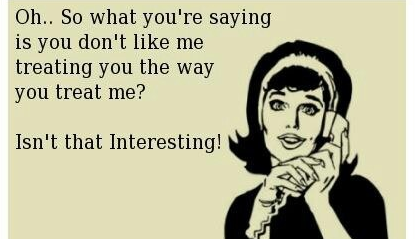 “Don’t say what you’re thinking.”
“It doesn’t matter how you feel.”
“Honesty is not always the best policy.”
It sounds terrible, doesn’t it? And yet modern society has created an entire value system based on these axioms. It’s called political correctness.
At the same time, however, there seems to be a freakish disconnect between the cultural extremes of political correctness and libertinism. On the one hand, the list of socially unacceptable words, phrases, and ideas keeps growing longer; on the other hand, regard for verbal filtering plummets in virtual free-fall.
At first blush, we might explain this away as an obvious consequence of competing ideologies and worldviews. Certainly, the popularity of Donald Trump and Ted Cruz can be understood as a natural reaction to the vacuous rhetoric of our elected officials, and to the farcical condemnation of benign comments and legitimate opinions as “hate speech” by the chattering classes. When a prominent university attempts to censor of words like mothering, fathering, and American as “microaggressions,” the inevitable consequence will be an equal and opposite reaction from the other side of the ideological divide.
But what is truly baffling are the offenses committed by proponents of political correctness themselves.

Christopher Hitchens: Almost a Hero
 It’s remarkable how we can develop a deep fascination, sometimes to the point of fixation, toward people we despise.
This is not particularly healthy: we gain much more by studying those who are worthy of our admiration and reverence, both as models for the refinement of our own behavior and as sources of inspiration that demonstrate the heights to which human nobility can soar.
But human nature produces an incessant magnetism toward the negative, no matter how much we may know better. So I couldn’t resist clicking on Daniel Oppenheimer’s recent retrospective* on Christopher Hitchens, one of my least favorite intellectuals.
I’m glad I did.

In Memorium
 Today marks the second anniversary of my father’s death. He was a man of unyielding principle and discipline, of meticulous honesty and unwavering standards. He had the ability to create an instant rapport with others and charm them without guile or manipulation, but he never seemed able to completely let down his emotional guard to truly connect. He could be hard, but he instilled in me a code of ethics and integrity that have formed the foundation of my sense of self and my worldview.
I wrote this tribute to him for Father’s Day in 2001:
Honor (is learned from) Thy Father

“A Special Place in Hell”
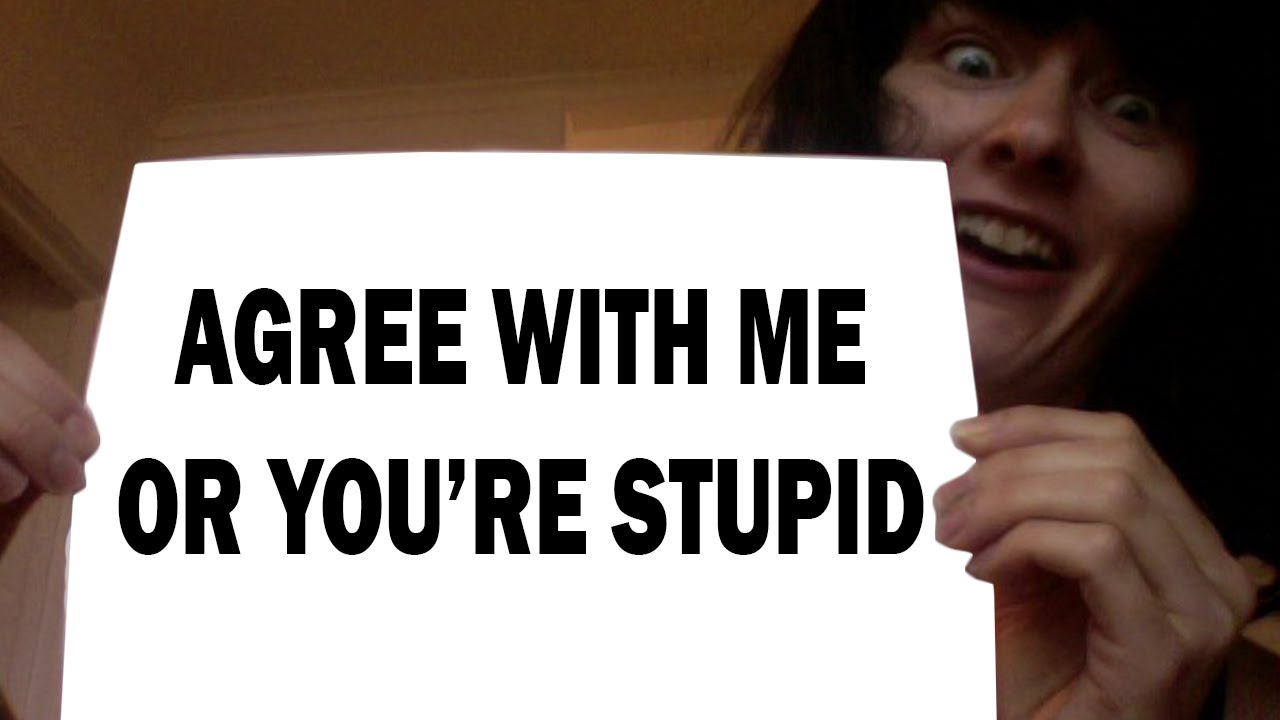 I am quoting. Don’t shoot the messenger.
In fact, it was Madeleine Albright, the first woman to serve as U. S. Secretary of State, who declared, “There’s a special place in hell for women who don’t help each other!”
Apparently, Ms. Albright believes that Hillary Clinton is either unworthy or incapable of winning the office of the president on her own merit. One has to wonder whether Ms. Albright also believes that she herself was appointed Secretary of State because of her sex rather than her abilities.
Feminist icon Gloria Steinem was close at hand to weigh in on the issue — predictably on the wrong side. “When you’re young, you’re thinking: ‘Where are the boys? The boys are with Bernie,’ ” sneered the crusader for women’s rights and dignity.
Just imagine if a man had said that. But so it goes in our age of unabashed double-standards.
In then, in classically Clintonesque style, the fearless former revolution tried to revise her message: “I misspoke on the Bill Maher show recently,” Ms. Steinem posted on Facebook, “and apologize for what’s been misinterpreted as implying young women aren’t serious in their politics.”
“Misspoke”? “Interpreted”? So what exactly was Ms. Steinem trying to say?
It’s heartening that at least some women are seeing through the smoke and mirrors.
“Shame on Gloria Steinem and Madeleine Albright for implying that we as women should be voting for a candidate based solely on gender,” said Zoe Trimboli, a 23-year-old self-described feminist from Vermont.
Indeed, that would be like suggesting that people voted for Barack Obama only because he’s black.
Wouldn’t it?
 Yonason Goldson