
Home » Articles posted by Yonason Goldson (Page 49)

Author Archives: Yonason Goldson

The Key to Personal Success… Just Ask!

ask_questionsDoes this sound familiar?

You’re running out the door to take your wife to the airport, only to discover you have a flat tire.  You don’t have time to wait for a taxi or the auto club.  You want to ask your neighbor for a ride, but you’re afraid it’s too much of an imposition.

Or… you see someone on the subway reading a book by your favorite author or about a topic you find fascinating.  You want to strike up a conversation, but you’re afraid of intruding on the other person’s privacy.

Or… you have a lead on a promising job opportunity, and an acquaintance has dealings with your prospective employer.  You want to ask her to make an introduction, but you don’t want to put her in an uncomfortable position.

Maybe you’re afraid of rejection; maybe you’re afraid of overstepping the bounds of the relationship; maybe you’re afraid of being a pest.

Sure, there are boundaries, and sometimes we do cross them.  So if these scenarios arise often, you might need to examine whether you’re overly needy.  

But most of us aren’t looking for such situations; they just happen.  And when they do, here’s the key:  just ask!

Click here to read the whole article.

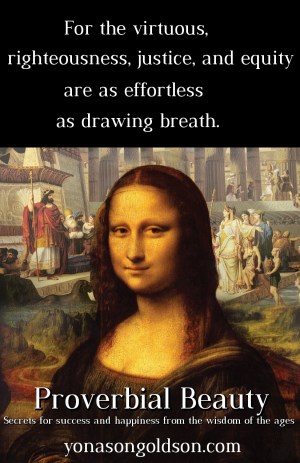
…as effortless as drawing breath

PB Meme -- For the virtuous

Order now on Amazon and learn to love life

Unforgivable

Should Dylann Roof be Forgiven for the South Carolina Massacre?

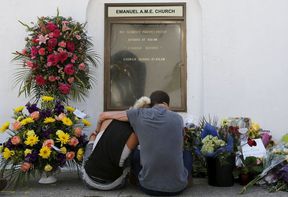
1276260-thumb-288xauto-1105590In an extraordinary example of human nobility, relatives of those killed in the Charleston, South Carolina, massacre expressed their forgiveness for Dylann Roof, the domestic terrorist who opened fire and took nine lives from the historic Emanuel A.M.E. church community. The mourners’ refusal to indulge their natural human impulse for revenge and to return love for hatred shows us all how it is possible to heal our fractured society.

Proverbial Beauty: Read now at Amazon.com

On a deeper level, however, the question of forgiveness is vastly more complicated.

One of the most compelling works of Holocaust literature is The Sunflower, an anthology built around the experience of survivor Simon Wiesenthal in the Lemberg Concentration Camp. In 1943, Mr. Wiesenthal was summoned to the deathbed of Karl Seidl, a Nazi soldier haunted by the atrocities he had committed, who wanted desperately to receive forgiveness from a Jew before he died.

Mr. Wiesenthal describes how he could find nothing to say and left the soldier without uttering a word. He then grapples with the question of whether he should have offered forgiveness, ultimately offering his answer by reframing the question:

ONE FOR ALL?

The crimes committed by the Nazis were not directed against individual Jews but against the Jewish people as a whole. Consequently, the torture and torment inflicted upon any Jew was in fact a crime against every Jew. Each individual victim was not a person but one of a people — the perpetrators didn’t care who he was but what he was — and therefore no individual had the power to grant forgiveness since an entire nation was targeted through each act of individual violence.

In other words, it wasn’t a matter of whether Mr. Wiesenthal should forgive, but whether forgiveness was his to give at all.

The same reasoning applies to all hate crimes. Whether the victim is black or white, Hispanic or Asian, Jew or Gentile, citizen or immigrant, rich or poor, any act of violence motivated by identity is not merely a crime against one person but a crime against mankind. As such, it transcends mere brutality or wickedness and rises to the level of gross inhumanity. By doing so, it becomes unforgivable.

So how can an act of forgiveness be both noble and impossible? Part of the confusion stems from a lack of clear definition. What is forgiveness? And why should forgiving evil ever be considered noble?

In the best-case scenario, forgiveness is a response to contrition. When a perpetrator recognizes the evil of his own actions, sincerely regrets them, and seeks to repair or atone for the harm he caused, then to withhold forgiveness becomes an act of evil itself. In such a case, to grant forgiveness becomes not merely noble but a moral obligation.

Proverbial Beauty: Read now at Amazon.com

But what if the perpetrator feels no remorse? Or what if he has no intention of righting the wrongs he has caused?

Even in that case, if one can understand, or even imagine, what motivated an act of evil, then it might be possible to forgive the offender for his own human weakness, whether it was a momentary lapse in temper or judgment, an innate lack of moral clarity or, as may or may not be the case with Dylann Roof, demonstrable psychological instability. To be able to see past one’s own pain and find a mitigating factor to excuse violence is truly noble… even saintly.

WITHOUT REMORSE

However, in the case of conscious, calculated evil, forgiveness may actually be a perversion of morality. Moral values should be so deeply rooted within that we can’t help responding to any violation of them with indignation and outrage. If we are truly committed to the values of good, how can we possibly tolerate evil, or those who do evil, especially when they do it in the name of good?

This is what the sages of the Talmud meant when they said, Be discerning in judgment. Look for every possible means of explaining away bad behavior. But after all is said and done, evil remains evil. Nonjudgmentalism is an empty slogan that allows evil to proliferate unchecked.

What often gets lost in the discussion of forgiveness is the matter of accountability. If I break your window, my apology means nothing unless I’m willing to pay for the window. And if I’ve caused damage that can’t be repaired, punitive restitution may be the only means through which society as a whole can preserve respect for the rule of law and confidence in the institutions of justice.

The particulars are open to debate. There are legitimate grounds to oppose the death penalty, mostly based in the real concern that an imperfect legal system cannot guarantee the guilt of those sentenced to death.

But to oppose capital punishment on the grounds that the state has no right to take a life misses a larger point. One who takes the life of another member of society forfeits his own place in that society; moreover, a society will retain its respect for the sanctity of life only with the recognition that by taking a life one forfeits his own right to life as well.

To take the life of any one person is, on some level, to take the life of every person. Justice must be served. Only then may it be possible to forgive.

Proverbial Beauty: Read now at Amazon.com

Click here to read this article and more from Yonason Goldson at Jewish World Review

Are you a brick?

Daily-Quotes-Life-Is-The-Most-Difficult-Exam-Inspirational-Quotes-PicturesA rabbi walked into a brick-making factory.

No, this isn’t a joke.  It really happened, many decades ago when Jerusalem was still a quiet, provincial village.  The rabbi watched as workmen filled up iron trays with moistened clay and slid them into large baking kilns, removing each tray to make room for the next.

“Tell me something,” the rabbi asked one of the workers.  “The clay looks exactly the same coming out of the kiln as it does going in.  What would happen if you didn’t put it into the fire?”

The worker laughed.  “It may look the same,” he replied, “but without the mold holding the clay together it would disintegrate the moment it began to dry.  You have to bake it in the fire if you want it to become a brick.”

The rabbi learned an important lesson from the brick-maker:  Our schedules and responsibilities “hold us together,” keeping us productive and forcing us to be efficient.  But what happens after work, on the weekends, or over vacation?  Do we remain disciplined with our time and solid as a brick, or do we crumble like so much dust into idleness and fritter away our time?

For parents especially, summer vacation poses a challenge, with two months of unstructured time looming before their children.

On the one hand, children need free time to learn to create their own schedules and manage their own time.  Too much structure deprives children of a critical component in their development.

But children shouldn’t be left entirely on their own, particularly in this generation when electronic toys provide limitless junk food for their growing minds.

As in all things, the best parents are consultants, gently but persistently helping their children to recognize the options in front of them and prodding them to make the choices that will serve them best.

And the best way to teach our children is by modeling the behaviors we want them to learn.  Be a brick, and your children will be bricks, too.

The Power to Change the World

With so much senseless violence dominating the headlines, from Charleston, South Carolina, to Syria and beyond, it’s worth revisiting this story of heroism and the power of the individual to change the world.

On the afternoon of September 18th, 2014, a teenage driver lost control of his SUV as he sped down Salt Lake City’s Indiana Avenue. The GMC Yukon tore through the safety barrier, went airborne into a ravine, and landed upside down in three feet of water and the bottom of the gully. Dazed or unconscious, strapped in by their seat belts, the driver and his two passengers had minutes before they would drown.

article-0-21869C9000000578-789_634x608What happened next offers a welcome relief from the relentless litany of strife and suffering that fills the headlines. Moments after the crash, nearly a dozen bystanders waded into the waist-high water and, working in unison, flipped the massive vehicle over onto its wheels, lifting the crash victims out from under the water and saving their lives.

But it might never have happened. As horrified onlookers stood frozen and stared at the capsized SUV, Leo Montoya, Jr., an out-of-work locksmith, overcame the Bystander Effect, plunged into the current and dove under the water in an effort to save the occupants. Unable to free them from their seat belts, only one option presented itself.

Turning toward the crowd, Mr. Montoya shouted, “We have to get this vehicle back on its wheels. Now, now, now!” Prompted by his commands, some of the men standing on the roadside began following him into the water. With so many pairs of hands and shoulders at work together, the Yukon rolled up and over until it was back on all four wheels and the passengers were clear of the water. When firefighters arrived, they freed the occupants and rushed them to the hospital.

The collective effort of bystanders saved three lives. But only because one person showed them the way and convinced them to follow.

The incident calls to mind another scene that happened 3,326 years ago after the exodus from Egypt at the splitting of the Sea. Faced with Pharaoh’s chariots bearing down on them from behind and the imposing expanse of water ahead, the Jewish people’s faith in God wavered. “Were there not enough graves in Egypt that you had to bring us out here to die?” they railed against Moses. The situation was impossible; there was no hope.

Until one man spoke up. Nachshon ben Aminadav, the prince of the tribe of Yehudah, cried out to the people: “If the only way to escape the Egyptian army is to go forward, then forward we must go. Let us do what we can and trust God to do the rest.” And with that, he waded out into the sea.

Inspired by his words, the people followed him. Deeper and deeper they advanced into the waters until, as the water reached Nachshon’s chin, the sea split before and around them, offering both the means of the Jews’ escape and the method of the Egyptians’ destruction.

What kind of person marches into the sea assuming that a path will open up to make way for a desperate nation? The same type of person who would charge forth and rally a dozen men to overturn a ton of steel, the type of person who understands that no matter how daunting the odds, there is no way to know the limit of human potential until we have pushed human potential to the limit.

What’s more, the potential of the many may remain unrealized until a singular individual shows that he has no interest in probabilities and, through sheer determination, awakens the collective spirit through which the impossible becomes reality.

We all want to be good and do good, and change the world for the better. But we lack confidence in ourselves, we lack the conviction to act, we lack the courage to risk failure. So we miss opportunities for greatness – not just by failing to charge into the breach, but by not expecting more from ourselves, by not setting the bar of human achievement and human integrity a little higher.

In one heroic moment, one man can inspire a world of others to change themselves. And the more we change ourselves, the more we change the world.

Just ask Leo Montoya. “As far as I know, a couple of kids get to live because of my actions,” Mr. Montoya told reporters. “I feel like I’m somebody.”

Originally published at Aish.com.


Honor (is learned from) Thy Father

Pearland defensive back Matt La Chiusa and his teammates stand during the playing of the National Anthem before the Oilers' opening game of the 2014 Texas high school football season against the Conroe Woodlands College Park Cavaliers played on August 29, 2014 at Woodforest Bank Stadium in Shenandoah, Texas. Pearland would go on to win the contest 25-14.

I was ten or twelve years old. My father and I had arrived at the stadium early, and I felt a thrill of excitement as we stood up for the Star Spangled Banner. Down on the field, our home team, the Los Angeles Rams, stood in a line holding their helmets under their arms. And in the row in front of us, a middle aged man stood with his hat perched casually upon his head.

The man didn’t respond.  “Hey you,” my father said, louder, “take off your hat.”

The man grunted an unintelligible, though clearly dismissive remark.

“You unpatriotic SOB,” growled my father; he didn’t abbreviate, either.

Dad!” I whispered, mortified and afraid, but also faintly confused.  My father had never before demonstrated any dramatic displays of patriotism.

The national anthem ended, the game began, and I guess I forgot about the incident because I never discussed it with my father, never asked him to explain an indignation that seemed entirely out of character.

But now I’m a father myself, and I don’t find my father’s action thirty years ago perplexing at all.

Why should we take off our hats for the national anthem?  Why should we stand up for the flag?  Why should we address strangers as “Sir” or “Madam,” wear coats and ties to church or synagogue, and give up our seats to the elderly?

It’s a matter of respect.  Respect for people.  Respect for institutions.  Respect for wisdom and values and human dignity.

Unfortunately, respect has been going out of fashion for a long time.  Sex scandals and no-fault divorce have eroded respect for marriage and commitment.  Partisan politics has eroded respect for leadership.  Inflated grades and deflated standards have eroded respect for teaching.  Abortion-on-demand and doctor-assisted suicide have eroded respect for life.  “Reality television” has eroded respect for ourselves.

Which was our first step onto this slippery slope?  Maybe it was the noble ideal of social equality, set spinning so wildly out of control that we began to equate respect with elitism.  Maybe the information glut convinced us that we know as much about medicine as our doctors, as much about cars as our mechanics, and as much about education as our children’s teachers.  Maybe our relentless pursuit of leisure time has made us too selfish to value age and experience, too lazy to act civilly toward our neighbors.

When respect is not earned, it disintegrates; when respect is exploited, it implodes.  Indeed, after his desperate quest for legacy, Bill Clinton was best remembered at the time of his departure as the American president who made his underwear preferences a matter of public policy, who pilfered the White House china,  and for whom a large percentage of once-self-respecting Americans so casually excused perjury in federal court.  Barack Obama will leave behind the first video of an American president making faces in the mirror in preparation for an historic selfie.

conversation-startersBut we should never rely on respect to percolate down from the top; it is our responsibility to grow it up from the grass roots.  It is the job of parents to teach their children to say “please” and “thank you,” to not interrupt and not talk with their mouths full, to speak civilly and give up their seats to the elderly, to pick up their own litter and maybe even someone else’s.  By doing so, parents instill in their children an intuitive sense of respect for others, even if their children may not understand why all these social minutiae are indispensable.

But too many parents have abdicated that job, either because they’re not around enough or because they never learned to be respectful themselves.

The Talmud says that where there are no leaders, strive to be a leader yourself.  In today’s increasingly fatherless society, teachers, scout leaders, and little league coaches have a greater obligation than ever to teach respect by showing respect for others — and so do we all every time we walk down the street or through the supermarket aisle.

A journey of a thousand miles begins with a single step.  And a journey through life begins with a step in the right direction.  Help a child take that step and, many steps later, his success will speak his thanks louder than words.

Every Father’s Day offers a reminder to say every day:  Thanks, Dad.

Originally published in the St. Louis Post-Dispatch

Proverbial Beauty: Browse paperback and Kindle versions at Amazon

The Depth of the Human Soul

Now Available at Amazon

Now Available on Amazon

[Available to preview & purchase on Amazon.com]

The Scent of Spirit

images“A rose by any other name would smell as sweet,” wrote William Shakespeare, arrange ten simple words into possibly the most famous aphorism in the English language.

[Proverbial Beauty – preview at Amazon.com]

And yet, for all the mystique and romance associated with the beauty of the rose, the greatest of all poets recognized fragrance, not visage, as the defining quality of the most admired flower.

Bonnie Blodgett would almost certainly agree. In Remembering Smell: A Memoir of Losing and Discovering the Primal Sense, Ms. Blodgett describes the emptiness and depression that took over her life when a zinc-based nasal spray disrupted the operation of her olfactory nerve and disfigured her sense of smell.

Gone were the familiar, reassuring fragrances of her garden, replaced by ceaseless aromas of rotting flesh and excrement, which Ms. Blodgett describes as nothing less than torture. But even when these “phantom smells” abated, the odorless existence that replaced them was only a marginal improvement.

“I had no way of knowing before what it would be like to not smell anything,” she told NPR. “When I woke up and sniffed and there was nothing there — I don’t know how to explain it — I felt completely disconnected. I truly felt as if colors were more flat. The voices in conversation felt like a TV soundtrack to me.”

Adding insult to injury was the lack of sympathy received from friends. Unlike blindness, deafness, illness, or injury, most of us cannot relate to an impaired sense of smell as especially debilitating. Of all our senses, it is the one we are most likely to take for granted.

Of course, not everyone fails to recognize the power of fragrance. From Cleopatra to Oprah Winfrey, the rich and powerful have scented themselves to augment their personas and project an image of potency, charisma, or sensuality. Today, the research, development, and production of perfume and cologne have created a $25 billion industry that markets, in the words of star perfumer Sophia Grojsman, “a promise in a bottle.”

imagesNational Geographic explains it this way:  “Memory and fragrance are intertwined, some biologists insist, because the sense of smell plugs smack into the limbic system, the seat of emotion in the brain. No other sense has such immediate access.”

The unique power of fragrance takes little time to assert itself in the chronicles of mankind. Immediately upon exiting the ark, Noah gave thanks for his salvation by building an altar and bringing offerings of thanksgiving. “And the Almighty smelled the pleasing fragrance, and said to Himself, Never again will I curse the earth on account of man” (Genesis 8:21).  Obviously, G-d does not “smell” the way human beings do.  But according to the linguistic nuances of biblical Hebrew, “aroma” implies direct contact over a great distance in the finest detail and in the most subtle ways.*

The Hebrew words rayach (scent) and ruach (spirituality) derive from a common grammatical root, and the implied connection between them appears as early as the narrative of man’s formation, when the Almighty “breathed a living soul into his nostrils” (Ibid. 2:7).  The common derivation of the Hebrew words neshimah –“breath” – and neshomah – “soul” – suggests that our spiritual life force comes, literally and metaphorically, by way of air and respiration.

Just as smell is the most difficult sense to measure, quantify, and define, so too is our spiritual essence the least palpable and discernible facet of our existence.  Similarly, the interplay between one soul and another is the most elusive of human pleasures, but it is also the most rewarding.  As King Solomon says, “Scented oil and incense gladden the heart, sweet as the sincere counsel of a kindred soul” (Proverbs 27:9).  Indeed, the smoky fragrance of incense wafting into the corners of our minds and rippling across the strings of our hearts is anything but smoke and mirrors; it stirs our memories and hopes and dreams the same way that true friendship and camaraderie arouse our spirit.  Truly, the faculty of smell provides the spice of life by adding texture and dimension to all our other senses.

[Proverbial Beauty – preview at Amazon.com]

Ask Bonnie Blodgett.  As suddenly as her sense of smell disappeared, just as suddenly it returned, and she will never take it for granted again. “I was going around smelling everything,” she says. “Being able to smell lilacs again was just — I don’t think I’ll ever get over it.”

imagesBut it goes beyond mere olfactory pleasure. There is truth to common expressions like he has a good nose for business and something doesn’t smell right. Like our sense of smell, human intuition is our intangible moral compass, guiding us when we encounter something for the first time to quickly assess its value and authenticity.  In the biblical narrative, Jacob disguises himself as his brother, Esau, then enters the tent of his father, Isaac, who exclaims, “The fragrance of my son is like the fragrance of a field blessed by G-d” (Genesis 27:27).  The sages elaborate, explaining that the fragrance of the Garden of Eden entered with Jacob, convincing Isaac to bestow his blessing.**

What was this “fragrance of Eden”?  It was nothing less than the soul’s eternal connection to the ultimate Plan of Creation, which began with the placement of Man into a perfect world and will culminate in the restoration of that perfect world at the End of Days.***  And throughout the long generations of chaos in between, the spiritual nature of our world can be scarcely perceived through sight, sound, touch, or taste.  But it can be smelled, if we pay attention to the subtle pleasures of life that are expressions of the human soul and contemplate the mysterious allegory of fragrance.

And so the ancient sources describe the advent of the messianic era as a time when the divinely appointed redeemer will “smell and judge,” – determining complex truths through spiritual discernment (Babylonian Talmud, Sanhedrin 93b).  Thus we find, according to Chassidic tradition, the story of Rabbi Menachem Mendel of Vitebsk, the 18th Century leader of European Jewry whose wife ran through the door one afternoon shouting, “Mendel, Mendel, there’s a man outside shouting that the Messiah has arrived!”

Immediately, Rabbi Menachem Mendel jumped up and ran to the window, took a long sniff of air, then shook his head and muttered, “Nonsense!” before returning to his studies.  Like Isaac, the rabbi knew that a world with the Messiah smells different from a world without Messiah, and that if he could not detect the fragrance of Eden then certainly the messianic era had not yet arrived.

Two generations later, Rabbi Israel of Rizhin asked why the illustrious rabbi had to run to the window – why could he not simply sniff the air in his own home?

Rabbi Israel answered his own question.  So involved was Rabbi Menachem Mendel with his own personal service of the Almighty, so intent was he upon hastening the arrival of messianic era, so profoundly had he had already connected with the spiritual source of the universe that his own house had already acquired the fragrance of Eden.  Consequently, he had to run to the window to discover what the rest of the world smelt like.

The more we focus on what we should be doing to create a perfect world through the perfection of our own character and conduct, the more our lives will acquire the fragrance of spiritual purpose.  And the more eagerly we anticipate the glorious fulfillment of the Almighty’s Master Plan, the sooner we will enjoy a world in which we draw in the aroma of the Divine with every breath.

[Proverbial Beauty – preview at Amazon.com]

*Rabbi Samson Rafael Hirsch

**Rabbi Shlomo Yitzchaki, ad. loc

***Based on the Malbim, loc. cit.

Adapted from an essay originally published in Inyan Magazine, 2 July 2014.  With thanks to Rabbi Shraga Simmons and Aish.com.

“No Awareness” Zone?

From Stuff.co.nz:

d0cd9a299025b637399ded0a978a5623“A Belgian city has come up with a solution to the problem of pedestrians bumping into other people while sending text messages from their mobile phones.

“Antwerp has given smartphone users their own designated lanes, where they can walk while texting or looking at their mobiles without irritating or endangering others.

“The narrow corridors are marked “text walking lane” in English on a number of busy pedestrian shopping streets in the city centre.

“Negotiating the corners is likely to remain challenging for people whose eyes are glued to their phone screens.”

Philadelphia did this last April Fool’s Day as a joke.  When life imitates art, should we laugh or cry?

The question answers itself:  is there really anything funny about people too preoccupied to watch where they’re going who need the government to step in and protect them from themselves?

Are we born, are we bred, or are we… us?

“When visiting the nature versus nurture debate, there is overwhelming evidence that both genetic and environmental factors can influence traits and diseases.”

0420-0907-0617-2414_lone_soldier_standing_on_a_cliff_o-1024x682So concluded researchers from Australia and the Netherlands after reviewing 50 years of studies and millions of cases.  “One of the great tussles of science – whether our health is governed by nature or nurture – has been settled, and it is effectively a draw.”

Without impugning the value of scientific studies, it’s hard not to wonder at the amount of time and effort scientists often invest to prove what most thinking people have already figured out for themselves.

“The findings, published in Nature Genetics, reveal on average the variation for human traits [is] 49 per cent genetic, and 51 per cent [environment].”

Stop the presses.  Film at eleven.

But even the obvious conclusion that personality is determined equally by genetics and by environment misses a larger point.  

Click here to read the whole article.