Home » Moral Compass (Page 32)
Category Archives: Moral Compass

Rethink Everything
 The ten days from Rosh Hashanah to Yom Kippur commemorate the Creation of the universe and the creation of mankind. Rosh Hashanah is called the Day of Judgment, reminding us that all our actions matter, whether great or small, whether public or private.
By contemplating that we will have to make an accounting before the One Judge, we become more aware of our own choices, more cautious in how we judge others, and more willing to rethink the many ideas and attitudes we take for granted.
Ultimately, we want to be the best people we can be, which means looking back on the past year to evaluate how we’ve succeeded and how we have fallen short. It also means looking forward to envision where we would like to see ourselves this time next year, and then setting the bar a little higher, knowing that we will always fall short of our goals.
Change isn’t easy. But it is inevitable, for better or for worse.
And it’s in our hands to see that we change for the better.

Remembering 9/11: Visionaries and Ideology
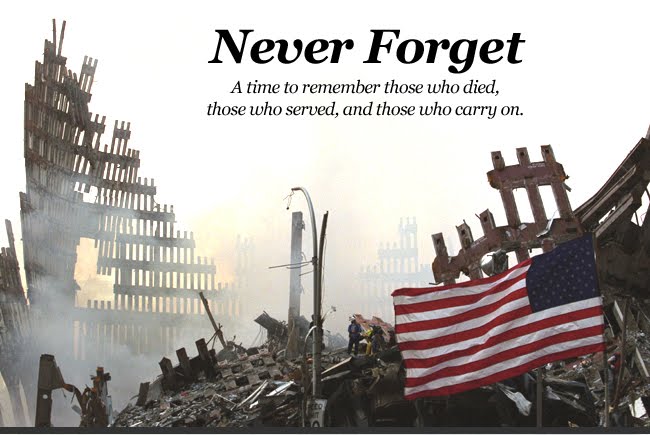 Who knew a trip to New York could be so emotional?
Our first stop was the 9/11 museum. I marveled at the artistic vision that had conceived the memorial pools, the water channeling down in rivulets that mirrored the face of the fallen towers, the continuous downward rush balanced by the redemptive feeling of water — the source of life — returning to the heart of the world. Here there was solace, closure, and consolation.
But a very different feeling accosted me inside. Almost upon entering the doors a single word brandished itself across my mind’s eye: Holocaust.
Obviously there is no comparison between the monstrosity of wantonly dehumanizing genocide and any single act of terror; obviously there is no equivalence between the systematic psychological, spiritual, and physical destruction of millions and a few thousand relatively instantaneous murders.
But then again, yes there is.
Read the whole article here:

Balancing the Scales of Freedom
Originally published in the St. Louis Post-Dispatch the week after 9/11, between Rosh HaShonah and Yom Kippur.
 It was Judgment Day — exactly one week after the World Trade Center buildings collapsed and so many illusions along with them.
“Judgment Day” is the expression found in the traditional liturgy for Rosh HaShonah, the first day of the Jewish new year. And as I stood in the midst of the congregation intoning the High Holiday prayers, the vision of exploding passenger planes and twin towers crumbling to dust hovered before my eyes.
On Rosh HaShonah we will be inscribed … who will live and who will die … who by water and who by fire … who by storm and who by plague … Who will have peace and who will suffer … who will be cast down and who will be exalted.
The judgment upon Jews became kinder after the United States opened her doors to us a century ago. Where no one else would have us, America took us in, allowing us to live both as Americans and as Jews without persecution.
Yet for all that, American Jews often feel torn by opposing cultural forces, especially approaching our Day of Judgment in a society where there is no greater sin than “judgmentalism.”
Without judgment, however, society cannot endure. As good citizens we must judge others – not based on race or religion but upon actions and behavior. And we must judge ourselves as well, by constantly reexamining our motives and our prejudices and our values and our goals. To condemn even this kind of judgment as a threat to freedom is to retreat from our responsibility to discern right from wrong; it is to embrace the illusion of absolute theoretical freedom – moral anarchy – which is in reality no freedom at all.
September 11 brought us face to face with moral anarchy in the form of incomprehensible evil. Perhaps the first step toward confronting it is to remind ourselves that freedom is not a right – it is a privilege, and privileges carry with them obligations that are often inconvenient and occasionally painful. When Thomas Jefferson wrote that the tree of liberty must sometimes be refreshed with the blood of patriots, he warned that the threat against freedom can only be met by not taking freedom for granted.
Freedom is not democratic, as less than a score of suicidal zealots understood when they commandeered four transcontinental airliners. The duties of freedom are non-negotiable, as New York firefighters and policemen understood when they rushed into crumbling skyscrapers. And the rules of freedom cannot always be legislated: sometimes we have to choose between necessary evils, as the passengers aboard United Airlines flight 93 understood when they drove their plane into a Pennsylvania field.
These are the kinds of judgments we must make, every day and every year, to preserve our society, all the more so in a nation built out of so many cultures and beliefs as ours. Every freedom of the individual cannot be permitted if it threatens the collective, nor can every interest of the collective be observed if it oppresses the individual. But when we share the collective will to make our society stable and secure, then the individual will set aside his personal freedoms for the national good and the nation will bend over backward to protect individual freedom.
This is the mark of a great civilization, and it rests upon an informed and devoted citizenry prepared to debate, sometimes passionately but always civilly, the moral direction of our collective journey.
This Rosh HaShonah I stood shoulder to shoulder with friends and neighbors singing ancient liturgical poems in praise of our Creator, just as so many Americans stood together the week before singing “G-d Bless America.” There were no agendas, no politics, no grudges, no rivalries. All of a sudden we were one nation, indivisible, a people with one noble history and many noble ideals whose differences vanished in the shadow of our many common values and common goals.
As the Jews have had ample opportunity to learn, now America has learned that nothing brings us together like a common enemy. What we have yet to learn is how to continue to stand together even in times of peace.
The End of Man
Rabbi Levitas of Yavneh said: Be extremely lowly of spirit, for the end of man is worms.
Pirkei Avos (Ethics of Father) 4:4

Hat tip: @DreamingJannah

Someone is Always Watching
 “Someone is always watching.” Movie fans will recognize this as the punchline from “Ocean’s Eleven,” a glib repartee that ultimately recoiled on Andy Garcia and drove Julia Roberts back into the arms of George Clooney. Political observers might remember it, now that former Illinois Governor Rod Blagojevich is back (briefly) in the news, as a line the convicted politico should have uttered when he found himself the subject of state and federal investigators.
But just the opposite was true. The AP reported:
“You would think he would see his life collapsing around him,” said Chicago defense lawyer John Beal, who was in the courtroom with Blagojevich this week and noted how carefree he seemed. “But he was the center of attention and seemed to love it.”
One almost envies Mr. Blagojevich the comfort of his delusions.
At the beginning of the last century, the invention of electric lighting,telecommunication, and cinematography began to change the complexion of modern society. At the time, the leader of European Jewry, the venerable Chofetz Chaim, observed that the introduction of technologies scarcely imagined a generation before provided a lesson for any spiritually sensitive person to recognize that the Universe is not indifferent to our moral conduct.
Previously, the natural cycle of night and day imposed strict order upon human activity. Because most people in those times could not afford the limitless supplies of candles necessary to transform night into day, all activity was cut short early by the long nights of winter, and only in summer could the workday stretch late into the evening. Now, inexpensively and with the flick of a switch, the night could be expelled and the secrets of the darkness instantly revealed.
Can you say AshleyMadison?

AshleyMadison — Why we’re too lazy to cheat right
 Everything’s easy. Everything’s instant. Is it any wonder that we want everything to be effortless and risk-free — even our acts of disloyalty.
Ironically, patrons of AshleyMadison made their infidelity all the more vulnerable to discovery, believing they could benefit from technology without exposing themselves to the inevitability that anything online eventually finds its way into the public arena.
Technology should free us to enjoy our lives more richly. Instead, it teaches us to be increasingly undisciplined, leeches meaning and purpose from our existence, and deadens us to the simple pleasures that make us truly happy.
Hear my guest interview on the Christal Frost Show discussing why we look for happiness in all the wrong places:
http://wtcmradio.com/the-christal-frost-show-podcasts/yonasongoldson82115/



Email of the Week — Making “Friends”
 Presently, I am trying to make friends outside of Facebook while applying the principles of Facebook.
So every day I walk down on the street and tell the passers-by what I have eaten, how I feel, what I did yesterday and what I will do tomorrow.
Then I give them pictures of my family, of my dog, and of me gardening and spending time in my pool. I also listen to their conversations and I tell them I love them.
And it works. I already have 3 persons following me:
2 police officers and a psychiatrist.

What is happiness, and how do we get it?
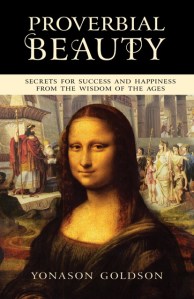
Order on Amazon today.
Proverbial Beauty, a new book on how to achieve happiness and success, offers a practical guide to changing our outlooks and our fortunes. Here’s an excerpt:
In a single, ringing phrase, Thomas Jefferson captured the essence of the American dream when he declared that all men have the right to “life, liberty, and the pursuit of happiness.” And yet, despite Mr. Jefferson’s noble sentiments and laudable achievements, the enduring lyricism of his words spawned an epidemic of confusion and despondency that continues to spread like pestilence through western society.
How precisely does one pursue happiness? We may pursue wealth, pursue fame, pursue gratification of one form or another. But the fiction of pursuing happiness has become a collective obsession that consumes our lives, either by goading us into chasing impossible dreams or by tarnishing the quality of our existence with unwarranted regrets.
Before we set off in pursuit of anything, we ought to know what it is and how to get it. Like many other words and expressions, we toss about the word “happiness” without really knowing what we mean. The definition seems obvious, but the inconvenient truth is that we really have no idea what we’re talking about.
So what is happiness, and how does one get it?
Read the whole excerpt here:
http://www.jewishworldreview.com/0815/Goldson_pursuit_of_happiness.php3

The Orchestra of Mankind

Find tranquility in the midst of conflict. Develop attitudes that deepen relationships. Gain clarity through times of darkness and confusion. Decrease cynicism and find joy in the daily miracles that fill our lives.
 Yonason Goldson