Home » Personal Development (Page 10)
Category Archives: Personal Development

Don’t count down — count up
 Between Passover and the festival of Shavuos (Pentacost, celebrating the Almighty’s revelation at Sinai), tradition calls for every Jew to count the days and the weeks connecting the freedom of the exodus from Egypt with the responsible application of that freedom.
These seven weeks are a time filled with opportunity for personal growth, beginning with the awareness that little changes can add up to extraordinary transformation.

Your dog doesn’t love you — get over it
 Okay, I’m guilty.
As a high school teacher, I strive to maintain a persona of impeccable professionalism every moment of every day. Almost.
On rare occasions, however, when I can no longer resist the impulse to really get under my students’ skin, I indulge a streak of sadism and utter those few words guaranteed to enrage even the most mild-mannered teenager.
Are you ready? This is what I say:
“Your dog doesn’t love you.”
And I don’t stop there. Pausing a few seconds to allow the full measure of indignation to begin boiling over, I follow up with:
“And you don’t love your dog.”
I have plenty of ammunition in my arsenal to defend my point. But in addition to the logic of my argument, I now have a current study that supports my claim.

Spitting Image 3:1 — A Journey of a Thousand Miles…
 The road beckons, and our heart longs for adventure. But the way is long, and who knows what might befall us along our journey?
How many times have we turned back, turned aside, or given up before we’ve given ourselves time to either succeed or fail? How many opportunities have we missed, how many victories have we left unwon, how many heroic failures have we traded for cold comfort and abandoned hopes?
All beginnings are difficult, say the sages of the Talmud. And when we concede the race before we start, all we have left is a scrapbook of empty dreams.

Passover and the price of freedom
 This Passover, let us all reflect upon the value of freedom, the price of freedom, the responsibilities of freedom, and the cost of taking freedom for granted. Only by standing strong against the forces within and without that never stop trying to enslave us will we remain free.

The Five Cups of Passover Wine?
 As everyone knows, on the first night of Passover we eat matzah and bitter herbs, we recline at the table, and we drink five cups of wine.
Five cups of wine? We drink four cups of wine, don’t we?
Well, that depends whom you ask.
Of course, it really is only four cups that we drink at the Passover seder. Acceptance of this practice, however, has not always been universal. Rather, it evolved as the best possible compromise between two contradictory Talmudic traditions. And only by going back to the root of the custom can we fully appreciate the relevance of our annual reenactment of the Exodus from Egypt.
The four cups of wine reflect four separate phases that concluded with the Jewish people’s transformation from Egyptian slaves into a free and autonomous nation. Within the narrative of the Exodus itself, four different expressions of redemption allude to the process through which the Jews attained their freedom — a freedom that was not born in an instant, but only as the culmination of four distinct and imperative stages.
Vehotzeisi. And I will take you out from the burdens of Egypt. Although Pharaoh endured ten plagues before he sent the Jews forth from Egypt, only half that many persuaded him to release them from their labors. This enabled the Jews to adjust to independence, to learn what it meant to make their own decisions before the time when they would be held accountable for the choices they would make.
Vehitzalti. And I will rescue you from their service. A slave whose master makes no demands upon him is still a slave. Having already been exempted from their labors, now the Jews were prepared to face the challenges of real freedom.
Vegoalti. And I will redeem you with an outstretched arm. History teaches us that freed slaves often fail to make the adjustment from slavery to freedom. The culture of slavery may be so deeply rooted in their psyches that they cannot succeed as free people. Similarly, the Jews needed divine assistance to purge their hearts and minds of the corrupt values of Egyptian culture, foreshadowing the way Jews all through history have had to struggle against the corrosive influence of foreign ideologies.
Velokachti. And I will take you to Me as a people. Once liberated from the physical and psychological bondage of Egypt, the Jews still faced the subtle dangers of unrestricted freedom. Only with a sense of identity and purpose, only with a clearly defined national mission, could the Jews emerge from cultural anarchy to embrace true freedom.
But there remains one final expression in the narrative of our collective transformation from slaves to free people: Veheiveisi. And I will bring you into the land. As a free and sovereign nation, could the Jewish people begin to fulfill their mission even before they established themselves in their land, in Israel? Or is it impossible for us as Jews to consider ourselves truly free while we remain exiled from our ancestral homeland? This is the essence of the debate whether we drink four or five cups of wine.
 What is our conclusion? We have none. We simply don’t know. However, we do know that we have to drink at least four cups. So that is what we do, then wait for Elijah the Prophet to come, not to drink the fifth cup, but to tell us whether or not we should drink it ourselves.
But some of us refuse to wait for Elijah to affirm our commitment to the Holy Land. This year, like every year, hundreds of Jewish high school graduates from around the country will defer their first year in college to study Jewish tradition and Jewish law in the land from which we are exiled. No threat of terrorist violence has been able to dissuade these young men and women from renewing their connection to the the heritage and land of their ancestors.
And, perhaps even more impressive, their parents have set aside their own fears and their own worst nightmares to encourage their children to travel half way around the world to pursue their highest calling: to rise to the challenge of Jewish freedom.

Why do we think so?
 We think so because all other people think so;
Or because—or because, after all, we do think so;
Or because we were told so, and think we must think so;
Or because we once thought so, and think we still think so;
Or because, having thought so, we think we will think so…
Henry Sidgewick

Are Facebook friends causing depression?
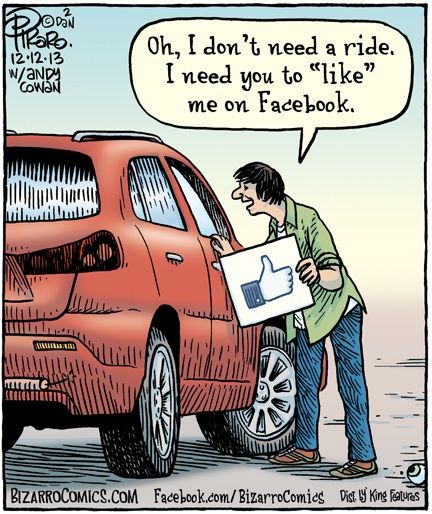 The connection between social media use and depression is old news. But a new study offers a new insight into the why.
The obvious reason has always been that substituting online “relationships” for genuine human interaction leaves a person feeling empty because of the shallowness of the exchanges. Now, Ariel Shensa of the University of Pittsburgh School of Medicine offers an additional insight.
Interviewing 1,763 randomly selected participants, ages 19-32, Dr. Shensa and her team discovered that aside from the amount of time spent on social media, the motivation behind that involvement proved a more significant predictor of depression.
According to Lindsay Howard of the Virginia Consortium Program in Clinical Psychology, those who seek recognition and approval through the use of social media are the ones most likely to suffer from a negative self-image and accompanying disorders. Even less frequent use of social media — when it is used to seek self-validation — becomes a kind of addiction, which is at the root of its link to depression.
So here’s an opportunity to revisit these thoughts from 2010 on the relentless pursuit of fame and the futility of seeking validation from others.
No Tears for Big Brother
Refinement. Poise. Modesty. Graciousness. Integrity. Once upon a time, these were the attributes with which parents hoped to imbue their children, that they might lead rewarding lives and develop healthy emotional relationships.
But consider the cultural icons we hold up before our children to emulate today: they have Michael Vick as their model of refinement; Lindsay Lohan as their model of poise; Lady Gaga as their model of modesty; Donald Trump as their model of graciousness; and a myriad of chief executive officers around the globe as their models of integrity. Our children learn from these instructors every day, unsupervised, through television and the internet. Could anyone in any previous generation have seen all this coming?
As a matter of fact, someone did.
 Superficially, the excesses of modern society may bear little resemblance to the colorless culture of oppression visualized by George Orwell in his dystopian classic1984. But Orwell’s masterpiece was itself a warning against the insidious threat of superficiality, whether political, social, or economic. Today, Orwell might be dismayed, but not surprised, at how eagerly we have divorced ourselves from reality in every aspect of our lives.
Unsustainable spiraling profits, unsupported by genuine production or service, sounded not a single warning bell until the inevitable bursting bubble caused billions of dollars to vanish in a heartbeat and left millions saddled with crushing debt. The nomination of a photogenic candidate with no experience and no credentials sounded no warning bells to the majority of the electorate who swept him into high office, precipitating the greatest ideological rift in the United States since the Civil War. Most significant of all, the cognitive and social disintegration spurred on by the ubiquitous virtual ports of the computer and television screens suggests a cultural crisis that is already upon us. Time and time again, we choose dreams over substance and learn nothing from our mistakes.
WE HAVE SEEN THE ENEMY…
I still remember vividly how I reacted twelve years ago when I first learned about the new phenomenon called “reality television.” I had just taken my seat on a plane home from New York City, delighted that a departing passenger had left behind a copy of the New York Times Magazine. The cover caption caught my interest, and I turned to the lead story about a new British television show called “Big Brother.” Before I was half-way finished my hands were trembling, and I could hardly stop myself from looking over my shoulder to see if George Orwell was reading the story from the row behind me.
Even for those of us who remember 1984, our overfamiliarity with instant visual communication has diluted the once-nightmarish connotations of the iconic Orwellian telescreen. We don’t value privacy, we can’t cope with isolation, and we dissolve into near-hysteria whenever we find ourselves cut off from our social networks even for a moment. Access means more than substance. Bandwidth means more than content. And Big Brother, the erstwhile symbol of Stalinist totalitarianism, now finds himself transformed into a pop-icon enjoying a successful dozen-year run in Britain, the backdrop for Orwell’s prophetic novel.
Last month, however, the kulturkamph deepened as the producers of the American version of the show announced two new wrinkles for the new season. First was the introduction of “The Mole,” a saboteur placed among the Houseguests to wreak havoc upon every social dynamic. Not only will the sole contestant to survive the season win half a million dollars; now, one of them gets a payoff for stirring up dissension.
…AND IT IS US
Second, and even more disturbing, was the announcement that one of the guests was to be an Orthodox Jew who, by his own account, “will practice all aspects of his religion while living in the Big Brother house.”
No he didn’t. (He was quickly booted). And here is why:
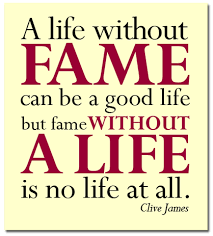 Rabbi Israel Ba’al Shem Tov, the illustrious founder of the 18th century Chassidic movement, once remarked that a pious companion of his youth had been blessed with a life of anonymity, while he, Rabbi Israel, had been condemned to fame. If the rabbi’s disdain for notoriety leave us bewildered, that itself is a symptom of how the superficial values of Western culture have rendered us incapable of understanding that personal privacy is both a virtue to be admired and a treasure to be jealously guarded. Conversely, fame is both a vice and a curse, although one wouldn’t know it from the electronic media’s most successful innovations — the seductive screen of television, the virtual gateway of the internet, and the reinvention of Big Brother.
The way private lives have gone out of fashion today is a blight upon the human condition and a corruption of all that is noble within human potential. To invite anyone who will listen into the deepest corners of our lives constitutes no less a violation than inviting a stranger into one’s bed. And the sale of our souls for 15 minutes of fame leaves us every bit as poor as the sale of one’s body for a few moments of carnal pleasure.
Of course, it’s not hard to understand how we arrived at this point. Our regard for privacy is continually eroded by the inescapable message that renown is the ultimate measure of success. But consider: if private lives were not so dear, why is everyone else trying so hard to steal ours away from us?
So can one uphold the precepts of Jewish Law while pandering for public adulation on international TV? For anyone who one remains sensitive to the Torah’s prescription with regard to fame, most certainly not. Any contestant that sells his personal privacy may be superficially in compliance with the letter of the law and the technical restrictions of the Sabbath and a kosher diet. But he has lost touch with the spirit of the law and has compromised the underpinnings of his faith. Even were he to have won that half a million, he will have paid out far more than he gained, in the cost of his personal dignity and in the sacrifice of his most precious commodity — the priceless gift of intimacy with the Divine.

Marriage of Convenience
 We are what we pretend to be, so we must be careful about what we pretend to be.
― Kurt Vonnegut
The orderly rolled my gurney to a stop before an imposing double doorway. “Okay,” he said, “This is where you get your kiss.” I couldn’t tell if he was speaking to me or to my wife. In any case, my wife kissed me and laughed and cried all at once. Then I was rolling again.
I arrived in surgery and scooted over onto the operating table. I joked with the anesthesiologist. He found my vein on the first try. I recited Psalms to myself and wondered distantly why I wasn’t scared out of my wits.
They sliced me open, broke my sternum, compressed my lungs like empty sugar bags, and stopped my heart to patch the hole between its upper chambers with a piece of my pericardium while redirecting the blood that flowed through an anomalous vein.
I don’t remember that part.
I also don’t remember my hands clawing the air, straining against nylon straps, struggling to tear the ventilator mask from my face and the dressing from my chest. My wife stifled a cry when she saw me in recovery. Apart from the convolutions of my fingers, the pallor of my face starkly mirrored the countenance of death.
“He looks so good,” the nurse told her.
When I did regain consciousness the next day, numbed by morphine and dazed by the residue of anesthesia, I asked my cardiologist if he could release me that afternoon. “I have to catch a flight to Jacksonville this evening,” I said.
I was trying to be funny. He thought I was delirious.
EXPECT THE UNEXPECTED
![[ File # csp3608269, License # 1131644 ] Licensed through http://www.canstockphoto.com in accordance with the End User License Agreement (http://www.canstockphoto.com/legal.php) (c) Can Stock Photo Inc. / Eraxion](https://proverbsandprovidence.com/wp-content/uploads/2016/04/anatomy-lungs.jpg)
Lacking prescience, however, I had no excuse for the cavalier attitude with which I approached this whole business. No matter how distinguished my surgeon’s credentials, and no matter how casually he explained away the operation as routine (with the probability of success better than 99%), cardiac surgery remains as heart-stopping as it sounds: they carve open your chest and, during an extended period of clinical death, cut and paste around your most vital organ before sewing you back together.
Call it what you like; it hardly ranks among the more attractive forms of elective surgery.
Yet “elective surgery” was how the doctor had described it. After all, I had virtually no symptoms, and my condition might not advance for twenty years. Then again, deterioration could begin within months, or even weeks. And so, at my cardiologist’s insistence, I opted to exchange the distant prospect of lingering death for the immediate promise of physical pain followed by months-long recovery.
That was what I expected. Instead, from beginning to end, while my wife and children and parents were dealing with their respective emotional traumas, the greatest discomfort I suffered throughout the entire episode came not from the incision, not from anesthesia withdrawal, not even from the mild pneumonia I contracted during recovery, but from a persistent hangnail that nagged me from the day after surgery until I returned home and exorcised it with my cuticle clippers.
THERE IS A LESSON
The great tennis player Arthur Ashe, after contracting AIDS via blood transfusion, was reported to have said, “If I ask why this has happened to me, then I must also ask concerning all the good that I have had in my life.”
Indeed, Mister Ashe, may you rest in peace — you should have asked both questions, as should we all.
If life is all One Great Accident, then there is no why. But the exquisitely textured fabric of our universe, the elegant design of our world, and the transcendent nobility of Man when he listens to the calling of his soul — all these testify to the genius of an invisible Conductor who guides the symphony of Creation.
And if there is a plan behind the apparent chaos, then whatever happens for good or for bad should prompt us to ask, “Why?”
Click here to read the whole essay, from my column in the inaugural issue of The Wagon Magazine

Spitting Image 2:6 — The FBI vs. Apple: Lessons Learned
 Good news, everybody! The FBI has found a workaround to break into the iPhone of suspected San Bernardino terrorist Syed Rizwan Farook, and the Department of Justice is backing down from Defcon 1. So now that the crisis is averted, what are some practical lessons we can learn about confrontation and conflict resolution?
Here are a few suggestions:
Both sides might be right. The FBI and Apple each claimed national security as its top concern. The FBI was thinking short-term — stop more terrorist attacks now; Apple was thinking long-term — don’t make ourselves vulnerable later. It’s entirely possible that both parties were sincere and correct.
So here’s the first takeaway. Until evidence proves otherwise, assume positive intent. Your adversary is not necessarily evil; he may just be looking at things from a different angle. Trying to understand his position before going into attack mode may avert conflict and promote mutually beneficial cooperation.
Go around roadblocks, not through them. Apple refused to cooperate. The FBI refused to back down. But as each party dug in and the deadlock stretched out, government officials did something that should renew our hope in government officials: they looked for another way of solving the problem. When the most straightforward plan of action isn’t panning out, don’t give up on finding a detour.
There might already be a solution. After arguing for months that it was impossible to break the phone’s encryption without Apple’s help, the government apparently found hackers who did what hackers said they could do from the beginning: find a way in. So if you don’t know what to do, ask someone who knows more than you do.
Nothing is foolproof. It’s a cliche, but cliches are usually true. Anything that can be protected can be broken into; and any plan can be thwarted. Or, as Yogi Berra used to say: Good pitching will always beat good hitting; and vice versa.
There are no perfect fixes. Although the Department of Justice isn’t releasing details, some believe that breaking into the phone may have caused some of its data to be irretrievably lost. A win doesn’t have to be 100%. In business, in diplomacy, and in most of life, it rarely is. If you end up with most of what you want, don’t let what you had to give up spoil your victory dance.
Save litigation as a last resort. Law suits cost everybody; except the lawyers. So if you’re not a lawyer, try everything else before you push the nuclear button.
Working together makes you look better. Black eyes and bloody noses are painful and unattractive, even when you win. I’m reminded of the Karate master who was accosted by hoods as he was leaving his dojo. “Do you want to beat me?” he asked. “Yeah, we want to beat you,” their leader replied.
The master could easily have dispatched the young miscreants without breaking a sweat. Instead, he took of his jacket and laid down on the sidewalk. “Now you have beaten me,” he said. The hoods looked at him in confusion, then drifted away.
Maybe cooperating means giving up a little more now. But you will almost certainly come out ahead in the end.

Spitting Image 2:5 — Keeping within the lines
 What’s wrong with this picture?
Well, that really depends; if there is no shortage of available parking spaces, or no handicapped spots open, perhaps nothing at all; if it is a one-time, careless indiscretion, it might be dismissed; if it is an expression of neurotic fear that others will damage the paint job by carelessly throwing open their doors, it might be understood, if not condoned.
But if it is symptomatic of indifference to the conventions of parking and the potential inconvenience to others, then it becomes something else entirely.
There is a good reason why lines are painted in parking lots. And there is more than one good reason to park one’s car between them.
We can apply the same principle to other conventions, some within the formal dictates of the law and others simply defined by custom and culture. Rolling stops at intersections, or disregarding stop signs altogether on a lonely road in the middle of the night. Changing lanes without signaling, or disturbing passengers on the subway with loud voices or offensive speech. Pushing into an elevator without waiting for its occupants to exit first, or cutting the line at the ticket booth. Setting the knife on the dinner table with blade turned outward, or not using cutlery at all.
Are there worse things? Of course there are. Should these things be legislated? For the most part, definitely not.
But is there something lost when we lose respect for these “trivial” conventions? Undeniably there is.
In his insightful book Civility, Stephen L. Carter explains the common root that turns “civility” into “civilization.” Of course we have to be a nation of laws; that’s a given. But just as important is being a nation of respectfulness, consideration, and self-reflection. Taking into account how our actions will affect others is not a matter for legislation; it is the symptom of a morally healthy world view, and of an awareness that what others expect from me is inseparable from what I can expect from others.
Like the proven “broken windows” theory of urban renewal, the respect I show for convention will serve as a model for others, making it easier for them to retain their own respect for the minutiae of personal conduct that produces a more pleasant society for everyone.
Even if we want to indulge our selfishness, respect for convention benefits us as well. The same discipline that makes me complete my set of 15 reps in the gym when I really want to stop after 12, that makes me finish my peas before I serve myself dessert, that makes me vacuum under the sofa even though no one is going to see the accumulated dust there — all these little concessions to doing things right reinforces our commitment to doing good and doing right on a grander scale by reminding us that there is a higher ideal in the world than our own individual comfort and convenience.
So there is good reason to park between the lines even when the parking lot is empty. Because you never know what other lines you may be tempted to cross, and you may not recognize the danger of crossing them until you’ve already gone over the edge.
 Yonason Goldson