Home » Personal Development (Page 15)
Category Archives: Personal Development

Are we born, are we bred, or are we… us?
“When visiting the nature versus nurture debate, there is overwhelming evidence that both genetic and environmental factors can influence traits and diseases.”
 So concluded researchers from Australia and the Netherlands after reviewing 50 years of studies and millions of cases. “One of the great tussles of science – whether our health is governed by nature or nurture – has been settled, and it is effectively a draw.”
Without impugning the value of scientific studies, it’s hard not to wonder at the amount of time and effort scientists often invest to prove what most thinking people have already figured out for themselves.
“The findings, published in Nature Genetics, reveal on average the variation for human traits [is] 49 per cent genetic, and 51 per cent [environment].”
Stop the presses. Film at eleven.
But even the obvious conclusion that personality is determined equally by genetics and by environment misses a larger point.



9 Ways to Keep your Integrity
 Everyone likes a good story.
I have my share to tell, having spent my prodigal youth hitchhiking cross country and circling the globe, living abroad for a decade, and teaching high school for over 20 years.
But it still happens that friends and neighbors occasionally respond to my recollections by asking: “Did that really happen?”
Read the intro to Proverbial Beauty at Amazon.
Are my tales so truly unbelievable? After all, I never claim to have flown to the sun with Icarus, to have crossed the Rubicon with Julius Caesar, or to have followed Teddy Roosevelt’s charge up San Juan Hill.
No, I’ve merely sought to pluck insights from slightly quirky encounters and offer a bit wisdom from my observations on the human condition.
“I loved your article,” someone will say. And then, almost predictably: “Did that really happen?”
I even get it from my mother.
The new normal?
To be honest, it comes as no surprise. After all, honesty has seen its market value tumble over the years with countless reports of plagiarism, factual carelessness, and blatant fabrication.
But as troubling as such prevarication may be from the media, it’s far more disheartening when it becomes the norm among our political leaders.
The sad truth is that we expect our politicians to lie. But the brazenness with which they conjure up easily verifiable falsehoods grows ever more astonishing.
Once integrity disappears, the only motive not to lie is fear of not getting away with it — and get away with politicians have, in a society that has grown indifferent to lying.
But there is something we can do. Here are 9 ways we can prevent the erosion of our own integrity:
Have you changed the world?
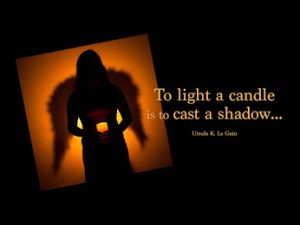 If you’re walking into the sun, you can’t see the shadow you cast, no matter how long it might be.
If you’re looking for your shadow, you’re looking away from the light.
When the sun is at it’s highest and brightest, the shadow you cast is hiding under your feet.
Only when the source of light is about to disappear does your shadow stretch out toward infinity.
We don’t always get to see how we change the world.

Who’s Number One?
“The fragile beauty of narcissism.”
That’s the title of a blog post I came across. The author tries to make the case — in engagingly poetic prose — that arrogance is a virtue. Having just published a book illustrating how to turn negatives into positives, I was intrigued by his efforts, but fear the gentleman doth protest too much. We have enough blights upon society without turning more vices into virtues.
The author posits that,
Arrogance is “claiming ownership without justification”, in other words, more commonly, an inflated sense of self-worth. Why is it inflated? Because it assumes that that which is the source of pride endures, when the truth is it does not.
 Well, he’s half-right. “Inflated sense of self-worth” is definitely accurate. But the real root of arrogance is the assumption the one is the source of one’s own power.
Why is the arrogance of starlets, sports “heroes,” and members of Mensa so irksome? Because to be born with brains or beauty has more to do with genetics and fate than with innate worth. And although most successful athletes work and train hard to succeed, a certain amount of inborn talent is requisite to anything they may achieve through practice.
The laudable custom among many (mostly Hispanic) baseballers to point toward Heaven after getting a hit shows the humble acknowledgement that athletic prowess is not one’s own. With a single, small gesture they remind themselves — and countless spectators — Who is really Number One.
When our innate abilities lead us to believe in our own superiority, we think we have the right to devalue not only the contributions but the very existence of others. The Torah describes Moses as both “the most humble man who ever lived” and “the greatest prophet who ever would live.” Moses’ knowledge of his own greatness did not impair his humility. Just the opposite — he recognized that whatever ability he possessed came from outside himself, and also how much more he was obligated because of his natural abilities.
To paraphrase a certain president (who meant something else entirely), “You didn’t create that!”
“My point is that arrogance, narcissism, pride, all forms of hubris, are not without aesthetic value. The arrogant man believes, or at least attempts to believe, that he is or has something of unique and special value.”
The author errs by conflating arrogance with self-confidence. To believe in my own value, to seek to fulfill my potential, and to strive to push myself beyond my comfort zone toward new horizons — all that has nothing to do with arrogance. Just the opposite: an arrogant person believes he is already great and therefore has nothing to prove. In fact, studies have shown that people who overvalue their own worth are less likely to take up challenges lest they expose themselves as frauds.
Humility and modesty have largely gone out of style in our society, which is a loss for us all. Let’s try to hang on a bit longer to our contempt for arrogance.

Remembering Forgetfulness
 “Too many people become members of the ‘Bad Memory Club’ and focus on the 5% of the time that their memory fails them. If you think you have a bad memory, it means you have a good one because you can remember where your memory has gone wrong. Think about how much data you already have stored in your memory… Your memory does a lot right, so ask yourself, “How does my memory serve me – how did it serve me today?”
We all have the power to radically improve the quality of our lives by turning negatives into positives. With modest but consistent effort, we can train ourselves to focus on the good, initiating a virtuous circle of positive thinking that leads to increasingly positive actions and results.
Sometimes all it takes is remembering to try.
Life is no different
 Can I possibly count how many things I desperately wanted that I later rejoiced not having gotten?
Can I possibly remember how many things I thought I needed that I would have been better off without?
Can I possibly imagine how different my life would be if all my wishes had come true?
In medicine, the cures are often more painful than the afflictions. Life is no different.

How will we survive the drone culture?
I haven’t read this entire excerpt, but the rise of the drone raises more questions than the obvious ones concerning basic morality and “rules of engagement.”
 At the end of the movie classic “Patton,” the general responds to a reporter’s question about the “wonder weapons” of the coming era:
“Wonder weapons? By G-d, I don’t see the wonder in them. Killing without heroics? Nothing is glorified? Nothing is reaffirmed? No heroes, no cowards, no troops, no… generals. Only those who are left alive, and those who are left… dead. I’m glad I won’t live to see it.”
The message here is not the glorification of warfare. What Patton understood is that conflict brings out the true essence of a person. Cowards are revealed as cowards, providing the opportunity for reappraisal. Heroes are not merely revealed… they are created through their engagement on the field of combat. The heat of battle requires them to tap into unrealized potential.
This doesn’t require a battlefield of armies. It does require that we take up arms against our lesser selves and strive to conquer our baser impulses and inclinations. It demands that we grapple with the complex issues of good and evil and not take refuge in political slogans or groupthink.
In a culture of automation, we have a harder fight not to become automatons ourselves. We can comfortably join the army of drones, or we can meet the challenge, rise to the occasion, and emerge victorious as heroes.
Reflect the reality you want
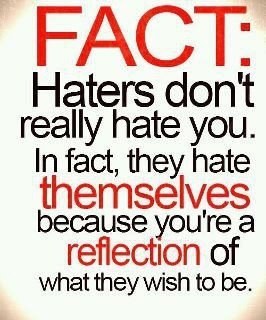 If you want to be happy, let happy people shape your mood.
If you want to be successful, let successful people show you the way.
If you want to be wise, walk in the ways of wisdom.
If you want to be appreciated, show appreciation.
If you want to be respected, act worthy of respect.
If you want to be loved, love others.
If you want to make a difference, learn right from wrong, and have the courage to do what’s right.
Send us your email, and we will send you the first four chapters of Proverbial Beauty – free!


Paradoxical Truths to Embrace for a Meaningful Life
 I’ve been telling my students for years that to live a successful life one has to be a little bit schizophrenic. We live in a world filled with contradictions that we have to acknowledge, attempt to reconcile, and sometimes accept as irreconcilable.
This article does a wonderful job of spelling it out. Definitely worth reading.
 Yonason Goldson