Home » Personal Development (Page 7)
Category Archives: Personal Development

The Pathology of Praise
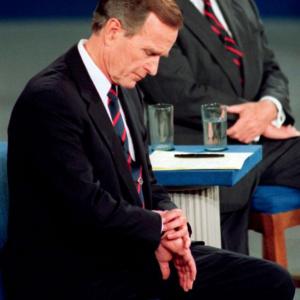 You’re so cute. You’re so sweet. You’re such a doll.
You slob. You moron. You’re such a loser.
Anyone who has studied education or taken parenting classes has heard the eight-to-one rule: offer eight positive comments for every negative one. The theory is sound. By responding to good behavior, we accomplish three things:
- reinforce that behavior so it will be repeated more often
- encourage a positive self-image inconsistent with bad behavior
- legitimize occasional criticism so it will be taken to heart
All well and good. Except when it doesn’t work.
In her acclaimed bestseller, Mindset, Dr. Carol Dweck reports that grade school teachers criticize boys eight times more often than girls. If that weren’t enough, school-age boys typically pepper their conversation with insults, put-downs, and name-calling. Consequently, we should expect to find that girls grow up into self-confidant over-achievers and boys grow up into meek underperformers.
In fact, just the opposite is true.
Professor Dweck observes that the constant negativity directed at boys makes them increasingly impervious to criticism, which may boost their confidence but leaves them unreceptive to constructive advice. In contrast, the praise lavished on girls can leave them hypersensitive to criticism, to the point where they are afraid to take risks and tend to indulge in constant self-doubt.
Applied to society at large, this may explain a lot about our collective cultural dysfunction.

Six Misconceptions that Stifle Success
 Why aren’t we more successful? Why aren’t we happier? Why do we have so many problems? Why can’t we get along?
We might blame it all on any number of things:
- Texting
- The internet
- Political correctness
- Self-esteem philosophy
The truth is, all of these are symptoms of the real problem:
The devaluation of self-discipline and personal responsibility.
More and more, we live in a culture that teaches us to expect what we want without effort and without concern for consequences. We know this doesn’t apply at work or in the gym; we should know that it doesn’t apply in school, in relationships, or in government.
But the social messages of immediate gratification and entitlement have seeped in everywhere, most of all into the one area on which all others depend.

Why people give up
 Anna Vital’s infographic reminds us of what we easily forget.
Hat tip: Joseph Lizio.

4 Lessons for Successful Leadership
(Expanded from a previous article.)

Tom Hanks’s recent movie “Sully” allows us to re-experience the dramatic events of January, 2009. Looking back, there are three great stories in the averted disaster of US Airways Flight 1549 that can change our outlook on life’s unexpected twists and turns.
First is the story of providence, which placed a pilot with precisely the right training, experience, and temperament at the helm of the crippled jetliner while placing the aircraft within reach of the only feasible landing strip — the Hudson River — for a safe, if chilly, touchdown.
Lesson 1: Even when things go wrong, look for an unexpected solution at hand to make them go right.
Second is the story of heroism. The pilot, Chesley Sullenberger, drew upon his experience with both military fighters and gliders to bring the passenger plane safely down from the sky. The flight crew quickly and efficiently instructed the people to prepare for impact and then hastened them off the sinking plane. The rescuers, both professional and private citizens, steered their craft to the crash site within minutes. Not one life was lost.
Lesson 2: With the right people ready and waiting, almost anything is possible.
But the third story is that of the passengers. For the most part untrained and unprepared, without exception the passengers on Flight 1549 did precisely what they needed to do in order to survive.
They followed instructions.

Rejecting the new Age of Inevitability
 Isn’t it great to live in an age when machines can do anything? Cars drive themselves, jetliners land themselves, and smartphones do just about everything but tuck us into bed.
Recognition software can read our moods and even catch us telling lies. (That’s a good thing, right?) Programs can analyze our handwriting and predict our likes, dislikes, and likely actions by tracking our digital footprints. Soon, Amazon may be filling orders for us that we haven’t even placed yet.
In the workplace, software programs may start deciding who gets hired or promoted based on models constructed from data gathered about the highest performing employees. This may include variables based on medical history, psychological markers, and virtual clues to everything about us including age, gender, political leanings, and sexual preference.
In a recent Ted Talk, Zeynep Tufekci acknowledges that these programs may make decisions more objectively than humans do. But she cautions that machines trained to infer and predict are only as good as their programming, and will of necessity reflect the biases of their programmers — which could mean compounding, not eliminating, bias.
What’s more, the algorithms that produce this kind of “machine learning” don’t allow for human insight and intuition. It’s all statistical analysis, which turns probabilities into absolutes with no assessment by human reasoning and without allowing room for appeal to a higher authority.
The more troubling issue is our willingness to abdicate the responsibility implicit in free choice. In a culture that has long conflated judgment with judgmentalism, it’s hardly surprising to find how eager people are to reduce every decision to a binary option and thereby eliminate all shades of gray from the mix. And if that’s not enough, we can simply block any information that doesn’t conform to our way of thinking.


Walking in Circles
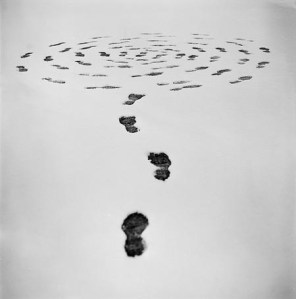 As the two contenders for the job of Leader of the Free World continue to confirm our worst fears about their competence and character, it’s worth revisiting these thoughts from 2010 about how we keep ending up in the same place.
“The whole world is a narrow bridge,” taught the great Chassidic master Rabbi Nachman of Breslav (1772 -1810), in one of his most famous aphorisms, “but the main thing is to have no fear at all.”
According to German scientist Jan Souman, however, it seems that we have good reason to be afraid. After exhaustive research devoted to the study of walking, Dr. Souman has amassed a mountain of evidence proving that human beings possess a natural inclination to travel in circles.
Like some impious prankster, Dr. Souman took his subjects out to empty parking lots and open fields, blindfolded them, and instructed them to walk in a straight line. Some of them managed to keep to a straight course for ten or twenty paces; a few lasted for 50 or a hundred. But all of them ended up circling back toward their points of origin.
Not many of them. Not most of them. Every last one of them.
“And they have no idea,” says Dr. Souman. “They were thinking that they were walking in a straight line all the time.”
Dr. Souman’s research team explored every imaginable explanation. Some people turned to the right while others turned to the left, but the researchers could find no discernable pattern. Neither left-handed nor right-handed subjects as a group demonstrated any propensity for turning one way over the other; nor did subjects tested for either right- or left-brain dominance. The team even tried gluing a rubber soul to the bottom of one shoe to make one leg longer than the other.
“It didn’t make any difference at all,” explains Dr. Souman. “So again, that is pretty random what people do.”
In fact, it isn’t even limited to walking. Ask people to swim blindfolded or drive a car blindfolded and, no matter how determined they may be to go straight, they quickly begin describing peculiar looping circles in one direction or the other.
And if, as the research indicates, human brains are hardwired to lead us in circles, why does Rabbi Nachman insist that “the main thing is to have no fear at all”?
 After all, a narrow bridge is a dangerous place to walk in circles.
Perhaps the answer lies in the words of King Solomon: G-d made man straight, but mankind sought many intrigues (Ecclesiastes 7:29).
The sages teach us that, in his original form, Adam towered above every other manner of creation and radiated a light of spiritual illumination. The inner purity of the First Man shone forth through the physical body that clothed his supernal soul, and the godliness that defined his essence drove him forward in unwavering pursuit of his divine purpose.
But Adam allowed his desire for spiritual elevation to confound his reason, rationalizing that by consuming the forbidden fruit he could internalize the influence of evil and thereby conquer it from within. Despite his noble intentions, by violating the divine word Adam strayed from his straight course and lost himself amidst the winding paths of a crooked world.
The history of Adam’s descendants testifies to the crookedness of man. The moral corruption of the generation of the Flood, followed by rebellion in the formof the Tower of Babel, marked mankind’s steady drift away from the path of Truth. The incipient Jewish nation, even before they had the opportunity to receive G-d’s Law at Sinai, twisted their spiritual yearning into worship of the Golden Calf and condemned themselves to wander directionless in the desert for 40 years.
Only upon entering their land did the Jews have another chance to find their way back to the straight and narrow. But again they lost their sense of purpose, refusing to accept upon themselves a leader who might steer them back on course toward a renewed national mission. And so the prophet declares that, “In those days there was no king; every man did what was upright (yashar) in his own eyes” (Judges 21:25).
The Hebrew word yashar, rendered here as upright, translates literally as straight. Indeed, no matter how much the Jews may have then convinced themselves of the straightness of their path, they were truly wandering in circles.

Dr. Souman explains what might otherwise seem obvious, that there is a simple solution to the circular inclinations of the internal human compass. With external clues, like a mountaintop or other promontory on the horizon, people have no trouble at all traveling a straight line.
Perhaps now we are ready to appreciate the meaning of Rabbi Nachman’s metaphor. We walk through life as if blindfolded, unable to see either the true nature of the world or the true purpose of our existence, bemused by all the material vanities that surround us and vie for our attention. The world is indeed a narrow bridge, with the winds of fad and fancy buffeting us on every side, relentlessly threatening to topple us into the abyss of spiritual oblivion if we place one foot off the path to either side.
But if we raise our eyes above the fray, if we pull the blindfold from our eyes and set our sights upon the mountaintop that beckons us across 3300 years of history, then we can march confidently into the future with no fear of straying from the true course that promises to lead us safely home.
Give a little, get back a lot
 Remember what they taught you when you were a kid:
It’s better to give than to receive.
Sure, it sounds nice. But no one really believes it.
After all aren’t these our basic assumptions about human nature and the ways of the world?
- No good deed goes unpunished (Clair Boothe Luce).
- When a fellow says, “It is not the money but the principle of the thing,” it`s the money (Kin Hubbard).
- Where large sums of money are concerned, it is advisable to trust nobody (Agatha Christie).
- If you wish to be a success in the world, promise everything, deliver nothing (Napoleon).
- The end of the human race will be that it will eventually die of civilization (Ralph Waldo Emerson).
It may be a cynical way of looking at life, but we had better learn to live with it if we want to get ahead.
Or do we?

Why Feeling Good about Yourself Is Not Always Good for You
 Take a ride in a glass elevator, from ground level to rooftop in a single ride. How do you feel?
If you’re like most people, you feel – no surprise here – like you’re on top of the world. You feel good about yourself and believe in your ability to overcome any obstacle and conquer every challenge. The only downside is – well, going down. By the time you get to the bottom, not only have your feelings of grandeur evaporated, but now you feel a bit puny, somewhat insignificant, and less than capable.
But wait! You can save yourself the effort. Researchers have discovered that you can awaken the same responses by merely imagining yourself soaring skyward or plummeting earthward. With a little visualization, you can create your own mood.
But what happens next?
That’s what Max Ostinelli, David Luna, and Torsten Ringbergat wanted to find out. The three University of Wisconsin, Milwaukee, psychologists had people imagine themselves rising up into the sky, then asked them to solve a series of SAT-style math problems. With all that positive and high self-esteem pumping up their neural pathways, certainly, their performance should have increased significantly. Right?
Wrong. They did worse. A lot worse. In fact, the performance gap between those who had their self-esteem artificially inflated and those who had theirs artificially diminished was between 20 and 30 percent.
As Max Ostinelli explains to NPR,
“When we boost self-esteem in this way, people are motivated to maintain their high self-esteem. So they say, well, I’ll withdraw from the task.”
In other words, when we know that our feelings of accomplishment are unearned or undeserved, our defense mechanism kicks in to protect our fragile bubble of fantasy from the nasty pinprick of reality. Conversely, when we feel we have to prove ourselves, an inner voice prompts us to engage and persevere rather than sit around wallowing in our feelings of inadequacy.

Rosh Hashanah Tailor-Made
Nobody likes fundraising dinners. The speeches are dry, the menu is dull, and the seating arrangements seem to have been drawn up by the Marquis de Sade. No one looks forward to these affairs, and we attend them only out of a sense of obligation.
Since one dinner I attended last year, however, I have become more wary than ever of this kind of event.
The evening began unremarkably and proceeded unremarkably — up to a point. The food was better than usual, the speeches ran longer than usual, the company was as good as could be hoped for, and I never saw the dinner plate that slipped from the tray of the passing waiter and struck me squarely on the forehead.
 “I didn’t hit you, did I?” asked the waiter in response to the alarmed gasps and cries from the people who shared my table, several of whom assured him that he had, indeed, scored a direct hit.
“Are you all right?” he asked, inevitably. A silly question, really.
A pound-and-a-half of glazed ceramic packs quite a wallop after accelerating at thirty-two feet-per-second-squared from a height of six feet in the air.
At least I was still conscious, still sitting upright, and I didn’t think I was bleeding.
“Get a doctor,” someone said.
“He doesn’t need a doctor,” said someone else. “Get him a lawyer.”
The manager arrived with an ice pack. “Here, take this.”
“I was hoping for scotch with my ice,” I said.
He laughed, but didn’t bring me any scotch. “I’ll need your name and address, sir,” he said, handing me a pen and paper.
“Don’t sign anything,” yelled someone from the next table.
I scribbled my vital statistics. “I’m really very sorry, sir,” he said.
“Is there anything else I can do for you?”
“Just the scotch.” He laughed again and went away. I had figured the manager would offer me vouchers for a complimentary night’s stay. He hadn’t. (I never even got a letter of apology.) I hadn’t gotten my whisky, either.
I began regaining my bearings to a medley of more lawsuit jokes. From across the table, however, my next door neighbor offered the only profound comment of the evening: “What were you thinking about before you got hit?”
I knew exactly what he meant. According to Talmudic philosophy, there are no accidents, no coincidences, no random events. Everything comes about through the guiding hand of Divine Providence, what we call hashgochoh pratis: the spiritual imperative that governs how the external world acts upon each and every one of us. In other words, if I got smacked on the head, I must have had it coming to me.
This is a far cry from the popular notion that whatever I want, I have coming to me. As much as contemporary culture may insist that privileges and entitlements are birthrights, the Talmud recognizes only our responsibilities, both to other individuals and to society. When we live up to our obligations, we may expect certain rewards to come our way. But if we do receive an apparently undeserved blow, great or small, we should assume that the equilibrium of the cosmic scales of justice somehow needed to be set back in balance, and we should reflect upon the message that has just been sent us from on high.
Sometimes we can easily identify a concrete lesson to glean from such mishaps. Other times not. But the principle holds, even when we can’t perceive any clear cause and effect: this was necessary; now we need to brush ourselves off and get on with life.
The traditional Yom Kippur liturgy provides a poignant example in its narrative concerning Rabbi Yishmoel, the High Priest, who died as the skin of his face was peeled away to suit the whim of the Roman governor’s daughter.
The malachim, the divine beings who inhabit the heavenly spheres, protested in outrage: “Is this the reward for living a life committed to holiness?” they demanded.
“Be silent!” commanded the Almighty, “or I will return the world to void and nothingness.”
 The incomparable 18th century genius, Rabbi Elyahu of Vilna, explains G-d’s reply with an allegory: a king once received a gift of fine Turkish wool, the most luxurious fabric in the world. It was so beautiful, in fact, that the king could not bear to think that even a tiny piece of it should end up as scrap on the cutting floor. He went to every tailor in his kingdom and asked each to make him a suit without letting even one thread of the wool go to waste. But every tailor claimed that such a feat was beyond his ability.
Finally, the king found a tailor who agreed to do the job. When the king returned to the tailor’s shop on the appointed date, he discovered that the tailor had indeed produced an exceptional suit of clothes. The king was elated.
“But have you fulfilled your promise?” asked the king. “Did you use every thread?”
“You really don’t know,” answered the tailor. “And the only way you will ever will find out is if you tear your beautiful suit apart and lay out all the pieces in the original shape of the fabric.”
Similarly, we often think that life is full of unfair knocks or is missing essential pieces. But to know for sure, we would have to see all of human history undone before our eyes. Only then would we have the right to assert that there were flaws in the slow sculpture of creation.
The days from Rosh HaShonnah to Yom Kippur — the traditional season of judgment — afford us the opportunity to strengthen our trust that the Master Tailor has done His job well, that He has stitched together the fabric of eternity according to a plan He understands far better than we do — even when bricks, or china plates, fall out of the sky upon our heads.
Should I have sued the hotel? the waiter? the school holding the event? the principal, who was speaking when I got hit? No doubt, I could have found any number of lawyers eager to take the case. If a woman could receive 4 million dollars for spilling a cup of coffee in her own lap, this should be worth at least as much.
But life is full of honest accidents resulting in superficial scrapes and bruises. It’s better for us (and better instruction for our children) to look for what we can learn from life’s bumps and knocks, not to look for whom we can blame and how much we can squeeze out of them.
 The waiter returned, contrite and apologetic, perhaps more shaken than I was. “In twelve years this has never happened to me,” he said. Evidently, he also had a date with Providence. “Is there anything else I can do for you, sir?”
“I wouldn’t mind a scotch on the rocks.”
“I’ll see what I can do.”
He did. It wasn’t four million dollars, but it was better than a knock on the head.
 Yonason Goldson