Home » Psychology (Page 17)

Category Archives: Psychology

Which Road Not Taken?

tel Dan 3jpg

Tel Dan Nature Preserve in northern Israel

I recently read an account of a girls’ high school graduation ceremony. The writer described the collective sigh of resignation that whispered through the assembled relatives and friends as one of the graduate-speakers began by reciting Robert Frost’s classic poem, “The Road Not Taken.” The captive audience seemed to anticipate a predictable excursion along the overly well-trodden road of invoking Frost’s verse as a paean to individuality and non-conformism.

Instead, the writer was pleasantly surprised. Departing from the expected formula, the young speaker argued with Frost’s message by defending those with the courage to walk the well-traveled road of tradition in the face of social pressure to reject establishment and convention. It is indeed refreshing to hear the voice of youth, albeit second hand, recognizing the fallacy of a new conformism that preaches non-conformity — or, even worse, anti-conformity.

However, in my days as a student of literature at the University of California, I learned that Robert Frost is among the most famously misunderstood of poets. The attentive reader discovers that it was never Frost’s style to merely paint landscapes out of words or to render such trite messages as “favor the road less-traveled.” Frost had a sharp, unforgiving eye that focused not on the beauties of nature but upon man’s frequent failure to recognize his own place in the natural world.

And so “The Road Not Taken,” like so many of Frost’s poems, ripples with subtle but troubling inconsistencies. Frost asserts that he chose the road

having perhaps the better claim Because it was grassy and wanted wear.

However, he immediately contradicts himself by declaring,

Though as for that the passing there Had worn them really about the same.

So which is it? Were the roads the same or were they different? And if they were the same, then what did it matter which one he chose?

Frost offers his first clue in his first line:

Two roads diverged in a yellow wood…

tel Dan 4jpgWhy did the wood have to be yellow? Since we generally visualize forests as green, would we not expect the wood to be described as emerald, or verdant, or leafy? Why did Frost choose to depict his forest as yellow, the color of the first turning of the leaves with the onset of autumn?

Since Frost is clearly describing not a ramble through the woods but a journey through life, the autumnal image of the yellow wood suggests the last years of middle age, the time when one is set in his ways and resistant to — but not yet incapable of — change. It may be a time when one begins to reflect upon opportunities missed, upon chances not taken, upon the caution that urges the traveler to consider the roads ahead and look

down one as far as I could To where it bent in the undergrowth.

As his choices and options diminish with the anticipated approach of his twilight years, it is here that the traveler through life hopes to catch sight of his final destination before committing himself irrevocably to one path or the other.

Taken thus, the yellow wood represents not the habit of age but the habit of human nature. We favor the familiar, the easy, the undemanding. We resist the unknown, the untried, the untested. When facing decision, human nature prods us along the path of least resistance, the path that poses the least danger, the least challenge and, consequently, the least opportunity for personal growth.

rock path

The two roads diverging in Frost’s yellow wood lay equally trodden in absolute terms. But for the narrator, the inclination born of habit predisposed him in one direction, where a different traveler inclined by his own forces of habit might find himself predisposed to take the other path.

And so Frost does not ponder the choice between roads more or less traveled by others, but contemplates which kind of road he has traveled more or less himself. To challenge ourselves with the unfamiliar, to force ourselves to overcome new obstacles, to seek out opportunities to discover new resources of talent, ability, and creativity — these are the pathways that, “somewhere ages and ages hence” will be what “has made all the difference.”

Who is mighty? asks the Talmud. The one who conquers his inclination. Traditionally, we apply this statement to the battle against the desire for physical gratification and amoral self-interest. But perhaps it applies equally well to the inclination of habit and routine. When we fear the unfamiliar, when we refuse to look down new roads for no reason other than because we have never traveled them before, we rob ourselves of the chance to discover the limitless potential with which the Creator has endowed every one of us.

Originally published in 2008 by Aish.com.

Near-death experience

1You’re ten years old and a sound sleeper, so it’s already unusual that something has woken you up in the middle of the night.  You go out into the hall to investigate.  There are strangers in the house and flashing lights out the window.  Your father tells you to go back to bed.

When you wake up the next morning, your mother has disappeared from your life.

It’s 1970, before school counselors or lettered conditions like PTSD.  Your father means well, but he’s not the communicative type, not one for expressing his feelings to others or eliciting others to share their feelings with him.  He’s from the Depression Era, and he barely saw his own father growing up during those desperate years.  He’s a veteran of the Second World War; difficulties are part of life.

He’s also dealing with his own trauma, as his wife lingers between life and death.

You get shipped off to stay with friends, or with your grandmother.  Very little is explained to you, and you understand even less.  Years later, there won’t be much that you remember, aside from the indelible images of that first night.

You won’t remember waking up the next morning to find your grandmother home with you instead of you parents.  You won’t remember when they took you to visit your mother one last time because no one thought she had much time left.  You won’t remember shouting at her for having abandoned you.  You won’t remember the outgoing, cheerful little boy you were before that cold, winter’s night.

You only remember how hard it was for you to talk to people from that moment forward.  You remember how easily you cried during the years that followed, and how much you hated yourself for crying so easily without understanding what made you that way.  You remember how you considered taking your own life, but always managed to convince yourself that you could do it tomorrow.

A decade passes before you really recover.  In some ways, you never recover at all.

Click here to read the whole essay.

Time Out

breaktimeI’m taking a break for a few weeks.  Until July…

A Tale of Two Icons

trust-me2What’s the difference between Bill Clinton and Hillary Clinton?

Obviously, gender.

Less obviously, expectations.

In an interview with NPR’s Shankar Vedantam, Mary-Hunter McDonnell of the Wharton school of business explained the difference between how men and women are judged by their peers for ethical infractions.

Professor McDonnell and her colleagues asked volunteers to recommend a jail sentence for a hospital administrator who filed a false Medicare claim. When the volunteers believed that the administrator was a woman, the average suggested sentence increased by over 60%.

The researchers also analyzed over 500 disciplinary proceedings in 33 states by the American Bar Association. They discovered that women were disbarred more than twice as often for similar types of misconduct.

The assumption here is that, since women are expected to be more ethical, they are punished more severely when they violate ethical standards.

This may be unfair in practice, but in principle is makes perfect sense. Moral people are expected to behave better than immoral people; consequently, we find their moral lapses less tolerable.

Which brings us back to the Clintons.

Click here to read the whole article.

The House

nad0-018“You’ll leave here after four years with an education few people have had access to in the history of mankind.  What are you planning to do with it?”

It was a good question, set forth by consumer advocate Ralph Nader as he spoke before an embarrassingly empty hall at our conservative university.  I was pretty conservative myself, and certainly no fan of the wildly liberal public avenger.  But I had found the opportunity to hear such an iconic figure irresistible, even if most of my fellow students felt otherwise.

“There’s a world out there filled with problems and suffering and injustice,” Mr. Nader continued.   “There’s a desperate need for crusaders, and you just want to get a job?”

The derision Mr. Nader injected into those last three words reverberated inside the echo chamber of my mind, etching upon my psyche an unequivocal contempt toward employment for the sake of mere employment.

It was 1981, during my junior year at the University of California, Davis, and I still had no idea what I wanted to do when I grew up.  But during those closing moments of his address, Mr. Nader awakened within me the passionate desire to do something – anything – as long as it might make a difference, as long as it would truly matter.

And so I left the lecture hall that evening feeling like Archimedes, looking for my fulcrum to move the world.  And my search led me to The House.

The HouseNo other name could have better described it:  here was an actual house – still thriving in the shadow of university office-buildings, lecture halls, and dormitories – with its modest front porch, unaffected wooden shingles, and single-pane windows opaque with dust around the corners.  Its official designation was Temporary Building-16.  But to everyone who worked there, and to anyone who patronized its services, TB-16 was simply called The House.

Fifteen or twenty years earlier, the thought had occurred to someone at Student Services to create an informal atmosphere where students could commiserate about the problems and stresses of college without having to endure the formality of an adviser, the social pressure of a dormitory, or the stigma of a psychologist.  In the course of its various incarnations, the project acquired a director, instituted a thorough course of preparatory and continuous training, and acquired TB-16.  The House opened its doors.

Karen was the House director, a position she had taken over from her husband, Kennebec.  His name was really Ken, but he had fallen in love with the Kennebec River and used its name as his own – at least in the company of friends and close acquaintances.  Student Services had brought him in to assume the directorship “after The House’s last nude retreat,” in hope of imposing greater structure upon the fledgling peer counseling facility.

Not that Ken was all that conventional himself.  His hobby was jumping freight trains, and he hadn’t thought it at all inappropriate to use this informal style of transportation for his own staff retreats.  I nagged Ken every time I saw him to take me train-jumping, but he was settling into the routine of responsible middle age, and never found time to take a weekend off to travel as undeclared baggage.

So Ken, it’s your fault that I later became a hitchhiker and not a hobo.

Click here to read the whole essay.

Profile of Terror

RacialProfilingWhether or not the cause of the EgyptAir disaster turns out to be terrorism — and regardless of whether Donald Trump was right or wrong to call it terrorism before any information was in — that was and is everyone’s first thought in these dangerous times.  We don’t believe in accidents anymore; experience has been too stern a teacher and the lessons of fanaticism have been too painful.

Presumably, such incidents will only make TSA lines move slower and slower.  Which wouldn’t matter if that actually made us safer and safer.

My neighbor told me recently that his son flew to Australia by way of Istanbul and Qatar.  Changing planes in Qatar’s Hamad International Airport, he was ushered through customs without even breaking stride — along with every other Caucasian on his flight — while every single Middle-Easterner was detained, searched, and questioned at length.

Interesting that the Qataris have no qualms about profiling their own people, while here in the open-minded West cling desperately to the illusion that every passenger poses an equal threat to our security.

Is it possible that the Qataris know something we haven’t figured out yet?

If terrorists were dressing up as Orthodox rabbis, I would want TSA to profile me and those who look like me.  Instead of taking it personally, I would be grateful for their common sense and conscientiousness.

But I guess that’s just me.

Spitting Image 3:3 — Never having to say you’re sorry

hqdefaultI can almost feel sorry for J. K. Rowling.  By age 40 she had published the most successful literature series in history, become the richest woman in England and, according to Forbes, was the first person ever to become a billionaire by writing books.

By any accounts, 40 is too young to retire.  So what does one do for a second act?

Ms. Rowling tried turning her hand to crime novel writing, but the glare of Harry Potter washes out anything else connected with her name.  After claiming she would never add to the series, now it seems that she is doing precisely that with a forthcoming sequel.

And why not?  Better than the sad attempts to stir up controversy with her post-publication commentaries, which seem aimed at no goal other that remaining relevant after her book sales ceased to make headlines.  First she told us that Albus Dumbledore is gay, an assessment that cooled the enthusiasm of many fans and met with incredulity from many others.

Then she began apologizing for killing off her characters, first Remus Lupin then, most recently, Fred Weasely.

960If Leo Tolstoy were still alive, would we expect him to apologize for killing off Anna Karenina?  Did William Shakespeare go too far by killing off Romeo and Juliet?   Should Arthur Miller have re-imagined the saga of Willy Loman as Life of a Salesman?  And is there anybody with more blood on his hands than Nicholas Sparks?

Ms. Rowling’s gift for making the fantastic seem believable depended upon lacing her stories with the kind of harsh and painful twists that are inevitable in the real world.  Without these, her novels would never have struck such a resonant chord with readers who could be captivated by impossible flights of fancy while finding within the narrative a wealth of down-to-earth lessons and insights for every day living.

Of course, maybe Ms. Rowling didn’t mean any of it, like the April Fool’s joke of Harry being a figment of Ron’s imagination.

We can hope, while suggesting that the author remember the words of King Solomon:  Do not say, “How is it that times gone by were better than these?”  For that is not a question prompted by wisdom.

With a talent for storytelling like yours, Ms. Rowling, no apologies are necessary.


Your dog doesn’t love you — get over it

dog-00033Okay, I’m guilty.

As a high school teacher, I strive to maintain a persona of impeccable professionalism every moment of every day. Almost.

On rare occasions, however, when I can no longer resist the impulse to really get under my students’ skin, I indulge a streak of sadism and utter those few words guaranteed to enrage even the most mild-mannered teenager.

Are you ready? This is what I say:

“Your dog doesn’t love you.”

And I don’t stop there. Pausing a few seconds to allow the full measure of indignation to begin boiling over, I follow up with:

“And you don’t love your dog.”

I have plenty of ammunition in my arsenal to defend my point. But in addition to the logic of my argument, I now have a current study that supports my claim.

Click here to read the whole article.

Spitting Image 3:1 — A Journey of a Thousand Miles…

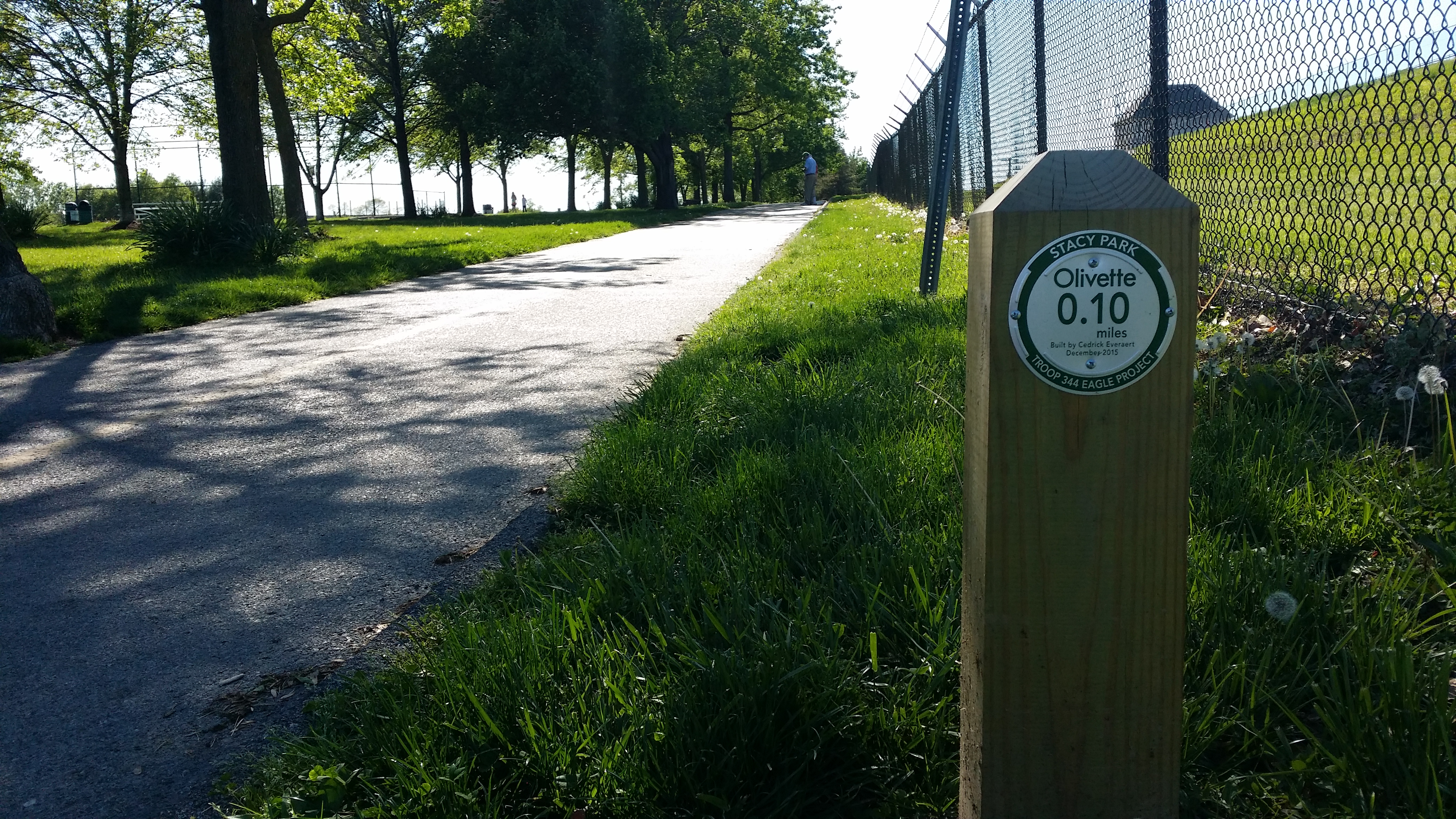
mile markerThe road beckons, and our heart longs for adventure.  But the way is long, and who knows what might befall us along our journey?

How many times have we turned back, turned aside, or given up before we’ve given ourselves time to either succeed or fail?  How many opportunities have we missed, how many victories have we left unwon, how many heroic failures have we traded for cold comfort and abandoned hopes?

All beginnings are difficult, say the sages of the Talmud.  And when we concede the race before we start, all we have left is a scrapbook of empty dreams.

Why we can’t say what we mean

matisse5a-2-webA picture is worth a thousand words.  Except when it isn’t.

You may have heard of Le Bateau, the work by French avant-garde painter Henri Matisse that hung upside down in New York’s Museum of Modern Art for 47 days back in 1961.  Looking at the painting, it’s hard to see why it mattered.

But that’s not the case when we communicate.  According to a recent study by the University of Minnesota, the use of emoji — those little yellow emoticons — are almost as likely to cause confusion as they are to evoke the emotions for which they are named.

Interviewing 334 subjects, researchers discovered that people argued over whether emoji communicate positive, negative, or neutral emotions about 25% of the time.  That’s a lot of befuddlement for a medium that’s supposed to make communication easier.

Hannah Miller, lead author of  the study, told Fortune Magazine that people could solve much of this confusion by “putting emojis in context, adding words into the mix.”

Now there’s a novel idea:  use actual words to say what you want to say.

screen-shot-2016-04-13-at-3-24-06-pmThe problem is, even that doesn’t always help, since the putrefaction of language that has resulted from advertising and political correctness, together with the corrosive influence of texting, has degraded not only our ability to articulate our thoughts clearly but also our capacity for clear thinking altogether.

Whether the deterioration of thought has influenced the deterioration of language or vice versa is the topic of these musings from 2009.