Home » Psychology (Page 20)
Category Archives: Psychology

Are you Smarter than a Pigeon?
 In the name of science, I’d like to propose a new study to investigate how researchers choose the topics they study. If my proposal finds acceptance, Jessica Stagner of the University of Florida will almost certainly figure prominently in the investigation.
Professor Stagner and her colleagues hoped to find support for evidence indicating that gamblers feel the same thrill of excitement when they almost win as they do when they actually win. To do so, they created an experiment in which pigeons had to peck at colored markers in order to receive hidden rewards.
That’s right: Pigeons.
And what was their conclusion? Pigeons are smarter than people.

Making the Ordinary Extraordinary
 You’ve just ordered a top sirloin at a five star restaurant and the waiter brings you prime rib. Or you arrive on time for your reservation and still have to wait 20 minutes to get a table. Or you ask for a beer with your dinner and, after you’ve reminded the waiter twice, he informs you as you’re finishing off your entree that the restaurant is out of your selection.
Do you complain to the manager, or do you wax philosophic and chalk up the experience to the vagaries of life?
It may depend on whether you are dining cross-country or dining across town.
That’s what researchers from Temple University, Arizona State University, and the University of Minnesota concluded when they studied a cross-section of restaurant reviews: we’re more likely to be critical of establishments when we’re closer to home than we are when we’re on the road.
The question, of course, is why?

Compartmentalize Your Free Will
 Throw out the diet books and stop starving yourself. Here’s the next big thing in healthy living:
Duct tape. Yellow duct tape.
That’s what researchers found when they partitioned grocery store shopping carts into sections, one side for fruits and vegetables, one side for other items. Just a little nudge to make shoppers more conscious of their purchases led them to buy more healthy food and less junk.
The researchers, Brian Wansink, Dilip Soman, Kenneth Herbst, and Collin Payne, didn’t stop there. By varying the size of the compartments, they discovered that shoppers bought even more fruits and vegetables in proportion to the size of the designated compartment. With a little manipulation, customers could be prodded into choosing a healthier diet.
Ah, but there’s the rub. How dare they manipulate us! Who are they to play with our minds, to force us to conform to their values, and to interfere with our free will?
To which there is only one obvious response: nonsense!
Read the whole article at http://www.pickthebrain.com/blog/compartmentalizing-free-will/#kyxx1wXQ1Ae41ZFJ.99

Living Beneath Falling Skies
 Two stories from this morning’s headlines:
Man Suing Over Injury From Giant Pine Cone in San Francisco
Missile Brought Down Malaysia Airlines Plane in Ukraine, Investigators Conclude
Our hearts should truly go out to the U.S. Navy veteran who had the misfortune of relaxing in a national park when a 16-pound pine cone fell on his head. The story would be comical were it not so tragic. After serving their country, our servicemen deserve respect and appreciation, not traumatic brain injury from freak accidents.
But that’s just the point. This was an accident, and accidents happen.
I suppose lawyers will wrangle over whether the Park Service was negligent for not posting warning signs and fencing off the area, or for planting a non-native species that might threaten unsuspecting visitors. I suppose one could also make the case that the Park Service should assume a measure of responsibility by covering the victim’s medical expenses.
But what does it say about us when our natural impulse is to litigate every mishap, to turn to the courts, assign blame, and make others pay? Life is full of scrapes and bruises, and sometimes more painful twists of fate. How we deal with the apparent randomness of our world comes down to personal philosophy and theology, but it isn’t always someone else’s fault.
In truth, it reflects a kind of collective arrogance, resulting from the delusion that we are in total control of our lives and our world, and that anything bad that happens to us must have been inflicted in some kind of criminal act. Why fate smiles on some and torments others is a question we can’t expect to answer in this world. But there isn’t always a man behind the curtain whom we can haul into court to demand restitution.
Even worse, when we attribute wicked intent to every whim of fortune, we lose some of our contempt for true acts of evil. The recent finding that it was a Russian-built Buk missile that killed 298 people aboard Malaysia Airlines Flight 17 last year confirms what everyone expected. There is true evil in the world, and we dare not conflate incidental suffering with that perpetrated by authentic villains.
We live in a world full of contradictions. When bad things happen to good people, we owe them our comfort and sympathy. When bad people spread suffering among the innocent, we are duty bound to hunt them down and exact justice.
But we should never confuse the two.

Someone is Always Watching
 “Someone is always watching.” Movie fans will recognize this as the punchline from “Ocean’s Eleven,” a glib repartee that ultimately recoiled on Andy Garcia and drove Julia Roberts back into the arms of George Clooney. Political observers might remember it, now that former Illinois Governor Rod Blagojevich is back (briefly) in the news, as a line the convicted politico should have uttered when he found himself the subject of state and federal investigators.
But just the opposite was true. The AP reported:
“You would think he would see his life collapsing around him,” said Chicago defense lawyer John Beal, who was in the courtroom with Blagojevich this week and noted how carefree he seemed. “But he was the center of attention and seemed to love it.”
One almost envies Mr. Blagojevich the comfort of his delusions.
At the beginning of the last century, the invention of electric lighting,telecommunication, and cinematography began to change the complexion of modern society. At the time, the leader of European Jewry, the venerable Chofetz Chaim, observed that the introduction of technologies scarcely imagined a generation before provided a lesson for any spiritually sensitive person to recognize that the Universe is not indifferent to our moral conduct.
Previously, the natural cycle of night and day imposed strict order upon human activity. Because most people in those times could not afford the limitless supplies of candles necessary to transform night into day, all activity was cut short early by the long nights of winter, and only in summer could the workday stretch late into the evening. Now, inexpensively and with the flick of a switch, the night could be expelled and the secrets of the darkness instantly revealed.
Can you say AshleyMadison?

How to Take Charge of your Moods and your Choices
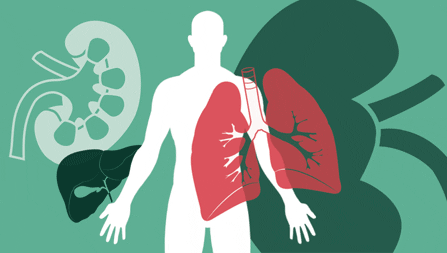 Why does Alaska have the highest rate of organ donation in the country? It might have something to do with Sarah Palin.
Most of us confront the question of whether or not we want our organs harvested every time we apply for a new driver’s license. Typically, we have to choose between checking a box if we want to be donors or leaving the box empty if we don’t.
This is how most donor forms were designed. Then researchers wondered what they could do to increase the number of participants. They came up with the bright idea of giving people a choice between two boxes: mark the yes box to donate, mark the no box to decline. The reasoning went this way: if people can opt out passively, then they’re not necessarily thinking about the choice in front of them, whereas having to choose one way or the other will force them to consider their options more carefully, resulting in more affirmatives.
The reasoning makes perfect sense. However, people are not always reasonable.

Channeling Anger and Solving our Common Problems
My thanks to Dan Mason of KKOH in Reno for inviting me to be a guest on his show. We talked about the anger driving voters, resolving conflict, and transforming negatives into positives.

The Miracle of Music
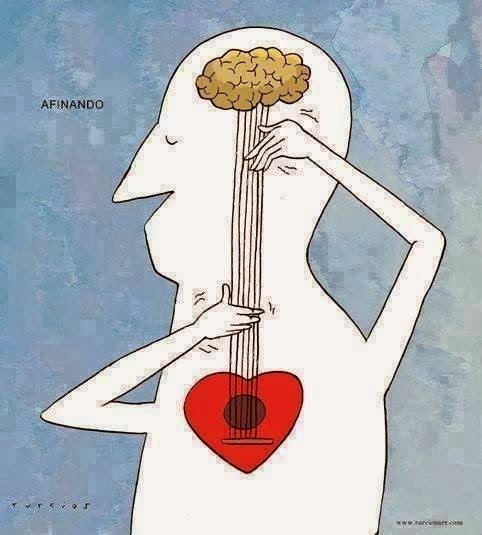 Why do the human mind and heart respond so passionately to an arrangement of sounds and words that provide absolutely no tangible or evolutionary benefit? The answer reveals much about ourselves and the world we live in.
We spend much of our lives looking and hoping for miracles. But the greatest miracle of all is right before our eyes: nature itself, the seamless fusion of all the forces of the world into a unified, unvarying system.
Science itself testifies to this: the principle of entropy, intrinsic to Newton’s second law of thermodynamics, describes the natural state of the universe as tending always toward disorder. In other words, nature’s law cannot account for the laws of nature, cannot explain the original ordering of the natural world that produced the immutable regularity of nature itself. What greater testimony to intelligent design can one find than the unnatural, persistent order evident in every aspect of the workings of Creation?
But what does this have to do with music?
Read the whole article here: http://www.learning-mind.com/the-miracle-of-music-how-sounds-affect-the-human-mind-and-heart/


Embrace Illusion
We see what we want. We don’t see what’s right in front of us. We need to learn how to look if we want to see what we’ve been missing.
Time — 4:13

Acquire the Gift of Giving
When she was 8 years old, Lara Aknin convinced her little brother to trade his dimes for her nickels. It was an easy sell… after all, nickels are bigger and must therefore be worth more.
 Now a psychologist at Canada’s Simon Fraser University, Dr. Aknin has discovered a mistake more profound than youthful embezzlement: in truth, her motivation itself was built on a misunderstanding of human nature.
In an interview with NPR’s Shankar Vendatam, Dr. Aknin describes the experiment in which her team asked toddlers to feed candies to hand-puppets which, they were told, would really enjoy the treats. Considering that these children were still too young to have absorbed any cultural awareness of giving as a value, the results produced two surprises. Explains Dr. Aknin:
“Children smiled significantly more when they were giving treats away than when they received the treats themselves. But what we thought was particularly exciting was that children actually smiled significantly more when they gave away one of their own treats than an identical treat provided by the experimenter.”
In other words, the greatest feelings of joy may come from giving up that which we treasure the most.
But does the impulse remain as we grow into adulthood?
 Yonason Goldson