Home » Psychology (Page 21)
Category Archives: Psychology
Where did I leave my keys?
 Have you noticed how the more we try to push God out of our lives, the more insurmountable our problems seem to become?
Remember Einstein’s definition of insanity?
How many times have we spent the morning looking for our keys, cursing the fool who moved them, until we discover that we carelessly dropped them someplace where we were certain not to find them?
How often do we blame other people for the problems we caused ourselves, and look to others for the solutions that we hold in our own hands?
Isn’t it time we learned better?

No one is so strong…
 Back in college, when everyone’s goal was “self-actualization,” we used to joke that the curse of actually becoming self-actualized would be having to live in a world where no one else was.
Strength doesn’t mean not needing anyone else. It means not being a slave to internal or external forces.
“Who is mighty?” asks the Talmud. “The one who masters his impulses and inclinations.”
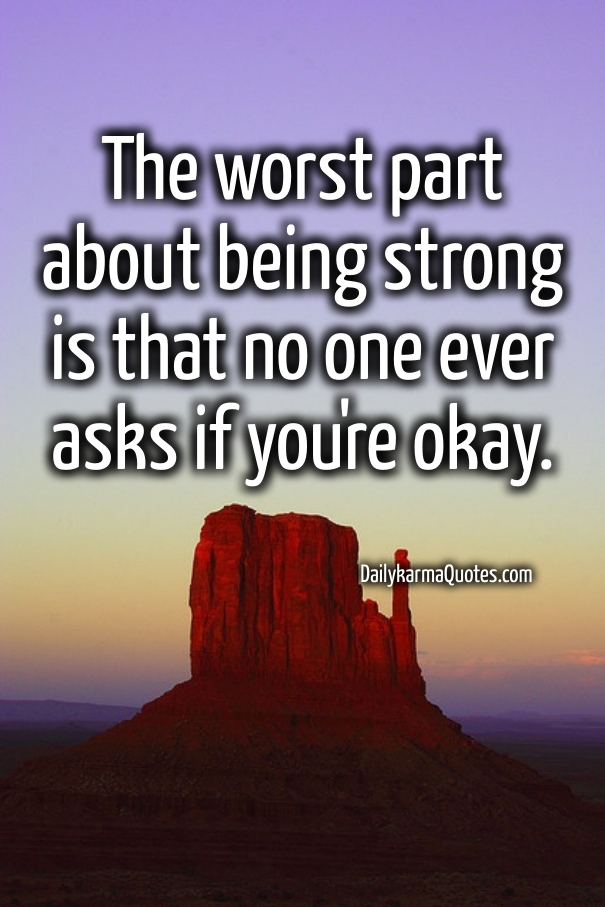
But we still need other people, and the downside of being strong is the presumption by others that everything is always okay.
So don’t forget to ask the people close to you how they’re doing, even when they seem to be on top of the world. Sometimes strength is a burden that we can’t carry alone.

Who’s Number One?
“The fragile beauty of narcissism.”
That’s the title of a blog post I came across. The author tries to make the case — in engagingly poetic prose — that arrogance is a virtue. Having just published a book illustrating how to turn negatives into positives, I was intrigued by his efforts, but fear the gentleman doth protest too much. We have enough blights upon society without turning more vices into virtues.
The author posits that,
Arrogance is “claiming ownership without justification”, in other words, more commonly, an inflated sense of self-worth. Why is it inflated? Because it assumes that that which is the source of pride endures, when the truth is it does not.
 Well, he’s half-right. “Inflated sense of self-worth” is definitely accurate. But the real root of arrogance is the assumption the one is the source of one’s own power.
Why is the arrogance of starlets, sports “heroes,” and members of Mensa so irksome? Because to be born with brains or beauty has more to do with genetics and fate than with innate worth. And although most successful athletes work and train hard to succeed, a certain amount of inborn talent is requisite to anything they may achieve through practice.
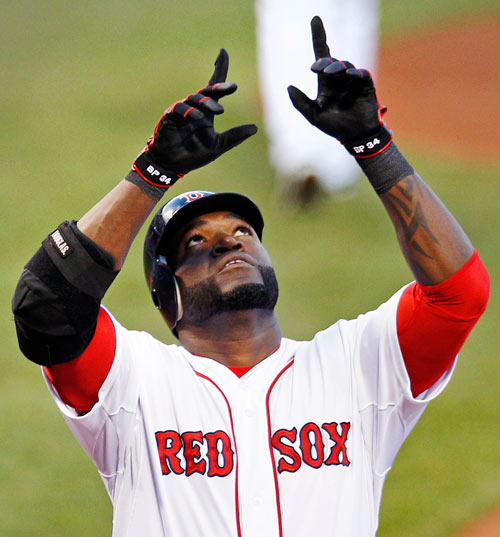
The laudable custom among many (mostly Hispanic) baseballers to point toward Heaven after getting a hit shows the humble acknowledgement that athletic prowess is not one’s own. With a single, small gesture they remind themselves — and countless spectators — Who is really Number One.
When our innate abilities lead us to believe in our own superiority, we think we have the right to devalue not only the contributions but the very existence of others. The Torah describes Moses as both “the most humble man who ever lived” and “the greatest prophet who ever would live.” Moses’ knowledge of his own greatness did not impair his humility. Just the opposite — he recognized that whatever ability he possessed came from outside himself, and also how much more he was obligated because of his natural abilities.
To paraphrase a certain president (who meant something else entirely), “You didn’t create that!”
“My point is that arrogance, narcissism, pride, all forms of hubris, are not without aesthetic value. The arrogant man believes, or at least attempts to believe, that he is or has something of unique and special value.”
The author errs by conflating arrogance with self-confidence. To believe in my own value, to seek to fulfill my potential, and to strive to push myself beyond my comfort zone toward new horizons — all that has nothing to do with arrogance. Just the opposite: an arrogant person believes he is already great and therefore has nothing to prove. In fact, studies have shown that people who overvalue their own worth are less likely to take up challenges lest they expose themselves as frauds.
Humility and modesty have largely gone out of style in our society, which is a loss for us all. Let’s try to hang on a bit longer to our contempt for arrogance.

Are you too sure for your own good?
“Understanding the distinctions between probability and certainty is one of the keys to developing a sociological imagination (and becoming an educated citizen, for that matter). One of the fascinating aspects of social science is using research tools to test assumptions through collected data—typically through multiple studies in a variety of settings.”
 This insightful post by Karen Sternheimer raises two critical points.
First, aside from death and taxes, there’s no such thing as a sure thing. Everything we do is based in probable outcomes. In the game of life, we are all gamblers.
But that’s as it should be. The difference between a gambler and an investor is largely semantic. We take a chance every time we cross the street, and success in any enterprise depends on weighing risk against reward, assessing the odds of winning against the odds of losing, calculating how much might be won and how much might be lost.
“Thinking about probabilities, rather than certainties, leads us to ask questions that help us understand sociological phenomena in much more depth than assumptions do.”
The problem is that most of us don’t want to do the hard work of making sure our facts are in order and our reasoning is sound. We’d rather listen to our gut, which is notoriously unreliable; after all, it’s a lot easier to take confidence in feelings and assumptions, than to deal with uncertainty.
The second point is the likelihood of children learning from their parents’ examples. If we gamble, chances are our children will, too. If we gamble recklessly, we are setting them up for disaster. But if we never take risks, our children may grow up timid and unaccomplished.
However, if we play the odds wisely, not waiting for the sure thing that will never come but neither betting the farm on long-shots… if we do our due diligence to make cautious bets when the probabilities are in our favor and the potential losses are manageable, then odds are our children will learn to be responsible gamblers themselves and will have the best chance for success in life that we can pass on to them.

The Art of Moving Forward

All around us is deception. Activity masquerades as action. Desire masquerades as direction. Preoccupation masquerades as love.
The Hebrew word yoda means knowledge. It also means intimacy.
Without knowledge, there can be no intimacy. Without closeness, there can be no knowledge. Without trust, there can be no closeness.

Embrace the Unknown and Discover Joy
 Question #1: You’re at an auction. Item #12 is a set of six glass goblets. Item #13 is a mystery set of either four or six glass goblets… you’ll only find out once the bidding is over. Which item is likely to go for a higher price? Needless to say, you would be willing to pay more when they know you’re getting six goblets than you would if you might end up with only four.
Question #2: You’re working at a job for which you will be paid $20. The person next to you is doing the identical job, but doesn’t know whether he will be paid $10 or $20. Who is going to work harder? Needless to say, you will, since you know that you’ll be paid at least as much and maybe twice as much as the other guy.
But guess what? Research shows just the opposite.

Remembering the Boston Bombing
After the sentencing of Boston Marathon bomber Dzhokhar Tsarnaev last week, I’m revisiting some thoughts from the days after the 2013 bombing:
 Zebadiah Carter describes himself living in “an era when homicide kills more people than cancer and the favorite form of suicide is to take a rifle up some tower and keep shooting until the riot squad settles it.” In 1980, this remark by the main character in a Robert Heinlein novel sounded like the science fiction that it was. Now it echoes like a prophecy.
Random acts of mass violence in the United States still horrify us but no longer shock us. We’ve heard too many stories, seen too many pictures. And too many of them are depressingly the same:
- 20 students and 6 adults murdered at Sandy Hook Elementary School.
- 12 killed and 58 wounded at the Century Theater in Aurora, Colorado.
- 13 killed and 30 wounded at Fort Hood.
- 32 dead and 17 wounded in the Virginia Tech massacre.
And those are only the bloodiest atrocities going back to 2007. The Columbine school shooting in 1999 adds another 39 victims to the tally. And, of course, Timothy McVeigh’s bombing of the Federal Building in Oklahoma City in 1995 claimed 168 lives and injured nearly 700.
Now we have to try and make sense of this latest act of senselessness — the Boston Marathon bombings, which shattered an iconic American institution and shook our already precarious sense of order and security.
Amidst all the suffering and all the investigation, the question we most want answered is why?
We’ve asked the same question before. According to reports, Adam Lanza was bullied as a student at Sandy Hook; Eric Harris and Dylan Klebold were bullied at Columbine High School; so was Timothy McVeigh as a boy in Pendleton, New York. There were also histories of psychiatric problems, as there were with Seung-Hui Cho before his attack on Virginia Tech, James Eagan Holmes before Aurora, and Nidal Malik Hasan before Fort Hood.
But these explanations offer little in the way of real answers. Almost all of us were bullied when we were younger without seeking murderous retribution against our tormentors, and most of us can lay claim to at least some kind of neurosis. More to the point, why is random violence on the rise, if the root causes have been around for generations? According to data assembled by Mother Jones Magazine, nearly 40% of mass shootings since 1982 have taken place in the last seven years (excluding robberies and gang-related incidents). If so, what has changed? And can we expect it to get worse?
Ultimately, it may be all about control. “These kids often feel powerless,” psychiatrist Peter Langman told LiveScience. “The one way they can feel like they’re somebody is to get a gun and kill people.”
“Out of control” is a term that seems increasingly characteristic of the world we live in. On the one hand, technology provides us with the power of information, opportunity, and access at a level unimaginable barely a decade ago. But on the other hand, our inability to manipulate so much power leaves us feeling both frustrated and inadequate, while the triumphs of others make us feel like pawns in a game we can never win. With the world at our fingertips, success and happiness remain damnably elusive.
 And so we flail about with increasing desperation, constantly trying to push ourselves just a little harder and work just a little faster. Day by day, our sense of anger and resentment toward a society that promises so much and delivers so little builds within us until we feel ready to explode. In a world gone mad, what else can we do but get mad at the world?
The fallacy, however, is the world has not made sense since the beginning of time. So observed King Solomon, the wisest of all men, in his Book of Ecclesiastes, compiled over a lifetime spent searching for meaning and justice:
And I returned and saw under the sun that the race is not to the swift nor the battle to the strong, neither is there bread to the wise, nor riches to men of understanding, nor yet favor to men of knowledge; but time and death will overcome them all.
Really, all that has changed is our expectation. We have been taught to believe that anything we desire is within our grasp, that we are entitled to the love of poets, the wealth of kings, the pleasures and the power of the gods. Our culture has etched upon our collective consciousness the inalienable right to life, liberty, and the pursuit of happiness. And although Thomas Jefferson had the wisdom not to assert the right to happiness itself, that subtle distinction is lost on most of our generation.
Given the fantasy images of Pixar and Dreamworks, the superhero illusions of the silver screen, and the miracle gadgets that fit in the palm of our hands, what can we expect from a youth wholly unprepared for reaching the age of responsibility? And when they confront the seeming impossibility of leaving their mark on the world through any positive contribution, why should we be surprised when they choose violence as their final recourse to make the world take notice of their existence?
And yet, for all that, Solomon himself did not give in to despair and hopelessness, despite the words of lamentation with which he begins Ecclesiastes:
Futility of futilities — all is futile!
But it is not Solomon’s opening words that contain his ultimate message. It is the words he offers at the end, in sharp contrast to all the observations he offers before:
The sum of the matter, when all is heard: Fear the Divine and keep His commandments, for this is the entirety of Man.
Viewed superficially, this world is a place of chaos, without rhyme or reason, without justice or pity. Says Solomon: do not look at the outer trappings of creation, but search for the nobility of man. Recognize the greatness that compels a 27 year old first grade teacher, with scarcely a moment’s notice, to give up her life in the protection of her innocent charges. Admire the reflexive heroism of bystanders who rushed to help the injured at the finish line, without regard for whether another explosion might make them victims themselves. Do not lose hope in the face of wanton violence, but take inspiration from the lofty heights to which Man can rise.
In the marathon of life, some finish and some fall. But greatness is measured by perseverance, by pursuing the unique potential that resides within each of us us, by our determination to choose good over evil and show the world that the divine spark of the human spirit will never die.

What’s in a Name? Everything!
A name is not merely a label; it is an expression of the thing itself.
For instance, in Hebrew a donkey is a chamor. A variant form of the same word, chomer, means “mortar,” the cement used in laying bricks. And so the animal most characterized by its stubbornness is called by a name that also connotes “thickness.” The dog, known for its loyalty, is called a kelev, which can also be read as k’lev, which means “of the heart.” Names can provide insights into the nature of the world, if we know how to interpret them…
The meaning of a name can offer an insight into one’s intrinsic character. The name David means “beloved,” suggesting the capacity to form deep emotional bonds. The name Deborah means “bee,” suggesting an industrious nature as well as a personality that can both sting and sweeten. The name Abigail means, “source of joy,” suggesting a talent for providing happiness to others. Awareness of our innate, individual abilities can motivate us to develop potential that would otherwise remain dormant deep within us.
Enjoy the little things
 Children grow up. Friends move away. Parents pass on.
We miss out on sunsets, and sunrises; we miss out on walks in the woods and float trips on the river. And we can’t even remember the reason for the fits and fights and pity parties that seemed so justified at the time.
It should be obvious what’s really important. But we find so many ways to rationalize the irrational.
Stubborn, aren’t we?
So smile more, give more compliments, hug your kids, call your parents, take time out for friends.
Sure, it’s all a cliche. But after all, don’t cliches become cliches because they’re true?

The War on Women Continues
From the Huffington Post:
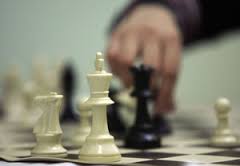 British chess grandmaster Nigel Short is responding to criticism after recently arguing that inherent differences in men’s and women’s brains may explain why there are fewer female chess champions than males ones.
“Men and women’s brains are hard-wired very differently, so why should they function in the same way? I don’t have the slightest problem in acknowledging that my wife possesses a much higher degree of emotional intelligence than I do,” he wrote in the February issue of New In Chess magazine. “One is not better than the other, we just have different skills.”
“It would be wonderful to see more girls playing chess, and at a higher level, but rather than fretting about inequality, perhaps we should just gracefully accept it as a fact,” he added.
So why would Huff Post run such a blatantly chauvinistic report? Well, obviously, for the counter-offensive that makes up the last 60% of the article. Then, of course, you have the comments, which fluctuate wildly between the apoplectic, the apologetic, the politically correct, and the well-reasoned.
Anyone who has raised children or taught school knows that males and females are more different than some species. We have different strengths and weaknesses, which is why it makes sense that we form partnerships called “the family.”
It’s both fascinating and disturbing that so many people are offended by those who say so.
 Yonason Goldson