Home » Psychology (Page 22)
Category Archives: Psychology
Sanity vs. Compassion — how to choose?
 Would you accept an invitation to the Mind and Life Institute’s International Symposium for Contemplative Studies? Or does it all sound too flaky?
It’s hard not to sound pretentious when trying to be substantive in a superficial world. I might easily have dismissed the headline — Creating a Caring Society — as so much new-age twaddle… but if I had I’d have been guilty of the same superficiality that I frequently decry.
Citing Tania Singer, a social neuroscientist from The Max Planck Institute, the article offers an intriguing distinction between empathy and compassion. The first is a mere sharing of feelings; the second is an impulse to turn feelings into action. Sure, empathy is a good start. But feeling another’s pain doesn’t help feed the poor, shelter the homeless, enlighten the ignorant, or comfort the bereaved.
In fact, failure to take action may actually cause distress and suffering to the empathizer, who feels frustrated and inadequate for having provided no relief to the one in need.
The more pervasive problem, however, is our increased detachment from the plight of others so that we don’t feel at all. No surprise there… if we responded as we should to every news story of poverty, illness, and violence, we’d all be on a perpetual Valium drip. So instead we plug into our electronic kaleidoscopes and tune out the real world.
We can only preserve our sanity by deadening ourselves to the flood of human suffering that washes over us day and night. But to ignore the call of compassion leaves us less than human.
As with so many things, the answer lies somewhere in the middle. Feel pain, but not too much pain. Respond to the pain of others with concrete action. No, it’s not easy. But it’s the only avenue we have for restoring an emotionally and morally healthy society.
Speak your mind… or not
 How much damage is caused talking about other people? And for what? Usually to make ourselves feel superior at the expense of others.
And what if it’s true? So what if it is? If there’s no benefit, why say it?
How much time do we spend talking about the obvious or the irrelevant? The weather? The economy? Last night’s episode of Letterman?
As an icebreaker, small talk serves a purpose. But if it becomes a staple, if it leads nowhere except the next inanity, wouldn’t we be better off with silence?
Of course, that would leave us alone with our own thoughts, and that can be a pretty scary place to be.
The Illusion of Knowledge
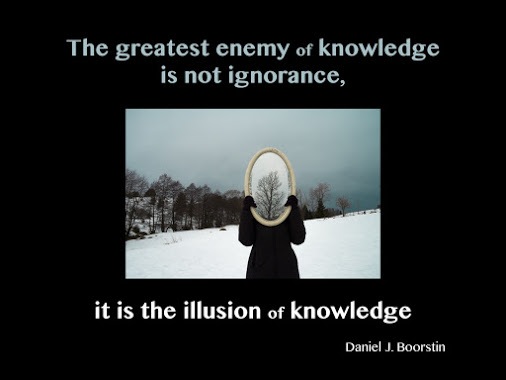
Nothing could be more true in the age of unlimited access and information overload. King Solomon wrote in Ecclesiastes, “One who tears a hole in a fence invites in a snake.” In other words, no fence is better than a broken fence, since the former demands constant vigilance while the latter allows a false sense of security. The more we think we know, the more ignorant we actually are.
Please take a look at how modern research backs this up here.
Before it’s too late
 Like the genie let out of the bottle, words can never be taken back once they leave our lips, and actions cannot be undone once we’ve done them.
There are few sadder feelings than the regret of wishing to undo the past.
Think first. Then think again.
But don’t overthink. Inaction can be worse than the wrong action.
Yes, life is complicated.
End of an Icon
 Darrell Winfield, one of the original Marlboro Men who rode on horseback across the western countryside in cigarette ads, has died at age 85.
The image of rugged individualism is credited with the most successful advertising campaign in history, according to the Guinness Book of World Records, transforming an obscure brand into the world’s number one seller.
Which should make us ask ourselves: what are the influences that drive us in the decisions we make? As Eric Fromm wrote, everyone knows that the blonde in the ad doesn’t come with the sports car, but the mere possibility that the buyer might end up with her makes the sale anyway.
The questions extend far beyond cigarettes and cars; they apply to every aspect of our lives: What are we being sold? Who are the salesmen? How much are we paying?
 Yonason Goldson