Home » Society (Page 26)
Category Archives: Society

A Tale of Too Many Egos
 This isn’t about the 2016 presidential campaign. It’s not about the candidates or the conventions; it’s not about about political ideology or the political process.
It’s all about We The People.
But that requires talking about — at least briefly — the candidates I’d rather not talk about.
Some of us had dared to hope that Donald Trump, after securing the Republican nomination, would disclose that it had all indeed been an act and that he was ready to start acting like an adult. After all, he’s a super-successful billionaire real estate mogul. And he has such great kids. Surely, he’s capable of acting presidential.
Ah, hope springs eternal.
Then the ghost of Ted Cruz reappeared. To be fair, Mr. Trump has a legitimate grievance against Mr. Cruz, who should have either endorsed his former rival or declined the invitation to speak from the convention pulpit. As a career politician, Senator Cruz must understand that the purpose of a national convention is to inspire party solidarity, not to posture for the next election cycle. Mustn’t he?
Of course, life isn’t any better in Philadelphia, where DNC head Debbie Wasserman-Schultz finally agreed to disappear into the night in exchange for one last grandstand, after she was caught exploiting her position to skew the supposedly even-handed primary process in favor of Hillary Clinton.
Not than anyone was surprised. Whatever your political bent, principles have largely become a thing of the past.
That may be because too many Americans have no notion of the values on which this country was founded: Equal opportunity, equal rights, and equal protection under the law. These do not ensure equal wealth or power. But they are part of a culture that once recognized a moral, as opposed to a legal, commitment to place the lowest rung of the ladder of fortune within reach of its most downtrodden citizens, to protect the minority from the tyranny of the majority, and to shape a society bound together by commitment to higher values and national destiny.

The Continuing Culture of Violence
 I’ve had too many opportunities to repost this article. Violence begets violence, and as chaos becomes the new normal we have to find a way to restore order and civility to our societies. If we do, we can make Ft. Myers and Munich and Dallas and Boston nothing more than the names of cities once again.
https://yonasongoldson.com/2015/05/18/remembering-the-boston-bombing/
The Search for Nothing
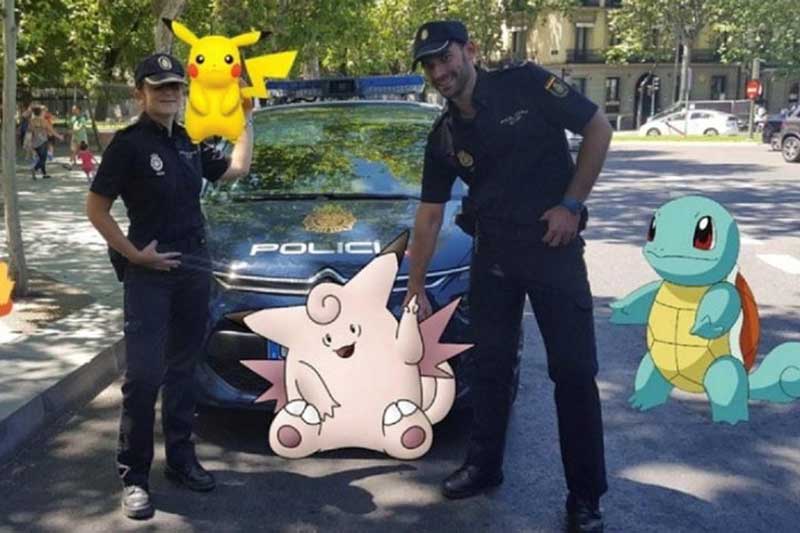 Of course, you know all about it. It has overshadowed all other headline news. It has become everyone’s passion. There’s no escaping it.
No, I’m not talking about the presidential elections, climate change, or global terror. I’m talking about something really important:
Pokemon Go.
If you haven’t heard of it, you probably live in a cave and won’t be reading this anyway. If you don’t understand what it is… well, that’s a different story.
For people of a certain age — not to mention a certain level of maturity and common sense — the latest tech-fad is barely comprehensible. Countless denizens of the virtual world have crawled out of the darkness and into the sunlight to search for animated characters that can only be seen on their cell phone screens in undisclosed locations. By wandering about pointing their phones hither and thither, players find cartoon critters, then take aim and “shoot” to catch their pixilated prey.
As inane as it may sound, the game seems relatively harmless. It also has the benefit of drawing participants off their couches and encouraging them to put their atrophying appendages back into use, sometimes by walking miles in pursuit of quarry. Guided by an all-knowing, all-seeing cosmic GPS mastermind, Pokemon creatures may crop up anywhere, leading players on quests of “augmented reality.”
But is it really harmless?

The Humpty Dumpty Deception
 “When I use a word,” Humpty Dumpty said, in rather a scornful tone, “it means just what I choose it to mean — neither more nor less.”
This would appear to be a powerful statement of personal empowerment and forward-thinking vision. In fact, it is precisely the opposite.
The truth is this: if we don’t master our language, we can’t be masters of ourselves. Because we think in words, sloppy speaking will inevitably produce sloppy thinking. And if we aren’t thinking clearly, then we don’t know who we are, what we believe in, or what we stand for.
Clichés, sound-bites, political correctness — these are all our enemies. The reflexive recitation of words bereft of authentic meaning constitutes much of talk radio, and it may offer a convenient refuge from having to defend our opinions with hard facts and sound reasoning. But we don’t open up lines of communication and cooperation by hiding from clarity and logic.
Verbal interchanges have become so glib, so vapid, and so superficial, that anything short of a complete overhaul of our language will not do. But some popular expressions are worse than others, and here is my short list of the worst offenders, phrases that should be punishable by law.

Days of Shame
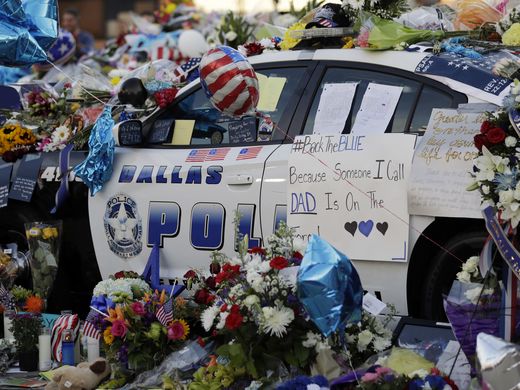 Five policemen cut down in the line of duty. Two more civilians cut down by errant policemen. A mistrustful population further convinced that there is no one deserving of their trust.
It’s more than a shame. It’s shameful. We need to point fingers, even as we recognize that finger-pointing lies at the heart of our problems.
Maybe there is a way to turn around the blame-game, to turn partisanship into hope of something positive. The only way to begin, however, is to acknowledge how we got here and to ask uncomfortable question of the people responsible… ourselves included.
Spitting Image 5:2 — Inversion

This provocative image from the Israel Museum provides one of the most compelling examples of what modern art can accomplish. Even as the values of contemporary society become more tangled, our priorities more topsy-turvy, our ideals more overgrown with deadwood, and the roots of civilized society increasingly shriveled, it’s not too late to take a fresh look at where we are and where we’re headed.
We just need to look with open eyes and clear minds.
The Talmud compares a person whose wisdom exceeds his good deeds to a tree with many branches and few roots. Ideas that fail to materialize into positive action may be worse than no ideas at all, since they allow us to live in the world of the mind and praise ourselves for our noble intentions while we stand idly by and allow evil to reign.
Only by recognizing the contradictions in our own lives will we be able to turn the world right-side-up again and restore order amidst the chaos.
Spitting Image 5:1 — Writing on the Wall
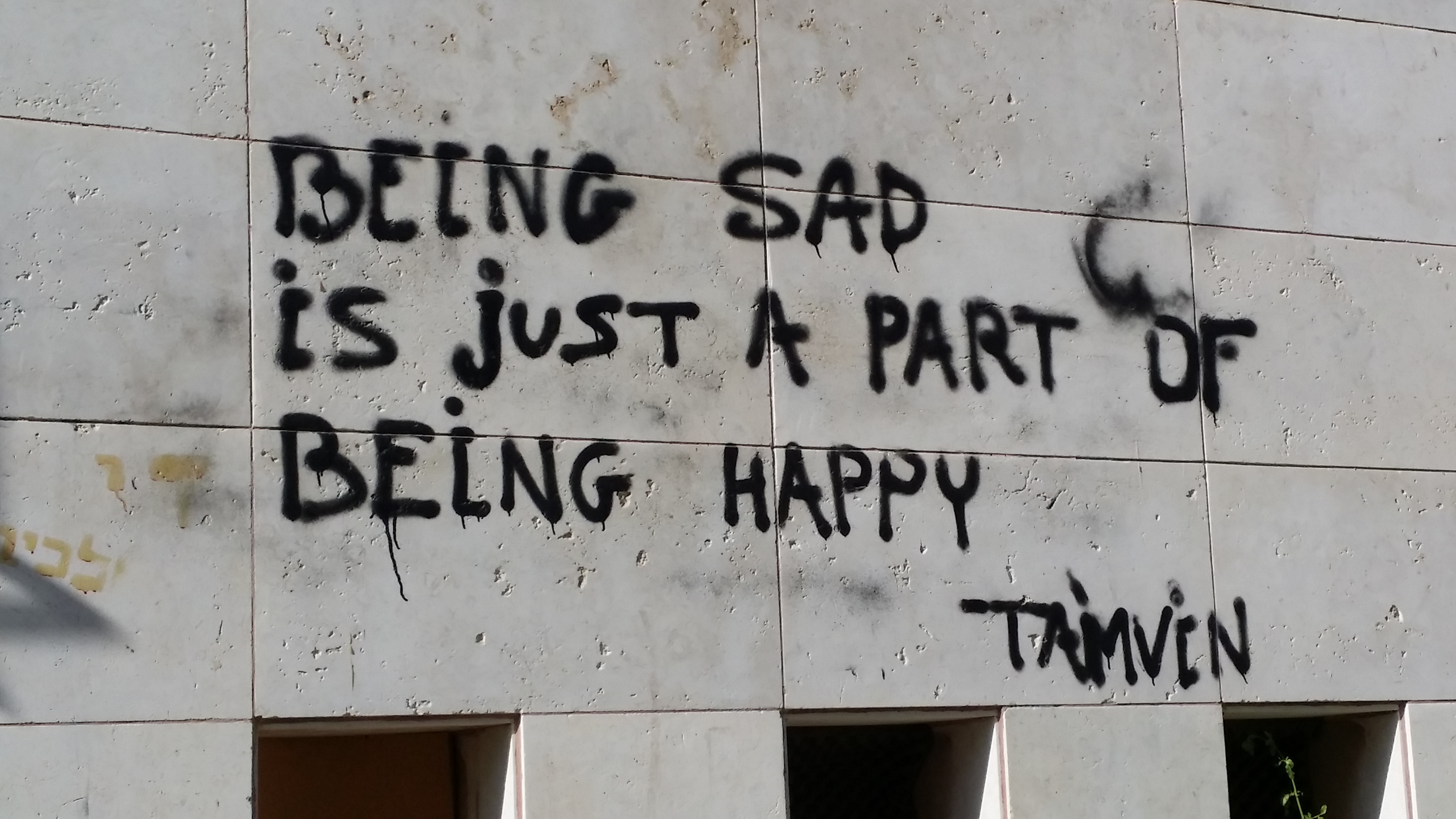 In Israel, even the graffiti aspires to wisdom and spiritual elevation.

The Divided States of America
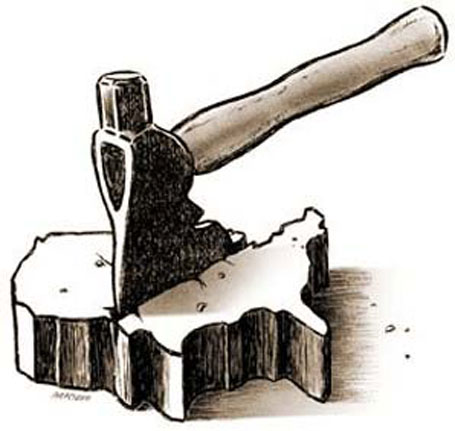 E pluribus unum — Out of many, one.
Such a glorious sentiment, 240 years old this week, destined for the dustbin of history.
In contrast to the vitriol of the broadsheets from two centuries ago — which belied a common commitment to basic, “self-evident truths” — the unfiltered invective filling our airwaves today reveals a wholesale abandonment of common values or, even worse, of any values at all.
With the general election now reduced to a choice between the two most unpopular candidates in American history, the undeniable takeaway is that our population has splintered into four intractable camps, each unwillingly come to terms with any other. Here is a snapshot of who we now are.

Radio Interview with Steve Curtis
 More discussion about my recent article in the Times of Israel Blog, “The Danger of Democracy.”
My interview with Steve Curtis of KLZ-AM in Denver ran a full hour segment. Enjoy!

Can I remain I after we become we?
 No man is an island, wrote John Donne. Neither is any nation, even if it’s the island nation of Great Britain.
This contradiction lies at the heart of the current political crisis facing British Prime Minister David Cameron. And as the British contemplate their future place in the world community, the rest of us should contemplate what the world will look like for our children and their children after them.
There are two legitimate, opposing arguments facing Britain in deciding whether or not to remain part of the European Union. To compete in the world marketplace as part of an economic powerhouse works to the advantage of every European country, Britain included. On the other hand, the threat to employment and security posed by unrestricted immigration may offset any benefits.
But whatever the British end up deciding for themselves in this month’s referendum, there is a deeper issue in play, one that has implications for all of us.
 Yonason Goldson