Home » Society (Page 33)
Category Archives: Society

The Monty Hall Problem: Unlocking the Doors of Destiny
 I can sleep at night again, now that I have resolved one of life’s most perplexing mysteries. All is well with the universe once more.
What is the persistent question that for so long stole my peace of mind? It is the riddle of Monty Hall and the goat behind Door Number Three.
The so-called Monty Hall problem is a counter-intuitive statistics puzzle that goes as follows: You have to choose one of three doors. Behind one you will find a car; behind each of the others, you will find a goat. You pick Door #1, hoping for the car, of course. Monty Hall, the game show host, narrows your choices by opening Door #3 to reveal a goat. Then Monty offers you a choice: you can stick with your original door or switch to Door #2.
What should you do? Simple logic suggests that there is no advantage to switching doors. With the elimination of Door #3, your odds improve from one-in-three to even-money. It shouldn’t matter whether or not you switch: either way, you will still have a 50-50 chance.
But here human logic fails. By switching doors, you increase your odds from even money to two-thirds.
HERE’S WHY IT WORKS, AND WHAT IT MEANS TO US:
http://www.learning-mind.com/the-monty-hall-problem/
Spam Rebound
Have you ever wanted to spam the spammers?
Here’s what it might look like:
Watch with a friend. Preferably not while you’re working or driving.

A Week of Ironies — Iranian Hostages, Nikki Haley, and $1.5 Billion
 In his State of the Union speech, President Obama patted himself on the back for making peace with Iran while, at that very moment, Iran held 10 American sailors in violation of international law and the Geneva Convention. The next day, Secretary John Kerry thanked the Iranians for not keeping the servicemen as hostages.
In the same speech, the president also lamented his failure to create an atmosphere of bipartisanship and cooperation, while passing up no opportunity to snipe at everyone who disagrees with him.
After South Carolina Governor Nikki Haley responded to the president’s address, the angriest voices loudly condemned her for condemning the angriest voices.
Hillary Clinton, who can boast the lowest national rating on trustworthiness since Richard Nixon, dismissed a new FBI investigation into her mishandling of classified information by declaring “that’s just not the way I treated classified information.” Transparency, at last.
 However, none of this made much of an impression on an American public entranced by the dream of winning a 1.5 billion dollar lottery, even though about half of multimillion-dollar lottery winners eventually admit that sudden wealth proved more of a curse than a blessing.
Now that three winners are going to share the unprecedented payoff, they might want to take a page from the book of a middle-aged man in Atlanta who, back in the 1990s, won a $4 million dollar lottery – what was an exceptional amount for the time.
The winner had been working a double shift as a garbage collector. When asked what he intended to do after winning so much money, the man replied, “I’m going to quit one of my shifts.”
“Only one?” asked the incredulous reporter.
“A man has to have work,” replied the new millionaire.

Affluenza: Nothing new but the name
 Some verbal atrocities are either too offensive or too absurd to ever be forgotten. Like Jonathan Gruber’s candid admission that “the stupidity of the American voter … was really, really critical for [Obamacare] to pass.” Or Brian Williams misremembering that he had been shot down in a helicopter. Or Al Gore’s claim that he invented the internet (although, in all fairness, that was not quite what he said).
But few violations of common sense and common decency compare to that of Jean Boyd, the judge who concluded that probation and rehab were sufficient punishment for Ethan Crouch — after he pled guilty to taking the lives of four people while driving drunk — because he was a victim of affluenza.
Now, two years later, after Ethan Crouch has violated his parole, fled to Mexico with his mother, and finally ended up back in custody, the Washington Post would like us to reconsider whether the diagnosis is really so ridiculous after all. Rallying experts to support his case, Post editor Fred Barbash suggests that affluenza may indeed be an authentic malady, citing ASU professor of psychology Suniya S. Luthar and Barry Schwartz of Swarthmore College:
“High-risk behavior, including extreme substance abuse and promiscuous sex, is growing fast among young people from communities dominated by white-collar, well-educated parents. These kids … show serious levels of maladjustment as teens, displaying … marijuana and alcohol abuse, including binge drinking [and] abuse of illegal or prescription drugs.”[What also stands out] is the type of rule-breaking – widespread cheating and random acts of delinquency such as stealing from parents or peers among the affluent, as opposed to behavior related to self-defense, such as carrying a weapon, among the inner-city teens.”
“[What also stands out] is the type of rule-breaking – widespread cheating and random acts of delinquency such as stealing from parents or peers among the affluent, as opposed to behavior related to self-defense, such as carrying a weapon, among the inner-city teens.”
And finally: Serious depression or anxiety among affluent kids is “is two to three times national rates.”
No arguments from this quarter. But what does not appear in Mr. Barbash’s lengthy commentary is even the most meager attempt to identify why affluence produces teenage miscreants. What is it about growing up with every possible advantage that predisposes so many children to criminally irresponsible behavior?
The answer is quite simple.

State of the Union: Four Faces of Leadership
 If we need another example of how upside-down our culture has become, we only have to look at the hype leading up to tonight’s State of the Union address by soon-to-be Former President Barack Obama. Even as the pundits all agree that the speech will be largely irrelevant and predictable, they can find little else to talk about.
Mr. Obama is expected to tell us how wonderful things are, how many of his goals he has achieved, and how much the quality of our lives has improved since he took office. The success of such an approach depends upon one of three factors:
- that his claims are actually true;
- that he can convince the people that his claims are actually true;
- that he can pound home the message (with the cooperation of an obsequious media) until people think there must be something wrong with them if they don’t believe it.
Whether the president succeeds or not remains to be seen. But it’s illuminating to compare his style to other presidents and presidential hopefuls, past and present.

Sean Penn — the twelfth monkey?
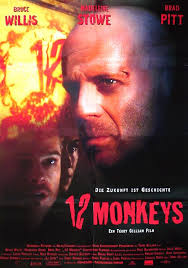 It may be the real-world incarnation of 12 Monkeys, the cult flick in which Bruce Willis goes back in time to save mankind and inadvertently causes the holocaust he is trying to prevent.
Sean Penn has traveled far and wide to uncover the warm, fuzzy side of such political personalities as Hugo Chavez and Raul Castro. We can only speculate on the motives behind his latest adventure, an elaborately staged meeting with El Chapo, the infamous Mexican drug kingpin Joaquin Guzman, who was recently recaptured after escaping from his maximum security prison cell.
Irony of ironies, it was Sean Penn himself who inadvertently led authorities to Guzman’s location. And although Mr. Penn has had little to say about his role in the apprehending of El Chapo, it’s tantalizing to wonder whether he might seek help from Bruce Willis to travel back in time in hope of undoing what he has done.
Always Faithful
 My son at his induction ceremony into the IDF.
May the Almighty watch over all those who put the lives of others before their own.
May we all find within ourselves the clarity and courage to stay true to the values that lie at the core of our humanity.

The Intern
 Trans-Atlantic flying has gotten a little more tolerable with the almost limitless supply of movies on each passenger’s personal screen. All the more so when you come across one of those rare productions that provide everything you could possibly want from a movie.
The Intern, starring Robert DeNiro and Anne Hathaway, showcases Hollywood at its best. It’s clever, it’s clean, it carries you along effortlessly and leaves you happy and hopeful that maybe, just maybe, the world is not tottering on the brink of cultural implosion after all.
Robert DeNiro is eminently believable as a 70-year-old widower who finds himself working for an edgy, high-tech start-up and turns the business on it’s head with his old-fashioned work ethic and traditional, common sense values. Without sermonics or sentimentality, the film endorses the follow-your-dream mentality while simultaneously deflating the myth that you can have it all.
Loyalty, self-discipline, personal responsibility, and the wisdom of experience, all in a major motion picture. Who woulda thought?

Justice in Oregon — Color Blind and 20/20
 A broken clock is right twice a day and, gratefully, the justice department has found the sweet spot — at least for the moment — in Oregon.
Certainly, the armed occupation of a national wildlife refuge is cause for concern. But it is not cause for panic and, in light of past notorious government interventions, definitely not cause for military confrontation.
In both the 1992 Ruby Ridge, Idaho, incident and the 1993 Branch Davidian raid in Waco, Texas, the level of intervention was clearly disproportionate to the danger posed and the resulting bloodshed largely indefensible. This is not to say that the government did not have just cause; rather, it failed to employ that resource that is more endangered than any other: common sense.
3 people died at Ruby Ridge; 76 died at Waco.
It’s heartening, therefore, that authorities are approaching the current crisis near Burns, Oregon, with circumspection. Of course, they can’t ignore the occupation. But with no one in danger, a wait-and-see strategy is the best of all available options.
The broader relevance of the story arises from the inevitable accusations of racism by leaders in the black and Muslim communities. It’s only because the so-called Citizens for Constitutional Freedom are white, they say, that the government has not charged in with guns blazing.
Which is, of course, pure nonsense. Two dozen right-wing trespassers in the middle of nowhere is hardly comparable to Ferguson, Missouri, or San Bernardino, California.
The response is different because the situations are different. And in this case, stuck between the real fears that inaction will embolden extremists to further acts of defiance while over-reaction will provide the opportunity for martyrdom, wait-and-see offers the best possible compromise between unattractive alternatives.
It’s also arguable that the occupiers have legitimate grievances against government overreach, which has grown into a systemic malady, evidenced by a rash of executive orders and a culture of bureaucratic strong-arming. Compared with the nebulous jeremiads of the Occupy Wall Street crowd and, more recently, students at Yale and the University of Missouri, the very real plaints of the Oregon occupiers appear level-headed and downright mainstream.
Competent leadership is characterized by the ability to gauge every situation according to its unique combination of factors, risks, and potential consequences. One-size-fits-all solutions rarely prove effective, and accusations of inconsistency are childish at best, opportunistic at worst. What we need most in these troubled times is cool-headed calculation that looks to strike the sanest balance between principled action and pragmatic compromise.
When we start demanding that level of aptitude and integrity from our leaders, maybe we will find ourselves with leaders worthy of our confidence and trust.

Guest Post: No Good Deed…
 A poor Jew finds a wallet with $700 in it. At his synagogue, he reads a notice saying that a wealthy congregant lost his wallet and is offering a $100 reward for it. He spots the owner and gives him the wallet.
The rich man counts the money and says, “I see you already took your reward.”
The poor man answers, “What?”
“This wallet had $800 in it when I lost it.”
They begin arguing, and eventually come before the rabbi.
Both state their case. The rich man concludes by saying, “Rabbi, I trust you believe ME.”
The rabbi says, “Of course,” and the rich man smiles. The poor man is crushed.
Then the rabbi hands the wallet to the poor man.
“What are you doing?!” yells the rich man.
The rabbi answers, “You are, of course, an honest man, and you say the wallet you lost had $800 in it. Therefore I’m sure it did. But if the man who found this wallet is a liar and a thief, he wouldn’t have returned it at all. Which means that this wallet must belong to somebody else. If that man steps forward, he’ll get the money. Until then, it belongs to the man who found it.”
“What about my money?” the rich man asks.
“Well, we’ll just have to wait until somebody finds a wallet with $800 in it…”
 Yonason Goldson