Home » Society (Page 41)
Category Archives: Society

Limited Edition
 Would you pay $200 for a really pretty $50 bill?
Well, apparently Starbucks thinks that someone will. Their laser-etched gift card with floral details and ceramic finish might seem a little pricey; but hey, Mom’s worth it. Right?
If you market it, they will come.
#FieldOfScreams

MayPac — the untold story
Welcome to the Roman Empire.
 Even if you aren’t a student of history, you may remember learning about the “bread and circuses” of ancient Rome. By providing basic foodstuffs and the spectacle of gladiatorial combat, the Roman elites simultaneously invented the welfare state and the entertainment industry. Savvy enough to anesthetize the commoners into complacency, the aristocracy were then able to wallow in their epicurean and carnal orgies unmolested.
In our times, we don’t need the state to provide the bread. Burger King, Pizza Hut, and Taco Bell supply our undiscriminating culinary needs. The gladiatorial circuses have been reincarnated in the form of the NFL, except when the brutal melee of the gridiron is eclipsed by a billion-dollar fist-fight.
 Enter Floyd Mayweather and Manny Pacquiao. Their Romanesque and obscenely over-hyped bout, the much ballyhooed fight-of-the-century, came and went and will be soon forgotten… full of sound and fury, a tale told by an idiot.
But here’s a side of the event you won’t have read about in the papers or seen on ESPN.
My friend Art works for one of the big internet service providers. Friday was mayhem, as all the people whose service had been suspended for non-payment called in with either back-payments or desperate pleas for mercy so they could watch the spectacle. The tone of hysteria in call after call set Art’s teeth on edge.
Then this:
The woman called in, several hundred dollars behind in her bill, far too much in arrears for any kind of leniency. But she claimed extraordinary need. And her story was nothing less than extraordinary.
Her brother had just died. Her family was coming in the funeral. She explained frantically that she had to have internet service so that her siblings and cousins would be able to watch the fight.
Art literally put his head in his hands as he told me the tale. “I’d rather believe she was making it all up as a ruse to gain my sympathy,” he said. “But who could make up a story like that?”
Who, indeed? Once we have come to a place where we can conflate the loss of a loved one with the lost opportunity to watch two palookas beat each other senseless, I suspect that even the Romans would look upon us disdainfully and uncomprehending.
And, of course, we know what happened to Rome.
#MayPac
Light up your world
 A smile is like a flame. You can give one to someone else without giving away your own.
In Hebrew, the word for flame is lahava, related to the word ahava, which means love. A flame is broad at the base and narrows to a point: in the same way, two people might be very different from one another, but if they share a common sense of purpose they come to love one another.
And as with a flame — as well as a smile — you lose nothing by loving others.

The Grass is Always Greener After the Apocalypse
 Well, there goes the neighborhood. Well, there goes the neighborhood.
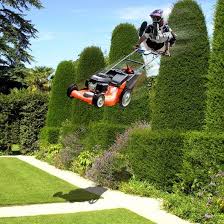
That’s what I thought when I came home to find my next-door neighbor cutting his grass – for the first time since autumn. This was bad news. With the front yard of my other neighbor already short-cropped and neatly clipped, my own bedraggled lawn now stood out in sharp, unpretty relief. For some mysterious reason, the zoysia grass that dominates my front lawn is the last in the neighborhood to awaken each year from dormancy. Even worse, a variety of other grasses shoot up energetically with the outbreak of spring, speckling my lawn in malignant clumps that make the zoysia appear all the more anemic. In contrast to the golf course-like greens on either side of me, my patch of stringy yellow turf seemed to beckon for a rough-cut, whitewashed sign proclaiming CONDEMNED! My yard guys had yet to appear after the winter hiatus and hadn’t returned my phone calls. Were they out of town? Had they given up yard work for house painting or auto repair? It didn’t matter. Only one course of action remained: I would have to cut the grass myself. My sensibilities cried out against the wrongness of it all. The Creator did not plant grass upon His earth that it should be cut. He intended that it should grow, that it should go to seed, that it should produce new grass, and that the cycle should continue, uninterrupted by the meddling hands of Man. Cutting the lawn was a symbol of the same intrusive practices responsible for the destruction of the ozone layer and global warming, for deforestation and the extinction of new species every day, for Japanese kudzu smothering the southwest and Venezuelan hyacinths choking the Everglades. It all starts here, hacking down new growth sown by the Divine Hand to conform to some arbitrary aesthetic mean, branding every bayou a quagmire to justify turning it into a landfill or a parking lot. Was I now to become a part of this? “How about doing mine when you finish yours?” I called to my neighbor. Let him be the one to destroy the planet. “You’re welcome to borrow my mower when I finish,” he said. Terrific. Out of the frying pan, into the quagmire. Should I leave my lawn uncut to protest the destruction of the world’s ecosystem? No, my neighbors wouldn’t understand that I was making a political statement. Even worse, I would likely be cited by the city for crimes against civilization. And, worst of all, a small inner voice insisted that as an upstanding community member, as a father and a teacher, I had an obligation to uphold standards and preserve the status quo for the general welfare of the collective. Bah. Humbug. My neighbor finished. “You want to use it now?” he asked. Of course not, you infidel. But I didn’t say that: he would only have thought me rude. Instead I just smiled and nodded. He showed me how to operate the mower then went inside, mercifully, so not to behold me in my degradation. You know what? It wasn’t so bad. I even felt a kind of thrill as I assumed mastery over nature, subduing the power of the untamed wilderness, imposing order upon chaos. In fifteen minutes, the lawn looked great. I felt great. Maybe I should buy shares in John Deere. My only worry was that my wife might now expect me to mow the grass every two weeks. Well, maybe she wouldn’t notice. Half an hour later, as I was throwing the baseball with my son on our newly manicured front yard, my wife pulled into the driveway. “Honey,” she cried. “The lawn looks great. You cut it yourself?” Rats. She noticed. Previously published by the St. Louis Post-Dispatch and Jewish World Review |

The War on Women Continues
From the Huffington Post:
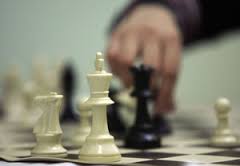 British chess grandmaster Nigel Short is responding to criticism after recently arguing that inherent differences in men’s and women’s brains may explain why there are fewer female chess champions than males ones.
“Men and women’s brains are hard-wired very differently, so why should they function in the same way? I don’t have the slightest problem in acknowledging that my wife possesses a much higher degree of emotional intelligence than I do,” he wrote in the February issue of New In Chess magazine. “One is not better than the other, we just have different skills.”
“It would be wonderful to see more girls playing chess, and at a higher level, but rather than fretting about inequality, perhaps we should just gracefully accept it as a fact,” he added.
So why would Huff Post run such a blatantly chauvinistic report? Well, obviously, for the counter-offensive that makes up the last 60% of the article. Then, of course, you have the comments, which fluctuate wildly between the apoplectic, the apologetic, the politically correct, and the well-reasoned.
Anyone who has raised children or taught school knows that males and females are more different than some species. We have different strengths and weaknesses, which is why it makes sense that we form partnerships called “the family.”
It’s both fascinating and disturbing that so many people are offended by those who say so.
Turnaround, or fair play?
 Last week, John Roberts reported for jury duty, not as Chief Justice of the Supreme Court, but as John Q. Public at Maryland’s Montgomery County courthouse. He wasn’t selected in the end, but he came within measurable distance of serving as an ordinary juror on a case that would determine damages in an automobile accident.
Does this reflect what’s best in America, that no one is exempt from performing his civic duty? Or is it symptomatic of the most absurd form of political correctness, which demands equivalence in all arenas and all situations, no matter how un-equivalent they may be?
So what do you think: would it have been worth shutting down the highest court in the land so that our top jurist could sit in the place of an average citizen? Leave a comment with your take on the question.
How Ants Survive Rush Hour…
… and why putting your ego in check will change your life
 It’s everyone’s nightmare. Rush hour. Inching along interminably as too many cars navigate too few lanes, with too many merging in and too few turning off.
Who would have imagined that King Solomon already anticipated the chaos of our highways when he declared, Go, sluggard, and learn from the ant?
As it turns out, ants are better drivers than we are. And the lessons of their highway habits offer some valuable lessons that extend far beyond the way we drive.
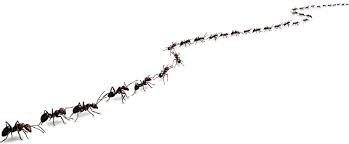
According to NPR, Apoorva Nagar discovered the connection in a study by German and Indian researchers. Apparently, traveling ants are able to maintain a constant speed regardless of the number of ants on the path. In other words, even at rush hour, ant traffic carries on unimpeded.
Sanity vs. Compassion — how to choose?
 Would you accept an invitation to the Mind and Life Institute’s International Symposium for Contemplative Studies? Or does it all sound too flaky?
It’s hard not to sound pretentious when trying to be substantive in a superficial world. I might easily have dismissed the headline — Creating a Caring Society — as so much new-age twaddle… but if I had I’d have been guilty of the same superficiality that I frequently decry.
Citing Tania Singer, a social neuroscientist from The Max Planck Institute, the article offers an intriguing distinction between empathy and compassion. The first is a mere sharing of feelings; the second is an impulse to turn feelings into action. Sure, empathy is a good start. But feeling another’s pain doesn’t help feed the poor, shelter the homeless, enlighten the ignorant, or comfort the bereaved.
In fact, failure to take action may actually cause distress and suffering to the empathizer, who feels frustrated and inadequate for having provided no relief to the one in need.
The more pervasive problem, however, is our increased detachment from the plight of others so that we don’t feel at all. No surprise there… if we responded as we should to every news story of poverty, illness, and violence, we’d all be on a perpetual Valium drip. So instead we plug into our electronic kaleidoscopes and tune out the real world.
We can only preserve our sanity by deadening ourselves to the flood of human suffering that washes over us day and night. But to ignore the call of compassion leaves us less than human.
As with so many things, the answer lies somewhere in the middle. Feel pain, but not too much pain. Respond to the pain of others with concrete action. No, it’s not easy. But it’s the only avenue we have for restoring an emotionally and morally healthy society.
Dangerous Freedom
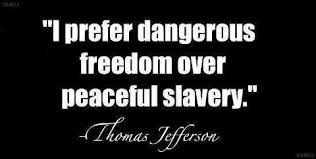 With the holiday of Passover behind us, the dangers of freedom become more threatening than ever.
Freedom is a privilege, not an inheritance. Freedom is an obligation, not a right. Freedom calls us to duty, not to indulgence.
And the illusion of freedom may be the cruelest tyrant of all, seducing us into accepting the slavery of ego, impulse, and comfort.
Every day we should ask ourselves: are we fighting to deserve and to preserve the freedom that our fathers fought so hard for us to have?
Keeping Trust
 Distance yourself from falsehood. – Exodus 23:7
We all like to think of ourselves as honest. But are we?
Do we rationalize white lies? Do we fudge our taxes? Do we return to the counter when we’re undercharged or when we get too much change? Do we make hasty promises that we forget to keep? Do we exaggerate? Do we embellish? Do we state as fact when in fact we aren’t so sure?
Do we lie outright when we’re caught in a compromising position?
It’s easy to justify “little” lies, or even big ones under pressure. How often are we lied to by our politicians — increasingly without shame or consequence? If they can do it, why shouldn’t we?
It comes down to trust. We want to be trusted. And we want to be able to trust others. So it’s not enough not to lie. Distance yourself from falsehood — whether a false word or a false thing or a false friend.
Not only do we become known by the company we keep; we become the company we keep. And once we lose our sensitivity to falsehood, it’s a near-impossible struggle to get it back.
 Yonason Goldson