Home » Society (Page 42)
Category Archives: Society
The Hazards of Headline News
 Here’s an insidious little headline: Money, Not Marriage, Makes Parents Better
Family structure, family meals, limiting television, extracurriculars. No worries. None of it makes much of a difference. Your child’s success or failure in life will have more to do with how much money you have. If it’s in LiveScience, it must be true. No?
Thanks to the U.S. Census Bureau for using our tax dollars to produce such a sinister study. Maybe their next project will offer similarly insightful results. How about something like this: Wings, Not Landing Gear, Make Air Travel Safer.
Well, sure, up to a point. But what does one really have to do with the other?
Read the whole post here.
No Direction
 “You just could not make this up,” tweeted Alan Price of the British employment law firm Peninsula.
Of course, I couldn’t have made it up at all, since I’d never heard of Zayn Malik or the boyband One Direction until this morning. That’s when I learned about the aftermath of Mr. Malik’s change of direction in headline news.
According to the Telegraph, Peninsula received 480 calls from employers asking how to respond to workers requesting compassionate leave so they can grieve over the music idol’s decision to go rogue — and that was just between Wednesday and Friday morning.
One shudders to think how these workers will react when real tragedy enters their lives. Or maybe they’re so removed from reality that the foibles of the entertainment industry are the only events in which they can find any relevance at all.
But that’s what happens in a world without direction.
The Illusion of Knowledge
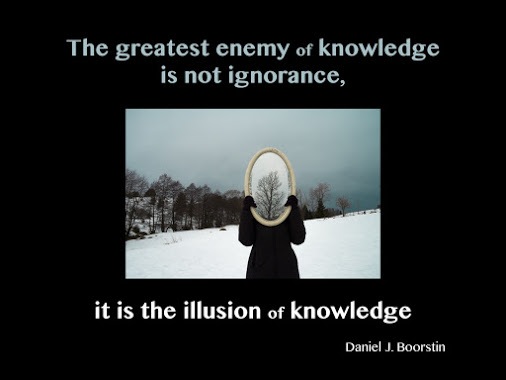
Nothing could be more true in the age of unlimited access and information overload. King Solomon wrote in Ecclesiastes, “One who tears a hole in a fence invites in a snake.” In other words, no fence is better than a broken fence, since the former demands constant vigilance while the latter allows a false sense of security. The more we think we know, the more ignorant we actually are.
Please take a look at how modern research backs this up here.
Before it’s too late
 Like the genie let out of the bottle, words can never be taken back once they leave our lips, and actions cannot be undone once we’ve done them.
There are few sadder feelings than the regret of wishing to undo the past.
Think first. Then think again.
But don’t overthink. Inaction can be worse than the wrong action.
Yes, life is complicated.
The New Narcissism
 Have we finally reached the point where narcissism is no longer an epidemic but an institution? Is this the legacy of the “Me Generation” of the ’70s, bequeathing a cultural norm of such enormous self-absorption that self-absorption has itself become a virtue?
Joe Holleman asks the question. I fear that the answer is self-evident. The mantra of our generation has become:
Ask not what you can do for others; ask what you can demand that others must do for you.
Visionaries and Ideology: a study in contrasts
 Who knew a trip to New York could be so emotional?
I didn’t want to go in the first place. As my 92-year-old student likes to quote: Travelling is for peasants.
But my wife convinced me with simple arithmetic. Four tickets to bring three kids and son-in-law home or two tickets to visit them. No-brainer.
So I went grudgingly, confirming in the end the truism that some of life’s most profound moments come not only unexpected but against our will.
Our first stop was the 9/11 museum. I marveled at the artistic vision that had conceived the memorial pools, the water channeling down in rivulets that mirrored the face of the fallen towers, the continuous downward rush balanced by the redemptive feeling of water — the source of life — returning to the heart of the world. Here there was solace, closure, and consolation.
But a very different feeling accosted me inside. Almost upon entering the doors a single word brandished itself across my mind’s eye: Holocaust.
Let me explain.
Read the whole article here.
Just who are “we”?
Tonto: What is wrong, Kimosabe?
Lone Ranger: We’re surrounded by bloodthirsty indians, Tonto. What are we going to do?
Tonto: What you mean, “we,” white man?
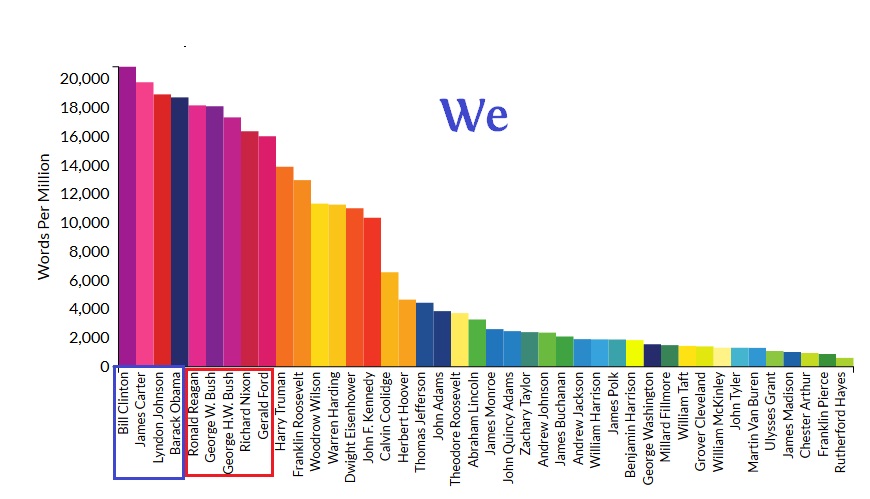 Thanks to Jay Livingston for this post on behalf of the Montclair State Sociology Department. He paints a compelling picture of how the collective language of “we” has been increasingly conscripted by modern politicians to create — or fabricate — an impression of common purpose and common allegiance.
With politics dividing us more deeply than ever, it might seem beneficial to employ rhetoric designed to bridge the ideology gap. In practice, however, disingenuous expressions of harmony and unified vision can do a lot more harm than good.
For one, when a demonstrably divisive leader — a U. S. president, for example — claims that he is the leading advocate of unity and cooperation, he makes himself a lightning rod for accusations of hypocrisy and manipulation that breed cynicism in place of optimism. For another, by claiming the high ground, he implicitly vilifies all who oppose him, even if they do so from positions of principle. Either way, the ideological rift grows wider, not narrower.
Perhaps worst of all, the collective “we” diffuses responsibility from the individual onto the collective: since all of us are responsible, none of us is responsible. This produces the effective equivalent of such politicalisms as “Mistakes were made.” Somewhere, someone did something wrong. There’s plenty of blame to go around, but nowhere for it to stick.
In short, fake unity achieves the opposite of unification.
But when there really is cohesion, whether within a team, a business, a community, or a society, the collective “we” becomes a priceless asset, including the lowly with the high, the rank and file with the leaders, the grunts with the visionaries. Like it or not, we’re all in it together. And the more we try to shoulder our collective burdens with one mind and one heart, the more we will succeed.
Church vs. State
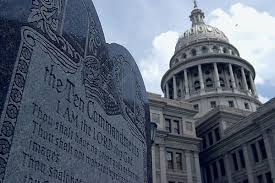 Here’s a quiz question: When was the phrase “separation of church and state” first introduced into American jurisprudence?
a) 1789; b) 1800;
c) 1840; d) 1947
Most of us would answer 1789, with the ratification of the United States Constitution and the First Amendment, guaranteeing religious freedom.
Guess again.
According to Columbia law professor Philip Hamburger (cited by Eytan Kobre in Mishpacha Magazine), the first use of the phrase was during the presidential election of 1800, when defenders of Thomas Jefferson responded to attacks that their candidate was anti-religious by invoking the “need to separate religion from politics.” Jefferson himself used the phrase in a letter in support of Connecticut Baptists who feared political oppression. Jefferson’s overture was ignored by religionists who could not imagine the absence of religion from public life, even in their own defense.
Around 1840, when Catholics in New York City began claiming access to funding for religious schooling, Protestants responded by asserting church and state separation, eventually seeking a new constitutional amendment to that effect in the 1870s. When that effort failed, reinterpretation of the First Amendment became their next strategy.
But it was only in 1947 in Everson vs. Board of Education that, despite a 5-4 split in the Supreme court ruling, the justices agreed unanimously that a “wall of separation between church and state” was implicit in the First Amendment. The majority opinion was authored by Justice Hugo Black, a former leader of the Ku Klux Klan in Alabama.
Thus, the origins of a tradition that everyone thinks believes goes back to the framers — most of whom would be horrified by the popular outlook that has come to define the First Amendment, in the words of Joseph Lieberman, as protecting not freedom of religion but freedom from religion. The “wall of separation” has been critiqued by Justice Clarence Thomas as “born in bigotry,” by Justice Potter Stewart as “nowhere to be found in the Constitution,” and by former Chief Justice William Rehnquist as “a metaphor based on bad history, a metaphor which has proved useless as a guide to judging. It should be frankly and explicitly abandoned.”
Writes American University law professor Daniel Dreisbach: “Indeed, this wall has done what walls frequently do — it has obstructed the view. It has obfuscated our understanding of constitutional principles…”
Kung Fu Sociology
 I often say sociology is a martial art, a means of self-defense. Basically, you use it to defend yourself, without having the right to use it for unfair attacks.
As with all data, facts, information, or intellectual discipline, social science can be used honestly to reveals truths about the human condition or applied selectively to support preconceptions and bolster entrenched ideology. In this blog post, the writer who cites Professor Bourdieu correctly identifies examples of disingenuous conclusions reached through misapplication of facts and logic. At the same time, however, the writer indulges his own personal biases by making sweeping assumptions about headline events without regard for established facts.
In the same way we have no right to misapply data to fit our preexisting notions, neither are we justified imposing our world view on specific situations that objectively refuse to fit our own personal narrative.
Civil society depends upon debate that is both civil and intellectually honest. When we manipulate conclusions, we fail in the art of social kung fu. I imagine that Professor Bourdieu would agree.
End of an Icon
 Darrell Winfield, one of the original Marlboro Men who rode on horseback across the western countryside in cigarette ads, has died at age 85.
The image of rugged individualism is credited with the most successful advertising campaign in history, according to the Guinness Book of World Records, transforming an obscure brand into the world’s number one seller.
Which should make us ask ourselves: what are the influences that drive us in the decisions we make? As Eric Fromm wrote, everyone knows that the blonde in the ad doesn’t come with the sports car, but the mere possibility that the buyer might end up with her makes the sale anyway.
The questions extend far beyond cigarettes and cars; they apply to every aspect of our lives: What are we being sold? Who are the salesmen? How much are we paying?
 Yonason Goldson