



Blog: The Ethical Echo Chamber

Karma Always Strikes Twice

Arriving in Hangzhou on Saturday, President Obama received an unexpected welcome. Absent were both rolling staircase and television coverage. Instead, the president was compelled to disembark ignominiously through a high-security door in the belly of the plane.

New York Times reporter Mark Landler mused that in his six years covering the White House he had never witnessed the president shut off from the media.

And that was only the beginning. Both reporters and staffers — including National Security Advisor Susan Rice and her deputy — found their way blocked by bright-blue police tape. When Ms. Rice tried to duck under the tape, Chinese officials swiftly intercepted her. When White House staff members protested the radical departure from protocol, their objections were met by angry shouts from the Chinese.

Some saw in this a reprise of Mr. Obama’s first visit to China in 2009, when the Chinese censored coverage of the president’s town hall meeting and an interview with the non-government press. Maybe the administration’s much-heralded pivot-to-Asia swung too far and came around full-circle.

Or it may be yet another case of karma, which chooses its targets without political bias.

Click here to read the whole article.

A Stranger Among Us

14232647_1449881988372335_6502948759817740768_nFew Americans ever make it to Colombo, the main port of Sri Lanka and the hottest place I’ve ever been in my life.  Within ten minutes of setting foot on dry land I felt as if I was going to literally melt and disappear between the cracks in the sidewalks.

But the coastal heat serves to make escape from it that much more liberating.  Once you head up into the hills, the air turns deliciously cool and you find yourself in a sea of luminescent green, surrounded by resplendent tea plants stretching to the edges of the horizon.

The local bus, on which I had bought a ticket for one dollar (only to discover later that I’d overpaid by 500%), lumbered slowly up the mountainous roads, passed by everything with an engine while barely passing pedestrians and donkey carts itself.  After an hour and a half, we pulled over and everyone started filing out.

“Are we there?”  I asked another passenger.

“No,” he replied.  “We are stopping for tea.”

15 minutes later, the passengers slowly began wandering back.  No one was in a hurry.  We sat calmly on the bus a while longer before it started plugging back up into the hills.

Click here to read the whole essay from this month’s The Wagon Magazine.

Love Work

labor-dayShemayah says:  Love work, despise high position, and do not seek to become intimate with power.

~ Ethics of Fathers 1:10

How far we have come from the wisdom of the sages, who remind us that there is no deeper feeling of satisfaction and fulfillment than that of a purposeful job well-done, no more corrupting influence than the desire for mastery over others, and no more corrosive influence in the erosion of our values than currying favor with those we think can change our fortunes.

When we look at the twisted lives of so many politicians and celebrities, do we need any further reminder that we ought to revel in the blessings of humble productivity and quiet dignity?

Lip Service

15f24f5565fa780b0dbd1c181a9e721b

Open Season on Everyone

47514117.cachedLet me be clear.  I am no fan of Ann Coulter.

The right-wing firebrand disdains all forms of moderation in both tone and worldview, whether she is tweeting expletives about Jews or hailing Donald Trump’s immigration plan as a new Magna Carta.  When it comes to discrediting the intellectual and moral integrity of conservatism, nobody does it better.

Even Ms. Coulter’s political mentor, arch-conservative David Horowitz, disavowed her for attempting to resurrect as a martyred crusader Senator Joseph McCarthy, whose self-serving campaign against communists real and imagined represents one of American history’s ugliest eras.

For my part, I’ve never gotten out of my head Ms. Coulter’s inexcusably cruel and utterly gratuitous swipe at Margot Kidder in a 2004 column about the controversy that eventually ended the career of CBS anchor Dan Rather.  With neither context nor pretext, Ms. Coulter’s savaging of an admired actress struggling with bipolar disorder was even more contemptible that Donald Trump’s mocking of disabled reporter Serge Kovaleski.

So it may be simple karma that Ms. Coulter received as good as she dishes out at last weekend’s Comedy Central roast of actor Rob Lowe.  Her mere presence on the dais apparently marked her as fair game, making her the target of more vicious barbs than the man-of-honor himself.

But karma does not excuse the cast of notables who turned what should have been good-natured (if adolescent) banter into a lynching party.

Click here to read the whole article.

Fighting Political Correctness — Civilly

DissentConservatives across America are cheering University of Chicago dean John Ellison for his recent letter informing incoming students that they may have to suffer the indignity of confronting people they don’t agree with and ideas that make them uncomfortable.

Needless to say, the position was immediately denounced by zealots who sincerely believe that the only way to preserve intellectual freedom is by muzzling any and every utterance that they find threatening to their own feelings and worldview.

The sad reality is that there are racists and sexists in the world, just as some people are intellectually dishonest and plain rude.  (Some of them are running for president of the United States.)

But people such as these will not go away or change their stripes because others attempt to silence them.  The only effect of censorship is to drive people into more insulated camps and encourage their withdrawal into more extreme factions where groupthink reigns and all meaningful exchange of ideas is prohibited.

The freedom to disagree and engage in civil discourse is what keeps a society healthy, and a college campus is where intellectual and moral maturity are supposed to take root and blossom.  It’s a challenging process; but there’s a reason for the expression growing pains.

When such distinguished figures at Condoleezza Rice and George Will — not to mention Binyamin Netanyahu — are disinvited on account of pressure from students who would rather hide from opposing viewpoints than defend their own positions, it is obvious that American universities are no longer serving their students or society at large.

A free society depends upon the ability to differentiate between legitimate opinions that differ from our own and pathological ideologies corrosive to moral values and human dignity.  As such, we have to allow those who embrace the latter free voice so that we can then refute them from a position of reason, not opposing ideology.

In his book Civility, Stephen L. Carter makes the critical point that civil behavior — which is the foundation of civilization — requires a sensitivity to a code of personal conduct that goes beyond the letter of the law.  By attempting to legislate free speech and codify free thought, we forfeit the essential value that human culture is built upon a commitment to seek and to do good, not merely to abstain from what is forbidden.

With courage and clarity of thought, we can engage those with whom we disagree in a way that is both civil and respectful.  By doing so, we can promote mutual respect and understanding, while effectively marginalizing those who reject civility without needing to stifle all dissenting opinions.

This is not merely a prescription for American college campuses.  It would serve to foster a much needed atmosphere of unity and fellowship in all our communities, at home and around the world.

Published in the Times of Israel blogs.

When we aren’t who we think we are

83a61e759284e01c80d632c4d8b7143c-20a0g4sFor the second time in one year, two men in Canada have discovered that they were switched at birth four decades ago.  Just last week, DNA testing confirmed that Leon Swanson and David Tait, Jr., were swapped in the government-run Norway House Hospital in 1975.

Close to tears at a press conference, Mr Tait said he felt “distraught, confused and angry”. He said: “I want answers so bad. It’s going to affect us one way or the other, I know that. It’s going to be a long journey.”

Eric Robinson, a former cabinet minister in Manitoba province, told reporters:  “What happened to them is criminal. Lives were stolen. You can’t describe it as anything less than that.”

A similar case was reported in Oregon back in 2009.  Here are my thoughts from then, originally published in Jewish World Review.


It sounds like a movie. Nurses bring a newborn daughter back to her mother after bathing. The mother insists that she’s been given the wrong baby. The nurses, who clearly know better, dismiss her concerns.

But 56 years later, DNA testing proves that Marjorie Angell, the real mother in this real story, was right.

Kay Rene Reed and DeeAnn Angell were both born on the third of May, 1953 in eastern Oregon’s Pioneer Memorial Hospital. As babies they were switched, presumably while being given baths, and grew up to become wives, mothers, and grandmothers. Less than a year ago Kay Rene’s brother discovered an old photograph of Kay Rene in middle school. Except that it wasn’t a picture of Kay Rene; rather, the schoolgirl who could have been her twin was in fact the sister of DeeAnn.

Subsequent DNA testing proved what had already become obvious. Kay Rene wasn’t a Reed, and DeeAnn wasn’t an Angell.

“I cried,” said Kay Rene. “My life wasn’t my life.”

MISTAKEN IDENTITY

flat,800x800,070,fImagine waking up one morning and discovering that you were someone else. Nothing has changed, yet everything has changed. You have the same friends, the same family, the same job. But you also have another family and another past — a whole different identity about which you know nothing. A careless moment over which you had no control and an innocent mistake outside your knowledge conspired to leave you wondering how your whole life might have unfolded if not for that momentary twist of fate.

What would you do? What would you think? How would you feel?

If you have lived a happy and well-adjusted life, you’d probably wrestle with some inner confusion and then return to your friends and family. But if your life had been difficult, if you had endured an existence of hardships and traumas that had left you broken and bitter, how might you cry out against the cruelty of chance that had snatched away the happy life you might have had.

And what if, somehow, it had actually been your own fault?

THE ULTIMATE ANGUISH

The Sages of the Talmud teach that when a soul departs from this world, it lets out a scream that can be heard from one end of the universe to the other. Contemporary scholars have explained their meaning as follows:

Once freed from the bonds of physical existence, every soul ascends to the next world and comes before the Heavenly tribunal for judgment. Upon our arrival, each of us will witness a reenactment of his entire life on earth, as if projected upon a giant screen, with all of our good deeds and accomplishments, but also with all our carelessness and self-absorption. Recognizing the futility of either excuses or apologies, we will feel the shame and remorse of a life poorly lived, with no further chance of redemption.

Simultaneously, as if on a split-screen, a different story plays out. Here we will behold the life of a tzaddik, a truly pious individual whose every thought and deed is for others and whose efforts are directed entirely toward moral and spiritual self-perfection. The contrast between the two images will be astonishing.

As the painful exercise concludes, each of us will pose a question to the court: “I recognize my own life, but who is this tzaddik that lived so perfect a life, and why was his story projected next to mine?”

“That tzaddik,” the court replies, “is the person you could have been.”

Will sudden clarity, the ascendant soul will understand the consequences of a life lived in pursuit of physical pleasure and material goals. Perceiving that there had resided within him the potential to become someone else altogether and, realizing that it is too late to go back and relive his life, the unfortunate soul will emit a scream that can be heard from one end of the universe to the other.

BEFORE IT’S TOO LATE

04As long as we remain alive in this world, however, there is time to go back. What’s past is not necessarily past, for the Creator has programmed into his universe the extraordinary capability to go back in time and reshape what has already been done. This is teshuva — repentance or, literally, return.

The Jewish concept of repentance is not mere chest-clopping and confession.Teshuva is a process of self-transformation, of changing ourselves into the kinds of individuals incapable of ever again committing our earlier transgressions and indiscretions. Through sincere self-reflection, our genuine remorse will catapult us to new levels of spiritual and moral sensitivity. By returning to the straight path the Creator laid out before us from the moment we were born, we literally re-create ourselves and severe all connection to the errors of the past.

What’s done is now undone, and we have nothing to fear from the ultimate Day of Judgment. It is no longer our past that defines us. It is what we have made of ourselves, and what we do from this point forward, that will define our future.

The two women switched at birth have gotten on with their lives, and they have even become friends. Kay Rene introduces DeeAnn as her “swister.”

“I’m trying to move forward and look at the positive,” DeeAnn said. “You can’t look back. It just drives you crazy.”

No Re-entry

exit door

“I can only show you the door.  You have to walk through it.”

~ Morpheus, The Matrix

Life is a series of doorways, each leading into the future.  Fear and complacency try to convince us not to go through one; complacency and arrogance try to convince us that there’s no need to go through another.

Either way, once we go through, there’s no going back.  All we can do is be careful which doors we choose to open, and learn from our mistakes so that we don’t repeat them.

Here’s a deeper look, excerpted from my book Proverbial Beauty:

Fortunate is the man who listens for me, attentively waiting at my doors day by day, keeping watch by the doorposts of my entryways (Proverbs 8:34).

In the language of Solomon, a doorway symbolizes a point of transition, a threshold of spiritual growth, and an opportunity not only to realize but to increase one’s personal potential.  And so wisdom says, as it were:  “None is more fortunate than those who listen to me, who learn my ways and commit themselves to my principles, who wait eagerly and attentively for every opportunity to rise to the challenges demanded by moral discipline, who do not rest on their laurels but follow every moral victory by hastening to the next ‘entranceway’ and waiting for the next ‘door’ of opportunity to open up for them.”

It sounds a simple formula, but although “change” may make an effective campaign slogan, human nature deplores change and yearns for the status quo.  For many, nothing is more frightening than the unknown that lies on the other side of the next “door.”  And human creativity knows no bounds in its efforts to avoid knocking at the doors life places in our path.

In the mythical town of Khelm, the synagogue beadle would rise at dawn each morning to go around the town, knocking on doors to rouse the parishioners for the morning prayer service.

Years went by, and as the beadle grew older it became increasingly difficult for him to make the rounds.  One winter, after a particularly heavy snowfall, he told the synagogue elders that he would be unable to make it out the next morning to knock on doors.

The wise men of Khelm convened an emergency meeting.  Without the beadle to knock on the doors of the townspeople, there was no way to ensure that they would have the requisite quorum of ten men for the morning service.  But appointing a replacement also posed a problem.  For one thing, the beadle had served the community loyally for decades, and it seemed unappreciative to unceremoniously remove him from his post.  For another, it was difficult to think of a replacement as reliable and trustworthy as the beadle had been.

After lengthy consideration, the wise men finally devised a solution.  No replacement would be necessary after all.  Instead, they hired workers to remove the doors from all the homes in the town and line them up in the beadle’s house.  The next morning, the beadle rose at his usual time, knocked on every door without having to leave the comfort of his home, and then went back to bed.

Even if we make it through one doorway, our problems are still not over.  For just as fear and self-interest are eager to turn us back before we pass through any given door, arrogance and complacency are waiting to pounce upon us after we make it to the other side, urging us to be satisfied with what we have achieved and warning us not to risk what we have by trying to accomplish something more.

Of course, the most successful deceptions are the ones closest to the truth.  There is always risk in aspiring to greatness, and reaching for the unattainable is as certain a recipe for failure as not attempting to reach at all.

This is why we find some doors closed to us.  It is for our own benefit that fate may bar us from pursuing the most appealing pathways:  those ways could lead to crippling failures if we tried to follow them, or else leave us giddy with pride and quash further opportunities for success.

No one ever said life was simple.  Only through self-reflection, sincere introspection, and seeking counsel from the wise can we hope to choose rightly and wisely.  If we make every effort to push ourselves to the limits of our potential without giving in to impulse or ego, more often than not we can expect to succeed in our endeavors.  And if we find that some doors remain closed to us, with perseverance we will discover that other doors open to lead us toward the same, or better, destinations.

Click here for more information on Proverbial Beauty.

Suffer the Children?

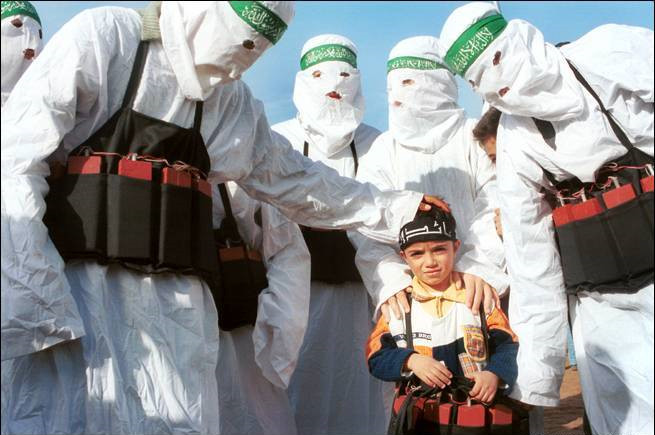
20121001_jihad_kid_terrorist_child_largeTwelve-year-olds don’t choose to become suicide bombers.

And true believers don’t send children as martyrs in place of themselves. The perpetrators of last week’s vicious attack on a Kurdish wedding in Turkey believe in nothing so much as violence as a means to their own power. It’s a sad sign of the times that we can almost admire the zealots of a few years ago who willingly gave their own lives for their ideals, no matter how convoluted those ideals may have been.

When fanatics eagerly give the last full measure of devotion — for which Abraham Lincoln praised the Union soldiers who sacrificed their lives at Gettysburg — we have to ask ourselves if we are prepared to sacrifice as much for our noble values as our enemies readily sacrifice in the name of terror.

Click here to read the whole article.

Louisiana and the Waters of Life and Death

As residents across Louisiana struggle against catastrophic flooding, we should all take a few moments to contemplate how quickly nature can become our greatest adversary.  Water is both the source of all life and the greatest destructive force on earth.  I ponder the paradox in these reflections from after the Pacific Rim tsunami of 2005.

maxresdefaultVolcanoes. Hurricanes. Earthquakes. Fires. Tornadoes. Blizzards. Drought.

In a time when reports of terrorism have become all too common, it is sobering to consider the myriad ways nature possesses to inflict death and violence on a scale surpassing the most destructive instruments devised by man. Of all these, however, destruction by water, whether from the sea or from the sky, holds a unique terror in the scope and measure of its devastation.

Aside from the 150,000 lives already reported lost across nearly a dozen countries along the Indian Ocean, dehydration, disease and hunger threaten as many as 5 million more in the wake of the recent tsunami. And rare though tidal waves may be, the more familiar trial-by-water of floods has, with much greater frequency, left similar numbers homeless and in danger of starvation.

It seems ironic that water, the source and foundation of all life upon our planet, can become nature’s most malevolent instrument against the beings whose lives depend upon it.

Devastation by water occupies a prominent place in human history. Virtually every ancient culture records the tradition of a great flood that inundated the world, lending credence to the biblical account of Noah and the ark. Jewish tradition describes this not as a random event, but as a divine response to the corruption of mankind.

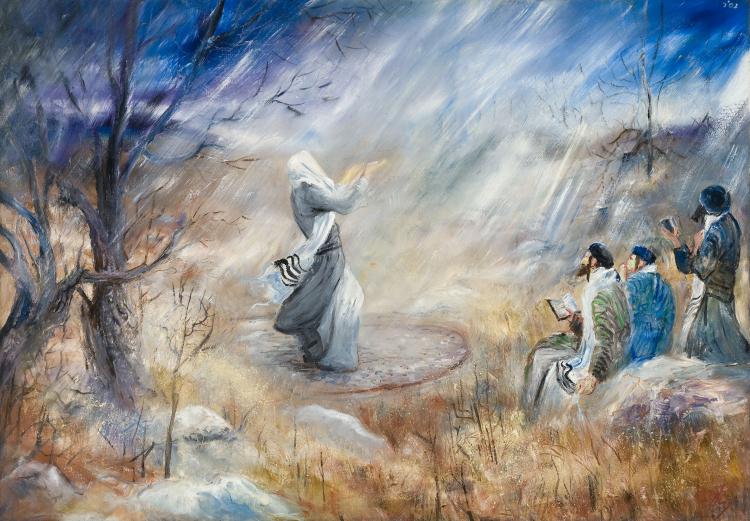
The Talmud, however, reports a much more enigmatic account of divine intervention through water. It was in a time of terrible drought that the Jewish people approached the sage Choni HaMagil and beseeched him to pray for rain on their behalf. When Choni’s supplications to the Almighty went unanswered, he drew a circle in the dust and stepped inside of it, vowing not to leave the circle until G-d bestowed rain upon His people.

Immediately, a fine mist settled upon the earth, too little to alleviate the drought but sufficient to free Choni from his vow.

Choni called out to heaven: “I asked not for this, but for a rain to fill all the wells and cisterns.” Immediately, raindrops larger than melons began to fall, wreaking destruction upon homes and fields.

120831085605-01-isaac-landov-fri-horizontal-galleryAgain Choni called out to heaven: “Neither did I ask for this, but for a rain of blessing.” Immediately a normal rain began to fall, filling the wells and cisterns of the people as Choni had requested. But the rain did not stop, and soon the entire population of the land feared that they would drown in the rising waters.

One last time Choni called out heavenward: “Master of the World, Your people, Israel, whom You brought out from Egypt, can tolerate neither too much blessing nor too much misfortune.” Immediately the waters abated, and the people returned to their fields. From this time onward, people referred to Choni by the name HaMagil   —   the Circle-maker.

What was the point of G-d’s demonstration to the people of Israel? What did Choni mean that the people could not tolerate too much blessing? And why did Choni find it necessary to remind the Almighty, at this particular moment, that He had brought the Jewish people out from Egypt?

The Exodus from Egypt may be described, in commercial terms, as the largest loan ever extended in the history of man. During the generations of slavery in Egypt, the Jewish people had forgotten their Creator and lapsed into the same idolatries as their Egyptian masters. And although, to their credit, the Jews had guarded themselves against assimilation, this alone was insufficient to earn them the privilege of miraculous redemption. Nevertheless, G-d gave them an incalculable line of credit: Freedom from slavery, freedom from oppression, freedom to chart their own course into the future.

Moreover, He promised them immeasurable blessing and unbounded prosperity, on condition that they would repay their loan   —   repay it by living according to G-d’s law, repay it by rising above material pursuits and petty self-interest, repay it by using all the blessing that G-d would bestow upon them to aspire to moral, ethical, and spiritual perfection.

In this light, blessing may be understood as a double-edged sword. Wielded in one direction, it cuts down all enemies and obstacles that stand before us. Wielded in another, it obligates us to a standard of righteousness and moral behavior that we may find nearly impossible to meet.

This was the meaning behind the Almighty’s response to Choni the Circle-maker’s plea:

Two roads lie before My people, and it is their choice which to follow. One leads back to Egypt, back to the oppression of materialism and the slavery of self-indulgence, back to spiritual emptiness and the absence of all blessing. The other road leads forward, to spiritual fulfillment and spiritual greatness, if My people will only find within themselves the potential to seek greatness and discard all lesser goals. It is for this that I redeemed them, that they might cast off the chains of physicality and reach for the heavens.

H19060-L75167491And this too was the meaning behind Choni’s appeal to the Almighty:

Master of the World, You brought your people out from slavery and oppression on condition that they would use their freedom and the blessings to strive for spiritual heights. Your people, however, have demonstrated from their beginnings that, whatever their potential may be, they still suffer from human failings and human shortcomings. They cannot tolerate too little material blessing, lest the struggle to survive overwhelms them and they abandon all higher aspirations. And they cannot tolerate too much blessing, lest they cower before the goal set for them and lose all hope of its attainment.

By all accounts, the world that we live in today enjoys a level of material affluence unattained and unimagined by previous generations. Such basic necessities as rapid transit, instantaneous communication, indoor plumbing, electrical lighting and refrigeration, which we take for granted, provide us with an ease of living simply unavailable to even the wealthiest, most powerful monarchs until the last century. The very existence of an “entertainment industry,” much less the staggering sums of money devoted to it, testifies to our abundance of resources   —   which is to say, our abundance of material blessing.

Nowhere does Jewish tradition teach the condemnation of wealth or of recreation.

Nowhere does Jewish law mandate the forcible redistribution of wealth from those blessed with good fortune to those less fortunate. But Jewish tradition does warn us of the responsibilities of prosperity. It warns us in the narrative of the flood, in the story of Choni HaMagil, and also in the Hebrew word for charity: tzedakah, derived from the word tzedek, or justice.

It is only just that those who are blessed share a portion of their blessing with their less fortunate neighbors. It is only just that, before overindulging in one’s own good fortune, he ponders why he deserves having received such blessing while his neighbor has not. And it is only just that he ask himself how, even in the absences of tax incentives or legal mandate, he might reach out with his blessing to ease his neighbor’s plight.

If the waters of the earth, the life-giving waters that are the source of our greatest blessing   —   life itself   —   have risen up to inflict enormous tragedy, swallowing human life and draining billions of dollars of aid to spare human suffering, we will all be remiss if we do not pause to consider whether we have used our blessings wisely, and what we must do to ensure that we will continue to deserve them.

Originally published by Jewish World Review.

Enter your email here for new articles and insights. We will not share your info.

← Back

Thank you for your response. ✨