Blog: The Ethical Echo Chamber

Why do we think so?
 We think so because all other people think so;
Or because—or because, after all, we do think so;
Or because we were told so, and think we must think so;
Or because we once thought so, and think we still think so;
Or because, having thought so, we think we will think so…
Henry Sidgewick

Are Facebook friends causing depression?
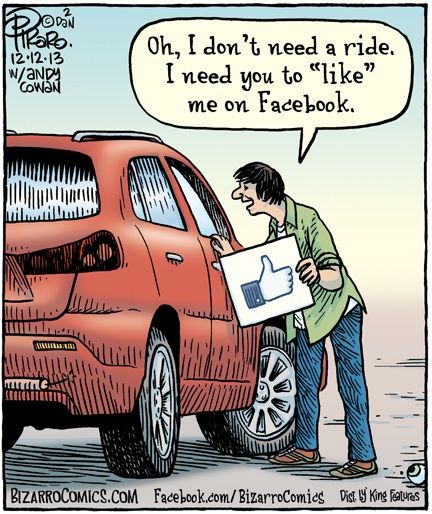 The connection between social media use and depression is old news. But a new study offers a new insight into the why.
The obvious reason has always been that substituting online “relationships” for genuine human interaction leaves a person feeling empty because of the shallowness of the exchanges. Now, Ariel Shensa of the University of Pittsburgh School of Medicine offers an additional insight.
Interviewing 1,763 randomly selected participants, ages 19-32, Dr. Shensa and her team discovered that aside from the amount of time spent on social media, the motivation behind that involvement proved a more significant predictor of depression.
According to Lindsay Howard of the Virginia Consortium Program in Clinical Psychology, those who seek recognition and approval through the use of social media are the ones most likely to suffer from a negative self-image and accompanying disorders. Even less frequent use of social media — when it is used to seek self-validation — becomes a kind of addiction, which is at the root of its link to depression.
So here’s an opportunity to revisit these thoughts from 2010 on the relentless pursuit of fame and the futility of seeking validation from others.
No Tears for Big Brother
Refinement. Poise. Modesty. Graciousness. Integrity. Once upon a time, these were the attributes with which parents hoped to imbue their children, that they might lead rewarding lives and develop healthy emotional relationships.
But consider the cultural icons we hold up before our children to emulate today: they have Michael Vick as their model of refinement; Lindsay Lohan as their model of poise; Lady Gaga as their model of modesty; Donald Trump as their model of graciousness; and a myriad of chief executive officers around the globe as their models of integrity. Our children learn from these instructors every day, unsupervised, through television and the internet. Could anyone in any previous generation have seen all this coming?
As a matter of fact, someone did.
 Superficially, the excesses of modern society may bear little resemblance to the colorless culture of oppression visualized by George Orwell in his dystopian classic1984. But Orwell’s masterpiece was itself a warning against the insidious threat of superficiality, whether political, social, or economic. Today, Orwell might be dismayed, but not surprised, at how eagerly we have divorced ourselves from reality in every aspect of our lives.
Unsustainable spiraling profits, unsupported by genuine production or service, sounded not a single warning bell until the inevitable bursting bubble caused billions of dollars to vanish in a heartbeat and left millions saddled with crushing debt. The nomination of a photogenic candidate with no experience and no credentials sounded no warning bells to the majority of the electorate who swept him into high office, precipitating the greatest ideological rift in the United States since the Civil War. Most significant of all, the cognitive and social disintegration spurred on by the ubiquitous virtual ports of the computer and television screens suggests a cultural crisis that is already upon us. Time and time again, we choose dreams over substance and learn nothing from our mistakes.
WE HAVE SEEN THE ENEMY…
I still remember vividly how I reacted twelve years ago when I first learned about the new phenomenon called “reality television.” I had just taken my seat on a plane home from New York City, delighted that a departing passenger had left behind a copy of the New York Times Magazine. The cover caption caught my interest, and I turned to the lead story about a new British television show called “Big Brother.” Before I was half-way finished my hands were trembling, and I could hardly stop myself from looking over my shoulder to see if George Orwell was reading the story from the row behind me.
Even for those of us who remember 1984, our overfamiliarity with instant visual communication has diluted the once-nightmarish connotations of the iconic Orwellian telescreen. We don’t value privacy, we can’t cope with isolation, and we dissolve into near-hysteria whenever we find ourselves cut off from our social networks even for a moment. Access means more than substance. Bandwidth means more than content. And Big Brother, the erstwhile symbol of Stalinist totalitarianism, now finds himself transformed into a pop-icon enjoying a successful dozen-year run in Britain, the backdrop for Orwell’s prophetic novel.
Last month, however, the kulturkamph deepened as the producers of the American version of the show announced two new wrinkles for the new season. First was the introduction of “The Mole,” a saboteur placed among the Houseguests to wreak havoc upon every social dynamic. Not only will the sole contestant to survive the season win half a million dollars; now, one of them gets a payoff for stirring up dissension.
…AND IT IS US
Second, and even more disturbing, was the announcement that one of the guests was to be an Orthodox Jew who, by his own account, “will practice all aspects of his religion while living in the Big Brother house.”
No he didn’t. (He was quickly booted). And here is why:
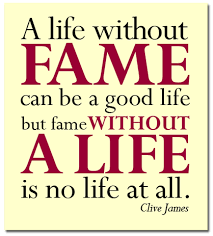 Rabbi Israel Ba’al Shem Tov, the illustrious founder of the 18th century Chassidic movement, once remarked that a pious companion of his youth had been blessed with a life of anonymity, while he, Rabbi Israel, had been condemned to fame. If the rabbi’s disdain for notoriety leave us bewildered, that itself is a symptom of how the superficial values of Western culture have rendered us incapable of understanding that personal privacy is both a virtue to be admired and a treasure to be jealously guarded. Conversely, fame is both a vice and a curse, although one wouldn’t know it from the electronic media’s most successful innovations — the seductive screen of television, the virtual gateway of the internet, and the reinvention of Big Brother.
The way private lives have gone out of fashion today is a blight upon the human condition and a corruption of all that is noble within human potential. To invite anyone who will listen into the deepest corners of our lives constitutes no less a violation than inviting a stranger into one’s bed. And the sale of our souls for 15 minutes of fame leaves us every bit as poor as the sale of one’s body for a few moments of carnal pleasure.
Of course, it’s not hard to understand how we arrived at this point. Our regard for privacy is continually eroded by the inescapable message that renown is the ultimate measure of success. But consider: if private lives were not so dear, why is everyone else trying so hard to steal ours away from us?
So can one uphold the precepts of Jewish Law while pandering for public adulation on international TV? For anyone who one remains sensitive to the Torah’s prescription with regard to fame, most certainly not. Any contestant that sells his personal privacy may be superficially in compliance with the letter of the law and the technical restrictions of the Sabbath and a kosher diet. But he has lost touch with the spirit of the law and has compromised the underpinnings of his faith. Even were he to have won that half a million, he will have paid out far more than he gained, in the cost of his personal dignity and in the sacrifice of his most precious commodity — the priceless gift of intimacy with the Divine.

Marriage of Convenience
 We are what we pretend to be, so we must be careful about what we pretend to be.
― Kurt Vonnegut
The orderly rolled my gurney to a stop before an imposing double doorway. “Okay,” he said, “This is where you get your kiss.” I couldn’t tell if he was speaking to me or to my wife. In any case, my wife kissed me and laughed and cried all at once. Then I was rolling again.
I arrived in surgery and scooted over onto the operating table. I joked with the anesthesiologist. He found my vein on the first try. I recited Psalms to myself and wondered distantly why I wasn’t scared out of my wits.
They sliced me open, broke my sternum, compressed my lungs like empty sugar bags, and stopped my heart to patch the hole between its upper chambers with a piece of my pericardium while redirecting the blood that flowed through an anomalous vein.
I don’t remember that part.
I also don’t remember my hands clawing the air, straining against nylon straps, struggling to tear the ventilator mask from my face and the dressing from my chest. My wife stifled a cry when she saw me in recovery. Apart from the convolutions of my fingers, the pallor of my face starkly mirrored the countenance of death.
“He looks so good,” the nurse told her.
When I did regain consciousness the next day, numbed by morphine and dazed by the residue of anesthesia, I asked my cardiologist if he could release me that afternoon. “I have to catch a flight to Jacksonville this evening,” I said.
I was trying to be funny. He thought I was delirious.
EXPECT THE UNEXPECTED
![[ File # csp3608269, License # 1131644 ] Licensed through http://www.canstockphoto.com in accordance with the End User License Agreement (http://www.canstockphoto.com/legal.php) (c) Can Stock Photo Inc. / Eraxion](https://proverbsandprovidence.com/wp-content/uploads/2016/04/anatomy-lungs.jpg)
Lacking prescience, however, I had no excuse for the cavalier attitude with which I approached this whole business. No matter how distinguished my surgeon’s credentials, and no matter how casually he explained away the operation as routine (with the probability of success better than 99%), cardiac surgery remains as heart-stopping as it sounds: they carve open your chest and, during an extended period of clinical death, cut and paste around your most vital organ before sewing you back together.
Call it what you like; it hardly ranks among the more attractive forms of elective surgery.
Yet “elective surgery” was how the doctor had described it. After all, I had virtually no symptoms, and my condition might not advance for twenty years. Then again, deterioration could begin within months, or even weeks. And so, at my cardiologist’s insistence, I opted to exchange the distant prospect of lingering death for the immediate promise of physical pain followed by months-long recovery.
That was what I expected. Instead, from beginning to end, while my wife and children and parents were dealing with their respective emotional traumas, the greatest discomfort I suffered throughout the entire episode came not from the incision, not from anesthesia withdrawal, not even from the mild pneumonia I contracted during recovery, but from a persistent hangnail that nagged me from the day after surgery until I returned home and exorcised it with my cuticle clippers.
THERE IS A LESSON
The great tennis player Arthur Ashe, after contracting AIDS via blood transfusion, was reported to have said, “If I ask why this has happened to me, then I must also ask concerning all the good that I have had in my life.”
Indeed, Mister Ashe, may you rest in peace — you should have asked both questions, as should we all.
If life is all One Great Accident, then there is no why. But the exquisitely textured fabric of our universe, the elegant design of our world, and the transcendent nobility of Man when he listens to the calling of his soul — all these testify to the genius of an invisible Conductor who guides the symphony of Creation.
And if there is a plan behind the apparent chaos, then whatever happens for good or for bad should prompt us to ask, “Why?”
Click here to read the whole essay, from my column in the inaugural issue of The Wagon Magazine

Who we are not
 So here we are again, contemplating a general election that will give us a choice between the lesser of two evils. And the likely options look to be more noxious than any we’ve ever had to face.
Everyone is asking the same question: how did we get here? And the bad news — which is old news — is that negative advertising works.
But why does it work? Everyone hates it, everyone complains about it, everyone laments the decline of civility, the widening of the political divide, and the incurable blight of ideological gridlock. So why do we continue to respond to the very thing we can’t stand in a way that makes it keep getting worse?
A new study may offer a glimmer of explanation.

Spitting Image 2:6 — The FBI vs. Apple: Lessons Learned
 Good news, everybody! The FBI has found a workaround to break into the iPhone of suspected San Bernardino terrorist Syed Rizwan Farook, and the Department of Justice is backing down from Defcon 1. So now that the crisis is averted, what are some practical lessons we can learn about confrontation and conflict resolution?
Here are a few suggestions:
Both sides might be right. The FBI and Apple each claimed national security as its top concern. The FBI was thinking short-term — stop more terrorist attacks now; Apple was thinking long-term — don’t make ourselves vulnerable later. It’s entirely possible that both parties were sincere and correct.
So here’s the first takeaway. Until evidence proves otherwise, assume positive intent. Your adversary is not necessarily evil; he may just be looking at things from a different angle. Trying to understand his position before going into attack mode may avert conflict and promote mutually beneficial cooperation.
Go around roadblocks, not through them. Apple refused to cooperate. The FBI refused to back down. But as each party dug in and the deadlock stretched out, government officials did something that should renew our hope in government officials: they looked for another way of solving the problem. When the most straightforward plan of action isn’t panning out, don’t give up on finding a detour.
There might already be a solution. After arguing for months that it was impossible to break the phone’s encryption without Apple’s help, the government apparently found hackers who did what hackers said they could do from the beginning: find a way in. So if you don’t know what to do, ask someone who knows more than you do.
Nothing is foolproof. It’s a cliche, but cliches are usually true. Anything that can be protected can be broken into; and any plan can be thwarted. Or, as Yogi Berra used to say: Good pitching will always beat good hitting; and vice versa.
There are no perfect fixes. Although the Department of Justice isn’t releasing details, some believe that breaking into the phone may have caused some of its data to be irretrievably lost. A win doesn’t have to be 100%. In business, in diplomacy, and in most of life, it rarely is. If you end up with most of what you want, don’t let what you had to give up spoil your victory dance.
Save litigation as a last resort. Law suits cost everybody; except the lawyers. So if you’re not a lawyer, try everything else before you push the nuclear button.
Working together makes you look better. Black eyes and bloody noses are painful and unattractive, even when you win. I’m reminded of the Karate master who was accosted by hoods as he was leaving his dojo. “Do you want to beat me?” he asked. “Yeah, we want to beat you,” their leader replied.
The master could easily have dispatched the young miscreants without breaking a sweat. Instead, he took of his jacket and laid down on the sidewalk. “Now you have beaten me,” he said. The hoods looked at him in confusion, then drifted away.
Maybe cooperating means giving up a little more now. But you will almost certainly come out ahead in the end.

Spitting Image 2:5 — Keeping within the lines
 What’s wrong with this picture?
Well, that really depends; if there is no shortage of available parking spaces, or no handicapped spots open, perhaps nothing at all; if it is a one-time, careless indiscretion, it might be dismissed; if it is an expression of neurotic fear that others will damage the paint job by carelessly throwing open their doors, it might be understood, if not condoned.
But if it is symptomatic of indifference to the conventions of parking and the potential inconvenience to others, then it becomes something else entirely.
There is a good reason why lines are painted in parking lots. And there is more than one good reason to park one’s car between them.
We can apply the same principle to other conventions, some within the formal dictates of the law and others simply defined by custom and culture. Rolling stops at intersections, or disregarding stop signs altogether on a lonely road in the middle of the night. Changing lanes without signaling, or disturbing passengers on the subway with loud voices or offensive speech. Pushing into an elevator without waiting for its occupants to exit first, or cutting the line at the ticket booth. Setting the knife on the dinner table with blade turned outward, or not using cutlery at all.
Are there worse things? Of course there are. Should these things be legislated? For the most part, definitely not.
But is there something lost when we lose respect for these “trivial” conventions? Undeniably there is.
In his insightful book Civility, Stephen L. Carter explains the common root that turns “civility” into “civilization.” Of course we have to be a nation of laws; that’s a given. But just as important is being a nation of respectfulness, consideration, and self-reflection. Taking into account how our actions will affect others is not a matter for legislation; it is the symptom of a morally healthy world view, and of an awareness that what others expect from me is inseparable from what I can expect from others.
Like the proven “broken windows” theory of urban renewal, the respect I show for convention will serve as a model for others, making it easier for them to retain their own respect for the minutiae of personal conduct that produces a more pleasant society for everyone.
Even if we want to indulge our selfishness, respect for convention benefits us as well. The same discipline that makes me complete my set of 15 reps in the gym when I really want to stop after 12, that makes me finish my peas before I serve myself dessert, that makes me vacuum under the sofa even though no one is going to see the accumulated dust there — all these little concessions to doing things right reinforces our commitment to doing good and doing right on a grander scale by reminding us that there is a higher ideal in the world than our own individual comfort and convenience.
So there is good reason to park between the lines even when the parking lot is empty. Because you never know what other lines you may be tempted to cross, and you may not recognize the danger of crossing them until you’ve already gone over the edge.

Purim and the Jewish response to terror
After the horrific attacks in Brussels, especially coming as they did so close to the Festival of Purim, I’m revisiting these thoughts from 2005. Lest we forget.

Pogroms. Genocide. Jihad.
These are the devices our enemies have directed against us throughout the ages, for no other reason than because we are Jews. Yet for all that, the commitment to mercy and justice that defines us as a people and sets us apart from the other nations of the earth ensures that we would never seek the destruction of another people simply because of who they are.
Or wouldn’t we?
You shall erase the memory of Amolek from beneath the heavens. So the book of Deuteronomy commands us — a command renewed from generation to generation across the span of Jewish history — to strike down the nation of Amolek and obliterate its memory from the consciousness of mankind.
How is such a precept defensible? How can we claim the moral high ground over our enemies if we resort to the same tactics that they employ against us?
The decree against Amolek, however, is based upon neither racial hatred, ethnic struggle, religious ideology, nor even historical justification. Many nations have differed from the Jews in belief, practice, and culture, and many of these have waged war against us and sought our destruction. But only the nation of Amolek warrants such condemnation, not only that we seek out and destroy it, but that we never forget the reason why.
Remember what Amolek did to you on the way, as you departed from Egypt: How they fell upon you in the desert, when you were tired and weary, and cut down the weak who trailed behind you.
Why did Amolek attack us? Why did they descend upon us in the desert, unprovoked, and attempt to annihilate us?
At the time of the Jewish exodus from Egypt, 3328 years ago, the entire world witnessed an event both unprecedented and never to be repeated: The miraculous destruction of the most powerful nation on earth and the even more miraculous supremacy of a small and oppressed people. No one in the world doubted the involvement of the Divine Hand behind the upheaval, nor could anyone fail to recognize the significance of this fledgling nation: the rise of the Jewish nation introduced human civilization to such ideals as peace, collective conscience, social responsibility and, above all, a standard of moral values that would become the foundation of all ethics and human virtue.
Such ideals, previously unknown to human society, did not find immediate universal acceptance. Indeed, the values of Judaism have been rejected and discarded time after time throughout human history. But in the wake of the miraculous destruction of Egypt, every nation and every people recognized what the Jewish nation represented. And every nation stood in awe of them. Every nation except one.
The nation of Amolek despised the very concept of moral standards. They would accept no moral authority, would make every sacrifice to protect their moral autonomy, and would employ any tactic to strike out against the nation who, by teaching morality to the world, threatened to render them a pariah.
Why is it important that they cut down the weak who trailed behind you? What does it reveal that they chose the moment when an unsuspecting people were tired and weary to attack? What perverse strategy drove them to embark upon a hopeless campaign of violence that had no hope of success?
In short, Amolek introduced the world to the tactics of terrorism, launching a suicide campaign against the defenseless, against the tired and the weary, just as their ideological descendants would later blow themselves up to murder women and children, waging brutal physical and psychological war upon a civilian population — not for clearly defined political gain, but to spread chaos and the moral confusion of disorder.

In response, the Torah teaches us the only possible answer to terror: Not negotiation, not compromise, not appeasement, not even military conquest and domination — none of these will ever succeed against the terrorist who seeks nothing less than the obliteration of his enemies, the terrorist driven by such singular purpose that he will sacrifice everything to achieve it and will stop at nothing until he has attained it. He will use others’ desire for peace, their respect for human life, and their confidence in the ultimate goodness of mankind as weapons to destroy them; he will make any promise and offer any gesture of goodwill to gain the opportunity to take another life, to cripple another limb, to break the spirit of all who stand between him and moral anarchy.
In confronting terror, little has changed over the course of 33 centuries. Four centuries after Amolek’s attack upon the Jews in the desert, King Saul showed a moment’s mercy to the king of Amolek, thereby allowing both that nation and its ideology of terror to survive. Five centuries after that, when the Jews of Persia thought to appease Haman, a descendant of Amolek, they very nearly brought about their own destruction, saved only by the miracle of Purim. Similarly did the governments of Europe seek to appease the greatest criminal in modern times, empowering him to send millions to meaningless death in pointless battle and incinerate millions more in an incomprehensible Holocaust.
And today, Western governments and ideologues continue to promote negotiation with and concession to terror, even as more and more innocents are murdered and maimed. Like King Saul, they prove the talmudic dictum that one who shows mercy at a time for cruelty will show cruelty at a time of mercy. For all its insistence upon compassion, upon virtue, upon love for our fellow man, Judaism teaches the cold practicality of confrontation with terror, that there can be no peace with those committed to violence, that there can be no offer of good faith to those who renounce faithfulness, that there can be no respect for the lives of those who devote their lives to dealing out death.
For those who live and die for the sake of terror, only one course of action exists to preserve the society that makes peace and justice possible: to erase their memory from beneath the heavens.

Dustin Hoffman and the Miracle of Purim
 The Festival of Purim may be the most misunderstood celebration in all Jewish tradition. Even the historical background seems to contradict the template of Jewish history and survival.
Confounded in the cultural and spiritual darkness of Persian exile 2372 years ago, the Jewish people faced a calculated plan for genocide beyond anything devised by Adolph Hitler. A conniving King Ahasuerus, inspired by his devious viceroy, Haman, laid out a scheme to exterminate the entire Jewish nation in a single day.
With the full force of the king and his empire turned against them, how could the Jews hold out any hope of salvation?
But in the wink of an eye, literally overnight, Haman fell out of favor and, through an improbable confluence of apparent coincidences, the Jews became the king’s most favored nation while the enemies who conspired to destroy them were themselves destroyed.
And how do Jews commemorate the divine intervention that saved them from annihilation? On this day that the sages equate with Yom Kippur, the Jewish Day of Atonement, we replace fasting with feasting, exchange prayerful reflection for revelry, and eschew the simple white garments of purity for masks and costumes.
Purim becomes a day of backwards and inside-out, of contradictions and reversals, of parties and paradoxes.
In keeping with the counterintuitive practices of Purim, allow me to conscript a pair of latter-day Jewish cognoscenti to dispel confusion with the light of clarity:
Dustin Hoffman and Sydney Pollack.

Nothing left to say, nothing right to say
 I’m going to make a greater effort to stay away from politics in general and Donald Trump in particular (although I’ve made that resolution before without much success). I’ve been baffled by the responses I’ve gotten from Trump supporters accusing me of dishonesty and spreading a message of hate.
It’s hard to imagine how individuals who claim sensitivity to lying and hate-mongering are able to overlook such an abundance of both in their own candidate’s rhetoric. But I’ve already addressed the proliferation of such double-standards and willful ignorance elsewhere.
So here is my parting shot (for now), excerpted from an article by the always-insightful Jonathan Rosenblum:
IF DONALD TRUMP SPEAKS to voters tired of being ignored and condescended to, he is nevertheless a disastrous representative of them. Nothing in his life until now has shown an iota of concern with those who now salute him, and he has not offered one serious policy prescription that would address their economic insecurities. All he offers is his boastful self-promotion and a call for the power to make America great again. However different in style he is to the polished and fluent Barack Obama, he offers the same promise of being some sort of miracle worker. (Remember when Obama pronounced his nomination as the day the oceans cease to rise.)
Trump is not the antidote to thought-stifling political correctness, as his supporters seem to think. Vulgarity and the lack of basic human decency are not the opposite of political correctness.
[Trump] has betrayed no understanding of the American system of checks and balances or three co-equal branches of government. Recently, he boasted that he would gut First Amendment protections of the press to make it easier for him to sue, in the manner of Turkey’s Erdogan, reporters and papers that get under his tissue-thin skin.
ONE OF THE WISEST OF THE FOUNDERS, Benjamin Franklin predicted, “Only a virtuous people are capable of freedom. As nations become corrupt and vicious, they have more need of masters.” And, as David French argues, “Trump is running not for president of a constitutional republic but to be the strongman of a failing state.”
One by one, many at first inclined to hold their noses and vote for Trump (and there is an argument for doing so) have determined that they cannot, for he will further lower the standards of an already debased culture. For some it was his casual dismissal of the courage of John McCain during six years of torture in North Vietnamese captivity, which left McCain permanently disabled.
For Andrew McCarthy, the lead government prosecutor in the first World Trade Center bombing, it is Trump’s boast that he will order American troops to become war criminals and target the wives and children of ISIS fighters. For Stephen Hayes of the Weekly Standard, it is the impossibility of explaining to his young children why someone would mock the physical disability of a crippled reporter. For the religious conservative David French, it is his pledge to keep funding Planned Parenthood to the tune of millions of dollars, so that it can continue killing hundreds of thousands of babies a year.
These thoughtful conservatives are shocked that Trump’s supporters rather than being appalled by his cruelty and malice are attracted by it. They see him as the artifact of a society from which the civic vitality catalogued by de Tocqueville has been lost and replaced by vitriol and demagoguery.
“Our Constitution was made for a moral and religious people,” wrote John Adams. “It is wholly inadequate for the governance of any other.” (Hat tip again to David French.) If so, America is grave danger on the evidence of this election season.
Hat tip: Sylvia Poe

Spitting Image 2:4 — Don’t say “Cheese!” Really?
ISIS threatens to bring terror to our shores. Iran and North Korea threaten to launch nuclear missiles against our cities. The national debt soars out of control. The divisions of ideology and race widen inexorably, as does the gap between rich and poor. The structure of the family continues to disintegrate, along with the core values that once gave us a sense of higher purpose and national identity.
 So what is the one issue that really gets people’s blood boiling? Apparently, it’s the suggestion that Hillary Clinton doesn’t smile enough.
I’ve never paid any attention to MSNBC host Joe Scarborough, so I have no preconceived notions, although he seems to be a surprising voice of moderation on that most immoderate network. And I wasn’t watching the news on election night, so I can’t comment on whether Hillary Clinton should or should not have been smiling more when Mr. Scarborough tweeted:
Smile. You just had a big night. #PrimaryDay
This was too much for many women. Of all the belittling, misogynistic comments that Mr. Scarborough might have made, this one crossed the line of lines.
As the Washington Post explains: Being told to “smile” may be the ultimate nails-on-the-chalkboard comment for women.
Sorry, ladies, but I’m with Mr. Scarborough on this one. Because the truth is that we all need to learn to lighten up and smile more.
Like almost everything else in our society, our view on humor is completely backwards. The most caustic personal attacks are the standard fare of light-night television, while innocent quips and casual banter are condemned as “microaggressions.” Biting sarcasm is seen as the pinnacle of wit, while self-effacing irony is misconstrued as condescension.
This has nothing to do with Hillary, and it’s not just about women. If we really want to do something about the rise of violence and the demise of civility, the answer is right here:
Smile more, take pleasure in the company of friends and strangers alike, find joy in good-natured wordplay, laugh at your own shortcomings and inconsistencies, and look for ways to connect with others instead of staking out claims and drawing battle lines.
Indeed, the sages of the Talmud urged us relentlessly to draw others into our sphere of happy influence. Here are a few examples:
 Rabbi Masya ben Charash said: Initiate a greeting to every person.
Rabbi Yishmoel said: Be respectful toward a superior, be pleasant to the young, and receive every person with joy.
Shammai said: Receive every person with a cheerful countenance.
Hillel said: Be like the disciples of Aaron — loving peace and pursuing peace, loving others and bringing them closer to the ways of wisdom.
Rabbi Chanina ben Dosa said: If the spirit of one’s fellows is pleased with him, the spirit of the Almighty is pleased with him as well.
So stop whining and start smiling.


 Yonason Goldson