




Blog: The Ethical Echo Chamber

Making the Ordinary Extraordinary

08b419073f601987ce81e919e41a021d-300x300You’ve just ordered a top sirloin at a five star restaurant and the waiter brings you prime rib.  Or you arrive on time for your reservation and still have to wait 20 minutes to get a table.  Or you ask for a beer with your dinner and, after you’ve reminded the waiter twice, he informs you as you’re finishing off your entree that the restaurant is out of your selection.

Do you complain to the manager, or do you wax philosophic and chalk up the experience to the vagaries of life?

It may depend on whether you are dining cross-country or dining across town.

That’s what researchers from Temple University, Arizona State University, and the University of Minnesota concluded when they studied a cross-section of restaurant reviews: we’re more likely to be critical of establishments when we’re closer to home than we are when we’re on the road.

The question, of course, is why?

Read the whole article here.

Did That Really Happen?

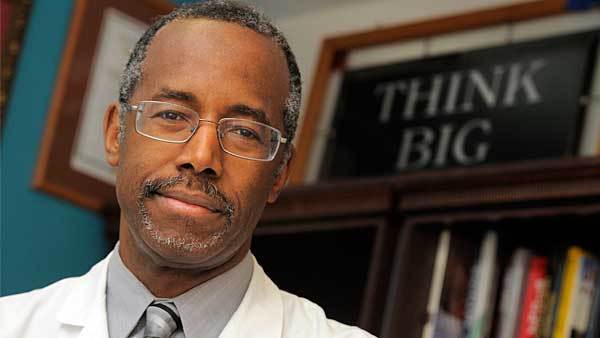
ben-carsonWell, it was probably inevitable.  Dr. Ben Carson, quintessential political outsider and man of integrity, has been caught in a … well, let’s call it a modest inaccuracy for the time being.  The inspirational narrative of his turning down a full scholarship to West Point proved somewhat less dramatic:  at best, he was encouraged to attend West Point and chose otherwise.

This may have been an honest misstatement or trick of memory decades after the fact.  It certainly can’t be compared to claims of having been shot down in a helicopter or having had to duck under sniper fire, and if it doesn’t emerge as part of a pattern of prevarication then the doctor can be forgiven.

It does demonstrate, however, how careful we should be with our words, especially in this day and age when everything is recorded and almost everything can be verified or disproven.

It’s a topic I address in this essay, published by Jewish World Review back in 2010.

Having circled the globe one and a half times before finding my way to Torah observance, having lived for nine years in Israel and one year in Hungary, having taught adolescents for nigh on two decades, it’s only natural that I have more than a few stories to tell. Consequently, it never fails to discomfit me when friends or neighbors respond to my essays by asking:

“Did that really happen?”

Are my anecdotes so truly unbelievable? After all, I never claimed to have flown to the moon on gossamer wings, to have crossed the Alps with Hannibal and his elephants, or to have led the attack against Custer’s army at Little Big Horn. No, I’ve merely looked to pluck useful insights from slightly quirky encounters and bring to light the Torah wisdom that resides within myriad aspects of the human condition.

12d8aa967e8ef907e5f1f4932db629feAnd so I’ve penned essays about my white fedora, which fellow travelers reported noticing as our paths crisscrossed throughout Europe; about the Israeli gentlemen who rebuked me in an elevator for wearing an earring while sporting tzitzis, the fringed tassels worn over the belt line according to Torah law; and about the ragged man who stopped in his tracks on the streets of Budapest, apparently overwhelmed and overjoyed to discover a religious Jew having survived the travails of the Holocaust and assimilation; these, together with assorted episodes from my high school class room.

“I loved your article,” an acquaintance will say. And then, with alarming frequency: “Did that really happen?”

I even get it from my mother.

To be honest, I can’t say that I’m surprised. After all, narrative accuracy has seen its market value tumble over the years. As candidate for president, John Kerry described how Christmas in Cambodia was “seared in his memory.” A stirring narrative, aside from the fact that he wasn’t actually there. In the Democratic primary four years later, Hillary Clinton reported that her parents had named her in honor of Sir Edmund Hillary — an impressive feat of prescience, since Sir Edmund had not conquered Mount Everest until five years after Ms. Clinton was born and named. Even Ronald Reagan, although never caught embellishing his own history, nevertheless brought tears to the eyes of his audiences with poignant war stories that turned out to be scenes from old movies.

Popular motion pictures that are “based on” or “inspired by” true stories often undergo such embellishment that they emerge bearing little resemblance to the events they claim to portray. Tonight Show host Jay Leno, in his autobiography, reportedly included anecdotes that actually happened to other people, but explained that he had permission to use one story, and that he had paid for the right to use the other.

As in so many cases, the Torah prohibition against speaking untruths extends far beyond the simple meaning of the words. MiDavar sheker tirchak translates, simultaneously, as “Distance yourself from a false word” and as “Distance yourself from a false thing.” From the perspective of Jewish philosophy, words are not mere symbols or labels; they possess a substance and a reality all their own. Consider how a cruel word can inflict more pain than a sharp blow between the eyes, or how a well-placed compliment can produce more pleasure than the sweetest dessert.

When does a word or a thing become false? In principle, the slightest embellishment or exaggeration constitutes a violation of Torah values, if not Torah law. If one is uncertain about the details of a story, it is easy enough to add “I think” or “something like” to one’s narrative. That small concession to veracity helps us preserve our respect for the lines between truth and falsehood — lines that grow increasingly blurred amidst the moral confusion of our generation.

the-truth-shall-set-you-freeThe Hebrew word emes, commonly translated as truth, is formed by the three letters that come, in sequence, at the very beginning, the precise middle, and the very end of the Hebrew alphabet. Before we can be certain that anything is true, we must have a sufficiently broad perspective; we must have all the information, accurately and in context; and we must have a clear understanding of the propriety of revealing that information and the consequences of doing so. Only then is it emes.

Consequently, sometimes even absolute truth may be considered false. In the case of malicious gossip, the accuracy of the information may result in harm even worse than slander by damaging relationships that would have been secure against rumor or innuendo. Similarly, details taken out of context, although factual, often imply conclusions that have no bearing on reality. They may be true, but they are not emes.

The distinction between words that are true and words that are emes easily leads us onto thin moral ice. What about “white lies” intended to spare the feelings of others, or “harmless” untruths meant to warm another person’s heart?

At first glance, Torah tradition seems to endorse such ideas. The sages teach that Aaron, the High Priest, upon discovering that two friends had come to quarrel, ran back and forth reporting to each how sorry the other was and how desperately he longed for reconciliation, until the two friends resolved their dispute and became friends once again. The same sages tell us to always call a bride beautiful, no matter what she actually looks like.

On deeper reflection, however, is it not true that true friends, divided by conflict, miss the relationship they once had and deeply long to restore their friendship? And is it not similarly true that every bride glows with an inner beauty projected at the moment of her greatest joy, and that she is truly beautiful in the eyes of her bridegroom? If so, is it not also true that the sages were offering us a profound lesson in how to interpret human nature?

Indeed, even if there may be cases that require us to speak some literal untruth to protect another person’s physical, mental, or spiritual welfare, such cases are few and far between. If we are honest with ourselves, we will concede that most of us will have rare occasion to bend or break the truth.

Perhaps, if we all exert more effort to ensure that all our words are words of emes, we will not find ourselves suspicious of those stories of little miracles and inspirational irony that can make our eyes sparkle and our hearts swell. And if a more profound commitment to honesty helps us become less cynical and more easily inspired, then what do we really have to lose?

Thank You

PROVERBIAL BEAUTY Secrets for Success and Happiness from the Wisdom of the Ages Available at Amazon.com

PROVERBIAL BEAUTY
Secrets for Success and Happiness from the Wisdom of the Ages
Available at Amazon.com

Thanks to all those who participated in my launch event this week at Subterranean Books.  The crowd was standing room only and the responses were enthusiastic and encouraging.

Thanks also to Kelly, Alex, and Jenna at Subterranean Books for hosting the event.

If you weren’t able to make it, please take a look on my landing page or at Amazon.com and see what you’re missing.

If you’d like a signed copy, please send $20 and your inscription request to me at this address:

POB 11504
St. Louis, MO 63105

James Zogby is Right: Israel is Like Ferguson

Ferguson-Palestine-Protest-APRandom acts of violence.  Daily stabbings.  Bystanders run down on the sidewalks.  A religious couple shot dead in front of their four children.

So says James Zogby, president of the Arab-American Institute.  But Mr. Zogby offered an additional insight in a recent interview with Andrea Mitchell on MSNBC.

“Palestinian lives matter,” declared Mr. Zogby.

“Look, there’s a bit of Ferguson going on here. Maybe a little bit more than a bit of Ferguson…  Unless we find a way for those who control the occupation — it’s not the Palestinians, it’s the Israelis — to give these kids a ray of hope, to say that there is a future for you that’s different than what you’re seeing right now, this isn’t going to end… The violence is the result of a situation of despair that is eating away at the lives and souls of both peoples.

“Palestinians are at the end of the day the ultimate victims.”

Mr. Zogby’s comparison is absolutely right.  But he’s right for all the wrong reasons.

Read the whole article here.

The World Series of Anti-Semitism

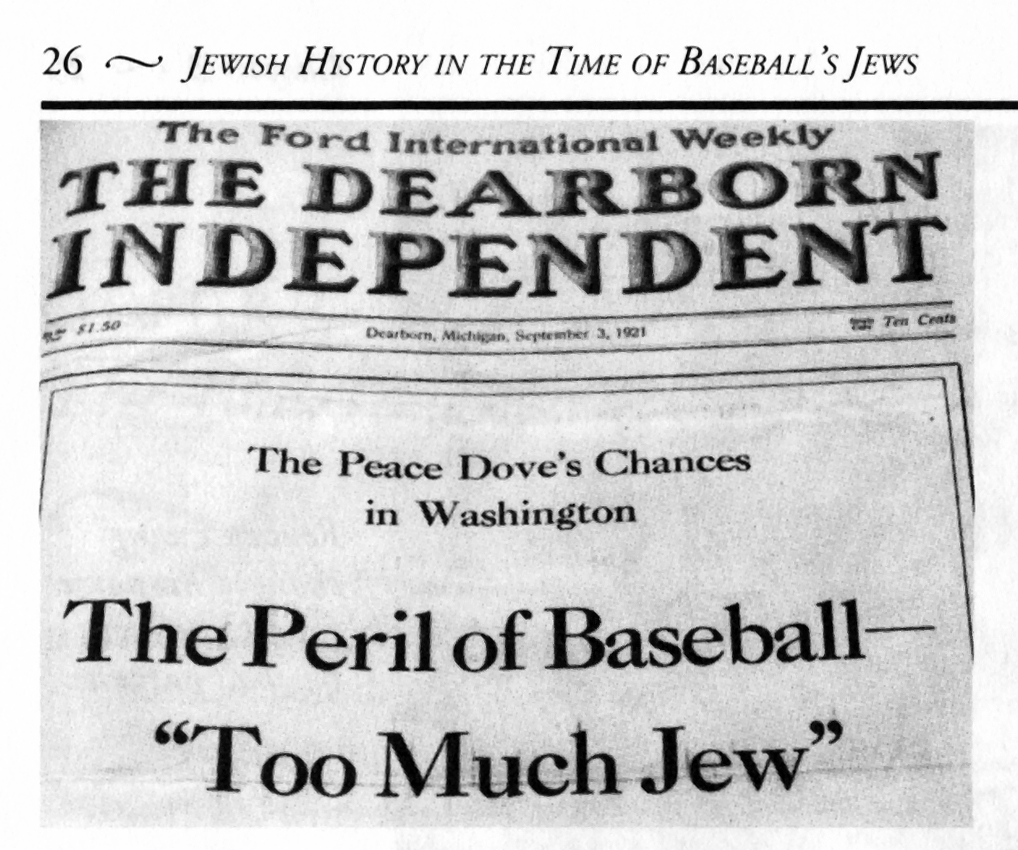
Henery-Ford-Dearborn-newspaperExultation knows no bounds in Kansas City this week, as the town basks in the victory of the Royals over the New York Mets. But they’re not the only ones cheering. In cities all over America, baseball fans can dispel some of the clouds of disappointment with this silver lining: at least the World Series champions are not the St. Louis Cardinals.

You see, according to a Reddit survey last summer, St. Louis is one of the most hated teams in major league baseball.

But what is it about the St. Louis Cardinals that piques the ire of so many spectators? After all, the squeaky-clean, wholesomely Midwest ball club has earned every right to be admired, if not adored. In June 2004, St. Louis fans gave Ken Griffey, Jr., a standing ovation when he hit his 500th home run off Cardinal pitcher Matt Morris. Griffey later said that if he couldn’t reach that milestone in his home town of Cincinnati, he’d hoped it would happen in St. Louis.

That was the same year Larry Walker joined the team and stuck out his first time at bat. Cardinals fans rewarded him with a standing ovation as well, as if to say, “Welcome to the team, Larry.”

A couple of months after that, Cardinals and Dodgers players shook up the sports world by shaking hands after the Cardinals won the playoff series, inspiring astonishment and almost universal commendation.

So why isn’t St. Louis feeling the love?

Read the whole article here.

Who is Wise? Who is Righteous? One who reads Harry Potter

RADCLIFF...TO GO WITH STORY TITLED POTTER COUNTDOWN--FILE--Actor Daniel Radcliffe writes with a quill in a scene from Warner Bros. "Harry Potter and the Philosopher's Stone," in this undated promotional photo. The film has its world premiere in London this weekend and hits theaters Nov. 16. Based on the first of author J.K. Rowling's best-selling series, the movie follows the adventures of Harry, an orphan boy who is invited to become a student at the Hogwart's School of Witchcraft and Wizardry. The movie faces huge expectations not only among fans, but at the box office, too. (AP Photo/Warners Bros. Pictures, Peter Mountain/FILE)

Do you want to put an end to bigotry, ultra-nationalism, and racism? It might be easier than you think. Try reading Harry Potter.

No, it’s not magic. According to the Journal of Applied Social Psychology, there’s more to the wildly successful series than just a good story. The tale of a mistreated orphan boy who discovers extraordinary magical abilities is essentially an epic metaphor for the battle between merit and privilege, between status and stature, as pure-blooded wizards contend with half-bloods and “mudbloods” for supremacy over the magical world.

By identifying with the heroes of the story who grapple with the conflict between ancestral identity and the content of character, readers will likely emerge a little more heroic themselves.

That’s what Professor Loris Vezzali and his team of researchers from Italy’s University of Modena and Reggio Emilia concluded after a series of studies which demonstrated how children exposed to the passages dealing with prejudice displayed improved attitudes toward minorities and other social classes. According to Scientific American, this research supports an earlier study in Science, which “found that reading literary fiction, as opposed to popular fiction or nonfiction, results in keener social perception and increased empathy.”

This really should come as no surprise. Literary fiction seeks to educate as well as entertain. The combination of relaxing the mind, the willing suspension of disbelief, and the integration of moral themes, allows for the better internalization of values. Of course, the benefits are dependent upon the soundness of those values.

But Harry Potter hits the mark with almost unwavering accuracy.

Read the whole article at: http://www.learning-mind.com/reading-harry-potter/

When Monsters Lurk in Every Shadow

Originally published by the St. Louis Post-Dispatch and Aish.com.

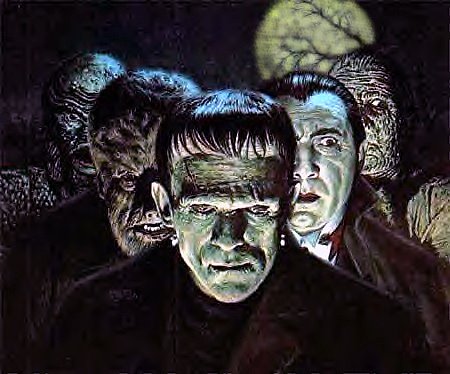
classic-monsters1Every year at Halloween, my wife and I lay in a supply of candy for the trick-or-treaters who come knocking at our door, even though neither we nor our children observe the rituals of the day. Only once did we fail in our preparations: that was the year we forgot to brief our four-year-old son on the creepy customs of this curious festival.

Shortly after dark, I watched from the window as the first of our nocturnal visitors arrived, alighting from a minivan that idled beside the curb and swiftly approaching our front door. The doorbell rang, and my son raced to answer it, excited only by the prospect of an unexpected visitor.

Imagine his surprise, upon throwing open the door, to find himself face to face with a 4-foot-high Frankenstein’s monster complete with rubbery green skin, oozing stitches, and bolts protruding from its neck. Imagine further the surprise of our gruesome little guest when he stepped forward with his bag held open, only to receive a two handed shove in the chest and have the door slammed in his face by a ferocious four-year-old shrieking, “Monsters!”

Young Frankenstein took off toward his car at full flight, also screaming, “Monsters!”

We sorted the matter out and little Frankenstein got his Milk Duds, but it was a long time before my son was willing to answer the door again. That’s a normal response, for a four-year-old. I have to wonder, however, if we aren’t all spending far too much time peering out from behind our curtains and seeing monsters lurking in every shadow.

The simple minds of children sort out the dichotomy of their worlds in the most rudimentary fashion: us and them, superheroes and monsters, good guys and bad guys. And the good guys always wear white.

As we grow up, however, we should come to appreciate that the world is considerably more complex, that the good guys don’t always look like us and the bad guys sometimes do. Unfortunately, by longing for the simplicity of childhood, many adults cling to an either/or view of the world as unsophisticated as a child’s. And although childishness in children may be cute, in adults it is not only embarrassing, but dangerous.

The desire for a return to simplicity is easily understood. As technology and social evolution spin our world around faster and faster, people are seeking common belief, common culture, and common interest to steady them against the storm. Indeed, cultural continuity and a sense of community are among the most stabilizing factors within families and society. But when we begin to feel threatened in our own beliefs and insecure in our own cultures simply because others are expressing their beliefs and cultures in their own way, then culture becomes a battlefront across which enemies stand ready to attack.

One response to this kind of uneasiness is to become a universalist. “I’m okay, you’re okay, and everyone else is okay, too.” The only one not okay is the one who passes judgment on others. This is a comforting philosophy, which may explain its popularity. It also explains a report last year that teachers in high school and college failed to persuade a large percentage of their students to take a stand in condemnation of Hitler’s Nazis: by refusing to concede that one ideology is better or worse than any other, the students eliminated the need of ever having to defend their own.

Universal-Monsters-halloween-36931352-480-310A second response calls for a good offense as the best defense. By attacking the shortcomings of others, I deflect attention away from my own. It doesn’t take much imagination, either, since virtually every religion and culture has enough dirty laundry to provide any supermarket-aisle tabloid with a supply of juicy banner headlines. But all that soiled laundry, aired in the light of day, only feeds our mistrust and paranoia, without providing any direction toward cleaning up the messes that we have made ourselves.

The only reasoned response to cultural insecurity and, as such, the most difficult, is for all of us to study and learn about our respective cultures and ideologies well enough that we immunize ourselves against the xenophobia that results from ambivalence in our convictions. When I truly understanding my own identity, my heritage, and my beliefs, when I take responsibility for my faults and begin working to correct them, only then can I move toward confidently separating attitudes that are wrongheaded from those that merely differ from my own.

“Know how to answer a heretic,” the Talmud says. You don’t necessarily have to engage him in debate, but you do have to know, for your own peace of mind, why his beliefs differ from yours. Without such knowledge, we are helpless to discern what hides behind the masks all around us, helpless to recognize the difference between dangerous fanatics and simple neighbors, between real monsters and children whose only wish is that we add a little sweetness to their lives.


 

Compartmentalize Your Free Will

do-not-cross-the-line-crossing-a-shopping-cart-prohibition-of-shopping-cart-1201651Throw out the diet books and stop starving yourself.  Here’s the next big thing in healthy living:

Duct tape.  Yellow duct tape.

That’s what researchers found when they partitioned grocery store shopping carts into sections, one side for fruits and vegetables, one side for other items.  Just a little nudge to make shoppers more conscious of their purchases led them to buy more healthy food and less junk.

The researchers, Brian Wansink, Dilip Soman, Kenneth Herbst, and Collin Payne, didn’t stop there.  By varying the size of the compartments, they discovered that shoppers bought even more fruits and vegetables in proportion to the size of the designated compartment.  With a little manipulation, customers could be prodded into choosing a healthier diet.

Ah, but there’s the rub.  How dare they manipulate us!  Who are they to play with our minds, to force us to conform to their values, and to interfere with our free will?

To which there is only one obvious response:  nonsense!

Read the whole article at http://www.pickthebrain.com/blog/compartmentalizing-free-will/#kyxx1wXQ1Ae41ZFJ.99

If You Could Be Supergirl

The new CBS drama “Supergirl” premiered last night to surprisingly positive reviews.  (No, I didn’t watch it.)  Critics liked the return to an all-American, disarmingly optimistic protagonist after the recent rash of moody, brooding, self-doubting superheroes who spend one moment saving the world and the next wallowing in their own personal angst.

Perhaps “Supergirl” is a step back toward lost innocence, and maybe a step forward toward a future when traditionalists don’t have to apologize for their commitment to traditional values.

We can only hope, and contemplate these thoughts on heroism, originally published in 2008 by Aish.com.

If You Could Be Superman

The-Avengers-Movie-Roster-Concept-ArtThe question caught me off guard, which doesn’t happen often after 15 years in the classroom. “If you could have any superpower,” asked Aliza, the ‘reporter’ for the school newspaper, “which would you choose?”

I pondered my choices. Super strength? Invisibility? Mind control? X-ray vision? I wouldn’t like becoming a green mutant like the Incredible Hulk, but swinging on webbed ropes like Spiderman might be cool.

The question is more than a variation on the genie-in-the-bottle scenario. Three wishes make narrowing the field of possibilities much easier, and focus on what you want to have, as opposed to who you want to be.

Ironically, it was two Jews who brought the whole genre of superheroes into the collective consciousness of popular culture. In 1933 Jerry Siegel and Joe Shuster, two Jewish teenagers from Cleveland, responded to Hitler’s rise to power in Germany by reinventing their comic character, Superman, as a defender of truth, justice, and the American way. The only time they couldn’t work on their project was Thursday nights, when their “drawing board” was confiscated by Joe’s mother, who used it to knead the dough for her Shabbos challah.

Batman, Spiderman, Captain America, and the Green Lantern were all created by Jews as well. For the not-yet assimilated Jew trying to find his place in gentile society, the invincible alter ego of the mild-mannered misfit was the perfect symbol of cultural ambivalence.

Jewish tradition has its share of larger than life heroes. Samson defeated the Philistines with superhuman strength. Jacob’s son Naftali possessed supernatural speed. The biblical prophets predicted the future and performed countless miracles, including at least two incidents of resurrecting the dead. The kabbalistic literature includes credible accounts of sages possessing knowledge of other’s secret thoughts or personal histories.

A proper understanding of these narratives requires an appreciation that the personalities in the Bible are not cartoon characters. Moses was infinitely greater than Charlton Heston could ever make him out to be, and the memory of Samson is poorly served by his common portrayal as a World Wrestling Federation caricature. The biblical heroes of Judaism were real people who, through extraordinary dedication and self-sacrifice, achieved extraordinary things.

THE RESPONSIBILITIES OF POWER

Nevertheless, there is a critical point in common between the heroes of Jewish tradition and the heroes of comic book fantasy: all recognized that their unique talents and abilities obligated them in service beyond individual self-interest. As Cliff Robertson says to Tobey Maguire in Spiderman: “With great power comes great responsibility”.

crossing-the-red-seaThe heroes of the Bible did not seek greatness. Moses tried to argue his way out of the yoke of national leadership. The prophet Jeremiah protested that he was too young and inexperienced to rebuke his fellow Jews. Samson’s divine mission was prophesied before his birth. Yet each of them rose to the responsibility imposed upon him by the power with which he was endowed by his Creator.

Consider the structure of the Jew’s daily prayer, composed by the sages to include every possible category of request. We ask for knowledge, so that we can know the difference between right and wrong. We ask for forgiveness, repentance, redemption from our problems, health, guidance, and for the arrival of the messianic era. In short, we ask for the Almighty to bestow upon us the resources we need to help bring His plan for creation closer to its fulfillment.

None of which requires superpower.

THE REAL HEROES

So what should one ask of his Creator? It is with this request that the devout Jew begins his day: Bring us not into the hands of careless sin or wanton transgression, nor into the hands of trials or disgrace; let us not fall under the dominion of the inclination to do evil, and distance us from wicked men and every wicked companion. We do not ask for super power to defeat our enemies, but for the inner strength and the divine protection to rule over ourselves.

The attraction of superhuman power and the mystique of superheroes springs forth from a romantic adventurism that renders ordinary life unsatisfying by comparison. We find our lives mundane and therefore long for the excitement of fantasy. We discard the value of the everyday and seek to live vicariously through the imagined and the unattainable.

It is noteworthy, therefore, that Biblical Hebrew contains no word for either romance or adventure. These are concepts of the modern world, both of them betraying the modern world’s dissatisfaction with reality.

So what superpower would I ask for? I still can’t say. And when I asked a group of my students, not one would commit to an answer. Perhaps our reticence comes from our innate appreciation that we are already supermen by virtue of the soul that resides within us. How else to explain the courage that compels human beings to battle daily against ignorance, prejudice, laziness, impatience, dishonesty, and deceit. To conquer those enemies, day after day and year after year, and to return to the fight when they have conquered us — this is the measure of true heroism.

We don’t need super powers to become extraordinary. Striving to fulfill the potential with which we were endowed by our Creator makes us the greatest heroes of all.

Legal Larceny

politicianEarlier this month, voters in a CBS news poll ranked presidential candidates on, among other qualities, honesty.  Joe Biden, who was then still in the race, claimed the top spot with an 85% favorable rating.  Hillary Clinton scored 68% among Democrat primary voters but only 35% among voters in general.

This is nothing less than staggering.  Whatever one may think about Mrs. Clinton’s qualifications to occupy the White House, her record on truthfulness screams for itself:  She’s lied about Benghazi, lied about her emails, lied about ducking under sniper fire in Bosnia, lied about being broke when her husband left office, lied about her immigrant grandparents, lied about being named for Sir Edmund Hillary.

The real tragedy is that so much of the voting public is uninformed about or, even worse, indifferent to Mrs. Clinton’s utter disregard for the truth.  It’s not just that she tells lies; it’s that she tells lies about things that don’t even matter, tells lies that can be easily verified, tells lies about having told lies without even a trace of embarrassment or remorse.

For whatever reasons, a huge portion of the country has made up its mind to adore Mrs. Clinton.  In their eyes, she can do no wrong.  Either her lies don’t matter, or else they aren’t lies, since if they were she would never have spoken them.

Whatever the explanation or excuse, the effect upon our society is chilling.  For when we lose our respect for the truth, there is no way our culture can survive.

It’s worth reflecting on Harry Truman’s observation that there is nothing more dangerous than a liar in public office.  Mr. Truman feared what would happen if the people believed him.  But what’s even more frightening is what happens when we follow our leaders’ examples and accept dishonesty as a way of life ourselves.

As I discuss in this article from 2011, originally published in Jewish World Review.

Legal Larceny

70 million Britons can’t be wrong. Can they?

Well, since our cousins across the pond boil their meat and drink warm lager, maybe the British love affair with one-pound coins was not the best indicator that Americans would willingly part with their one-dollar bills. Given the spectacular failures of the Susan B. Anthony dollar and the Sacagawea gold coin, hindsight seems better than 20/20.

If experience were not enough, a 2008 Harris poll found that three-fourths of people questioned prefer their dollars in bill, leaving little room for doubt. According to NPR, however, dollar-coin proponents remain undeterred. When asked about the poll, Leslie Paige, who represents watchdog group Citizens Against Government Waste, replied, “I suspect that they just don’t understand what the up sides are.” Ms. Paige believes the government should the dollar bill from circulation, thereby forcing Americans to use the coins.

In the meantime, over a billion newly minted coins line the shelves of government reserve vaults sealed in plastic bags. At a production cost of 30 cents per coin, that’s $300 million dollars of tax money spent on very pretty gold-colored trinkets that no one may ever use, with more being added to the pile every day.

Some, however, have found a way of turning fool’s gold into the genuine article.

money-lifestyle-greedIn an effort to popularize the coins, the United States Mint has offered to mail coin orders to buyers free of shipping charges. Enterprising “travel hackers” quickly figured out that they could buy the coins, rack up frequent-flier points on their credit cards, then deposit the coins to their bank accounts to pay off their credit card> bills. Officials began catching on when they noticed repeat orders adding up to as much as $600,000 worth of coins; they got another clue when banks reported receiving deposits of coins still in their Mint wrappers.

“We’ve used them to go on trips around the world,” Jane Liaw told NPR, saying that she and her husband are planning trips to Greece and Turkey, “all on miles and points.”

“It’s not illegal,” says Mint spokesman Tom Jurkowsky, “But it’s an abuse of the system… The system was set up to promote the use of dollar coins and we are simply trying to do the right thing here.”

NOLO CONTENDRE

Sadly, this seems to be the mantra of modern morality. If the government hasn’t legislated against it, there’s no reason not to do it. Everything that is not forbidden is permitted.

How recently have we witnessed the fallout from this mentality: the false promises of 125% home mortgages to insolvent borrowers, the loan-bundling that turned a fraction of a percent advantage into multimillion dollar profits, the obscene bonuses paid to executives with government bail-out money. None of these practices was illegal, even though they caused and perpetuated an economic tailspin from which the middle and lower classes have yet to recover.

mindfulhappiness-the-greedThe attraction of easy money is irresistible, it seems, no matter what the risk.

Ironically, the decline of the America work ethic coincides with many Americans working harder than ever. But appearances can be deceiving. While people do indeed put in longer hours, increasingly those hours are frittered away texting, tweeting, checking email, and playing solitaire. Indeed, even when working hard, many of us seem motivated less by a desire to do our jobs well than by the passionate longing to escape work altogether, either through exotic forms of recreation or early retirement.

I can’t help but remember the way my English professor described Shakespeare’s Prince Hal, who fearlessly charged into battle and “fought like hell for the privilege of not having to work for a living.”

I also can’t help but apply the teaching of the sages in the Talmud when they remarked, “Love work, despise lordliness, and do not become overly familiar with the government.”

The Hebrew word for “work” employed here is malachah, derived from the root meaning “walking” or “traveling forward.” To involve oneself in any pursuit that is productive, creative, or designed to benefit those with whom we share our world – this is highest calling of civilized society. This kind of work is truly the labor of love. Moreover, by dropping the feminine ending, the word malachah becomes malach, commonly translated as “angel;” when we strive to create a better world we simultaneously transform ourselves into divine emissaries of the Almighty.

ILL-GOTTEN GAINS

In contrast, the sages warn us to despise “lordliness,” the lust for power that seeks to control others and harness their efforts for personal advantage. More and more, we witness the investment of time and energy in profit without production, in clever tricks to generate income effortlessly without contributing anything to society in return, in seeking the spoils of lordliness at the expense of those who perform real work.

Finally, the sages warn us against over-familiarity with the government, since it is the nature of rulers to care for little except their own continued hold on power. Even in our democratic government, too many of our elected officials are motivated either by their own lusts and avarice or by the conviction that they know what is best for the people no matter how much evidence testifies to the contrary.

In truth, there is no greater satisfaction than that derived from an honest day’s work; neither is there any shortage of individuals desperate to avoid labor at all costs, or to exploit the labors of others to feather their own nests. And no matter how hard it tries, government will never succeed in legislating noble values or a human conscience.

Just ask Ben Schlappig, who writes a travel hacker blog. According to NPR, Schlappig brags that he has “a few million miles” and top-tier status with several airlines.

“Just last week I came back from a trip from Australia and Singapore and Malaysia all in first class, just on miles,” he says, “partly thanks to the dollar coin program.”

Enter your email here for new articles and insights. We will not share your info.

← Back

Thank you for your response. ✨