Home » Posts tagged 'Community' (Page 19)
Tag Archives: Community
Speak Truth to Powers
 How refreshing that there are people like Kirsten Powers in the world.
In her new book, the outspoken, unapologetic liberal Democrat has taken aim at the militant search-and-destroy tactics employed by many liberals to shut down civil discourse and bully ideological opponents into submission.
Not surprisingly, many on the left have turned their attacks upon Ms. Powers and her book, proving her point by doing exactly what she accuses them of doing.
The intellectual laziness of groupthink lies at the heart of the deep divisions that are tearing this country apart. If more people would listen — listen to each other, and listen to Ms. Powers’s message — America might start turning back toward a culture of problem-solving and away from character assassination and political dogma.

Collateral Damage from the Grievance Industry
In a deeply insightful column, Thomas Sowell offers an observation that should be obvious to everyone:
 “[C]ommunities scattered across the country were disrupted by riots and looting because of the demonstrable lie that Michael Brown was shot in the back by a white policeman in Missouri — but there was not nearly as much turmoil created by the demonstrable fact that a fleeing black man was shot dead by a white policeman in South Carolina.” (Emphasis added.)
Mr. Sowell goes on to make the point that the grievance industry cares about neither truth nor justice. A guilty white cop indicted for killing an innocent black man isn’t newsworthy; an innocent white cop exonerated for killing a black criminal is cause for moral outrage.
And this is what is all comes down to: self-serving leaders and rabblerousers want outrage. They want to rail against the unfairness of it all, against the gap between rich and poor, against the indignity of stop-and-frisk, against the “legacy of slavery.” What they don’t want is to search for solutions, much less find them. That would mean an end to the victim-culture that has allowed them to exploit the disadvantages of their own brethren for their own profit and power.
“In a world where the truth means so little, and headstrong preconceptions seem to be all that matter, what hope is there for rational words or rational behavior, much less mutual understanding across racial lines?”
Let’s hope Mr. Sowell’s lament isn’t the sad epitaph for any hope of achieving, or restoring, a civil society.

When does encouragement turn deadly?
A New York Times article last month highlighted suicide clusters among Palo Alto high school students over the past few years. Many believe the reason lies in mixed messages from parents who tell their children to do their best and be happy, but who clearly won’t be happy themselves if their children’s best doesn’t get them into Ivy League universities.
Dr. Glenn McGee, the district superintendent, thinks that parents don’t get it. “My job is not to get you into Stanford,” he said he tells parents and students. “It’s to teach them to learn how to learn, to think, to work together — learn how to explore, collaborate, learn to be curious and creative.”

But the pressure to compete and perform remains. During this past school year, three boys laid down on local train tracks and took their own lives. Their parents’ words of assurance couldn’t offset the pressure of uncompromising expectations.
Indeed, one wonders whether Dr. McGee gets it himself. “Can we put sensors up there?” he wonders, suggesting some sort of system to alert the train operators. “This is Silicon Valley. There ought to be something we can do.”
But the solution isn’t to monitor the train tracks. As the old cliche goes, you don’t save people from falling of a cliff by putting an ambulance down in the valley.
The only answer is to change the culture so that success is measured not by standardized test scores and status but by cultivating individual talents and the attitudes that contribute to a healthy society. When parents make it their mission to fulfill each child’s unique potential — and not to satisfy their own dreams — then children are likely not only to meet parents’ expectations but to exceed them.
Light up your world
 A smile is like a flame. You can give one to someone else without giving away your own.
In Hebrew, the word for flame is lahava, related to the word ahava, which means love. A flame is broad at the base and narrows to a point: in the same way, two people might be very different from one another, but if they share a common sense of purpose they come to love one another.
And as with a flame — as well as a smile — you lose nothing by loving others.
How Ants Survive Rush Hour…
… and why putting your ego in check will change your life
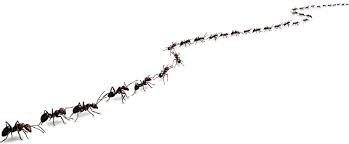 It’s everyone’s nightmare. Rush hour. Inching along interminably as too many cars navigate too few lanes, with too many merging in and too few turning off.
Who would have imagined that King Solomon already anticipated the chaos of our highways when he declared, Go, sluggard, and learn from the ant?
As it turns out, ants are better drivers than we are. And the lessons of their highway habits offer some valuable lessons that extend far beyond the way we drive.
According to NPR, Apoorva Nagar discovered the connection in a study by German and Indian researchers. Apparently, traveling ants are able to maintain a constant speed regardless of the number of ants on the path. In other words, even at rush hour, ant traffic carries on unimpeded.
Sanity vs. Compassion — how to choose?
 Would you accept an invitation to the Mind and Life Institute’s International Symposium for Contemplative Studies? Or does it all sound too flaky?
It’s hard not to sound pretentious when trying to be substantive in a superficial world. I might easily have dismissed the headline — Creating a Caring Society — as so much new-age twaddle… but if I had I’d have been guilty of the same superficiality that I frequently decry.
Citing Tania Singer, a social neuroscientist from The Max Planck Institute, the article offers an intriguing distinction between empathy and compassion. The first is a mere sharing of feelings; the second is an impulse to turn feelings into action. Sure, empathy is a good start. But feeling another’s pain doesn’t help feed the poor, shelter the homeless, enlighten the ignorant, or comfort the bereaved.
In fact, failure to take action may actually cause distress and suffering to the empathizer, who feels frustrated and inadequate for having provided no relief to the one in need.
The more pervasive problem, however, is our increased detachment from the plight of others so that we don’t feel at all. No surprise there… if we responded as we should to every news story of poverty, illness, and violence, we’d all be on a perpetual Valium drip. So instead we plug into our electronic kaleidoscopes and tune out the real world.
We can only preserve our sanity by deadening ourselves to the flood of human suffering that washes over us day and night. But to ignore the call of compassion leaves us less than human.
As with so many things, the answer lies somewhere in the middle. Feel pain, but not too much pain. Respond to the pain of others with concrete action. No, it’s not easy. But it’s the only avenue we have for restoring an emotionally and morally healthy society.
Just Plain Ugly
 Here’s another lovely headline:
Top 15 Celebrities who are Just Plain Ugly
And no, I’m not including the link.
Why would anyone write an article like this? Why would anyone read it?
Sadly, the answers are obvious. Someone wrote it because he knew people would read it. And people read it either out of pure voyeurism or, even worse, because they need to tear down others to feel good about themselves.
Maybe we should revisit some old cliches:
- Don’t judge a book by its cover
- Beauty is only skin deep
- All that glitters is not gold
Sure, they’re cliches. But remember: cliches become cliches because people recognize their truth enough to repeat them over and over and over.
When we make the effort to see the best in others, that makes our world brighter. With practice, recognizing what’s good in others can motivate us to be like them, which will make us feel better about ourselves.
After all, the grass isn’t really greener on the other side of the fence.
Keeping Trust
 Distance yourself from falsehood. – Exodus 23:7
We all like to think of ourselves as honest. But are we?
Do we rationalize white lies? Do we fudge our taxes? Do we return to the counter when we’re undercharged or when we get too much change? Do we make hasty promises that we forget to keep? Do we exaggerate? Do we embellish? Do we state as fact when in fact we aren’t so sure?
Do we lie outright when we’re caught in a compromising position?
It’s easy to justify “little” lies, or even big ones under pressure. How often are we lied to by our politicians — increasingly without shame or consequence? If they can do it, why shouldn’t we?
It comes down to trust. We want to be trusted. And we want to be able to trust others. So it’s not enough not to lie. Distance yourself from falsehood — whether a false word or a false thing or a false friend.
Not only do we become known by the company we keep; we become the company we keep. And once we lose our sensitivity to falsehood, it’s a near-impossible struggle to get it back.
The Hazards of Headline News
 Here’s an insidious little headline: Money, Not Marriage, Makes Parents Better
Family structure, family meals, limiting television, extracurriculars. No worries. None of it makes much of a difference. Your child’s success or failure in life will have more to do with how much money you have. If it’s in LiveScience, it must be true. No?
Thanks to the U.S. Census Bureau for using our tax dollars to produce such a sinister study. Maybe their next project will offer similarly insightful results. How about something like this: Wings, Not Landing Gear, Make Air Travel Safer.
Well, sure, up to a point. But what does one really have to do with the other?
Read the whole post here.
The New Narcissism
 Have we finally reached the point where narcissism is no longer an epidemic but an institution? Is this the legacy of the “Me Generation” of the ’70s, bequeathing a cultural norm of such enormous self-absorption that self-absorption has itself become a virtue?
Joe Holleman asks the question. I fear that the answer is self-evident. The mantra of our generation has become:
Ask not what you can do for others; ask what you can demand that others must do for you.
 Yonason Goldson